
30 Minute Meal Prep: A Power Hour Plan for Busy Weeks
Updated: Sep 18
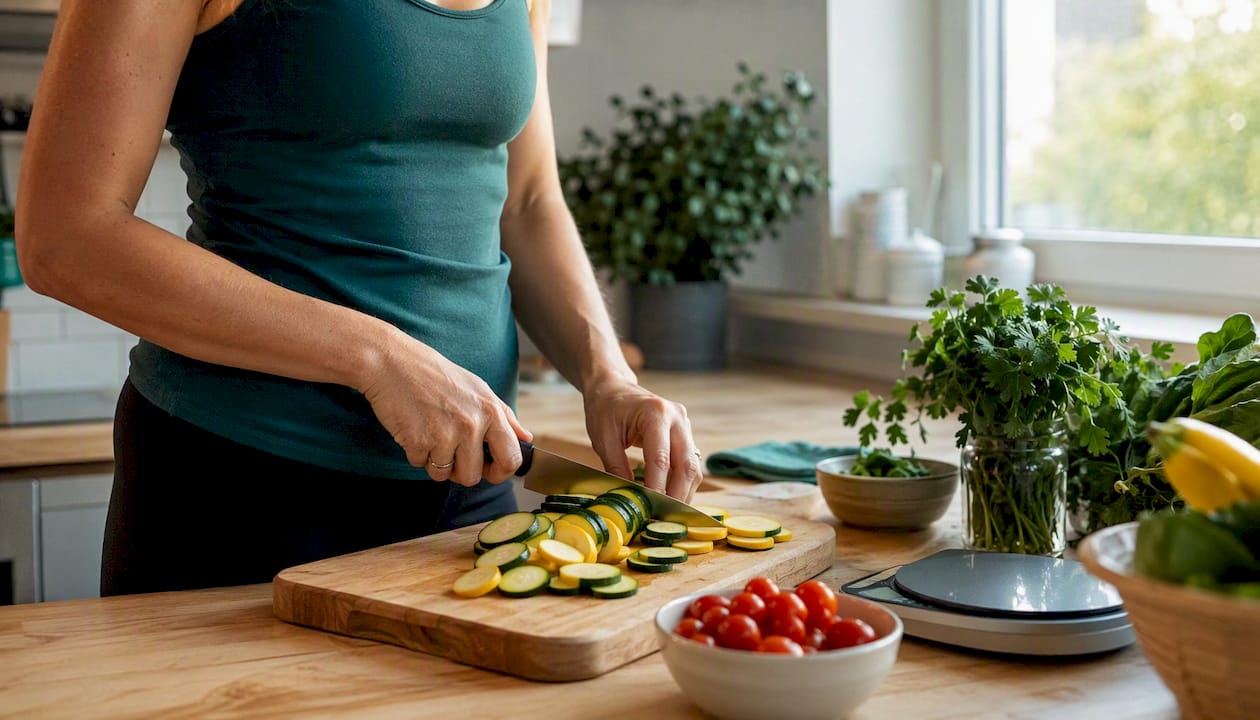
Yes, you can meal-prep in 30 minutes. Not “sort of,” not “with an asterisk.” Cook two or three components in parallel, mix and match them across the week, and you can walk away with 5 to 10 meals’ worth of food, according to the parallel-cooking method outlined by Meal Prep Budget. The trick isn’t cooking faster. It’s cooking at the same time.
Here are three ways to start this week, depending on what you have energy for:
Component batch: Roast one protein and one grain simultaneously, then build meals around them all week. Best if you want variety without five different recipes.
Sheet-pan plus stove combo: One tray in the oven, one pan on the stove, both running at once. Best for households that need meat and a starch handled fast.
No-cook jars: Layer grains, veggies, protein, and dressing into containers with zero heat involved. Best for lunches you can grab and go.
Expect four to six servings from a single 30-minute session, more if you double a component. Refrigerate everything within two hours and plan to eat fridge items within three to five days, freezing anything that won’t get eaten by day four.
Key Takeaways
Consistent 30-minute sessions built around parallel cooking and mix-and-match components produce more usable meals than occasional all-day prep marathons.
Point | Details |
Cook in parallel | Run the oven, stovetop, and no-cook assembly at the same time to finish 5 to 10 meals in 30 minutes. |
Start with the slowest item | Load sheet pans first since roasting takes the longest; grains and no-cook jars can wait. |
Follow safe storage windows | Refrigerate within two hours and eat fridge items within three to five days, freezing the rest. |
Prep one meal first | Focus on a single “pain point” meal before expanding to a full week of prep. |
Coaching adapts the plan | Coach Jill Byrne builds 30-minute prep plans around individual schedules and GLP-1 nutrition needs. |
Table of Contents
What Is 30 Minute Meal Prep and How Does the Power Hour Work?
Meal prep, in plain terms, means cooking food ahead of time so your weeknights don’t require a stove. The 30-minute version, sometimes called a “power hour” even though it’s half that length, means running your oven, stovetop, and a no-cook assembly station at the same time so nothing sits idle. The Kitchn built its entire mix-and-match dinner system around this idea: pre-cook a few core components and a sauce or two, and weeknight “cooking” becomes reheating and combining.
Here’s the minute-by-minute breakdown that makes it work.
Minute 0 to 2: Setup. Preheat the oven, pull out two half-sheet pans, fill a pot with water for grains, and set out your containers. This is also when you should have already washed and chopped anything raw.
Minute 2 to 5: Load the oven. Get your protein and vegetables onto sheet pans and into the oven immediately. This is the longest single task, so it needs to start first.
Minute 5 to 12: Start the stovetop. While the oven runs, get a grain or a stovetop protein going in a pot or skillet. Stir occasionally, but don’t hover.
Minute 12 to 20: Assemble the no-cook items. With the oven and stove both working unattended, this is your window to build salad jars, mix a dressing, or prep overnight oats.
Minute 20 to 30: Portion and cool. Pull everything from the oven and stove, divide into containers, and let them vent uncovered for a few minutes before sealing and refrigerating.
Pro Tip: The single biggest time-waster in a 30-minute session is waiting on one task before starting the next. Always load the slowest-cooking item (usually the oven) first, and never let a burner or oven sit empty while you chop something that could’ve been chopped at minute zero.
What Are Some Good 30-Minute Recipes for Meal Prep?
Variety comes from mixing a small number of components, not from cooking ten different dishes. Pinch of Yum’s mix-and-match approach works because one or two proteins, one or two grains, and two vegetables can combine into a week of different-feeling meals.
Sheet-pan chicken and vegetables. Toss chicken thighs and chopped vegetables with olive oil and roast at 425°F for 20 minutes. Start it at minute 2; it needs zero attention until pull time. Swap in rotisserie chicken if you’re short on active time.
Garlic butter shrimp. Shrimp sears in under 5 minutes flat, making it one of the fastest proteins available for a quick high-protein session. Start it around minute 12 so it doesn’t overcook while you handle other tasks. Frozen shrimp works fine if thawed under cold water first.
One-pot ground beef and rice skillet. Brown beef, stir in rice, broth, and seasoning, then let it simmer while you handle other stations. One-pot dinners minimize both active time and cleanup, which matters more than people admit when you’re racing a clock.
Roasted salmon fillets. Salmon cooks through in under 20 minutes in the oven, making it an easy second item on a sheet pan alongside vegetables. High in protein and freezer-friendly if wrapped well.
Chickpea and roasted vegetable bowls. A vegetarian base of chickpeas, roasted sweet potato, and greens holds up for days and doesn’t dry out like some proteins do. Add tahini or a vinaigrette at serving time, not before.
Beef and broccoli stir-fry. Thin-sliced beef and broccoli cook fast in a hot skillet, ready in under 10 minutes once your pan is hot. Works well started during the oven window.
No-cook Mediterranean jars. Layer quinoa, cucumber, chickpeas, feta, and olives with dressing on the bottom so nothing gets soggy. Takes about 5 minutes per jar and needs zero heat.
Overnight oats. Oats, milk, and a mix-in like berries or peanut butter, portioned into jars and left in the fridge overnight. A near-zero-effort breakfast component that pairs with any other week’s prep.
The formula behind almost all of these: protein, a fiber-rich component, and a healthy fat, combined in whatever ratio fits your goals. That structure is what keeps quick meals from turning into a plate of just carbs.
Which Pantry Staples and Tools Actually Speed Up Prep?
You don’t need a gadget drawer. You need the right seven or eight items on hand. Canned beans, quick-cooking grains like couscous or instant rice, frozen vegetables, jarred marinara or pesto, and pre-cooked grain pouches all cut steps out of a session without cutting quality.
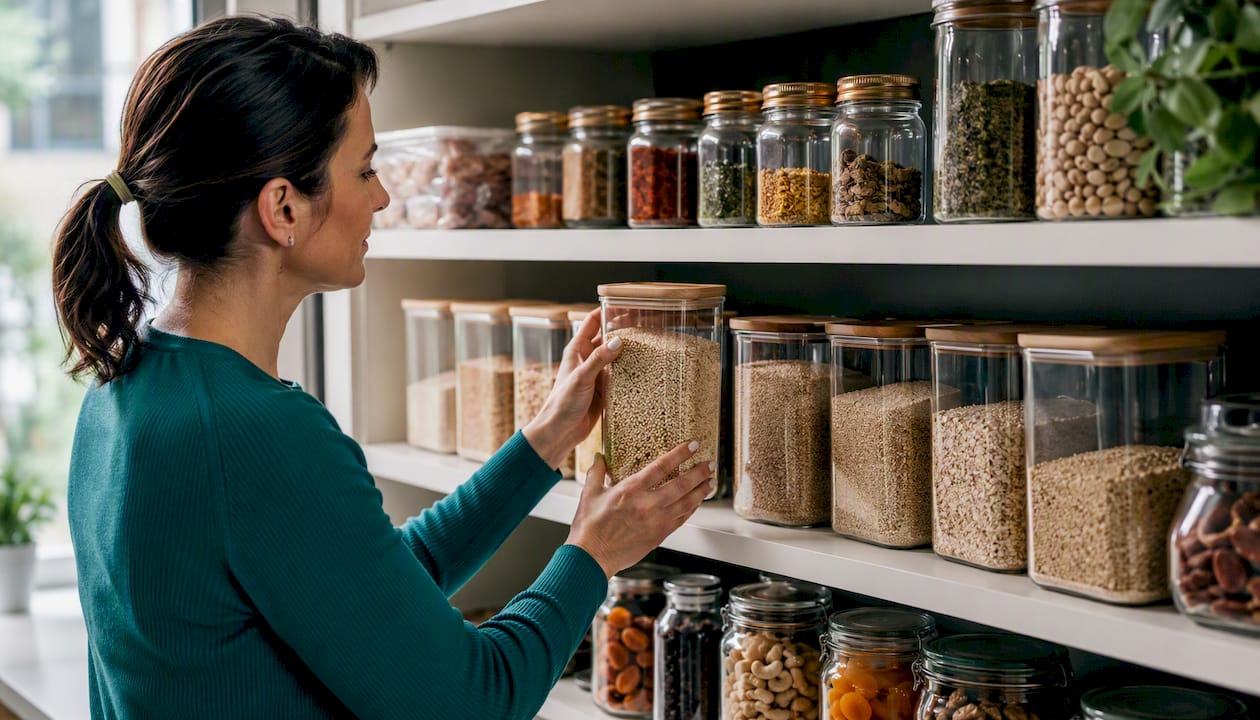
On equipment, two half-sheet pans, one large skillet, and one pot cover almost everything in this guide. Add a digital timer so you’re not guessing when the oven’s done, and a sharp chef’s knife, since a dull one adds real minutes to any chopping. For more pantry ideas built around speed and versatility, a well-stocked shelf does more for your Tuesday night than any new appliance will.
Container size matters more than people expect. Standard 2-cup containers work for most single meals, while quart-size deli containers handle soups and stews better. Label each one with the date it was made, not the date you plan to eat it.
How Long Do Prepped Meals Last in the Fridge and Freezer?
Cooked proteins, grains, and roasted vegetables generally hold for three to five days refrigerated. No-cook jar salads last about the same window if the dressing stays separate until you eat. Overnight oats hold up for four to five days without getting mushy, longer than most people assume.
Refrigerate everything within two hours of cooking, and use shallow containers so food cools quickly instead of sitting warm at the center.
Anything you won’t eat by day four should go in the freezer instead of the fridge.
Reheat cooked proteins and grains until steaming hot throughout, not just warm on the surface.
Keep dressing, sauce, or vinaigrette in a separate small container and add it only at serving time.
Label every container with the date it was made so you’re never guessing.
What Usually Goes Wrong in a 30-Minute Session?
The most common mistake is trying to prep every single meal for the week in one sitting. Beginners who focus on just one “pain point” meal, like breakfast or lunch, stick with the habit far longer than those who attempt it all at once.
Crowding the sheet pan: Food steams instead of roasting. Fix: use two pans instead of piling everything onto one.
Starting with a slow-cooking grain: Wild rice or farro can eat up your whole 30 minutes. Fix: swap in instant rice, couscous, or a pre-cooked grain pouch.
Raw ingredients everywhere: Swap raw chicken for rotisserie chicken, frozen shrimp for anything requiring butchery, and pre-washed greens for salad you’d otherwise wash yourself.
Pro Tip: If a full week feels unrealistic, prep three days’ worth first and add a 10 to 15 minute midweek refresh. That’s still meal prep. It just doesn’t pretend to be a marathon.
What Does a Sample 30-Minute Weekly Plan Look Like?
Here’s what one session produces and how it turns into five different dinners.
What to prep: 1.5 pounds chicken thighs (roasted), 2 cups instant rice (cooked), 2 bags frozen broccoli and bell pepper mix (roasted alongside the chicken), 1 batch garlic yogurt sauce, and 4 hard-boiled eggs for grab-and-go snacks.
Shopping list:
Produce: frozen broccoli mix, garlic, a lemon
Protein: chicken thighs, eggs
Pantry: instant rice, olive oil, plain yogurt, spices on hand
Extras: whole wheat wraps, a jar of salsa or hot sauce
Assembly notes for the week:
Monday: chicken, rice, and vegetables in a bowl with sauce
Tuesday: chicken and vegetables wrapped in a tortilla
Wednesday: rice bowl with a fried egg on top
Thursday: chicken salad using leftover chicken and yogurt sauce
Friday: whatever’s left, combined into a quick stir-fry with extra frozen vegetables
For a version of this that scales to a full family, a longer-form weekly meal plan walks through building out beyond a single 30-minute session.
How Does Coaching Turn a Single Session Into a Lasting Habit?
One prepped meal, done consistently, beats an ambitious week that collapses by Wednesday. Coach Jill’s approach starts small: pick one meal, schedule a fixed 30-minute slot, and track how it actually goes for two to four weeks before adding more.
Put your 30-minute session on the calendar like an appointment, not a “if I have time” task.
Build a simple prep kit: containers, labels, and a short list of go-to components.
Review what worked and what didn’t each week, and adjust rather than starting over.
For clients balancing meal prep with GLP-1 medication guidance or broader accountability needs, Coach Jill’s coaching programs build these habits around real schedules, not idealized ones.
Why Frequency Beats Volume in Meal Prep
Sustainable eating rarely comes from one heroic Sunday of cooking. It comes from showing up for 30 minutes, repeatedly, until it stops feeling like a task. In coaching conversations, the clients who stick with real food changes are almost never the ones who tried to overhaul everything at once. They’re the ones who nailed lunch first and let dinner follow later. Pick one meal. Give it 30 minutes this week.
Let Coaching Handle the Planning So You Just Cook
A 30-minute session works even better when someone has already mapped out what fits your schedule, your goals, and the foods you’ll actually eat. That’s the gap most generic meal-prep guides leave open: they hand you recipes but not a plan built around your week specifically.

Coach Jill’s coaching pairs habit-based accountability with holistic health plans designed around real time constraints, including support for clients managing GLP-1 medication nutrition needs. Instead of guessing which components to batch or troubleshooting a prep session alone, you get a plan adapted to your goals from the start. If you compare that to piecing together strategy from scattered recipe sites, the difference is having someone check in on what’s actually working. Book a consult with Coach Jill Byrne to build a 30-minute routine that fits your week, not a generic one.
Sources
FAQ
What are some good 30-minute meals?
Sheet-pan chicken with vegetables, garlic butter shrimp, one-pot beef and rice, and no-cook Mediterranean jars all fit comfortably within a 30-minute prep session.
What is the 30-minute meal concept popularized by cooking shows?
The concept, most associated with Rachael Ray, centers on recipes designed to go from raw ingredients to a finished plate in half an hour using simple techniques and minimal cleanup.
Who is known for popularizing 30-minute meals?
Rachael Ray built her cooking career and several television shows around the 30-minute meal format, emphasizing speed and simplicity over complicated technique.
How can I feed myself for a week on a tight budget?
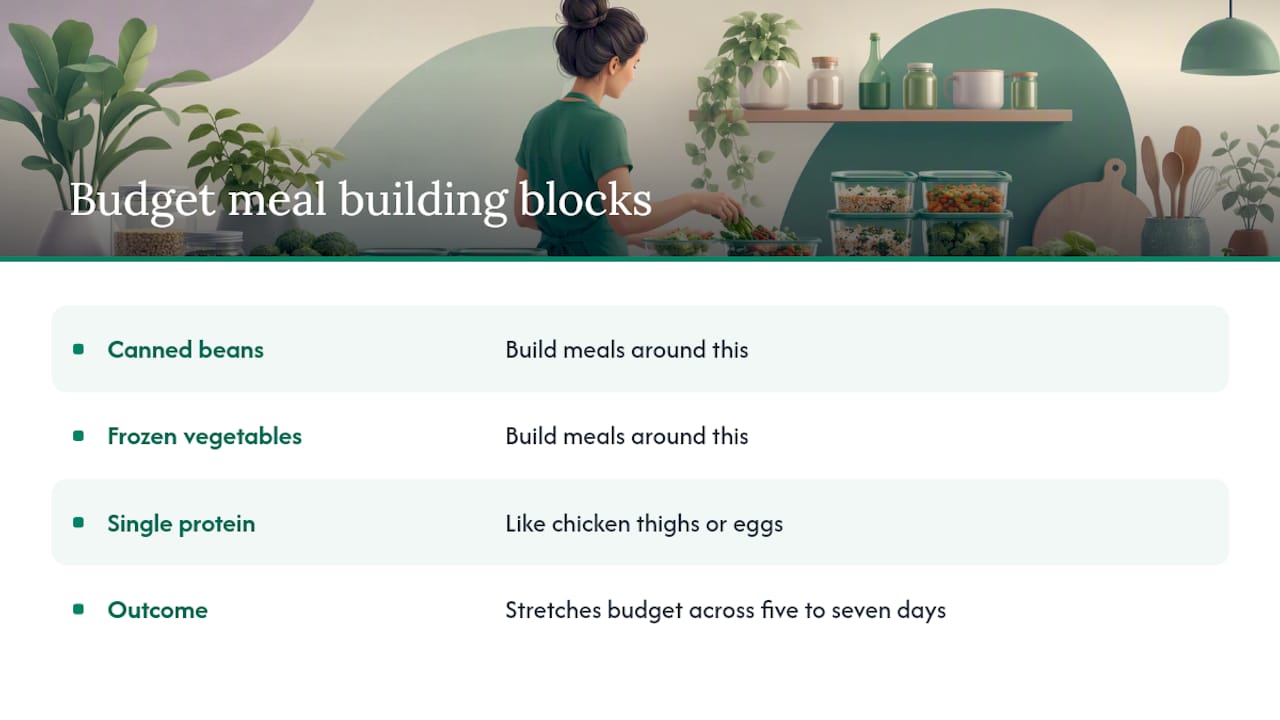
Building meals around canned beans, frozen vegetables, and a single inexpensive protein like chicken thighs or eggs stretches a small grocery budget across five to seven days; budget-focused meal planning covers this in more depth.
Is 30-minute meal prep enough for a full week of meals?
A single 30-minute session typically yields 5 to 10 servings when you cook components in parallel, which covers most of a week when mixed and matched across different meals.
Recommended
Comments