
60–90 Minute Batch Cooking for Beginners That Builds a Habit
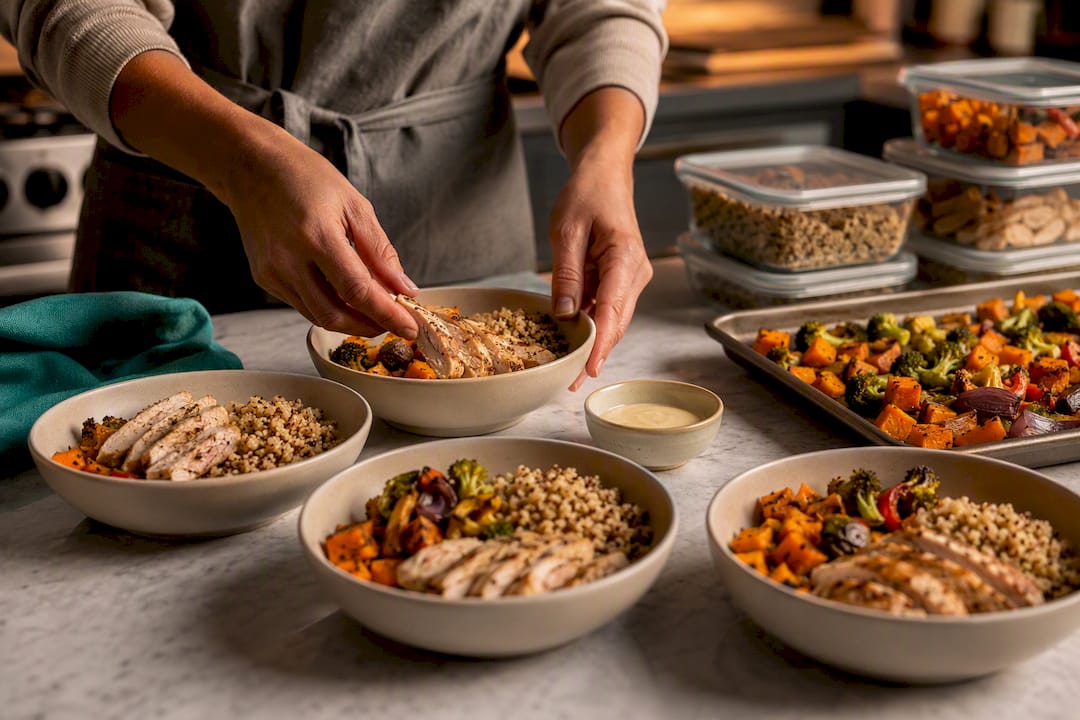
Batch cooking means preparing flexible components once so you can assemble different meals all week. Start with a single 60 to 90 minute session and four components: a protein, two grains or starches, roasted vegetables, and a sauce. That approach saves time, cuts food waste, and gives you more variety than reheating the same casserole five nights in a row.
TL;DR:
Batch cooking with separate components allows for more variety and prevents boredom, making it easier to stick with meal prep long-term.
Cooking four versatile components in 60 to 90 minutes supplies the base for multiple meals and reduces food waste and grocery costs.
Suitable foods for batch cooking include grains, roasted vegetables, and proteins, while delicate greens and cream sauces should be minimized or avoided.
Reheat proteins and vegetables by searing or broiling to restore texture, and keep sauces separate to maintain freshness and flavor.
Starting with one component and gradually increasing complexity fosters consistent habits better than attempting a full system all at once.
Table of Contents
What Is Batch Cooking for Beginners, Really?
Batch cooking is not the same as traditional meal prep, where you cook five identical dishes for five identical lunches. Instead, it means cooking separate components, a protein, a grain, roasted vegetables, and a sauce, that you recombine into different meals throughout the week. One batch of roasted chicken becomes tacos on Monday, a grain bowl on Wednesday, and fried rice on Friday.
This component approach solves the biggest reason beginners quit meal prep: boredom. A practical batch-cooking system built around interchangeable parts can produce four to eight distinct meals from one session.
Start small. Your first session might cover just two components. Add a third and fourth once the routine feels manageable, rather than attempting a full system on day one.
Components mix and match, unlike single dishes
Variety reduces flavor fatigue and skipped meals
Scaling up gradually beats an all-or-nothing start
Why Does Batch Cooking Save Beginners Time and Money?
The time savings show up at assembly, not at the stove. Cooking four components in one session takes roughly the same active effort as cooking one weeknight dinner, but it produces building blocks for several meals. That math is what makes batch cooking on a budget realistic instead of aspirational.
Buying proteins, grains, and vegetables in bulk for one cooking session also tends to cost less per serving than repeated small grocery trips, and it curbs the food waste that comes from produce wilting before you get to it.
By the numbers: Cooked components stored properly stay safe in the refrigerator for 3 to 4 days, which lines up almost perfectly with a five-day workweek when you batch on a Sunday.
Fewer decisions each night, since components are already cooked
Built-in vegetables and lean protein when meals start from real food
Less impulse takeout when dinner is already half assembled
Batch cooking has real limits. Cooking for an entire week in one marathon session tends to cause burnout fast. A smaller, repeatable rhythm beats an ambitious one-time effort every time.
The Simple 4-Part Batch-Cooking Game Plan
A beginner-friendly system rests on four components you can mix and match all week:
An anchor protein — roasted or baked chicken thighs, ground turkey, baked tofu, or hard-boiled eggs
Two grains or starches — rice, quinoa, farro, or roasted potatoes give you contrast in texture and flavor
Tray-roasted vegetables — broccoli, peppers, zucchini, or root vegetables cooked at high heat on a sheet pan
One sauce or dressing — a single flavorful sauce transforms the same ingredients into completely different meals across the week
Portion for three to five servings per component, store two or three days’ worth in the fridge, and freeze the rest for later weeks.
From those four components, you can build:
Grain bowls with protein, roasted veg, and sauce drizzled on top
Tacos using shredded protein and a quick slaw
A frittata folded with leftover roasted vegetables
Fried rice using cooked grains, protein, and a fried egg
A quick soup built on broth, grains, and vegetables
Wraps layered with protein, greens, and sauce
Salad bowls with protein and grains over greens
Pasta tossed with roasted vegetables and a protein of choice
Pro Tip: Make two smaller batches of different components instead of one giant batch of a single dish. Two four to six portion batches deliver far more variety across the week than one twelve-portion batch of the same thing, according to advice from All-Clad on small-batch cooking.
How Do You Run a 60 to 90 Minute Batch-Cooking Session?
A little planning before you turn on the oven makes the whole session run smoother.
Shop first. Buy one protein (about 1.5 pounds per adult for the week), two grains, four to six cups of vegetables, and ingredients for one sauce. Stick to that ratio and you will not overbuy.
Set up your station. Have sealable containers, a large sheet pan, a sharp knife, and a few labels or a marker ready before you start. Beginners genuinely don’t need specialized gadgets to make this work.
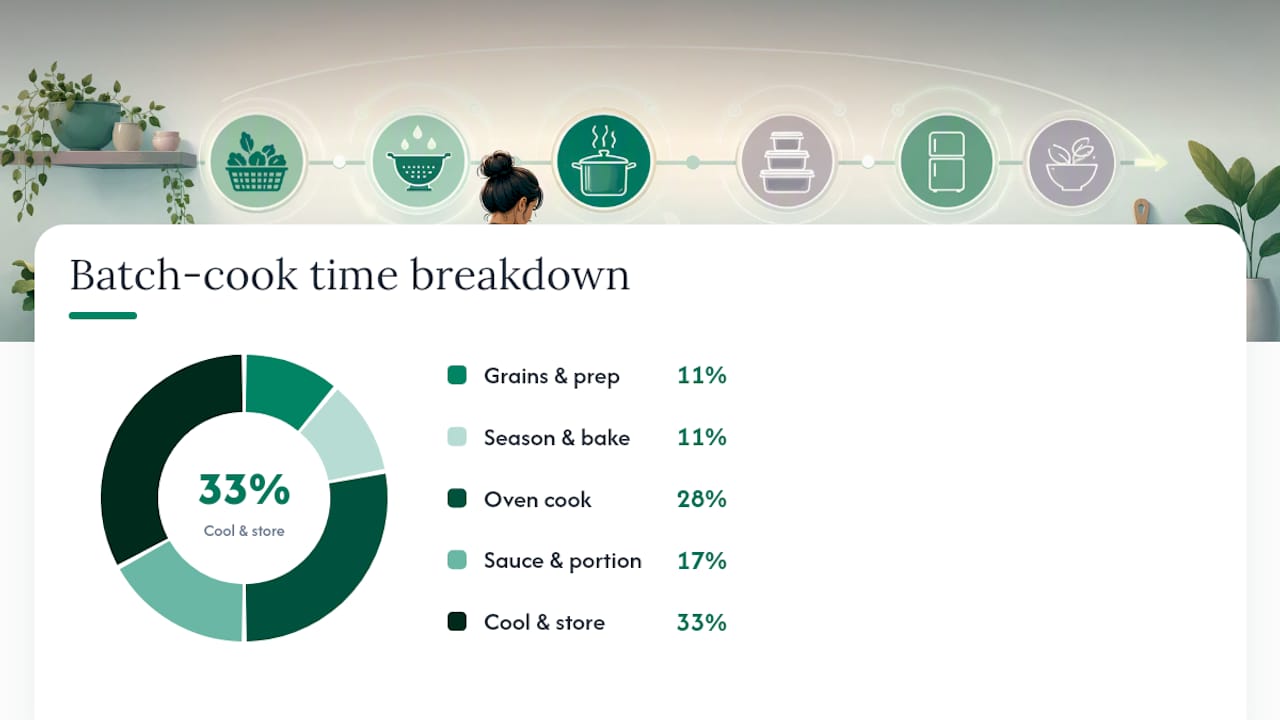
Run tasks in parallel. Start the grains first since they need the least attention. While they simmer, get vegetables and protein into the oven together. Make the sauce last, while everything else finishes cooking.
A sample timeline:
Minutes 0 to 10: Start grains on the stove, preheat oven, chop vegetables
Minutes 10 to 20: Season protein and vegetables, get both onto sheet pans
Minutes 20 to 45: Oven does the work; grains finish and rest
Minutes 45 to 60: Make the sauce, portion everything into containers
Minutes 60 to 90: Cool, label, and store
What Should You Batch Cook, and What Should You Skip?
Some foods hold up beautifully over several days. Others turn mushy, watery, or unsafe. Knowing the difference keeps your first few sessions from ending in the trash.
Good candidates:
Grains like rice, quinoa, and farro
Roasted vegetables (broccoli, carrots, sweet potatoes)
Beans and lentils
Braised or roasted chicken
Hard-boiled eggs, which keep up to a week in the shell and about five days once peeled and cooked grains and roasted vegetables generally hold for four to five days refrigerated
Thick sauces like tomato sauce or a peanut sauce base
Skip or minimize:
Dressed salads, which wilt within hours
Delicate cooked greens like spinach
Cooked fish held longer than a day or two
Cream or egg-based sauces, which separate and spoil faster
By the numbers: USDA guidance recommends keeping cooked components refrigerated at or below 40°F and eating them within 3 to 4 days. For longer storage, freeze portions for peak quality up to about 3 months, cooling and portioning food before it goes in the freezer.
Cool food quickly by spreading it on shallow pans rather than piling it into deep containers, and avoid stacking hot containers in the fridge. That single habit does more to prevent bacterial growth and preserve texture than almost any other step in the process.
How Do You Make Leftovers Taste Freshly Cooked?
Reheating is where a lot of batch cooking falls apart. Microwaved rice turns gummy, and reheated vegetables go soft. A few finishing techniques fix that.
Pan-sear or broil proteins and vegetables for two or three minutes to bring back crisp edges instead of microwaving everything into mush. Fresh herbs, a handful of raw crunchy vegetables, or a squeeze of citrus wakes up flavors that dull in the fridge.
Your sauce does a lot of the transformation work. The same batch of components tastes different depending on whether you finish it with tahini, a bright vinaigrette, or a quick warmed tomato sauce.
Reheat proteins in a hot pan, not the microwave, when possible
Add acid (lemon, vinegar) right before serving
Keep sauces separate and add them at the last step
Pro Tip: Thaw frozen portions overnight in the fridge for the best texture. If you forget, a short microwave defrost works in a pinch, but expect a slightly softer result.
Coach Jill’s Three-Week Starter Plan for New Batch Cooks
Start with one 30 to 90 minute session producing three to five servings of a single component. Week one, master that one item. Week two, add a second. Week three, run a full four-component session.
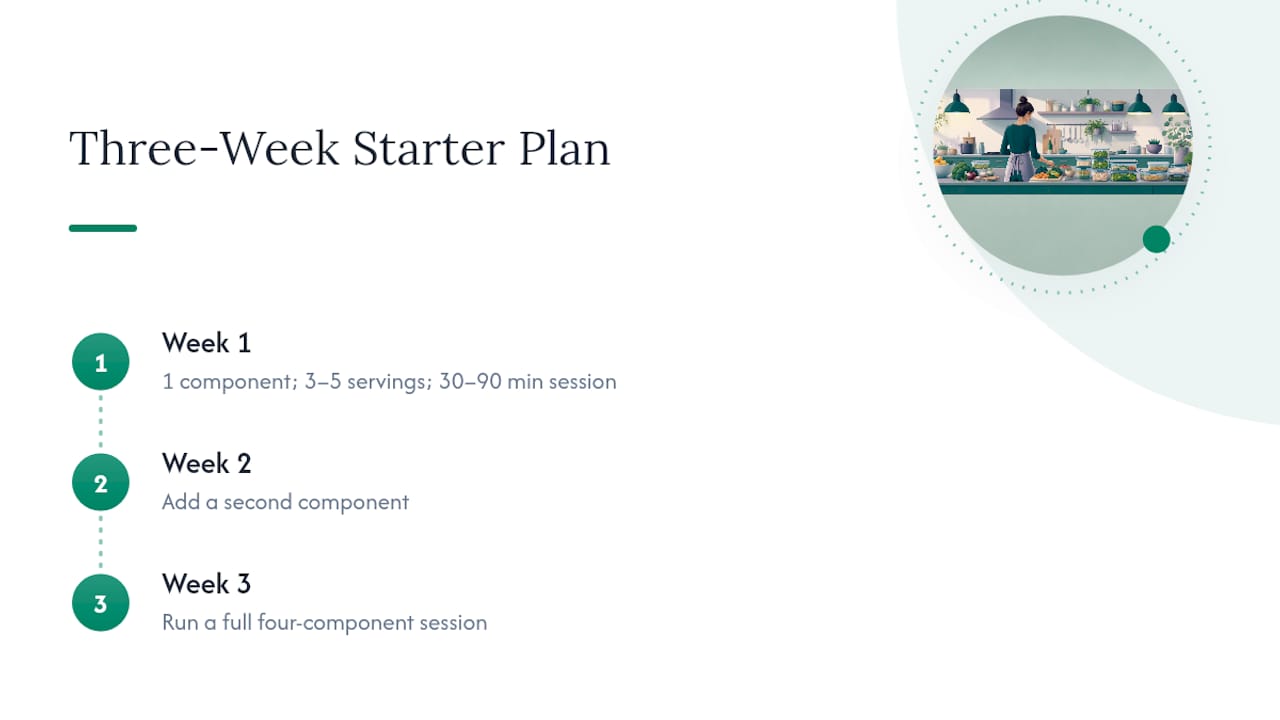
This staged approach mirrors the habit-based coaching Coach Jill uses with clients: small, repeatable wins build lasting routines faster than an ambitious overhaul that collapses after a week.
Starting Small Beats Starting Perfect
The beginners I see succeed at batch cooking are never the ones with the fanciest containers or the most elaborate spreadsheet. They are the ones who cooked one component, ate it, and did it again the following week.
Pick one recipe from this guide. Schedule 90 minutes this weekend. That is the whole plan, and it is enough.
— Coach Jill
Want Help Turning Batch Cooking Into a Lasting Habit?
Knowing how to batch cook and actually sticking with it for three months are two different challenges. Some coaching services work with clients on the part that batch-cooking guides usually skip: building a routine that survives busy weeks, travel, and the inevitable Tuesday when nothing goes as planned.

Coaching sessions may focus on realistic meal planning, portion guidance that fits your actual goals, and accountability check-ins that help maintain your batch-cooking habit beyond the first month. If you have tried meal prep before and fallen off after a few weeks, that pattern is exactly what habit-based coaching addresses, alongside broader work on improving family eating habits and connecting cooking routines to weight management. Visit Coach Jill Byrne to book a consultation and build a personalized plan around your schedule, your kitchen, and your goals.
Sources
For safety timelines, the USDA/FSIS food safety guidance covers refrigeration and freezing windows in detail. For workflow and timing, NowCook’s batch-cooking breakdown and Michigan State University’s cooling guidance both informed the session structure and food-handling advice above. Readers planning larger sessions around holidays may also find Wild Foodz’s meal-prep tips useful for scaling up.
FAQ
How Long Does Batch-Cooked Food Last in the Fridge?
Most cooked components stay safe for 3 to 4 days when refrigerated at or below 40°F. Hard-boiled eggs last up to a week in the shell, while cooked grains and roasted vegetables hold for about four to five days.
Can I Freeze Batch-Cooked Meals?
Yes. Freeze portions for peak quality for up to about 3 months, cooling food quickly and portioning it before it goes into the freezer.
Do I Need Special Equipment to Start Batch Cooking?
No. A sheet pan, a sharp knife, a saucepan, and sealable containers are enough for most beginners to get started without buying specialized gadgets.
How Much Time Does a Beginner Batch-Cooking Session Take?
A useful first session takes 60 to 90 minutes and can produce four to eight different meals across the week from just four components.
What Is the Biggest Mistake Beginners Make With Batch Cooking?
Trying to cook one giant batch of a single dish. Two smaller batches of different components tend to prevent the flavor fatigue that causes most people to abandon batch cooking within a month.
Recommended
Comments