
Calorie Counting vs Portion Control: Try a 2 to 4 Week Hybrid
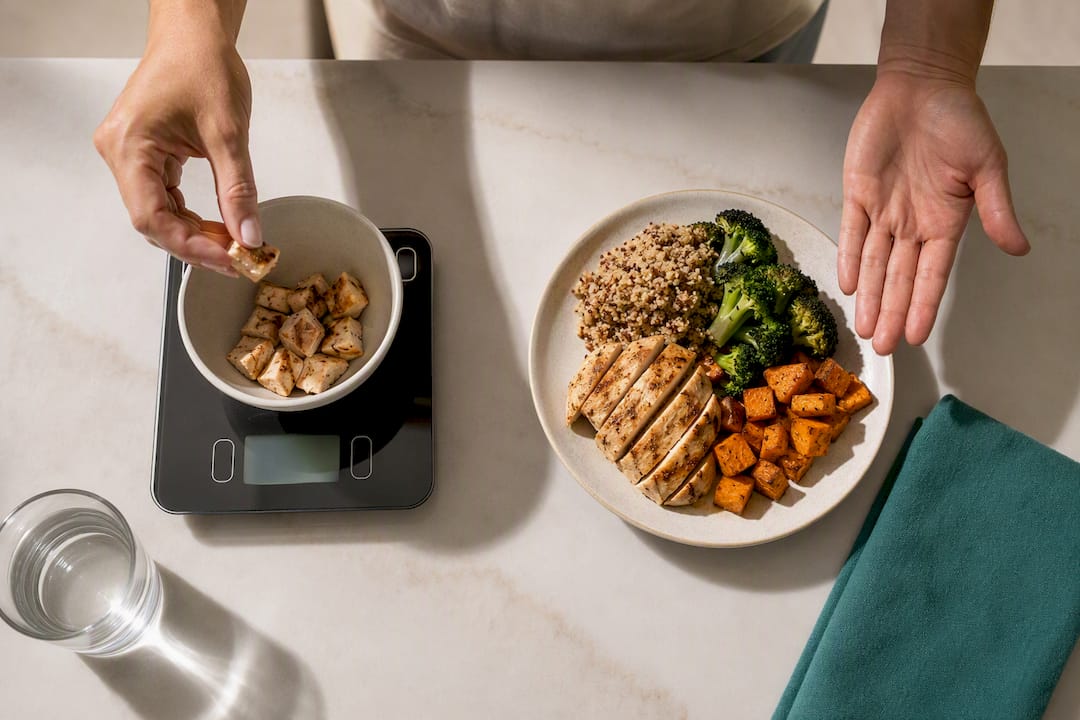
Neither method wins for everyone. Choose calorie counting when you need precision (a plateau, a medical condition, or a habit of underestimating food) and portion control when you need something low-burden enough to sustain for years. A 12-month randomized comparative effectiveness trial found both approaches deliver similar results once coaching is included, so the honest next step is a short two-to-four-week trial of whichever feels less exhausting, then a course correction from there.
TL;DR:
Calorie counting offers higher precision and better correction of underestimating intake, especially useful after weight loss plateaus or when strict targets are set.
Portion control is lower effort, flexible for social eating, and more sustainable for maintenance, but requires recalibration every four to six weeks to prevent portion drift.
Structured coaching with regular contact improves results more than method choice alone, regardless of whether clients focus on tracking or visual cues.
Combining an initial period of calorie tracking with subsequent portion-based habits typically yields the most sustainable weight management strategy.
Practical tips include building meals around visual cues, scheduling regular re-measurements, and addressing common pitfalls such as portion drift and reliance on inaccurate portion estimates.
Table of Contents
Calorie Counting vs Portion Control: The Basics
Calorie counting means logging the energy content of what you eat, usually with an app, and matching it to a target deficit. Portion control means managing food quantity through visual cues, plate design, and pre-measured servings, without necessarily knowing the exact calorie count.
Both work. The trade-offs differ:
Calorie counting gives precise feedback and corrects chronic underestimating, but it takes daily effort and can turn into an obsessive habit for some people.
Portion control is lower burden and fits social eating and travel far better, but it drifts over time as your sense of “normal” creeps upward.
Calorie counting wins after a weight-loss plateau, when you suspect you’re eating more than you think, or when a doctor has set a specific calorie target.
Portion control wins for maintenance, for people who find tracking triggers disordered patterns, and for anyone who eats out often.
The Mayo Clinic notes that misjudging a portion, or treating a multi-serving package as one serving, can quietly double your intake. That’s the exact failure calorie counting is built to catch.
What Do the Studies Actually Show?
The strongest head-to-head evidence comes from a 12-month trial of 261 adults with a BMI between 27 and 40, comparing a MyPlate-style portion program against calorie counting. Both groups received home education, group sessions, and phone coaching. Body composition improved similarly in both arms, but the calorie-counting group reported a meaningful drop in post-meal hunger by 12 months, likely because tracking sharpens awareness of what actually satisfies you.
The numbers behind portion tools: A systematic review and meta-analysis of portion-control tools found a small overall effect on intake, but combining tools like smaller bowls and spoons produced a much larger reduction in serving size than smaller plates used alone, according to the Nutrients meta-analysis.
Harvard Health takes a middle position, recommending calorie awareness over strict counting for many people, arguing that food quality and consistency usually matter more than exact math. Mayo Clinic’s own guidance on portion control for weight loss leans on visual cues, like sizing a portion of protein against a deck of cards, rather than requiring a food scale.
The pattern across all three sources is consistent: coaching and contact frequency predict results more reliably than which method a person picks. Structured programs with regular check-ins outperform information-only approaches regardless of tracking style, based on the same trial data reviewed in PMC.
How Do You Actually Start Either Method?
Pick a direction based on which failure mode worries you more: not knowing your numbers, or burning out on logging. Here’s how to run each one properly.
To try calorie counting:
Pick one tracking app and commit to it for the trial period, rather than switching tools every few days.
Weigh or measure your three or four most common “problem” foods for a week. Most people underestimate rice, oil, and nut butters the most.
Set a deficit you can actually sustain. Extreme deficits collapse within weeks.
Track consistently for 2 to 8 weeks.
Compare your weekly average weight, not daily numbers, against your energy target and adjust.
To try portion control:
Build a plate around the classic ratio: half vegetables, a quarter lean protein, a quarter starch or grain.
Use visual comparisons: a fist for carbs, a palm for protein, a thumb for fats.
Pre-portion snacks and staples into containers so you’re not eyeballing from the bag.
Slow down at meals. Chewing longer improves how accurately you sense fullness.
Pro Tip: Re-measure your go-to meals around the four-week mark. Portion drift is real, and Harvard Health’s guidance on staying calorie-aware works far better when you refresh your baseline instead of trusting old habits. For a deeper walkthrough with visual examples, our practical guide to portion control breaks down each cue by food type.
Watch your waist measurement or how a specific pair of pants fits alongside the scale. If either method stalls for three straight weeks, that’s your checkpoint to either tighten up tracking precision or bring in outside support.

Can You Combine Both Methods Into One Plan?
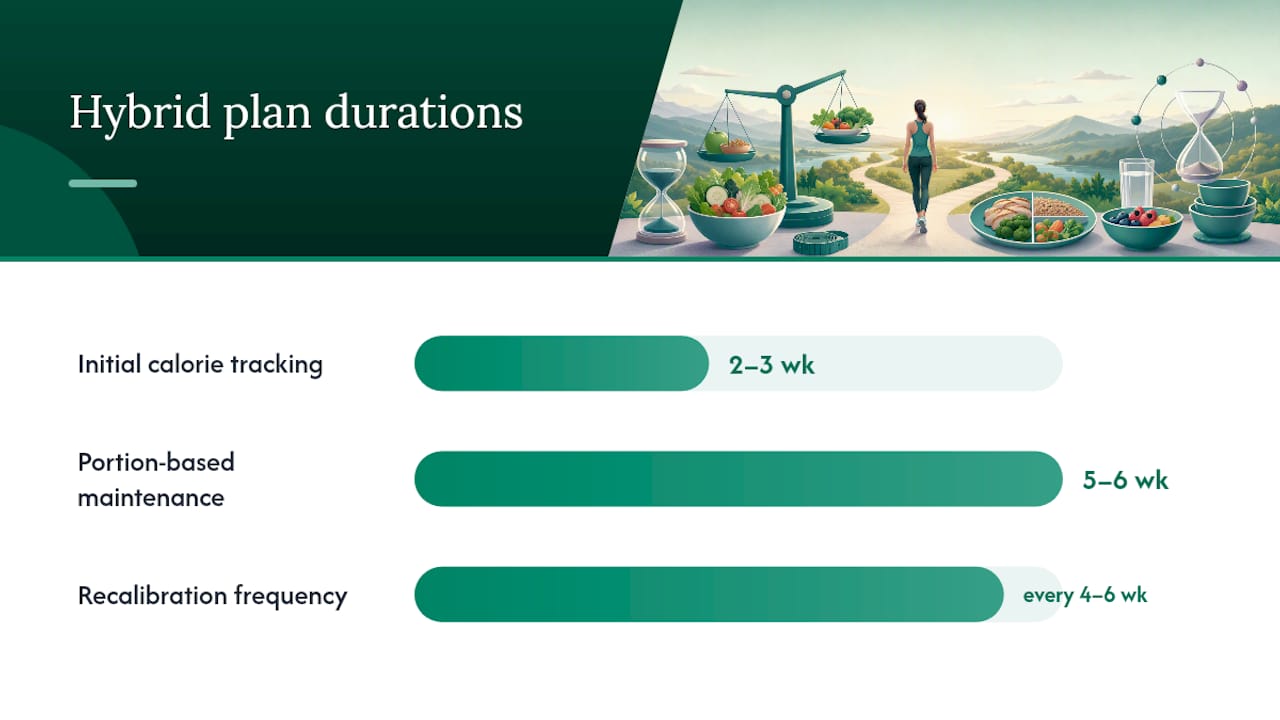
The most sustainable approach for most people isn’t purely one or the other. It’s a short calibration period followed by portion-based maintenance. An 8-week version looks like this: track calories closely for the first 2 to 3 weeks to learn your personal portion map, meaning what a real serving of your usual breakfast, lunch, and dinner looks like. Then spend the remaining 5 to 6 weeks running on portion cues alone, checking in with a quick tracking week only if the scale stalls.
Environmental design does a lot of the heavy lifting here. Research on menu language found that simply relabeling a smaller serving as “Standard” or “Just Right” increased how often people chose it, by roughly 8 to 13 percentage points. Smaller plates, pre-portioned containers, and even how a menu describes a dish all nudge behavior without requiring willpower.
Fill half of every plate with vegetables or fruit before adding anything else.
Keep high-fiber, minimally processed foods as your default, since they extend satiety regardless of which method you use.
Schedule a recalibration week every 4 to 6 weeks to catch portion drift before it becomes the new normal.
If you travel often or eat out during holidays, the Wild Foodz guide to eating healthy while traveling covers practical ways to keep portions in check away from your own kitchen.
What Do Coaching Clients Get Wrong Most Often?
After years of watching clients try both methods, a handful of pitfalls show up again and again. A short checklist catches most of them before they derail progress:
Establish a baseline first: one week of honest tracking before setting any target.
Set a two-week micro-goal instead of an abstract “lose weight” target. Something like “measure dinner five nights this week.”
Practice the plate method at home before trying it at a restaurant.
Weigh in weekly, same day and time, and judge trends, not single readings.
Schedule a re-measure at week four to catch drift early.
Build in accountability, even if it’s just a weekly check-in with a friend.
The biggest failure point isn’t the method. It’s giving up during the first hard week or leaning too hard on nutrition labels without checking actual serving sizes against what’s on the plate. Clients using GLP-1 medications need an extra layer of care here, since appetite changes shift how much protein and structure a meal needs, and that calls for individualized adjustments rather than a blanket calorie number.
Pro Tip: If you’ve stalled for more than three weeks on your own, that’s usually a sign the plan needs adjusting, not that you need more willpower. Our step-by-step portion size guide is a good starting point for recalibrating without a full tracking relapse.
When Should You Pick One Method Over the Other?
Most of the debate over calorie counting versus portion control misses the real question, which isn’t which method is superior. It’s which one you’ll still be doing in six months. I default to a hybrid for most people: a short, honest tracking window to build real numbers in your head, followed by portion cues for daily life.
Ask yourself three questions right now. Do you know what a real serving of your usual dinner looks like? Have you plateaued despite feeling like you’re eating well? Does tracking make you calmer or more anxious about food? Your answers point you toward precision or toward simplicity; either can work.
— Coach Jill
Get Personalized Guidance Instead of Guessing
Trying to figure out portion sizes or calorie targets alone often means months of trial and error before anything clicks. Coach Jill Byrne skips that guesswork by building a plan around your actual eating patterns, not a generic template.

Coaching includes real food strategies, habit-based accountability, and portion practice tailored to how you actually eat, whether that means learning to read your own hunger cues or getting structured support while using GLP-1 medication. This isn’t a plan you follow alone: it’s ongoing, personalized check-ins that catch portion drift and tracking burnout before they derail progress. Clients choose from monthly coaching packages of varying length depending on how much runway they want. If you’re ready for a plan built around your life instead of an app’s defaults, check the current coaching packages and pricing and pick the option that fits where you’re starting from.
Sources
FAQ
What Is the 3-3-3 Rule for Weight Loss?
There’s no single clinically validated “3-3-3 rule.” Definitions vary online, so treat any version you find as informal advice rather than an established guideline, and focus instead on the plate method or a measured calorie deficit covered above.
Why Am I Eating 1,200 Calories but Not Losing Weight?
Under-eating on paper often means over-eating in reality, since packaged foods frequently contain more than one serving and unmeasured cooking oil or condiments add up fast. Mayo Clinic notes that misjudged portions can double actual intake, so a short re-tracking week with an actual food scale usually reveals the gap.
Is 1,000 Calories of Junk Food the Same as 1,000 Calories of Healthy Food?
For pure weight change, calories are calories in the short term, but the foods differ enormously in fiber, protein, and satiety. Harvard Health’s guidance on calorie awareness points out that diet quality affects how long you stay full and how sustainable the eating pattern is over months, not just the number on the label.
What Is the 30/30/30 Rule for Weight Loss?
This is a popular social-media framework, not a research-backed protocol, so no clinical source in this article confirms a standard definition. Stick with proven approaches like the plate method or a measured calorie deficit instead.
Does Coach Jill Byrne Help With Both Calorie Counting and Portion Control?
Yes. Coaching sessions build a plan around whichever method fits a client’s life, often starting with a short tracking window before shifting to portion-based habits for the long term.
Recommended
Comments