
Coach Backed Roadmap to Create a Calorie Deficit Without Tracking
Yes, you can build a real calorie deficit without counting a single calorie. The most reliable path combines four habits: building meals around protein and produce, cutting liquid calories, using visual portion cues instead of a scale, and optionally trying time-restricted eating. Together, these tactics typically create a moderate calorie deficit daily. Most people following this approach can expect steady weight loss at a moderate pace per week, without opening an app.
TL;DR:
Building meals around protein and produce can reduce daily calorie intake by several hundred without conscious restriction.
Using visual portion cues and cutting liquid calories, like sugary drinks, provides high-impact, low-effort ways to create a calorie deficit.
Time-restricted eating within an 8 to 10 hour window can lead to an average daily deficit of about 425 calories without calorie counting.
Incorporating resistance exercise, mindful eating, and gradual habit changes over 4 to 6 weeks enhances long-term weight management.
Addressing hidden calories from oils, dressings, and restaurant foods, along with improving sleep and emotional awareness, prevents common setbacks.
Table of Contents
Practical Ways to Cut Calories Without Counting Them
Skipping the food journal doesn’t mean skipping structure. It means replacing numbers with habits that produce the same result. Here’s what actually works.
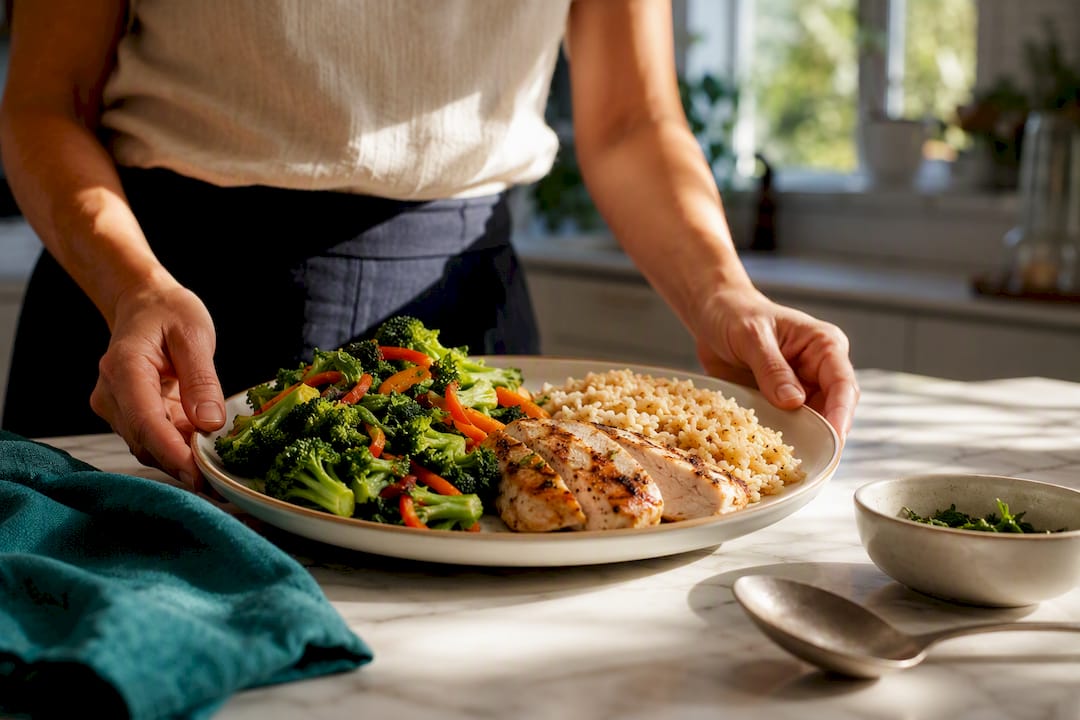
Build meals around protein first. Protein blunts hunger more effectively than fat or carbohydrates, largely because it slows digestion and triggers satiety signals earlier in a meal. Aim for a palm-sized portion at each meal, roughly 25 to 30 grams: two eggs plus a serving of Greek yogurt at breakfast, a chicken breast or a cup of lentils at lunch, tofu or salmon at dinner. This single shift, supported by research on diet quality, can lower daily intake by several hundred calories without any conscious restriction.
Use the plate method instead of a food scale. Fill half your plate with non-starchy vegetables, one quarter with a protein source, and one quarter with a starch like rice, potatoes, or whole grains. Breakfast might mean eggs, a fruit serving, and whole grain toast. Lunch could be a big salad with grilled chicken and a small scoop of quinoa. Dinner might be salmon, roasted broccoli, and a modest portion of sweet potato. No scale required, just a mental grid you apply to whatever plate you’re eating from.
Cut liquid calories before anything else. A daily 400-calorie oat-milk latte or a couple of sugary sodas can quietly account for more excess calories than an entire dessert. Swapping that drink for black coffee or sparkling water is one of the highest-leverage, lowest-effort changes available, and reviews of beverage intake consistently identify liquid calories as an underestimated source of daily surplus.

Choose low-density, high-fiber foods. Legumes, leafy greens, and whole fruit take up more stomach space per calorie than processed snacks, which means you feel full on fewer calories. Swap chips for air-popped popcorn, swap fruit juice for whole fruit, and swap white bread for a bean-based side dish.
Lean on visual portion cues. A palm equals a protein serving, a fist equals a vegetable serving, a cupped hand equals carbohydrates, and a thumb equals added fats like oil or nut butter. Mayo Clinic’s guidance on using everyday objects as serving-size references makes this approach usable in any kitchen or restaurant, no measuring cups involved. Pre-portioned meals can help during the first few stressful weeks, though their advantage tends to fade over time as people return to normal serving habits.
Consider time-restricted eating (TRE). Limiting food intake to an 8 to 10 hour window, say 10 a.m. to 6 p.m., naturally removes late-night snacking opportunities without requiring any calorie math. It’s optional, not mandatory, and anyone on medication or with a history of disordered eating should talk to a clinician before trying it.
Move more without “exercising” more. Non-exercise activity, like taking stairs, parking farther away, or walking during phone calls, adds up across a week. Pair that with two 20 to 30 minute strength sessions weekly to protect muscle mass while losing fat.
Practice mindful eating. Put the phone away, chew slowly, and pause for three breaths before deciding on seconds. This single pause interrupts autopilot eating, which is where most uncounted extra calories sneak in.
Use a weekly food photo instead of daily logging. Snapping a photo of meals once or twice a week, rather than logging every bite, keeps awareness alive without the burnout that daily tracking often produces.
Pro Tip: Pick one liquid-calorie swap and one plate-method meal to start this week. Small, specific changes stick far better than trying to overhaul every meal at once.
Why Habit Changes Work as Well as Counting Calories
The “3,500 calories equals one pound” rule is a rough approximation, not a precise formula. Metabolism adapts as you lose weight, so the same deficit produces smaller results over time. That’s exactly why habit-based methods can rival calorie counting: they target the actual behaviors that drive overeating rather than chasing a number that shifts anyway.
Protein and fiber influence satiety hormones like GLP-1 and peptide YY, which signal fullness to the brain earlier in a meal. Energy density matters just as much. Ultra-processed foods pack more calories into less volume, which is part of why Harvard Health’s review on diet quality points to food quality, not calorie math, as the more durable lever for weight management.
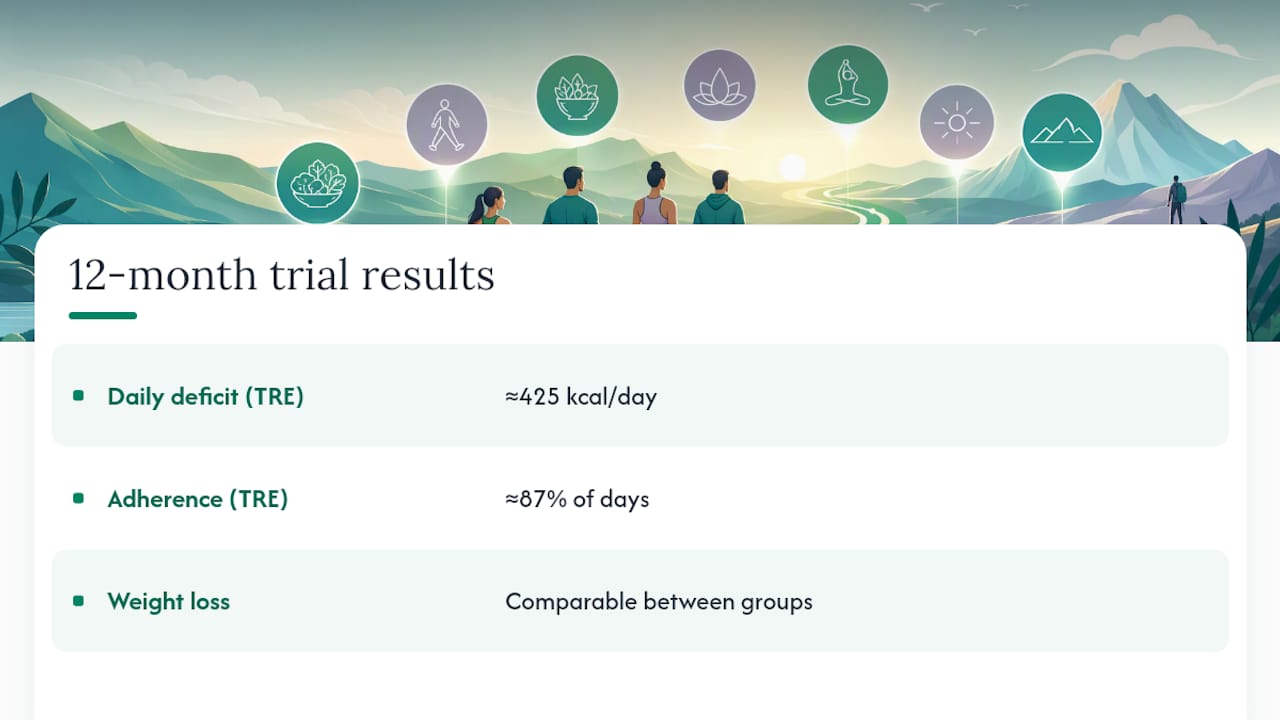
The clearest evidence comes from time-restricted eating trials. A 12-month randomized controlled trial in a racially and ethnically diverse population found that an 8-hour eating window produced a mean deficit of about 425 calories per day, with adherence around 87% of days, and weight loss comparable to a standard calorie-restricted diet. Nobody in the TRE group counted a single calorie. They simply ate within a set window and let the deficit happen on its own.
A 6 to 12 Week Roadmap for Building These Habits
Trying to adopt every tactic at once is how most no-counting approaches fail. Structure and pacing matter more than intensity here.
Weeks 1 to 4: Pick two changes only. A strong starter bundle is a protein-first plate at every meal plus eliminating one liquid-calorie source. Practitioners who combine two or three of these habits often see a practical deficit in the range of 300 to 600 calories a day, enough for sustainable weekly loss.
Weeks 2 through ongoing: Set a light accountability rhythm: one weekly weigh-in, two quick meal photos, and a five-item habit checklist. Add a short weekly journal entry if you notice patterns worth tracking, like stress eating on certain days.
Grocery template: Stock protein staples (eggs, canned beans, chicken, Greek yogurt), a rotating mix of vegetables, and low-calorie drink options like sparkling water or unsweetened tea. Three easy go-to meals: a sheet-pan chicken and vegetable dinner, a big grain-and-bean salad for lunch, and a Greek yogurt parfait with fruit for breakfast.
Weeks 5 to 6: Layer in strength-preserving habits, a daily protein target reached through real food, and two 20 to 30 minute resistance sessions weekly.
If progress stalls after 4 to 6 weeks: Increase daily movement before cutting food further, reduce restaurant meals (which reliably run higher in calories than home-cooked equivalents), or revisit any liquid calories that crept back in.
Pro Tip: Give any new habit bundle a full four weeks before judging it. Weight fluctuates day to day, and a single stalled week rarely means the approach has failed.
Fixing the Most Common Setbacks
Hidden calories add up fast. Cooking oils, salad dressings, condiments, and restaurant portions are the usual culprits. A quick fix: measure oil with a spoon for two weeks to recalibrate your eye, and ask for dressing on the side when eating out.
Emotional or boredom eating derails more plans than hunger ever does. Try the 15-minute rule: wait 15 minutes before reaching for food outside of meal times, and use that window to identify whether you’re actually hungry or just distracted, stressed, or tired.
Keep trigger foods out of easy reach at home.
Build a short list of non-food comfort activities (a walk, a call to a friend, ten minutes of stretching).
Check in weekly with a coach or accountability partner rather than waiting for a full plateau to ask for help.
Poor sleep spikes appetite fast, sometimes after just one or two rough nights, by disrupting the hormones that regulate hunger. Keep a consistent bedtime, dim screens an hour before sleep, and avoid caffeine after early afternoon.
See a clinician if you’re eating very little with no progress, suspect a metabolic or thyroid issue, or take medications that affect appetite or weight.
How Coach Jill Byrne’s Coaching Model Works
Coach Jill Byrne’s approach centers on real food, the plate method, portion control, and consistent habit accountability rather than restrictive rules. A typical month includes personalized meal planning, weekly check-ins, and adjustments based on what’s actually working in a client’s routine. Clients commonly report sustained weight loss and lasting changes to how they cook and shop for food. For clients using GLP-1 medications, coaching also addresses nutrition needs specific to appetite changes and muscle preservation, integrating tools like TRE only when appropriate for the individual.
A Note From Coach Jill
Consistency beats perfection every time. The clients who keep their results are the ones who make small, repeatable changes, not the ones who overhaul everything overnight. If you’re ready to test this, try a 4 to 6 week starter bundle and notice what shifts beyond the scale: energy, sleep, how your clothes fit.
— Coach Jill
Ready to Build These Habits With Support?
Habit change sticks best with structure and someone checking in on your progress. Coach Jill Byrne’s coaching packages, offered as Unlimited 1, 2, and 3 month plans, give you exactly that: personalized meal planning, portion-control training, and weekly accountability built around real food instead of restrictive rules.

These plans work well for anyone who has tried tracking apps and burned out, anyone managing appetite changes on GLP-1 medication, or anyone who simply wants a second set of eyes on their habits without obsessing over numbers. If you want a more structured entry point before committing, a guide to starting weight loss without restrictive dieting walks through the same principles this article covers. When you’re ready to move from reading to doing, view the current plans and pick the option that matches how much support you want right now.
Sources
For deeper reading: the TRE weight loss trial, the portion-control RCT, Harvard Health on diet quality, and Mayo Clinic’s portion guidance.
This article is general information, not a substitute for advice from a qualified doctor. Consult a qualified healthcare professional about your own circumstances before acting on anything here.
FAQ
Can I Be in a Calorie Deficit Without Tracking Calories?
Yes. Combining protein-focused meals, the plate method, cutting liquid calories, and portion cues like the hand-size method reliably creates a deficit without any math. The TRE trial showed a mean deficit of about 425 calories a day using only a fixed eating window, no counting involved.
What Is the Easiest Way to Lose Fat Without Counting?
Cutting liquid calories is usually the lowest-effort, highest-impact change available, since sugary drinks and specialty coffees can quietly add 200 to 400+ calories a day. Pairing that with a protein-first plate at each meal often produces a noticeable deficit within the first couple weeks.
Why Am I Eating 1,200 Calories a Day and Not Losing Weight?
Very low intakes can backfire by slowing metabolism, disrupting sleep, and triggering rebound overeating, especially without enough protein to preserve muscle. Hidden calories in cooking oils, condiments, and restaurant meals also frequently push actual intake higher than people estimate, even at a supposedly restrictive level.
At What Age Is It Hardest to Lose Weight?
Weight loss tends to get more challenging around menopause and later in life, largely due to hormonal shifts and a natural decline in muscle mass that slows metabolism. Prioritizing protein intake and two weekly strength sessions helps counter this shift at any age.
How Much Does Coach Jill Byrne’s Coaching Cost?
Coach Jill Byrne offers Unlimited 1, 2, and 3 month coaching plans, with current pricing listed on the plans page. Each plan includes personalized meal planning, portion-control guidance, and ongoing accountability support.
Recommended
Comments