
Clean Eating for Weight Loss: A Practical Guide

Clean eating for weight loss is defined as prioritizing minimally processed whole foods, including lean proteins, fresh vegetables, whole grains, and healthy fats, while limiting additives, refined sugars, and ultra-processed products. Unlike fad diets that rely on extreme restriction, this approach improves nutrition quality and supports a natural calorie deficit through food choices that satisfy hunger and fuel the body. The 2020–2025 Dietary Guidelines recommend limiting added sugars and saturated fats to less than 10% of daily calories, a standard that aligns directly with clean eating principles. When applied consistently, this way of eating becomes a sustainable lifestyle rather than a temporary fix.
What is clean eating for weight loss, and how does it work?
Clean eating is the practice of choosing foods in their most natural state, with minimal industrial processing, added chemicals, or artificial ingredients. Dr. Asimah Hanif describes clean eating’s core philosophy as selecting high-quality foods closer to their natural states for overall wellbeing. That definition matters because it shifts the focus away from calorie counting alone and toward food quality as the primary driver of better health outcomes.
Weight loss through clean eating works through two connected mechanisms. First, whole foods are generally higher in fiber and protein, both of which increase satiety and reduce overall calorie intake without requiring you to track every bite. Second, replacing ultra-processed snacks with nutrient-dense alternatives naturally lowers your exposure to excess sodium, refined sugars, and industrial seed oils that contribute to overeating. The result is a calorie environment that supports gradual, consistent weight loss.

What foods are included and excluded in a clean eating approach?
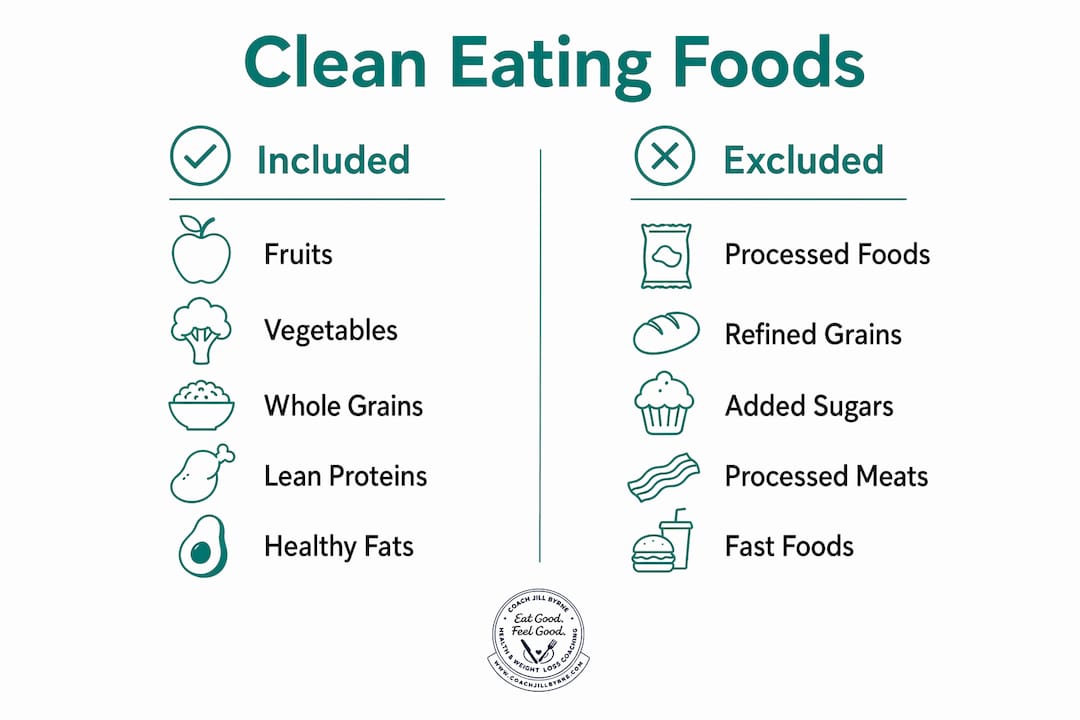
Clean eating draws a clear line between foods that nourish and foods that undermine your goals. Understanding both sides of that line makes grocery shopping and meal prep far more straightforward.
Foods to prioritize:
Fresh and frozen fruits and vegetables in all colors
Lean proteins such as chicken breast, turkey, eggs, canned tuna, and legumes
Whole grains including oats, brown rice, quinoa, and whole wheat bread
Healthy fats from avocados, olive oil, nuts, and seeds
Low-fat dairy or unsweetened plant-based alternatives
Foods to limit or avoid:
Packaged snacks with more than five ingredients or ingredients you cannot pronounce
Beverages with added sugars, including sodas, flavored coffees, and fruit juice concentrates
Refined grains such as white bread, white pasta, and most commercial cereals
Processed meats like deli cold cuts, hot dogs, and bacon
Fast food and frozen meals high in sodium and preservatives
Fruits, vegetables, whole grains, lean proteins, and healthy fats boost digestive health and stabilize energy and mood throughout the day. That stabilization matters for weight loss because energy crashes drive cravings for high-sugar, high-fat foods.
You can also explore sustainable weight loss foods with practical examples that map directly to clean eating principles.
Pro Tip: Flip every packaged product over and read the ingredient list before buying. If the list contains more than five items or includes high-fructose corn syrup, hydrogenated oils, or artificial dyes, put it back. The ingredient list tells you far more than the nutrition facts panel.
How does clean eating support sustainable weight loss compared to other diets?
The most common reason people abandon diets is psychological burnout from rigid rules. Clean eating avoids this trap by offering a flexible framework rather than a strict protocol. Dietitians stress that clean eating should be flexible and include occasional treats to support long-term adherence. That flexibility is what separates it from approaches like strict keto or very low-calorie diets, which produce faster short-term results but higher dropout rates.
It is also worth noting that calorie deficit is required for weight loss regardless of how clean your food choices are. Clean eating improves satiety and reduces the likelihood of overeating, but it does not override basic energy balance. A handful of almonds is clean. Four handfuls of almonds eaten mindlessly is still a calorie surplus.
The table below compares clean eating with three other common approaches across the dimensions that matter most for long-term success.
Approach | Flexibility | Nutrient density | Sustainability | Weight loss speed |
Clean eating | High | High | High | Moderate and steady |
Strict ketogenic diet | Low | Moderate | Low to moderate | Fast initially |
Very low-calorie diet | Very low | Low | Low | Fast but often rebounds |
Mediterranean diet | High | Very high | High | Moderate and steady |
The Mediterranean diet, which emphasizes whole grains, fish, olive oil, and vegetables, shares significant overlap with clean eating principles. Healthy diets for weight loss consistently include lean protein, fiber, unsaturated fats, and plant-based foods, all of which appear in both approaches. The key distinction is that clean eating is not a named clinical diet but a practical mindset you apply to any eating pattern.
How to create and follow a practical clean eating meal plan
A clean eating meal plan does not require a nutrition degree or hours of weekend prep. It requires a repeatable structure you can follow even on your busiest days.
Audit your current pantry. Remove or reduce items that fall into the “avoid” category. You do not need to throw everything out at once. Start by not replacing them when they run out.
Build meals around a protein anchor. Every meal should start with a lean protein source. Grilled chicken, hard-boiled eggs, canned salmon, or black beans all work. Protein controls hunger better than any other macronutrient.
Fill half your plate with vegetables. Leafy greens, roasted broccoli, sliced bell peppers, and steamed zucchini add volume and fiber without significant calories. This is the single most effective plate-building habit for weight loss.
Add a whole grain or starchy vegetable. Brown rice, sweet potato, quinoa, or whole wheat pasta provides sustained energy and prevents the mid-afternoon energy crash that leads to vending machine decisions.
Include a small serving of healthy fat. A quarter of an avocado, a tablespoon of olive oil, or a small handful of walnuts rounds out the meal and improves absorption of fat-soluble vitamins.
Batch cook two to three proteins and grains each week. Spending 90 minutes on Sunday preparing grilled chicken, cooked quinoa, and roasted vegetables gives you the building blocks for five days of clean meals assembled in under ten minutes.
Hydrate consistently. Water supports metabolism and is frequently confused with hunger. Aim for at least eight cups per day, and consider drinking a full glass before each meal.
A realistic nutrition plan for weight loss follows this same structure, emphasizing balance and consistency over perfection. Sustainable weight loss results from combining nutrient-dense foods with consistent physical activity and manageable meal plans, not from short-term dietary overhauls.
Pro Tip: Do not overhaul your entire diet in week one. Swap one processed item per week for a whole food alternative. Replace your morning granola bar with Greek yogurt and berries. The following week, swap your afternoon chips for apple slices with almond butter. Gradual swaps build lasting habits far more reliably than dramatic overnight changes.
What common challenges arise with clean eating for weight loss?
Even with the best intentions, clean eating presents real obstacles. Knowing them in advance gives you a practical response before they derail your progress.
Social situations and dining out. Most restaurant menus include grilled proteins, salads, and vegetable sides. Ordering these without guilt is a skill, not a sacrifice. You do not need a special menu to eat clean at a restaurant.
Time and convenience pressure. Ultra-processed foods are fast and cheap. Clean eating requires more planning. Batch cooking and keeping clean pantry staples, such as canned beans, frozen vegetables, and whole grain crackers, closes that convenience gap significantly.
Calorie blindness with “clean” foods. Nuts, nut butters, avocados, and olive oil are nutritious but calorie-dense. Portion awareness matters even with whole foods. A food does not become calorie-free simply because it is unprocessed.
All-or-nothing thinking. One slice of birthday cake does not ruin a week of clean eating. Flexible eating habits and occasional treats prevent the psychological cycle of restriction followed by bingeing.
“Orthorexic attitudes often develop when clean eating is treated as rigid. Integrating flexible ‘treat’ foods is not a weakness. It is a necessary part of a sustainable approach.” — EatingWell dietitian guidance
The risk of orthorexia, an unhealthy obsession with food purity, is real when clean eating becomes a set of unbreakable rules rather than a flexible framework. If food choices are causing significant anxiety, guilt, or social withdrawal, that is a signal to recalibrate toward a more balanced approach. Reading about weight loss without restrictive dieting can help you find that balance.
Key takeaways
Clean eating for weight loss works because it improves food quality, increases satiety through fiber and protein, and creates a sustainable calorie deficit without requiring rigid rules or extreme restriction.
Point | Details |
Core definition | Clean eating prioritizes whole, minimally processed foods and limits additives, refined sugars, and ultra-processed products. |
Calorie balance still matters | A calorie deficit is required for weight loss; clean eating supports it by improving satiety, not by replacing energy balance. |
Flexibility prevents burnout | Including occasional treats and avoiding all-or-nothing thinking is critical for long-term adherence and mental wellbeing. |
Meal planning is the foundation | Batch cooking proteins and grains, building meals around vegetables, and keeping clean pantry staples makes consistency achievable. |
Gradual change outperforms overhaul | Swapping one processed item per week builds durable habits more reliably than attempting a complete dietary reset at once. |
What I have learned from coaching clients through clean eating
I have worked with enough clients to know that the biggest obstacle to clean eating is not the food. It is the belief that eating well has to be complicated, expensive, or all-consuming. That belief keeps people stuck in a cycle of starting over every Monday.
What actually moves the needle is far simpler than most people expect. The clients who see the most consistent results are not the ones who follow the strictest rules. They are the ones who build two or three reliable meals they genuinely enjoy, keep their kitchen stocked with a handful of whole food staples, and give themselves permission to eat imperfectly at a dinner party without treating it as a failure.
The mental shift I encourage is moving from “clean versus dirty” food thinking toward “does this meal serve my goals most of the time?” That reframe removes the guilt and keeps the focus on progress rather than perfection. Long-term weight management is not about food purity. It is about building manageable, nutrient-rich habits combined with activity, and that is something every person can do regardless of their starting point.
The clients who struggle most are those who treat clean eating as a test they can pass or fail. The ones who thrive treat it as a default they return to, not a standard they must never break.
— Coach Jill
Ready to build a clean eating plan that actually sticks?
Understanding the principles of clean eating is the first step. Applying them consistently in your real life, with your schedule, your preferences, and your specific goals, is where personalized support makes a measurable difference.

Coachjillbyrne offers one-on-one nutrition coaching built around sustainable habits, practical meal planning, and the kind of accountability that keeps you consistent when motivation fades. Whether you are just starting out or looking to break through a plateau, the coaching approach focuses on real food, realistic expectations, and long-term results. Visit Coachjillbyrne to learn more about personalized programs designed to support your weight loss goals without restrictive dieting or unrealistic demands.
FAQ
What is the basic definition of clean eating?
Clean eating is the practice of choosing minimally processed whole foods, including fresh fruits, vegetables, lean proteins, whole grains, and healthy fats, while limiting refined sugars, additives, and ultra-processed products.
Is clean eating effective for weight loss?
Clean eating supports weight loss by improving food quality and increasing satiety through fiber and protein, but a consistent calorie deficit remains the essential requirement for losing weight.
What foods should I avoid on a clean eating plan?
Avoid packaged snacks with long ingredient lists, beverages with added sugars, refined grains, processed meats, and fast food. These items are calorie-dense, nutrient-poor, and drive overeating.
Can I follow a clean eating meal plan on a budget?
Yes. Frozen vegetables, canned beans, oats, eggs, and brown rice are among the most affordable and nutrient-dense foods available. Clean eating does not require organic produce or specialty health food stores.
How do I start clean eating without feeling overwhelmed?
Start by swapping one processed item per week for a whole food alternative rather than overhauling your entire diet at once. Gradual, consistent changes build lasting habits more reliably than dramatic short-term restrictions.
Recommended
Comments