
Log 2–3 Times a Day: Food Journaling That Works for Weight Loss

Yes, regular food journaling supports weight loss, but the format matters less than the habit itself. The highest-impact behavior is consistent, frequent logging using a method you will actually keep up over weeks and months. Pick paper, an app, or a simplified version, then focus on showing up daily rather than achieving perfect calorie math.
TL;DR:
Logging food two to three times daily and on most days significantly boosts weight loss chances compared to less frequent tracking.
Choosing a simple, manageable method like paper, an app, or photos helps establish a lasting habit without overwhelming effort.
Focusing on weekly pattern review is more effective than daily obsessing, especially during travel or routine disruptions.
Switching to qualitative notes or shorter entries can reduce stress if detailed calorie counting causes anxiety.
Coaching provides personalized feedback and meal adjustments that enhance the benefits of food journaling for plateaued or stressed eaters.
Table of Contents
Why Food Journaling Works for Weight Loss
The research on food journaling for weight loss keeps pointing to the same variable: how often you log, rather than how long you spend doing it. A widely cited analysis of electronic self-monitoring found that people who lost the most weight logged food roughly two to three times per day and recorded entries on more days each month than less successful dieters, according to research on electronic dietary self-monitoring. Frequency beat duration every time.
A large retrospective study of over 5,000 app users backs this up. Tracking food six to seven days a week correlated with significantly greater weight loss over six months, and each additional day of tracking raised the odds of losing 5% or more of body weight, per a 2026 cohort study of mobile app users. Motivation likely plays a role here too. People who feel committed enough to track daily may also be more consistent with other habits.
What does this mean in practice?
Log soon after eating rather than saving everything for one nightly session.
Aim for daily check-ins rather than sporadic, marathon entries.
Treat the journal as a mirror for patterns, not just a running calorie total.
Quick stat: Successful self-monitors in behavioral weight-loss trials logged food about two to three times per day, according to the same self-monitoring research cited above. That’s a text after breakfast, a note after lunch, and a quick log at dinner. Nothing more elaborate than that.
How Do You Start a Food Journal?
Starting a food diary for weight loss doesn’t require a fancy system. It requires one format and one week of low-pressure practice.
Choose one method for week one. Paper notebook, an app, or a photo-based log. Don’t switch mid-week; you’ll waste energy comparing tools instead of building the habit.
Record four things per entry: what you ate, a portion cue (palm-sized, cupped hand, a photo for scale), where and why you ate it, and a one-word note on how you felt (rushed, satisfied, bored, stressed).
Set a declining time budget. Expect entries to take longer in days one through three as you get used to the format. By day five or six, most people can log a meal in under a minute, since typing “the usual lunch” becomes shorthand for a known entry.
Review at the end of the week, not every single day. One sitting to scan for patterns beats daily obsessing over totals.
Three templates work well depending on your format:
Paper entry: Time | Food & portion cue | Location/reason | Feeling (one word)
App quick-entry: Search or scan barcode → confirm portion → tap “usual” if repeating a common meal → done
Abbreviated photo log: Snap the plate before eating, add one short caption (“stressed, ate fast” or “planned, felt good”). No numbers required.
Pro Tip: Weigh or measure your go-to meals just once during week one. Once you know that your regular bowl of cereal is about one and a half cups, you can eyeball it every time after without pulling out a scale.
If portion sizing feels like the hardest part, a practical guide to portion control can help you build reliable visual cues instead of guessing.
Paper, App, or Simplified Tracking: Which Method Fits You?
None of the three main tracking methods is universally “better.” Each suits a different kind of person, and the research reflects that nuance.
Paper journals are tactile and slow you down, which can increase mindful choices. A 12-week randomized trial found paper journaling produced favorable changes in body fat and LDL cholesterol compared with app tracking under minimal-contact conditions, even though overall weight change wasn’t significantly different between groups, according to a randomized trial comparing paper and app tracking.
Apps make totals and streaks visible, and the cohort data above shows high-frequency app trackers tend to lose more weight. The tradeoff is that streaks can become a source of anxiety if you miss a day.
Abbreviated tracking, like photo logs or tracking a single target (sugary drinks, late-night snacks), lowers the burden significantly. A review of 59 studies found both full-intake logging and abbreviated methods produced meaningful weight loss, with adherence mattering more than which style you choose, based on a systematic review of self-monitoring strategies.
Pick based on three questions: Will you actually keep doing this in month two? Do you need hard numbers to stay motivated, or does that create stress? Do you want your data private on paper, or are you comfortable with an app’s cloud storage? If sugary drinks are your weak spot, a single-target log paired with healthier soda alternatives can simplify that specific habit fast.
How to Stay Consistent With Daily Food Tracking
Consistency, not perfection, is what makes a food log for weight loss actually work over time. Here’s how to build it into your day without it becoming another chore.
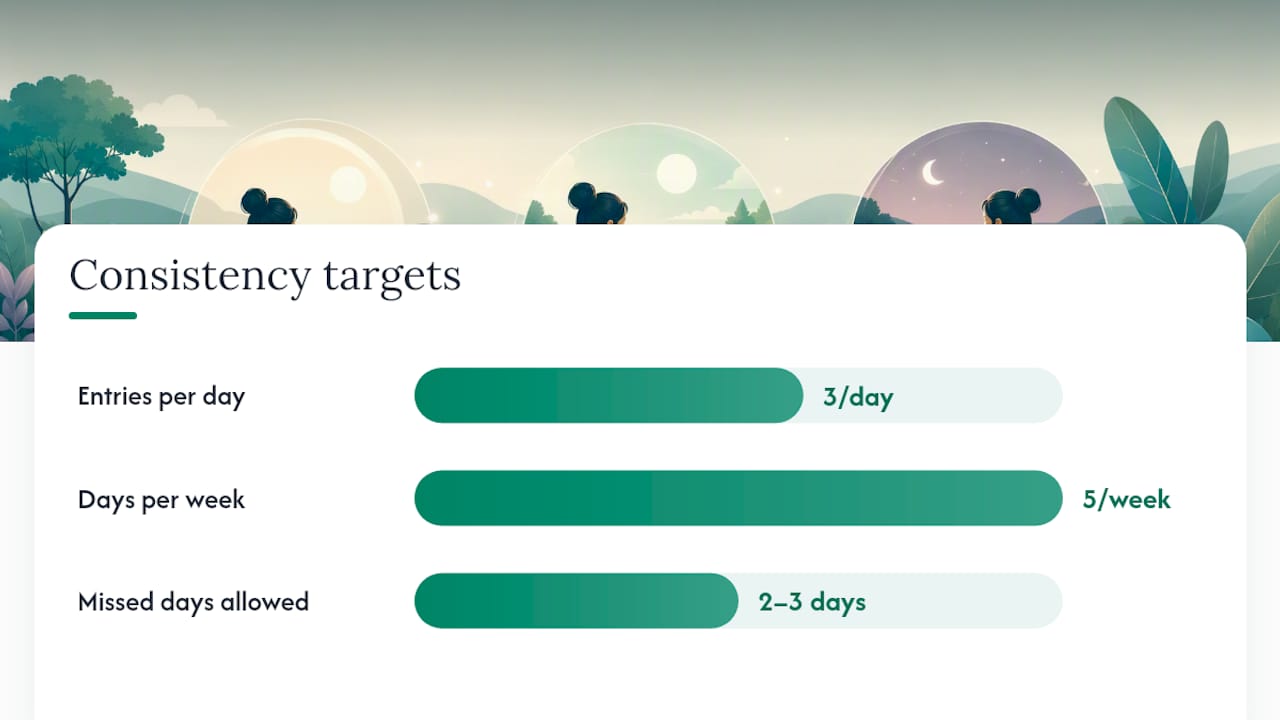
Set a small, measurable target, like “log three entries a day” or “track five days this week.” Attach it to an existing cue, such as logging right after you sit down to eat.
Use implementation intentions. Decide in advance exactly when and where you’ll log (“right after lunch, at my desk”) and have a plan for missed days: log the next meal and move on, no backtracking required.
Watch for perfectionism creeping in. If tracking starts to feel like anxiety instead of information, that’s a signal to simplify, not push harder. Switching to short qualitative notes (“felt satisfied,” “ate past full”) instead of exact numbers is a legitimate adjustment, and a sign to consider professional support if food guilt intensifies.
Review weekly, not daily. Weekly summaries reveal real patterns, like late-night snacking on Thursdays, that a single day’s log can’t show.
Pro Tip: If you miss two or three days in a row, don’t try to “catch up” by reconstructing old meals. Just start today’s entry and keep going. The streak resets, but the habit doesn’t have to.
Travel and holidays are common points where logging breaks down entirely. Tips for eating healthy on holiday can help you adapt your method instead of abandoning it during disrupted routines.
How Coaching Amplifies Food Journaling
A food journal tells you what happened. A coach helps you decide what to do about it. That’s the gap self-monitoring alone often can’t close, since data without feedback tends to stall out after a few weeks.

A coaching approach pairs daily tracking with personalized feedback on food choices, portion control, and meal planning, rather than generic calorie targets. Coaching sessions turn a week of journal entries into specific adjustments: swap this snack, plan lunches on Sundays, adjust portions on high-hunger days.
Coaching tends to add the most value when:
Weight loss has plateaued despite consistent tracking.
Emotional or stress eating shows up repeatedly in journal notes.
You need help translating journal patterns into an actual meal plan.
You’re using a GLP-1 medication and need nutrition guidance tailored to changing appetite and intake.
Explore mindful nutrition coaching if you’re logging consistently but still unsure what the data is telling you.
Realistic Progress Markers Worth Tracking
Daily weight bounces for a dozen reasons that have nothing to do with fat loss. Look at weekly averages and behavior trends over two to four weeks instead of chasing daily numbers.
Non-scale progress counts, too: steadier energy, better sleep, fewer cravings, more consistent portions without a second thought. Expect your tracking style to shift as life does. Travel, holidays, or a new treatment plan might call for simpler notes instead of detailed logs, and that flexibility isn’t failure. It’s the whole point.
— Coach Jill
Turn Your Food Journal Into Real Results
A journal shows you the pattern. A coach helps you fix it faster, and with less trial and error than figuring it out alone. Coaching adds personalized feedback on your actual entries, practical meal planning, and habit-based accountability built around real food, not restrictive rules or short-term fixes.

If your logs show a plateau, repeated stress eating, or you’re navigating a GLP-1 medication and unsure how to adjust intake, one-on-one guidance closes that gap between data and action. Coaching isn’t a requirement for food journaling to work. Plenty of people succeed with self-guided tracking and the tactics covered above. But if you want a second set of eyes on your patterns and a plan built around your specific life, view current coaching plans, including the Unlimited 1 month, Unlimited 2 months, and Unlimited 3 months options, and take the next step toward turning your entries into progress.
Sources
For readers who want the original research behind this guide: the self-monitoring frequency study, the paper versus app randomized trial, Cleveland Clinic’s food journaling guidance, and the 2026 tracking-frequency cohort study.
FAQ
Does Food Journaling Actually Cause Weight Loss?
Food journaling itself doesn’t burn calories, but the awareness it creates leads to better choices and greater consistency. Studies link frequent, consistent logging to significantly greater weight loss than sporadic tracking, according to research on self-monitoring frequency.
How Many Times a Day Should I Log My Food?
Aim for two to three entries per day rather than one long nightly session. Successful dieters in behavioral studies tracked at this frequency and logged on more days per month than less successful participants, per the same self-monitoring research.
Is a Paper Food Diary Better Than an App?
Neither format wins outright. A 12-week trial found paper journaling produced better body fat and LDL cholesterol changes under low-contact conditions, while real-world app data shows high-frequency trackers often lose more weight, based on findings from the paper versus app trial and the app-tracking cohort study.
What Should I Do if Tracking Feels Stressful?
Switch to simpler, non-numeric notes like “ate past full” or “felt satisfied” instead of exact calorie counts. Registered dietitian guidance recommends tailoring the method to avoid stress, and seeking professional support if food tracking triggers disordered eating patterns, according to Cleveland Clinic’s food journaling guidance.
Does Coach Jill Byrne Offer Support Alongside Journaling?
Yes. Coaching can pair journaling with personalized feedback, portion control guidance, and meal planning tailored to your patterns. Plans include Unlimited 1 month, Unlimited 2 months, and Unlimited 3 months options, with current pricing available on the pricing plans page.
Recommended
Comments