
Healthy Desk Lunch Ideas Guide for Busy Professionals
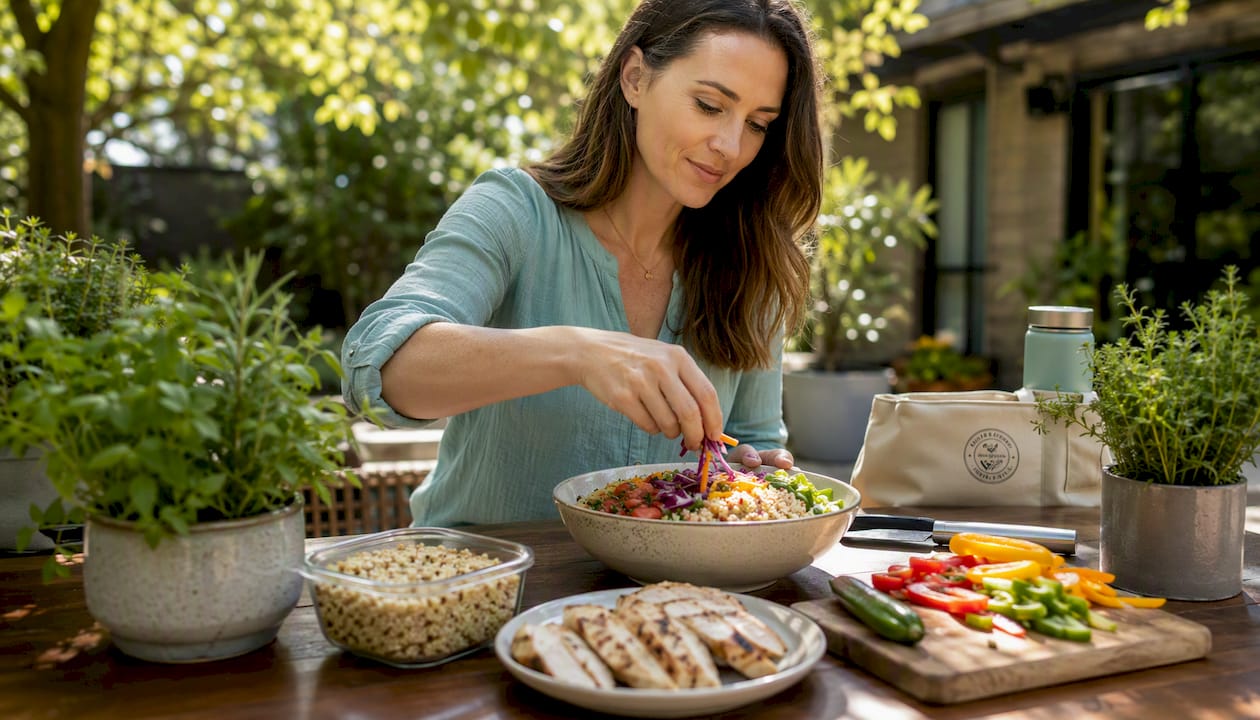
The eight best desk lunches you can start this week are: a grain bowl with rotisserie chicken, a mason-jar salad, a hearty wrap, a tuna or egg protein salad, a reheatable soup or stew, a bento-style adult lunchable, Greek yogurt parfait, and a bean or chickpea salad. Each one takes 15 minutes or less to assemble, travels well, and keeps you focused through the afternoon.
Here is why each one works:
Grain bowl with rotisserie chicken (5–10 min assemble): pre-cooked grains plus a ready protein means zero morning cooking.
Mason-jar salad (5 min assemble): layering keeps greens crisp for up to four days in the fridge.
Hearty wrap (5 min assemble): portable, no utensils required, and easy to customize for any dietary need.
Tuna or egg protein salad (5 min assemble): high protein, shelf-stable ingredients, no reheating needed.
Reheatable soup or stew (batch-cook Sunday, 2 min reheat): one pot feeds you three to four days.
Bento-style adult lunchable (5 min assemble): no-cook, visually satisfying, and naturally portion-controlled.
Greek yogurt parfait (3 min assemble): protein plus fiber in one container, no refrigeration needed if eaten within two hours.
Bean or chickpea salad (5 min assemble): plant-based protein, fiber-rich, and gets better as it sits overnight.
Macro balance matters. Nutrition experts recommend a desk lunch composed of roughly 25% lean protein, 25% unsaturated fat, and 50% complex carbohydrates to prevent post-lunch blood-sugar spikes and the energy crash that follows.
Pro Tip: Build every lunch around two batch-cooked staples — one grain and one protein — then vary the add-ins daily. You get variety without extra prep time.
Table of Contents
What nutrition rules actually make desk lunches work?
The core principle is straightforward: a balanced plate prevents the afternoon slump. According to nutrition guidance from The New York Times, the “secret” to a productive desk lunch is balancing protein, healthy fats, and complex carbohydrates so blood sugar stays stable for three to four hours after eating.
Here is what that looks like in practice, without a food scale:
Protein (25% of the plate): a palm-sized portion of chicken, tuna, eggs, Greek yogurt, or legumes.
Healthy fat (25%): a thumb-sized amount of olive oil, avocado, nuts, or seeds.
Complex carbs (50%): two cupped handfuls of cooked grains, legumes, or starchy vegetables.
The reason this composition works is physiological. Protein and fat slow gastric emptying, which blunts the glucose spike that follows a carbohydrate-heavy meal. Complex carbs provide a steady glucose release rather than the sharp peak you get from refined bread or sugary drinks. Together, they support sustained cognitive function through the afternoon.
A practical example: a grain bowl with half a cup of farro (complex carbs), three ounces of rotisserie chicken (protein), and a drizzle of olive oil with roasted vegetables (fat) maps almost exactly to the 50/25/25 split. No measuring required once you have done it twice. For more on optimizing energy with food choices, the Coachjillbyrne resource library covers the full picture.
The American Heart Association reinforces this with its own desk-lunch guidance: build from whole foods — lean proteins like canned tuna, skinless chicken, and legumes; whole grains; and plenty of vegetables. These are the same staples that make no-cook assemblies practical and reheatable meals satisfying.
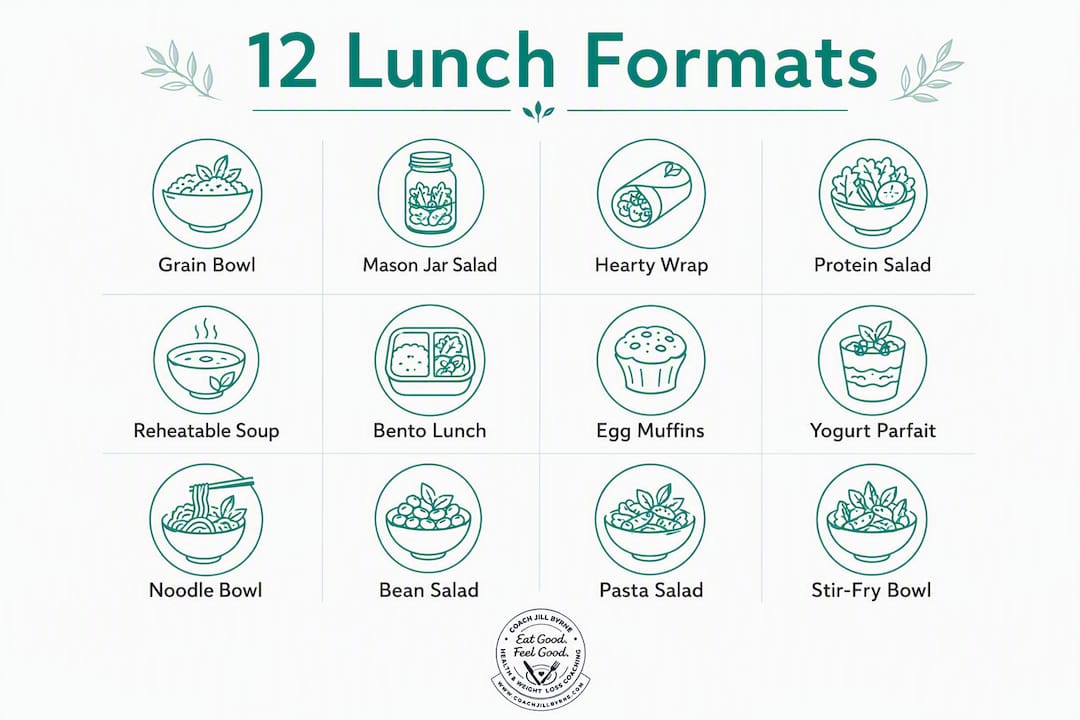
12 desk-friendly lunch formats you can rotate every week
Variety is what keeps meal prep sustainable. Rotating through these 12 formats prevents the sensory monotony that causes most people to abandon their lunch routine by week three.
Grain bowl
Prep time: 5–10 min assemble (grain batch-cooked). Fridge life: 4 days. Reheat: 90 seconds in microwave, stir once. Swap: use quinoa or farro instead of rice for a gluten-free base; sub chickpeas for chicken (vegan). Cost: low. Tags: high-protein, gluten-free option.
Mason-jar salad
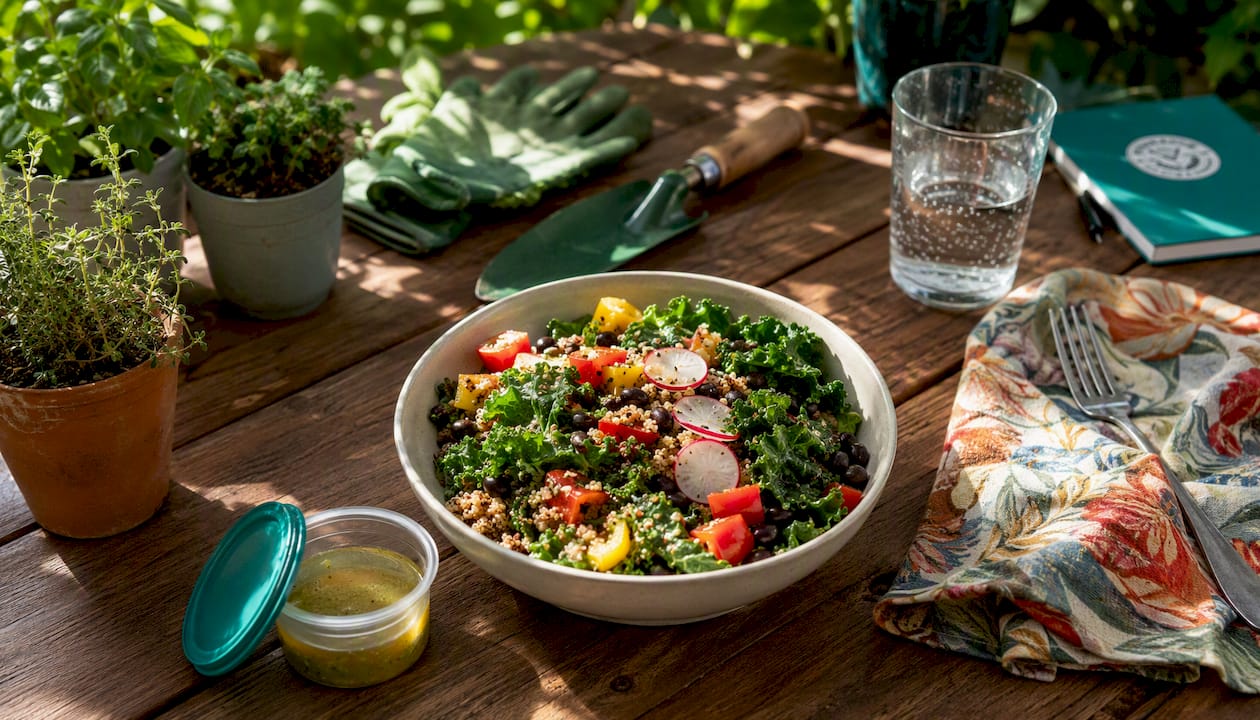
Prep time: 5 min assemble. Fridge life: 4 days (dressing separate). Reheat: none. Swap: omit cheese for vegan; use tamari-roasted seeds instead of croutons for gluten-free. Cost: low. Tags: vegetarian, vegan option, gluten-free option.
Hearty wrap
Prep time: 5 min assemble. Fridge life: 2 days wrapped tightly. Reheat: none or 30 seconds if preferred warm. Swap: use a collard green leaf instead of a flour tortilla (gluten-free, vegan with hummus filling). Cost: low. Tags: high-protein, vegetarian option.
Protein salad (tuna, egg, or white bean)
Prep time: 5 min assemble. Fridge life: 3 days. Reheat: none. Swap: white bean salad with lemon and herbs is a vegan version with comparable protein. Cost: low. Tags: high-protein, no-cook, gluten-free.
Reheatable soup or stew
Prep time: batch-cook 30–40 min Sunday; 2 min reheat at desk. Fridge life: 5 days, or freeze in portions. Reheat: microwave in a vented container, stir halfway. Swap: lentil or black bean soup is naturally vegan and high-protein. Cost: low. Tags: vegan option, gluten-free option, high-protein.
Bento-style adult lunchable
Prep time: 5 min assemble. Fridge life: 3 days assembled. Reheat: none. Swap: swap cheese for hummus and crackers for rice cakes (vegan, gluten-free). Cost: medium. Tags: no-cook, vegetarian option, gluten-free option.
Egg muffins
Prep time: 20 min batch-bake; 60 seconds reheat. Fridge life: 5 days. Reheat: microwave 60 seconds. Swap: use silken tofu and nutritional yeast for a vegan version. Cost: low. Tags: high-protein, gluten-free.
Greek yogurt parfait
Prep time: 3 min assemble. Fridge life: 2 days (granola separate). Reheat: none. Swap: coconut yogurt with hemp seeds for vegan. Cost: low–medium. Tags: high-protein, vegetarian, gluten-free option.
Noodle bowl (made healthier)
Prep time: 10 min assemble with pre-cooked noodles. Fridge life: 3 days (sauce separate). Reheat: 90 seconds, add a splash of water to loosen sauce. Swap: rice noodles (gluten-free); edamame instead of chicken (vegan). Cost: low–medium. Tags: vegetarian option, vegan option.
Bean or chickpea salad
Prep time: 5 min assemble. Fridge life: 5 days. Reheat: none. Swap: already vegan; add feta for a vegetarian protein boost. Cost: low. Tags: vegan, gluten-free, high-protein.
Cold pasta salad with vegetables
Prep time: 10 min assemble with pre-cooked pasta. Fridge life: 4 days. Reheat: none (best cold). Swap: chickpea pasta for gluten-free; omit cheese for vegan. Cost: low. Tags: vegetarian, vegan option.
Leftover-friendly stir-fry bowl
Prep time: 5 min assemble from dinner leftovers. Fridge life: 3 days. Reheat: 90 seconds, stir once. Swap: tofu or tempeh instead of meat (vegan); tamari instead of soy sauce (gluten-free). Cost: very low. Tags: high-protein, vegan option, gluten-free option.
Pro Tip: Change one sensory element each day — a different herb, dressing, or crunchy topping — to make repeated lunches feel new without adding prep time. This “vibrancy variation” approach is one of the most effective ways to maintain meal-prep adherence long-term.

For clean eating swaps that make these formats even more nutritious without sacrificing flavor, Coachjillbyrne’s resource library has practical substitution ideas.
How a simple weekly prep plan cuts your morning routine to minutes
Two kitchen sessions per week — roughly 60–90 minutes on Sunday and 20–30 minutes on Wednesday — can cover most of your weekday desk lunches. The goal is not to cook complete meals. It is to prepare components you can assemble in five minutes each morning.
Sunday session (60–90 min):
Cook one batch of grains (farro, brown rice, or quinoa — about 2 cups dry).
Roast one sheet pan of vegetables (broccoli, sweet potato, zucchini).
Hard-boil six eggs or bake a batch of egg muffins.
Prepare one large pot of soup or stew for reheatable lunches.
Wash and dry salad greens; store in a container lined with a paper towel.
Wednesday top-up (20–30 min):
Replenish grains if running low.
Prep a second protein (canned tuna salad, white bean salad, or a rotisserie chicken from the store).
Restock cut vegetables and fresh fruit for snacks.
Store-bought staples make this even faster. A rotisserie chicken, canned legumes, vacuum-sealed salmon pouches, and pre-washed salad kits are not shortcuts that compromise your nutrition goals. They are tools. The American Heart Association specifically lists canned tuna and legumes as heart-healthy desk-lunch staples, which means the convenience aisle is working in your favor.
The habit principle here is simple: small, repeatable actions compound. Coachjillbyrne’s coaching approach emphasizes that a consistent 60-minute Sunday prep session, done 40 weeks a year, produces more lasting results than any intensive meal-plan overhaul that lasts two weeks. For a deeper weekly meal planning workflow, Coachjillbyrne’s guide walks through the full process.
What gear actually keeps your desk lunch fresh and easy to eat?
The right container does more work than most people expect. A leaky container or a soggy salad at noon is one of the fastest ways to abandon a lunch routine.
Container essentials:
Bento-style divided containers (glass or BPA-free plastic): keep proteins, grains, and vegetables separate until you are ready to eat, preventing moisture transfer.
Wide-mouth mason jars (16 oz or 32 oz): ideal for layered salads; dressing goes at the bottom, greens on top, so nothing wilts.
Insulated thermos (at least 16 oz): keeps soups, stews, and grain bowls hot for up to five hours without a microwave.
Small leakproof dressing bottles (2 oz): eliminates the soggy-salad problem entirely.
Silicone snack cups: useful for separating nuts, dips, or crunchy toppings within a larger container.
Packing tips that preserve texture:
Pack dressing separately and add it just before eating. Dietitian Erin Palinski-Wade recommends storing dressing at the bottom of a mason jar with hardier ingredients (cucumbers, chickpeas, grains) layered above, and delicate greens on top.
Keep crunchy toppings (seeds, croutons, roasted chickpeas) in a small sealed bag inside your lunch bag; add them at the desk.
Use an ice pack for any lunch containing meat, dairy, or eggs if your office fridge is shared and space is limited.
Pro Tip: Size your container to your actual portion, not the largest one you own. Oversized containers encourage overeating and make it harder to maintain the 50/25/25 macro balance at a glance.
A quick note on desk etiquette: fish-based lunches and reheated cruciferous vegetables (broccoli, cauliflower) are the most common sources of office odor complaints. If your workspace is open-plan, save those for days when you can eat in a break room, or opt for cold versions of those proteins.
Which snacks prevent the afternoon energy crash?
The rule for effective desk snacks is the same as for lunch: combine protein, fiber, and healthy fat. Research from Fooda confirms that snacks built on this combination maintain focus and avoid the mid-afternoon slump more effectively than sugary alternatives.
Six reliable pairings you can keep at your desk or in a shared fridge:
Greek yogurt + berries: protein from yogurt, fiber and antioxidants from berries.
Apple + almond butter: natural sugar with fiber from the apple, fat and protein from almond butter.
Hummus + pepper strips: plant protein and fiber, low calorie, no refrigeration needed for single-serve hummus packets.
Roasted chickpeas + a piece of fruit: shelf-stable, crunchy, and satisfying; Healthline’s list of healthy office snacks includes roasted chickpeas as a top portable option.
Hard-boiled egg + a small handful of nuts: complete protein plus healthy fat, no prep required if batch-cooked Sunday.
Tuna pouch + whole-grain crackers: shelf-stable, high-protein, and takes 30 seconds to assemble.
Timing matters. A mid-morning snack around 10:00–10:30 AM bridges the gap between breakfast and lunch without overeating at noon. A mid-afternoon snack around 3:00–3:30 PM prevents the glucose dip that typically hits around 2:00–4:00 PM. Keep portions small: a snack is 150–250 calories, not a second lunch.
For more on replacing processed snacks with real food that actually satisfies, Coachjillbyrne’s guide covers the full swap strategy.
How do you store and reheat desk lunches safely?
Food safety at the desk comes down to two numbers and one rule. The U.S. Food and Drug Administration defines the “danger zone” as 40°F–140°F, the temperature range where bacteria multiply rapidly. The rule: refrigerate any perishable lunch within two hours of preparation.
Practical storage checklist:
Place lunches in the office fridge within two hours of leaving home, or use an insulated bag with a frozen ice pack to keep food below 40°F until you can refrigerate it.
Leftovers are generally safe for three to four days in the refrigerator. Label containers with the date so you are not guessing on Friday.
Discard any lunch that smells off, has changed texture, or has been sitting at room temperature for more than two hours.
Reheating at your desk:
Use a microwave-safe container with a vented lid or a paper towel loosely draped over the top to prevent splatter.
Stir halfway through reheating to distribute heat evenly and eliminate cold spots where bacteria can survive.
The USDA recommends reheating leftovers to an internal temperature of 165°F. A small instant-read thermometer kept in your desk drawer takes the guesswork out of this.
Shared fridge etiquette:
Label your container with your name and date to prevent mix-ups.
Store raw proteins on the lowest shelf to prevent drips onto other people’s food.
Avoid leaving food in the shared fridge over the weekend; most offices do not maintain consistent refrigeration during off-hours.
Your practical 5-day desk-lunch menu and grocery list
This sample menu is built around one Sunday prep session and uses the macro balance of 25% protein, 25% healthy fat, and 50% complex carbs throughout the week.
Day | Lunch Format | Assembly Note | Fridge Life / Reheat |
Monday | Grain bowl + rotisserie chicken | Farro + chicken + roasted veg + tahini drizzle | 4 days / 90 sec microwave |
Tuesday | Mason-jar salad | Chickpeas + cucumber + tomato + lemon-olive oil dressing | 4 days / no reheat |
Wednesday | Reheatable lentil soup | Batch-cooked Sunday; add crusty whole-grain bread | 5 days / 2 min microwave |
Thursday | Hearty wrap | Whole-grain tortilla + tuna salad + spinach + avocado | 2 days / no reheat |
Friday | Bento lunchable | Hard-boiled eggs + cheese + whole-grain crackers + grapes + hummus | 3 days / no reheat |
Grocery list (one week, one person):
Produce: spinach or mixed greens, cucumber, cherry tomatoes, bell peppers, broccoli, sweet potato, avocado, apple, grapes, berries, lemon.
Proteins: rotisserie chicken (1), canned tuna (3 pouches), eggs (1 dozen), canned chickpeas (2 cans), canned lentils or dry lentils (1 bag), Greek yogurt (plain, 32 oz).
Grains: farro or brown rice (1 bag), whole-grain tortillas (1 pack), whole-grain crackers (1 box), granola (small bag).
Pantry: olive oil, tahini, almond butter, hummus (individual cups), roasted chickpeas (snack packs), canned diced tomatoes, vegetable broth, nuts (mixed, small bag).
Extras: cheese (block or sliced), ice packs (if not already owned), small dressing bottles, mason jars or divided containers.
Short prep timeline:
Sunday (75 min): Cook farro, roast sheet pan of broccoli and sweet potato, hard-boil six eggs, make a large pot of lentil soup, wash and dry greens.
Wednesday (20 min): Make tuna salad, assemble Thursday wrap and Friday bento components, restock cut vegetables.
For a complete set of pantry staples that support batch cooking and desk lunches, Coachjillbyrne’s guide covers what to keep on hand year-round.
Key Takeaways
A balanced desk lunch built on 25% lean protein, 25% healthy fat, and 50% complex carbs, assembled from batch-cooked staples in under 10 minutes, is the most practical and sustainable approach for busy professionals.
Point | Details |
Follow the macro split | Aim for 25% protein, 25% healthy fat, and 50% complex carbs to prevent afternoon energy crashes. |
Batch-cook twice a week | Two sessions (Sunday 60–90 min, Wednesday 20–30 min) cover most weekday desk lunches with minimal morning effort. |
Pack smart to preserve texture | Store dressings separately and keep crunchy toppings in a sealed bag; add both just before eating. |
Snack on protein + fiber + fat | Pair Greek yogurt with berries, or apple with almond butter, to maintain focus between meals. |
Coachjillbyrne meal planning | Personalized coaching from Coachjillbyrne helps busy professionals build consistent desk-lunch habits with accountability and customized meal plans. |
What most desk-lunch advice gets wrong
Most desk-lunch content focuses on recipes. The real problem is not knowing what to make. It is the gap between knowing and doing it consistently, week after week, when work is demanding and willpower is low.
The professionals who succeed with desk lunches are not the ones with the most elaborate meal-prep systems. They are the ones who have reduced the number of decisions required each morning to almost zero. Two batch-cooked staples in the fridge, a container ready to go, and a snack already packed. That is the whole system.
What gets overlooked is the cognitive cost of variety. Most people try to plan five completely different lunches each week, which means five separate shopping decisions, five different prep steps, and five opportunities to decide it is too much effort and order takeout instead. A smarter approach is to rotate three to four formats on a two-week cycle, changing one element (the grain, the dressing, the protein) rather than the entire meal. The result feels varied enough to stay interesting but requires almost no new thinking.
There is also a common misconception that healthy desk lunches are expensive. A grain bowl built from farro, canned chickpeas, and roasted vegetables is an affordable option when batch-cooked at home, costing significantly less than a similar bowl from a fast-casual restaurant. The savings compound quickly across a five-day workweek.
The habit shift that matters most, as Erin Palinski-Wade notes, is treating lunch as a restorative priority rather than a logistical inconvenience. That reframe changes the behavior. Once lunch feels worth the 10-minute morning assembly, the routine becomes self-reinforcing.
Personalized coaching makes desk-lunch habits stick faster
Knowing the right lunch formats and macro ratios is one thing. Building the habit of actually preparing and eating them consistently, through busy weeks, travel, and schedule changes, is where most professionals stall.
Coachjillbyrne offers personalized nutrition coaching that takes the guesswork out of meal planning for busy professionals. Rather than following a generic plan, clients receive customized menu guidance tailored to their schedule, food preferences, and health goals, along with the accountability support that turns a good intention into a consistent routine.

Two areas where coaching makes a measurable difference: first, identifying the two or three lunch formats that genuinely fit your schedule and taste preferences (not just the ones that look good in a guide), and second, building the weekly prep habit through structured check-ins that keep you on track even when work gets demanding. Clients working with Coachjillbyrne have replaced daily takeout lunches with quick assemblies and reported sustained improvement in afternoon energy and focus.
If you are ready to build a desk-lunch routine that holds up in real life, start with a consultation at Coachjillbyrne to get a personalized plan that fits your week.
Useful sources
This article is for general informational purposes only and is not a substitute for personalized nutrition or medical advice. Consult a registered dietitian or qualified health professional for guidance specific to your health needs.
FAQ
What are the healthiest lunch options to eat at your desk?
The healthiest desk lunches combine lean protein, healthy fat, and complex carbohydrates in roughly a 25/25/50 split. Grain bowls, mason-jar salads, protein salads, and reheatable soups consistently meet that balance while being easy to eat at a desk.
What are 10 good lunch foods for work?
Strong choices include farro or brown rice, canned chickpeas, rotisserie chicken, canned tuna, hard-boiled eggs, Greek yogurt, avocado, roasted vegetables, whole-grain wraps, and leafy greens. These staples are portable, nutrient-dense, and work across multiple formats.
How do you meal prep desk lunches for the whole week?
Two prep sessions cover the week: a 60–90 minute session on Sunday to batch-cook grains, proteins, and roasted vegetables, and a 20–30 minute top-up on Wednesday to replenish proteins and fresh produce. Assembly each morning then takes five minutes or less.
What are good office snacks to pair with a desk lunch?
Snacks that combine protein, fiber, and healthy fat work best. Reliable options include Greek yogurt with berries, apple with almond butter, hummus with pepper strips, and roasted chickpeas with fruit. Aim for a mid-morning snack around 10:00–10:30 AM and a mid-afternoon snack around 3:00–3:30 PM.
How long can a packed desk lunch safely stay unrefrigerated?
Perishable lunches should not sit at room temperature for more than two hours, per U.S. food-safety guidelines. Use an insulated bag with an ice pack to keep food below 40°F if you cannot access a refrigerator immediately upon arriving at the office.
Recommended
Comments