
$50 Weekly Healthy Grocery Plan for Budget Conscious Households
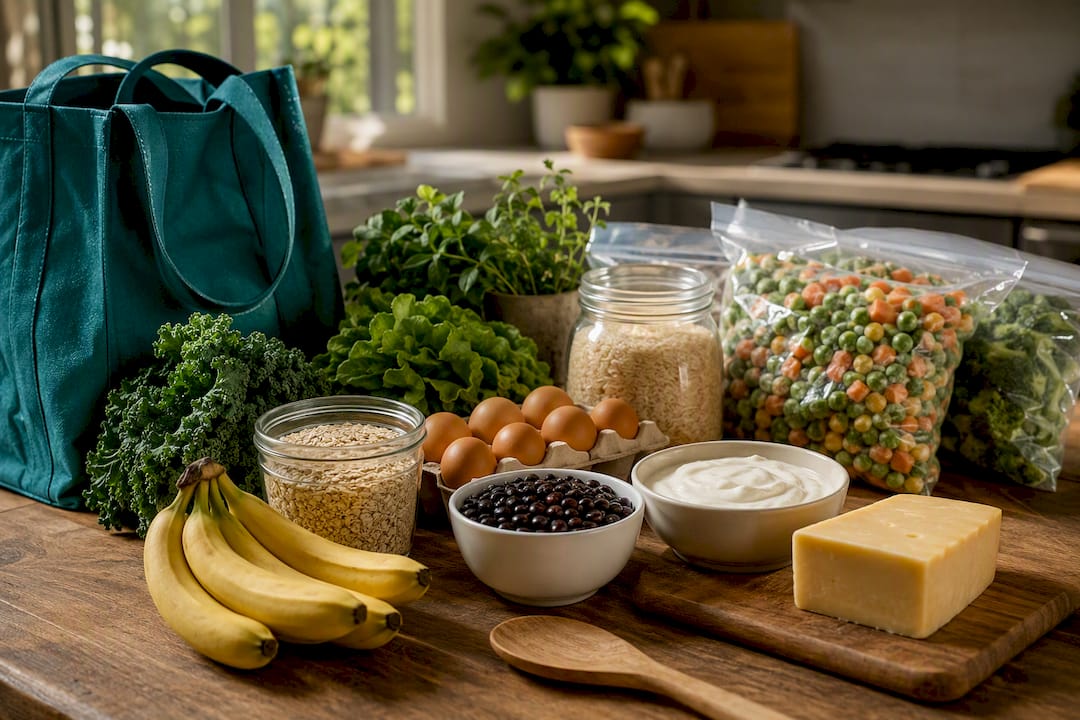
Yes, eating healthy on a budget is achievable, and it comes down to three moves: build meals around pantry staples and frozen produce, plan before you shop, and track cost per serving instead of price per item. A single adult can eat well on $50 to $75 a week using this approach, and families can scale the same list without losing nutrition.
TL;DR:
Buying in bulk only makes sense if you will consume the items before they spoil, especially for fresh produce and perishable proteins.
Comparing unit prices prevents overspending on smaller packages, as larger sizes are not always cheaper per unit, especially during store promotions.
Using frozen vegetables can match or surpass fresh produce in nutrient content, making them a smart choice for most meals to reduce waste and cost.
Building habits like meal planning around pantry staples and batch-prepping reduces decision fatigue and food waste, making healthy eating sustainable on a tight budget.
Table of Contents
Healthy Groceries on a Budget Start With the Right Staples
The backbone of every affordable, healthy grocery list is a short set of ingredients that show up in multiple meals. You are not buying ten different things for ten different dinners. You are buying five or six things that combine a dozen different ways.
Pantry staples that stretch the farthest:
Dried or canned beans and lentils, roughly $0.15 to $0.30 per serving, and a complete protein when paired with rice
Brown or white rice, oats, and whole wheat pasta, all under $0.20 per serving cooked
Canned tomatoes and low-sodium canned vegetables, useful as a base for soups, sauces, and grain bowls
Peanut butter and canned tuna, both shelf-stable protein sources that outlast fresh meat by months
Proteins that deliver the most nutrition per dollar: eggs remain one of the cheapest complete proteins available, often under $0.20 each even after recent price swings. Bone-in chicken thighs cost less per pound than boneless breasts and hold up better in slow cooking. Tofu and dried legumes round out the list for anyone mixing in more plant-based meals.
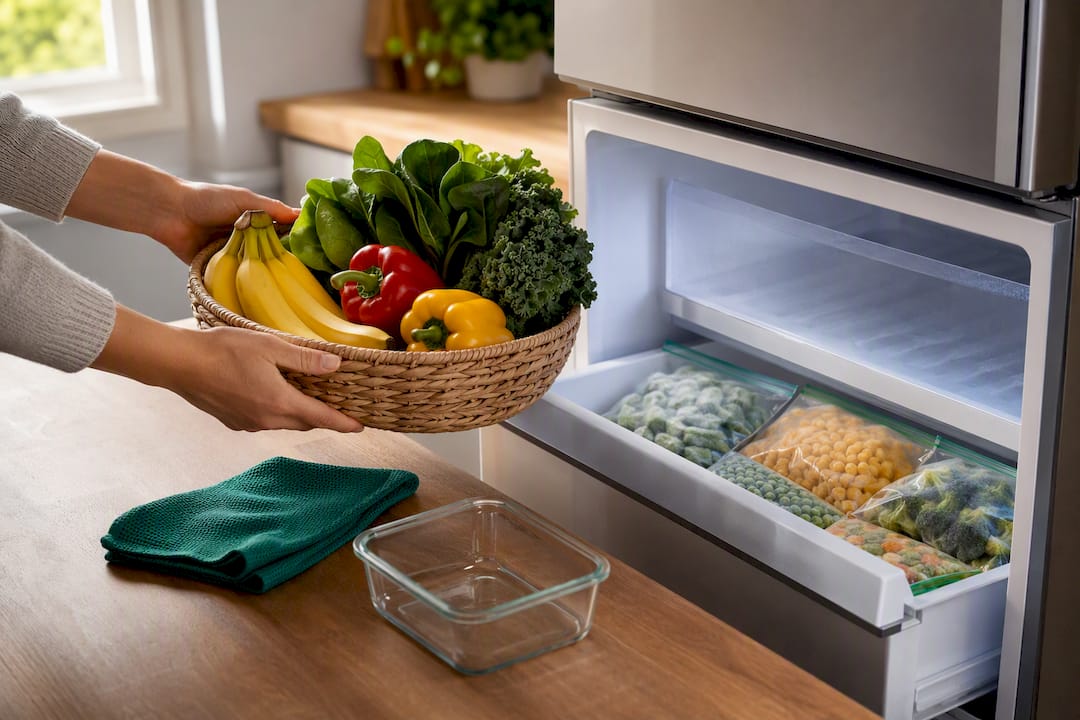
Fresh produce matters, but it should not be the only produce in your cart. Frozen vegetables are often harvested and frozen at peak ripeness, which means the nutrient content frequently matches or beats fresh produce that spent days in transit and on a shelf. Buy fresh for what you will eat within three or four days, like bananas, leafy greens, or bell peppers, and lean on frozen for anything you are cooking into a meal.
For dairy, milk, plain yogurt, and block cheese deliver more protein per dollar than pre-shredded cheese or single-serve yogurt cups. A jar of dried herbs, garlic powder, and a bottle of hot sauce cost a few dollars and make the difference between a bland bean bowl and one you actually want to eat again. Coach Jill’s pantry staples guide breaks down storage and quantity by household size if you want a deeper starting list.
Shopping Tactics That Cut Your Grocery Bill
Buying the right foods only saves money if you also buy them the right way. These are the specific behaviors that move the needle.
Compare unit price, not shelf price. The number on the shelf tag showing cost per ounce or per pound is the only fair way to compare a $4.99 bag against a $6.49 bag. A unit pricing guide from Iowa State Extension shows that the bigger package is not automatically cheaper per unit, especially with store promotions on smaller sizes.
Buy in bulk only for what you’ll actually use. Bulk rice, oats, and dried beans make sense because they store for months. Bulk fresh produce or a five-pound block of cheese only makes sense if your household will eat through it before it spoils.
Rotate through store brands before name brands. Store-brand canned goods, pasta, and dairy typically match the nutrition label of name brands at a lower price.
Shop sales cycles and stack loyalty app coupons. Grocery chains rotate protein and produce sales roughly every one to two weeks; buying two weeks’ worth of a sale protein and freezing half beats paying full price the following week.
Choose canned, dried, or fresh based on how soon you’re cooking it. Canned beans cost more per serving than dried but need no soak time. Dried is cheaper for anyone who batch-cooks on weekends.
Unit pricing and store-brand swaps commonly save 20 to 40 percent versus name-brand equivalents with the same nutrition label, which makes these two habits worth more than almost any other change on this list.
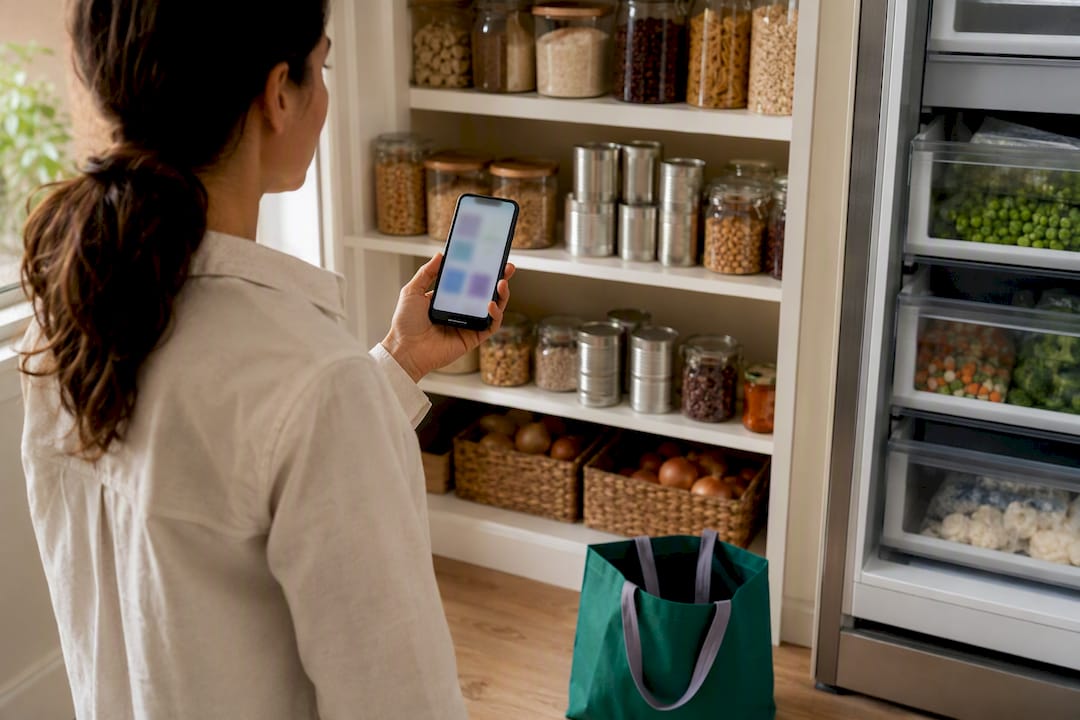
Pro Tip: Take a photo of your pantry and freezer before you shop. Half the “bulk deal” purchases people regret are duplicates of something already at home.
A $50 Weekly Grocery List and Meal Plan
Here is a one-week list built around the staples above, priced for a single adult using typical grocery costs. Actual totals shift by region and store, but this stays within the $50 to $75 per-person weekly range that USDA cost data supports for a healthy diet.
Sample shopping list (approximate cost):
Eggs, 1 dozen ($3.50)
Chicken thighs, bone-in, 3 lbs ($9)
Canned tuna, 4 cans ($4)
Dried black beans, 2 lbs, and canned beans, 2 cans, ($6)
Brown rice, 2 lb bag, and rolled oats, 1 lb ($5)
Frozen mixed vegetables, 3 bags, and frozen broccoli, 2 bags ($8)
Fresh bananas, spinach, and carrots ($6)
Milk, half gallon, and plain yogurt, 32 oz ($6)
Canned tomatoes, 2 cans, peanut butter, and basic spices ($6.50)
That totals roughly $54, leaving room for bread or a second protein swap.
Seven-day meal plan built on ingredient overlap:
Oatmeal with banana; chicken and rice bowl with frozen broccoli; bean and tomato stew
Eggs and spinach scramble; leftover stew; baked chicken thighs with rice and carrots
Yogurt with oats; tuna salad wrap; black bean and rice bowl with frozen veggies
Eggs on toast; leftover chicken and rice; lentil or bean soup with canned tomatoes
Oatmeal; tuna sandwich; stir-fried frozen vegetables with rice and remaining chicken
Eggs and spinach; bean burrito bowl; baked chicken with broccoli
Yogurt and banana; leftovers or a repeat favorite; big batch soup to freeze portions
The Nutrition offers sample menus at similar price points if you want a second reference point, and MyPlate’s budget guidance confirms this kind of plate, half vegetables and grains, a quarter protein, stays nutritionally balanced.
For a two-person household, this list roughly doubles by adding a second protein source rather than doubling everything. For a family of four, add a dozen more eggs, a bigger bag of rice, and a second bag of frozen vegetables rather than scaling every line item, which keeps cost per meal from climbing as fast as headcount does. Coach Jill’s family dinner guide has swap ideas for raising protein without blowing the budget.
Store and Prep Food So Nothing Goes to Waste
The best grocery list in the world loses its value if half of it spoils before you cook it. Food waste is one of the biggest hidden costs in most household budgets, and it is also one of the easiest to fix.
Portion raw chicken into freezer bags the day you buy it, so you are not tempted to cook the whole three pounds at once
Freeze cooked rice and beans flat in bags; they thaw faster and stack better than round containers
Batch-cook one soup or stew every weekend and freeze it in single-meal portions for the week ahead
Rotate older cans and dried goods to the front of the pantry every time you restock (FIFO: first in, first out)
Turn leftover roasted chicken into a wrap, a grain bowl, or a soup base instead of reheating the same plate three nights in a row
Pro Tip: Label freezer bags with the date, not just the contents. “Chicken” from an unknown month is how good food ends up thrown out.
Build a Planning Habit, Not Just a Shopping List
A grocery list only works if it comes from a repeatable routine. The order matters: check what you already have, plan meals around it, shop the gaps, then prep what you can before the week starts.
Inventory first. Open the fridge and pantry before writing anything down
Plan around a template, not a new recipe every night: grain plus protein plus vegetable, a one-pot soup, or an egg-based dinner covers most weeknights
Shop with the list, adjusting only for sales on items already on it
Prep in one block, usually 60 to 90 minutes on a weekend, rather than starting from scratch daily
For picky eaters, keep the same base ingredients but change the format. The same chicken and rice becomes a kid-friendly taco or a mild stir-fry instead of a stew. Coach Jill’s kid-friendly dinner ideas and the longer-term weekly meal plan guide both build on this same rotation model.
Why Habits Beat Willpower on a Grocery Budget
Most budget grocery advice focuses on austerity, cutting corners, going without, gritting your teeth through another week of rice and beans. That framing burns out fast. What actually sustains a healthy eating budget is a small set of repeatable habits: checking the pantry before shopping, keeping a rotating list of five or six staple meals, and prepping once instead of cooking from scratch every night.
Clients who stick with a plan long enough to see it work rarely describe it as restriction. They describe it as a system they stopped having to think about. That is the real savings, not just dollars per week, but decision fatigue removed from your evenings. Coach Jill’s habit-focused eating strategies build on exactly this principle: consistency beats intensity, every time.
— Coach Jill
Get a Grocery List and Meal Plan Built Around Your Life
A DIY list gets you far, but it is generic by design. It does not know your family’s allergies, your work schedule, your GLP-1 medication needs, or the three vegetables your kids actually eat. That is where personalized coaching earns its cost. Custom grocery lists and weekly meal plans can be built around your actual budget, household size, and food preferences, with added accountability to help maintain the plan.

This is a paid, optional service for anyone who wants a plan built for them instead of adapted from a generic template. It is not a replacement for the guidance above. It is the next step once you know you want ongoing support instead of a one-time list. You can review coaching options and get started at Coach Jill Byrne’s website.
Sources
FAQ
How can you eat on $100 a month for food?
Focus spending almost entirely on dried beans, rice, oats, eggs, and frozen vegetables, which run about $0.15 to $0.30 per serving, and limit fresh produce to what you’ll use within a few days to avoid waste.
What is the 5-4-3-2-1 rule for grocery shopping?
It’s a shopping framework suggesting five vegetables, four fruits, three proteins, two dairy items, and one grain per trip to keep variety in check while preventing overbuying any single category.
Can you really survive on $20 a week for food?
It’s extremely tight but possible short-term using rice, dried beans, eggs, oats, and frozen vegetables almost exclusively, though it leaves little room for fresh produce or variety beyond a few days.
Is $50 a week enough for one person to eat healthy?
Yes. A $50 weekly list built around pantry staples, eggs, bone-in chicken, and frozen produce covers three balanced meals a day, matching the lower end of the USDA’s per-person weekly cost range.
Are frozen vegetables as healthy as fresh ones?
Yes, in most cases. Frozen produce is typically picked and frozen at peak ripeness, so nutrient levels often match or exceed fresh produce that traveled days before reaching the shelf.
Recommended
Comments