
10g Protein Rule: Healthy Office Snacks for Busy Professionals
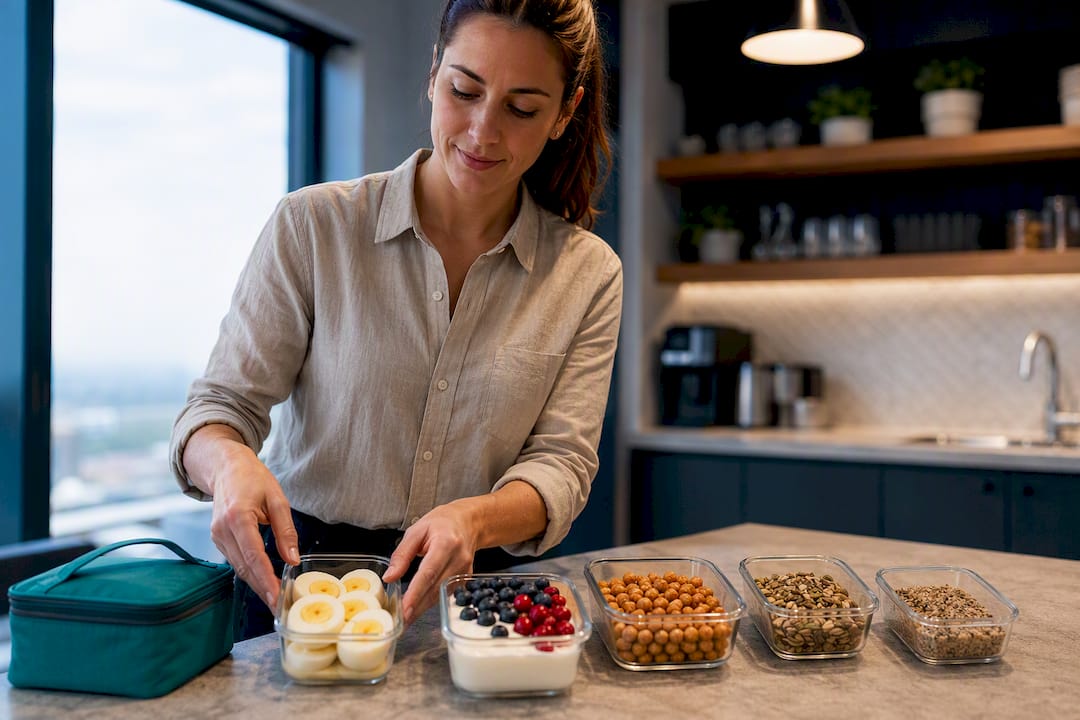
The best healthy office snacks combine protein, fiber, and healthy fat inside a moderate calorie portion generally recommended by dietitians. A handful of almonds with an apple, or Greek yogurt topped with berries, both fit that formula. Aim for at least 10 grams of protein per snack, since that threshold does more to curb hunger than any calorie count alone.
TL;DR:
Snack options should contain at least 10 grams of protein to help curb hunger for two to three hours and be within 150 to 250 calories.
Shelf-stable snacks like nuts, roasted chickpeas, and beef jerky are convenient, while fridge options include Greek yogurt, cheese, and hard-boiled eggs.
Pair snacks with water and a quick walk to support hydration, mindful eating, and energy stabilization throughout the workday.
Check labels for added sugars and sodium, favoring short ingredient lists and recognizable components to avoid hidden unhealthy additives.
Batch-preparing snacks weekly and choosing cost-effective, minimally processed foods reduces both health risks and expenses.
Table of Contents
Healthy Office Snacks Grouped by Storage and Purpose
Not every desk drawer or break room fridge offers the same setup, so the smartest approach is to sort snacks by how you need to store them, not just by what sounds appealing at 2 p.m. Below are the categories that cover almost every workplace situation.
Shelf-stable and portable. These live in your desk drawer or bag without spoiling, which makes them the backbone of any healthy office snacks rotation.
Raw or roasted almonds, walnuts, or pistachios form a wholesome portion-sized snack.
Roasted chickpeas, which pack about 5 grams of fiber and 5 grams of protein per half cup
Beef or turkey jerky provide a protein-rich snack with about 8 grams of protein per ounce serving.
Vacuum-sealed tuna pouches, a fuss-free protein option that needs no can opener or refrigeration
Fridge or short-term cold storage. If your office has a communal refrigerator, these options round out the protein-fiber pairing dietitians favor.
Plain Greek yogurt with a handful of berries stirred in
String cheese or a small container of cottage cheese
Hard-boiled eggs, prepped in batches at home and peeled the night before
Low-sugar sweet options. Sweet cravings hit everyone by mid-afternoon, but reaching for the vending machine isn’t the only fix.
Fresh fruit, whole rather than juiced, to keep the fiber intact
A square or two of dark chocolate paired with a small handful of nuts
Dates stuffed with a spoonful of natural nut butter
Crunchy and low-calorie. For the person who snacks out of boredom or stress as much as hunger, texture matters.
Air-popped popcorn, where two cups run around 62 calories and 2 grams of fiber
Roasted seaweed snacks, which deliver crunch with almost no calories
Rice cakes topped with a thin layer of nut butter or avocado
High-protein grab-and-go. To consistently hit that 10-gram protein mark, lean on combinations rather than single foods: a tuna pouch alone often clears the bar, while nuts or fruit usually need a partner like cottage cheese or a hard-boiled egg to get there.
How to Choose the Right Snack for the Moment
Matching the snack for the moment matters more than memorizing a master list. Use this quick sequence when you’re standing in front of the break room fridge or your own desk drawer.
Check the protein target first. Aim for 10 grams or more if the snack needs to carry you two or three hours.
Add fiber. Fruit, vegetables, chickpeas, or popcorn slow digestion and stretch out fullness.
Include a healthy fat. A small serving of nuts, seeds, or avocado helps satisfy without a big calorie load.
Cap added sugar near 5 grams when possible. This keeps energy from spiking and crashing an hour later.
Stay in the 150 to 250 calorie range, adjusting upward only if the snack is doubling as a light meal replacement or you’ve had an active morning, per general portion guidance from the American Heart Association.
Factor in workplace constraints. Skip strong-smelling foods near shared spaces, and favor sealed or single-serve items if mess or refrigeration is a concern.
Storing and Prepping Snacks So They Actually Get Eaten
A snack that sits in the pantry at home does nothing for your 3 p.m. slump at the office. Portion single servings into small containers or bags at the start of the week so grabbing one takes no decision-making at all. If your desk lacks reliable refrigeration, lean on sealed, low-odor, shelf-stable proteins like jerky or tuna pouches instead of anything dairy-based. Label perishables with the date you prepped them, and keep a couple of napkins and a small utensil at your desk so mess never becomes the excuse to skip the healthy option.
Batch-portion snacks every Sunday into grab-and-go containers
Choose sealed, shelf-stable proteins when fridge space is limited
Date-label anything perishable
Stock basic utensils and napkins at your desk
Pro Tip: Keep one small, clear container, like a mason jar filled with almonds or dried fruit, in plain sight on your desk. Visibility alone increases how often you reach for the healthy option instead of walking to the vending machine.
Coach Jill’s Rules for Snacking That Actually Sticks
Willpower runs out by 2 p.m. Systems don’t. Prepare five to seven snack portions at the start of each week so you’re never deciding what to eat while hungry and staring at a vending machine.
When you do buy packaged snacks, run them through a short checklist: a short ingredient list, under 5 grams of added sugar, and minimal refined vegetable oils. If you can’t pronounce half the ingredients, put it back.
One habit swap changes more than people expect: pair every snack with 8 to 12 ounces of water and a five-minute walk, even just to the water cooler and back, as explained in how home office aesthetics drive real productivity. That combination resets focus better than the snack alone. Treat snacks as bridges between meals, not replacements for them. This single mindset shift keeps portion sizes honest and prevents the slow creep toward grazing all afternoon.
Sugar, Sodium, and What’s Really in Your Office Snack
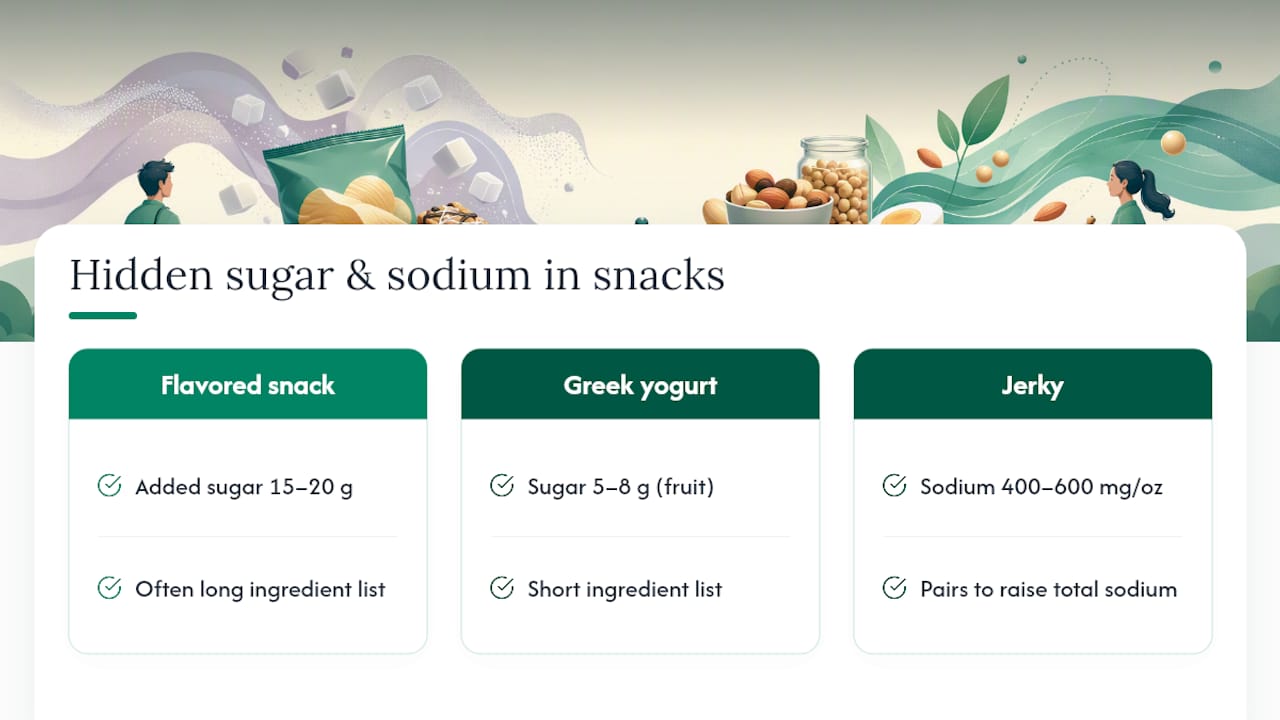
Not every snack marketed as “healthy” earns the label once you check the numbers. Sugar content is the biggest hidden trap. A flavored yogurt or a “protein” granola bar can carry 15 to 20 grams of added sugar, more than a serving of ice cream, while a plain Greek yogurt with fresh berries has closer to 5 to 8 grams from the fruit alone. Sodium is the second concern, especially with jerky, roasted nuts, and packaged crackers. A single ounce of jerky can carry 400 to 600 milligrams of sodium, which adds up fast if it’s paired with salted nuts and a sodium-heavy lunch.
The benefit side is real, though. Nuts and seeds bring healthy fats and steady energy. Fruit delivers fiber and micronutrients that most desk lunches skip entirely. Roasted chickpeas offer fiber and protein in one package with less sodium than most chip alternatives. The drawback to watch for with any packaged snack is the ingredient list length. A short list of recognizable ingredients usually signals a better nutritional profile than a long one loaded with additives and preservatives.
Reading labels for two extra seconds before tossing something in your desk drawer prevents most of the sugar and sodium surprises that undo an otherwise healthy snacking routine.
Snacking Around Food Allergies and Dietary Preferences
Office snack stashes work best when they account for the fact that not everyone eats the same way. Gluten-free professionals do well with rice cakes, fresh fruit, hard-boiled eggs, plain Greek yogurt, and roasted chickpeas, all of which sidestep gluten without sacrificing the protein-fiber combination dietitians recommend.
Vegan snacking leans on nuts, seeds, dates with nut butter, hummus with raw vegetables, and edamame, which delivers a rare plant-based complete protein in snack form. Getting to 10 grams of protein without dairy or meat usually means combining two of these rather than relying on one alone, since most plant snacks run lighter on protein per serving than animal-based options.
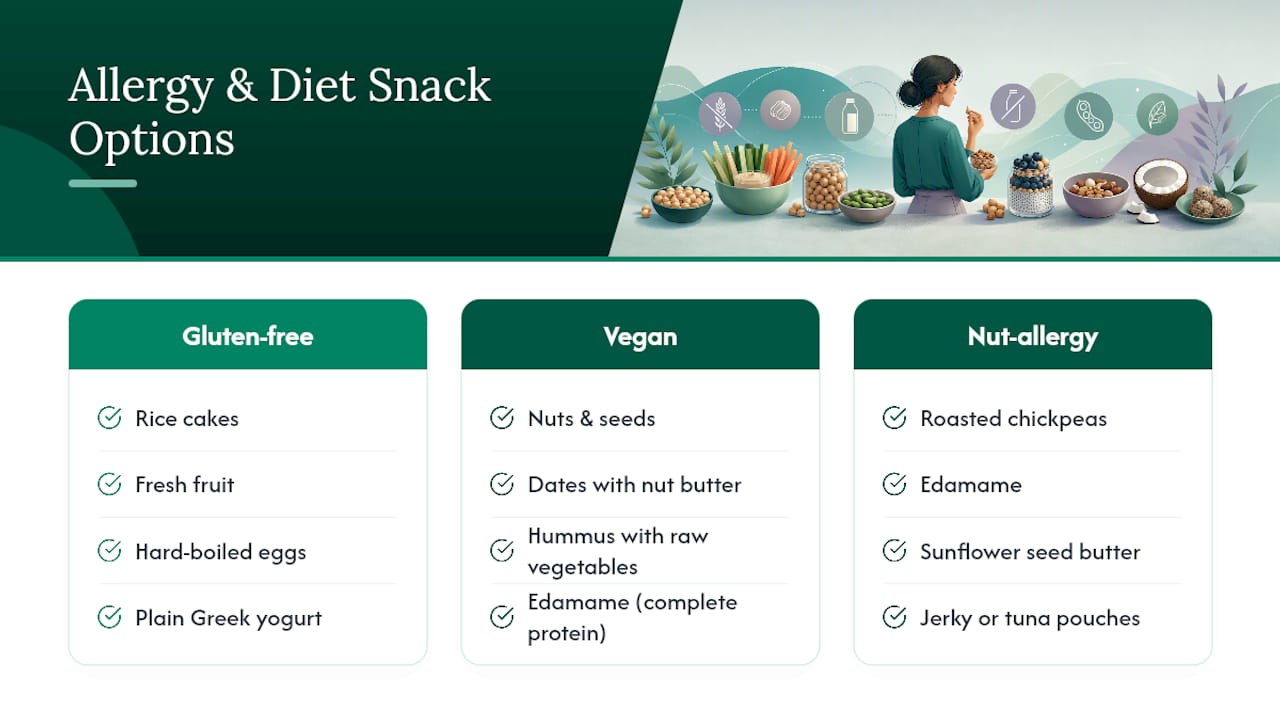
Nut allergies require a bit more care since nuts show up in trail mixes, granola bars, and even some hummus blends. Safer substitutes include roasted chickpeas, edamame, seed-based butters like sunflower seed butter, and jerky or tuna pouches for anyone who eats animal protein. Always double-check shared-office snacks for cross-contamination warnings, since a communal snack bin is one of the easier places for allergens to slip through unnoticed. Keeping a small, clearly labeled personal stash sidesteps most of this risk entirely.
Mindful Snacking Tips to Avoid Overeating
Eating at your desk while scrolling email is the fastest route to finishing a bag of anything without registering you ate it. Mindful snacking starts with a simple habit: pause, plate the portion, and put the box or bag away before you start eating. This one step prevents the mindless second and third handful that turns a 200 calorie snack into a 600 calorie one.
Pay attention to actual hunger versus habit or stress. A 3 p.m. urge to snack is often thirst, boredom, or a screen-fatigue signal rather than true hunger. Try drinking a glass of water first and waiting ten minutes. If the urge fades, it wasn’t hunger. If it doesn’t, you have a real signal to eat.
Eating slowly matters more than most people give it credit for. It takes roughly 20 minutes for fullness signals to register, so a snack eaten in 90 seconds gives your body no chance to say “that’s enough.” Chew fully, and if possible, step away from your monitor while you eat, even for five minutes.
Finally, match the snack size to the actual gap you’re filling. A quick bridge between lunch and a 4 p.m. meeting needs less than a snack meant to hold you from a skipped breakfast to a late lunch. Sizing the snack to the gap, rather than defaulting to whatever’s closest, keeps portions and energy levels steadier through the day.
Hydration Habits That Make Your Snacks Work Harder
Dehydration mimics hunger more often than people realize, which means a chunk of “snack cravings” during the workday are really thirst signals misread by the brain. Keeping a water bottle visible on your desk, the same way a snack jar increases healthy eating, tends to increase how often you actually drink throughout the day.
A simple rule: drink a full glass of water before or alongside every snack, not just at meals. This does two things. It slows down how fast you eat, which supports the mindful eating habits above, and it helps you gauge whether you’re actually hungry or just dehydrated. Herbal tea or sparkling water work as swaps if plain water gets monotonous by midafternoon.
Watch your intake around caffeine, too. Coffee is a mild diuretic, and a second or third cup without matching water intake can leave you feeling foggy in a way that looks like an energy dip but is really a hydration dip. Pairing your afternoon coffee with a glass of water, plus a protein-forward snack, tends to smooth out the crash that black coffee alone can cause.
Budget-Friendly Ways to Stock Healthy Office Snacks
Healthy snacking doesn’t require a specialty grocery run every week. Buying nuts, oats, and dried fruit in bulk bins rather than pre-portioned bags cuts the per-serving cost significantly, and portioning them yourself into reusable containers gets you the same convenience as a store-bought snack pack for a fraction of the price.
Frozen fruit is often cheaper than fresh and works fine in a desk-side yogurt cup once thawed for a few minutes. Canned chickpeas, dried and then roasted at home with a bit of olive oil and salt, cost far less than the pre-roasted bags sold at checkout counters. Store-brand plain Greek yogurt, dressed up with your own fruit and a drizzle of honey, matches the flavored cups nutritionally while costing less and carrying far less added sugar.
Buying jerky and nuts in larger bags from warehouse stores and dividing them into weekly portions at home is another easy way to stretch a grocery budget without sacrificing the protein-fiber formula this whole approach depends on. The upfront prep takes twenty minutes on a Sunday and saves both money and the daily temptation to buy something convenient but less nutritious from the office vending machine.
Changing Snacking Habits Is Slower Than It Looks, and That’s Fine
Workplace snacking habits took years to form, so expecting an overnight fix sets most people up to quit by Thursday. Pick one swap, maybe trading the afternoon vending machine run for a pre-portioned jar of almonds, and commit to just seven days. Track how your energy and focus feel rather than watching the scale, since that shift in attention is usually what makes the habit stick past week one.
— Coach Jill
Get Personalized Support for Building Better Snack Habits
A list of snack swaps can only take you so far when work stress, inconsistent schedules, and decision fatigue keep pulling you back to the vending machine. That’s the gap Coachjillbyrne fills: habit-based nutrition coaching built around real food, not restrictive rules you’ll abandon by Friday.

Coaching works best when energy crashes feel constant, when the swaps in this article haven’t stuck past a week, or when you want a meal plan and portion-control strategy built specifically around your schedule rather than a generic list. Sessions cover practical meal planning, portion guidance, and accountability check-ins, the same habit-first approach behind the snack rules above, applied to your whole day. If you’re ready for a plan built around your actual routine instead of another list to try alone, book a session with Coach Jill and start with a conversation about what’s actually getting in the way.
Sources
FAQ
What are the best healthy office snacks for busy professionals?
The best options pair protein with fiber, such as Greek yogurt with berries, roasted chickpeas, or a handful of nuts with fruit, all landing in the 150 to 250 calorie range.
What is a healthy snack for a work day?
A healthy work snack combines at least 10 grams of protein with fiber and a small amount of healthy fat, like a hard-boiled egg with a piece of fruit or a vacuum-sealed tuna pouch.
What is a healthy food to eat at the office?
Shelf-stable, low-mess foods work best: think roasted chickpeas, jerky, air-popped popcorn, or string cheese, since they require no prep and won’t spoil in a desk drawer.
What are easy snacks for the office?
Grab-and-go options like nuts, fresh fruit, tuna pouches, and pre-portioned yogurt cups need zero preparation at your desk and can be batch-prepped once a week, an approach Coach Jill’s coaching builds into a repeatable weekly routine.
Recommended
Comments