
Healthy Weekly Meal Plan: Build One That Lasts

A healthy weekly meal plan is defined as a structured schedule of meals and snacks designed to meet your daily nutritional needs while fitting your real life. The USDA MyPlate framework, the recognized dietary standard for balanced eating, recommends filling half your plate with fruits and vegetables, one quarter with lean protein, and one quarter with whole grains. A well-built plan reduces food waste, cuts daily decision fatigue, and supports consistent weight management. Coachjillbyrne works with clients daily to turn this framework into practical, repeatable habits that last well beyond any single week.
What is a healthy weekly meal plan built from?
A balanced weekly meal plan rests on three nutritional pillars: produce, protein, and whole grains. USDA guidelines set a clear target for the average adult: roughly 2,000 calories per day, at least 88 grams of protein, and 29 grams of fiber. Those numbers give you a concrete measuring stick, not just a vague goal.
The plate method in practice
The plate method translates nutrition science into a visual you can use at every meal. Half your plate goes to non-starchy vegetables and fruit: think spinach, roasted broccoli, berries, or sliced bell peppers. One quarter holds lean protein such as grilled chicken, canned salmon, lentils, or eggs. The remaining quarter carries whole grains like brown rice, quinoa, or whole wheat pasta.
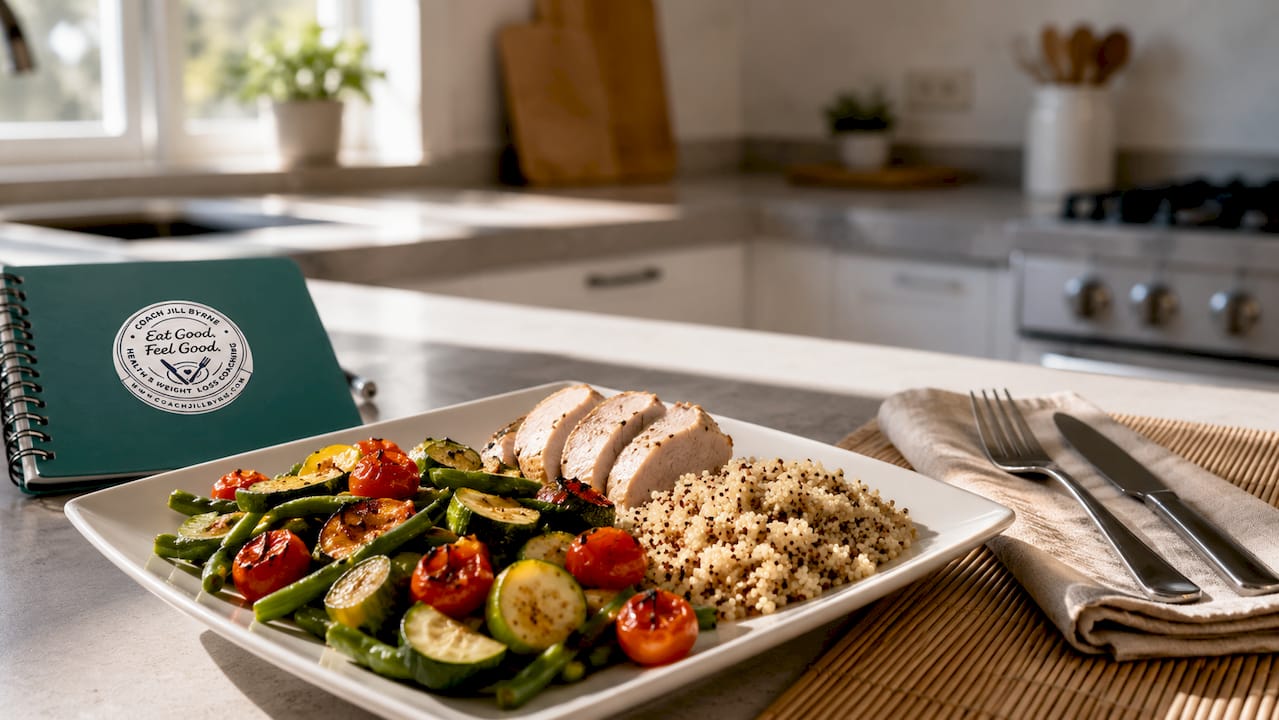
Dairy or a fortified alternative rounds out the meal. Low-fat Greek yogurt, cottage cheese, or unsweetened almond milk each add calcium and additional protein without excess saturated fat. Choosing nutrient-dense foods in each category means you hit your fiber and protein targets without tracking every gram.
Nutrient-dense foods worth keeping on your list
Vegetables: spinach, kale, broccoli, zucchini, frozen peas
Fruits: berries, apples, bananas, frozen mango
Lean proteins: chicken breast, canned tuna, eggs, black beans, tofu
Whole grains: oats, quinoa, brown rice, whole wheat bread
Healthy fats: avocado, olive oil, walnuts, chia seeds
Frozen fruits and vegetables are nutritionally equivalent to fresh because they are picked at peak ripeness and flash-frozen. Keeping a stocked freezer means you always have nutrient-dense options available, even on the busiest days.
How do you create a flexible, realistic weekly meal plan?
Most people do best planning only 4–5 dinners per week, with the rest covered by leftovers, quick meals, or an occasional dinner out. Rigid seven-day plans feel like a contract you cannot break. A flexible structure feels like a guide you can actually follow.
Start with a pantry and fridge inventory
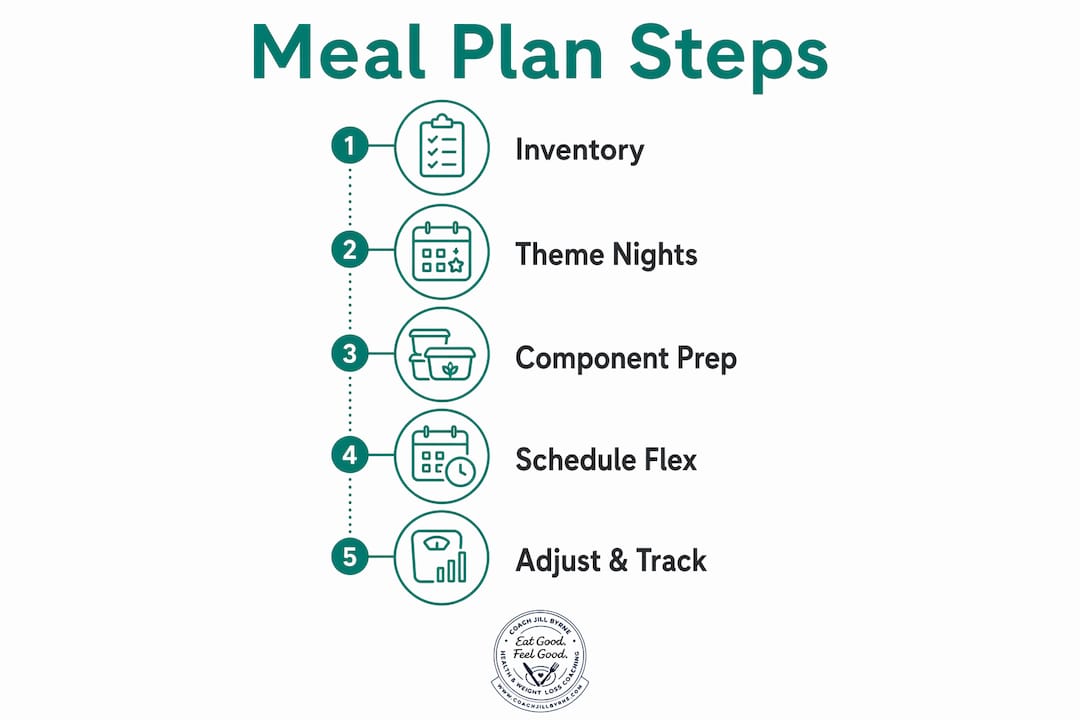
Before you write a single meal idea, open your refrigerator and pantry. Conducting a pantry inventory before planning reduces food waste by prioritizing items that need to be used soon. A can of chickpeas, half a bag of rice, and some frozen spinach can become three different meals this week.
Build your plan in four steps
Check your schedule. Identify your two or three busiest evenings. Those nights get your quickest meals or planned leftovers, not a new recipe.
Choose 4–5 dinner ideas. Pick meals that share ingredients. If you buy a rotisserie chicken, plan to use it in a salad, a wrap, and a soup across the week.
Group your grocery list by store section. Organize by produce, proteins, dairy, frozen, and pantry staples. This cuts shopping time and prevents impulse buys.
Add one emergency meal. Keep ingredients for a 15-minute fallback: pasta with jarred marinara, eggs and toast, or a grain bowl from pantry staples.
Theme-based rotations like Taco Tuesday or Stir-Fry Friday simplify decisions and make grocery shopping predictable. Combining ingredient overlap between meals reduces prep time and cuts food waste at the same time.
Pro Tip: A weekly planning session takes roughly one hour when you use repeated recipes and a consistent structure. Set a Sunday timer and treat it like a standing appointment.
What are effective meal prep techniques for a sustainable plan?
Meal prep does not mean cooking every meal on Sunday. Minimum effective prep means preparing components rather than complete meals, so you can assemble different combinations throughout the week without burnout. This approach keeps variety alive and prevents the “I’m tired of eating the same thing” problem that derails most plans.
Component prep beats full-meal prep
Batch-cook your bases: a pot of brown rice, a sheet pan of roasted vegetables, and two pounds of seasoned ground turkey cover a dozen different meal combinations. Wash and chop raw produce immediately after shopping so it is ready to grab. Marinate proteins the night before and make sauces or dressings in advance.
Grains: Cook a large batch of quinoa or oats at the start of the week.
Proteins: Bake or grill chicken breasts, hard-boil eggs, or cook a pot of lentils.
Vegetables: Roast a sheet pan of mixed vegetables; store raw cut vegetables in clear containers at eye level in the fridge.
Sauces: Prepare one or two versatile sauces, such as a tahini dressing or a simple tomato sauce, to add variety without extra daily effort.
Prepped ingredients and leftovers remain safe in the refrigerator for 3–4 days when stored at or below 40°F. Label containers with the date so you use them in the right order.
Pro Tip: Schedule at least one no-cook meal per week, such as a large salad with canned protein or a yogurt parfait with fruit and granola. It reduces prep pressure and keeps the plan sustainable.
Avoid over-preparing. Cooking 14 identical meals in advance leads to boredom and wasted food. Prep components, not full plates, and let the week’s assembly stay flexible.
How do you personalize your meal plan for your goals?
A nutritious weekly meal plan only works when it fits your actual life, not an idealized version of it. Coachjillbyrne consistently finds that clients who match meal complexity to their real energy levels stick with their plans far longer than those who aim for perfection.
Match meals to your energy and schedule
Assess your week before you plan it. Monday evenings after a long workday call for a 20-minute meal, not a new recipe with 12 ingredients. Save more involved cooking for Saturday afternoon when you have time and energy to enjoy it.
Core meals: Three to four reliable meals you know by heart and can make without thinking. These anchor the week.
Flex meals: One or two new or varied meals that keep eating interesting without adding stress.
Repeat breakfasts and lunches: Eating the same breakfast and lunch most days cuts decision fatigue significantly. Overnight oats, a smoothie, or scrambled eggs work well as daily anchors.
For weight loss specifically, portion adjustment matters more than eliminating food groups. A realistic nutrition plan for weight loss focuses on consistent calorie awareness, adequate protein, and foods that keep you full, rather than restriction. Introduce one new recipe per week to gradually expand your repertoire without overwhelming your routine.
Tracking your meal plan’s execution weekly helps refine and improve future plans. This takes about one minute: note what worked, what you skipped, and what you want to repeat. Over time, you build a stable grocery routine and a reliable meal list that requires almost no thought to execute.
Busy professionals benefit from planning meals around their schedule rather than around food trends. Sustainable weight loss habits come from consistency, not complexity. A simple plan you follow beats a perfect plan you abandon by Wednesday.
Key takeaways
A healthy weekly meal plan built on the USDA plate method, flexible scheduling, and component-based prep is the most sustainable approach to balanced eating and long-term weight management.
Point | Details |
Follow the plate method | Fill half your plate with produce, one quarter with lean protein, and one quarter with whole grains. |
Plan 4–5 dinners, not 7 | Covering the rest with leftovers and quick meals reduces stress and increases consistency. |
Prep components, not full meals | Batch-cook grains, proteins, and vegetables separately to keep variety and reduce burnout. |
Personalize to your schedule | Match meal complexity to your real energy levels each day, not an ideal version of your week. |
Track and refine weekly | A one-minute weekly review builds a reliable grocery routine and a meal list that runs on autopilot. |
What I have learned from years of meal planning with clients
Meal planning is a skill. Nobody builds a perfect system in week one, and the clients who expect to are the ones who quit by week three. The ones who stick with it treat the plan as a rough draft that gets better every week.
The most common mistake I see is aiming for too much variety too soon. People plan seven completely different dinners, buy 40 ingredients, and spend Sunday exhausted. By Thursday, they are ordering takeout because the plan collapsed under its own weight. The best meal planning system is the one you consistently use. Start simple. Two or three reliable meals repeated across the week will do more for your health than an ambitious plan that falls apart.
Flexibility is not a failure. Swapping Tuesday’s planned salmon for a scrambled egg dinner because you are tired is not a setback. It is the plan working exactly as it should. Rigid thinking about food is what leads to giving up entirely.
Balancing nutrition with enjoyment is non-negotiable for long-term success. A meal plan that never includes food you actually like will not last. Build in the foods you love, adjust portions where needed, and let the plan serve your life rather than control it.
— Coach Jill
Personalized meal planning support from Coachjillbyrne
Building a consistent weekly meal plan is straightforward once you have the right structure and support behind you.

Coachjillbyrne offers personalized nutrition coaching that includes customized meal plans, grocery list templates, and weekly accountability check-ins designed around your schedule, goals, and food preferences. Whether you are focused on weight loss, building better eating habits, or simply reducing the daily stress of deciding what to eat, the coaching process gives you a clear, repeatable system. Clients receive practical tools they can use immediately, not generic advice that requires a nutrition degree to apply.
FAQ
What does a healthy weekly meal plan include?
A healthy weekly meal plan includes balanced meals built around the USDA plate method: half produce, one quarter lean protein, and one quarter whole grains, plus snacks and a daily calorie target near 2,000 calories for most adults.
How many meals should I plan per week?
Plan 4–5 dinners per week and cover the remaining nights with leftovers, quick meals, or dining out. This approach is more sustainable than planning every meal from scratch.
How long does meal prep take each week?
A weekly planning and prep session takes roughly one hour when you use repeated recipes and a consistent structure. Component-based prep, rather than cooking full meals, keeps the time manageable.
Can frozen vegetables be part of a healthy meal plan?
Frozen vegetables are nutritionally equivalent to fresh because they are picked at peak ripeness and flash-frozen. They are a practical, cost-effective choice for any balanced diet meal plan.
How do I adjust my meal plan for weight loss?
Focus on portion control, adequate protein of at least 88 grams per day, and high-fiber foods that promote fullness. Adjust calorie intake gradually rather than cutting entire food groups.
Recommended
Comments