
Healthy Weight Maintenance After Stopping Wegovy

Stopping Wegovy (semaglutide) commonly leads to some weight regain, but a structured transition plan built around protein targets, strength training, consistent monitoring, and clinical follow-up can meaningfully limit how much comes back. The goal is not zero regain. The goal is to protect as much of your progress as possible while building habits that hold without the medication.
Start here on day one:
Confirm a tapering plan with your prescriber before your last dose (an 8–10 week taper is associated with better outcomes in some clinic reports)
Set a weekly weigh-in on the same day, same time, same scale
Aim for at least 90 grams of protein per day (if medically appropriate for you) and 64 ounces of water daily
Schedule a follow-up appointment with your prescriber or a registered dietitian within two to four weeks
Contact your clinician promptly if you experience rapid weight regain, return of metabolic symptoms, or significant blood sugar changes
Wegovy and its active ingredient semaglutide belong to a class of medications called GLP-1 receptor agonists. Ozempic contains the same molecule at a different approved dose, primarily for type 2 diabetes management. All three names refer to semaglutide’s mechanism, and all carry the same post-cessation physiology.
This article is general health information, not medical advice. Confirm any changes to your medication or treatment plan with your prescriber.
Table of Contents
Why weight often comes back after stopping semaglutide
Semaglutide works by slowing digestion and increasing fullness signals through GLP-1 receptor activation. When you stop the medication, those effects reverse. Appetite returns to baseline, gastric emptying speeds up, and the “food noise” — the persistent background thoughts about eating — comes back, often within weeks.
Beyond appetite, there is a metabolic layer that catches many people off guard. After significant weight loss, resting energy expenditure tends to fall below what body size alone would predict. Your body adapts to its new weight by burning fewer calories at rest, a phenomenon researchers call metabolic adaptation. Simply returning to pre-treatment habits is not enough to hold the loss.
Statistic to know: University of Cambridge modeling found that people regain approximately 60% of lost weight within 52 weeks of stopping a GLP-1 drug, with a later plateau where roughly 25% of the original loss may remain long-term.
Body composition adds another layer of complexity. Studies suggest that 40–60% of weight lost during GLP-1 therapy can be lean mass, not just fat. Losing muscle lowers your metabolic rate further and makes regain harder to reverse. This is precisely why strength training is not optional in a post-Wegovy plan.
Pro Tip: Redefine success before you stop. The target is not zero weight return — it is minimizing regain and protecting lean mass. A 5–10 lb return that stabilizes is a very different outcome from a full rebound.

How to stop Wegovy safely: tapering vs. stopping abruptly
The evidence on tapering is observational rather than from large randomized trials, but clinical reports suggest that a gradual dose reduction over approximately 8–10 weeks is associated with better weight maintenance than stopping abruptly. The likely mechanism is that a slower taper gives behavioral habits more time to consolidate before the full appetite-suppressing effect disappears.
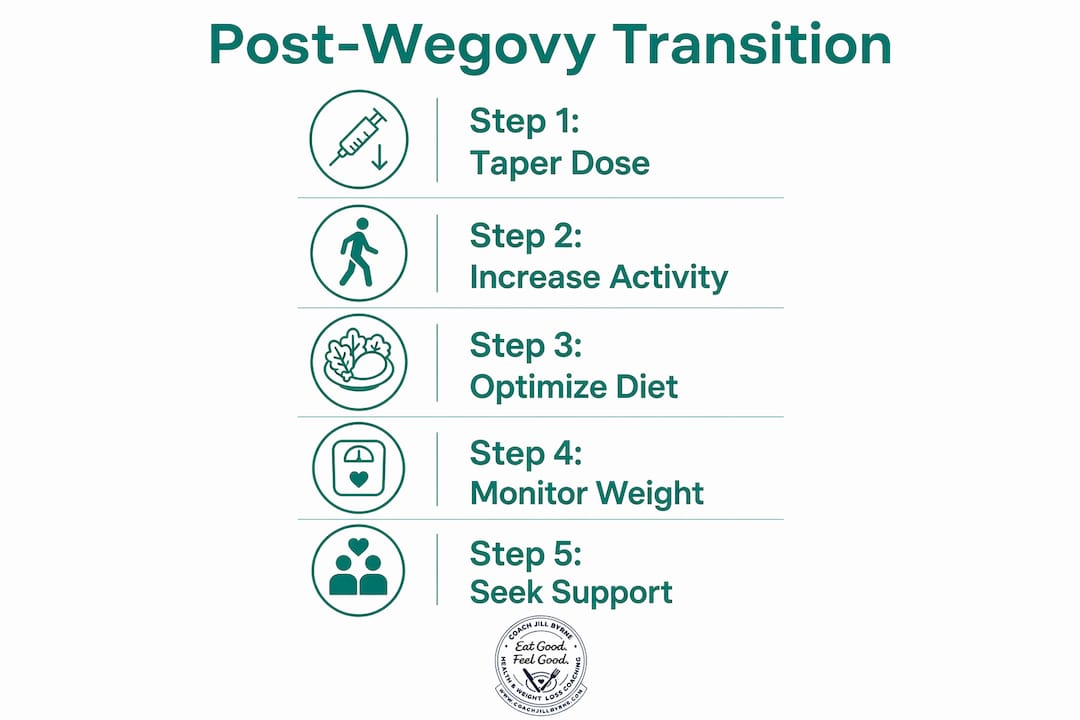
Tapering makes sense when you are stopping due to cost, insurance changes, or a planned transition rather than an urgent side effect. If you are stopping because of a serious adverse reaction, your prescriber may recommend stopping immediately rather than continuing at any dose.
Before your last dose, bring these items to your clinic visit:
A list of current medications for reconciliation
Recent labs (A1c and lipid panel if relevant to your history)
Questions about lower maintenance dosing or intermittent dosing as an alternative to full cessation
A request for referral to a registered dietitian or obesity medicine specialist if not already in place
Pro Tip: Ask your prescriber specifically whether a lower maintenance dose is an option before agreeing to stop entirely. Some patients maintain meaningful appetite control at a reduced dose with fewer side effects and lower cost.
Daily and weekly habits that help replace Wegovy’s effects
The most effective behavioral interventions after stopping semaglutide are the ones that mimic the drug’s fullness effects through food choices and meal structure. Protein slows gastric emptying. Soluble fiber adds bulk and feeds satiety hormones. Healthy fats extend the time between hunger signals. Together, they create a nutritional environment that partially replaces what the medication was doing.
Nutrition targets
Protein: Aim for a protein intake that supports weight maintenance, distributed across meals rather than concentrated in one sitting. Practical sources: Greek yogurt, eggs, chicken breast, canned salmon, cottage cheese, edamame.
Soluble fiber: Include a fruit or vegetable at every meal. Oats, lentils, apples, and Brussels sprouts are particularly high in soluble fiber.
Meal timing: Eat every 3–5 hours to prevent the deep hunger that leads to overeating. Plan a protein-rich snack between meals if gaps are longer.
Hydration: Adequate daily hydration, including drinking water before meals, helps support satiety.
Exercise plan
Research and clinical guidance recommend up to approximately 250 minutes per week of moderate-intensity activity for weight-loss maintenance, well above the standard public health baseline of 150 minutes. Two to three strength training sessions per week targeting major muscle groups are equally important for protecting lean mass.

A practical weekly structure: three 45-minute strength sessions (compound movements like squats, deadlifts, rows, and presses) plus three 30-minute moderate cardio sessions (brisk walking, cycling, or swimming). That combination hits both the aerobic and resistance targets without requiring a gym membership.
Lifestyle supports
Sleep 7–9 hours per night. Sleep deprivation raises ghrelin (the hunger hormone) and undermines the calorie control you are working to maintain.
Use a “hold and delay” strategy for cravings: when a craving hits, wait 10–15 minutes, drink water, and reassess. Most cravings pass.
Prepare cooking habits in advance: batch-cook proteins and grains on Sunday so weekday meals require minimal decision-making.
Pro Tip: Grocery swaps that add protein without complexity: swap regular yogurt for Greek yogurt (+10 g protein per serving), swap white rice for lentils (+9 g per half cup), swap crackers for hard-boiled eggs as a snack (+6 g per egg).
How to monitor your progress and know when to act
Consistent monitoring is what separates early intervention from a full rebound. Weekly weigh-ins, tracked on a simple spreadsheet or app, reveal trends before they become problems.
Metric | How to track | Cadence | Action threshold |
Body weight | Same scale, morning, after bathroom | Weekly | More than 0.5–1% body weight gained per week over 2–4 consecutive weeks |
Waist circumference | Tape measure at navel | Every 2 weeks | Increase of 1 inch or more over a month |
Hunger episodes | Brief daily log (1–5 scale) | Daily | Consistent high scores signal need to adjust meal timing or protein |
Strength markers | Track reps/weight in key lifts | Each session | Declining performance over 2+ weeks may indicate lean mass loss |
Sleep quality | Sleep tracker or subjective rating | Daily | Consistent poor sleep warrants lifestyle review |
When the scale shows more than 0.5–1% body weight gained per week for two to four consecutive weeks, the first response is not to panic. Tighten protein intake, add one strength session, and review sleep and hydration. If the trend continues for another two weeks despite those adjustments, contact your clinician.
Monitoring routine checklist:
Weigh in every Monday morning, log the number, and note any major life events that week (travel, illness, stress)
Review your weekly average, not just a single day’s reading
Check waist circumference every two weeks alongside the scale
If you see early regain, review the weight maintenance fundamentals before escalating to a clinical visit
Medical and professional support options after stopping Wegovy
Stopping Wegovy does not mean stopping all clinical support. Several options exist, and the right one depends on your health history, insurance, and how much regain occurs.
GLP-1 re-initiation: Restarting semaglutide (Wegovy or Ozempic, depending on indication) is clinically appropriate for many people who regain a meaningful amount of weight. Clinicians generally consider re-initiation when regain is significant and weight-related comorbidities return or worsen.
Alternative pharmacotherapy: Other FDA-approved weight management medications exist for people who cannot access or tolerate GLP-1 drugs. An obesity medicine specialist can review your full history and match you to an appropriate option.
Registered dietitian (RD) referral: An RD provides individualized meal planning, helps set realistic calorie and protein targets, and offers behavioral counseling. Many insurance plans cover RD visits for obesity-related diagnoses.
Behavioral programs: Structured behavioral weight management programs, often offered through hospital systems or university health centers, combine group accountability with evidence-based behavioral therapy.
Insurance documentation tips:
Request a letter of medical necessity from your prescriber that documents weight-related comorbidities (hypertension, pre-diabetes, sleep apnea, etc.)
Ask your insurer specifically about coverage for obesity medicine visits and medical nutrition therapy
If denied, ask your prescriber to submit a peer-to-peer review or appeal with supporting clinical notes
Clinicians recommend scheduled follow-ups at approximately 2 and 8 weeks after stopping, with referrals to an RD or obesity medicine specialist where appropriate.
Pro Tip: When requesting a referral, use the phrase “obesity medicine specialist” rather than “weight loss doctor.” It signals a specific board-certified subspecialty and is more likely to be recognized by insurance for coverage purposes.
What the timeline for weight regain actually looks like
Most regain happens fast. In a clinical trial, participants who stopped Wegovy after 68 weeks regained approximately two-thirds of their lost weight within a year. University of Cambridge modeling places the figure at roughly 60% regained by 52 weeks, with a plateau that may leave about 25% of the original loss retained long-term.
The first signal most people notice is not the scale. It is the return of hunger and food thoughts, often within two to four weeks of stopping as gastric emptying normalizes. Weight changes on the scale typically follow within four to eight weeks.
Body composition during regain tends to skew toward fat rather than lean mass. Even if total weight return is modest, the fat-to-lean ratio can worsen without deliberate strength training and protein intake. This is why the sustainable weight loss framework matters more after stopping than during treatment.
The realistic picture: Most people retain some benefit long-term, but the majority of regain happens in the first year. Planning for that window is the highest-leverage thing you can do right now.
An 8-week transition plan to protect your results
This plan is designed for the first two months after stopping Wegovy. It is not a rigid prescription but a structured framework to reduce regain risk, protect lean mass, and establish monitoring habits.
Week | Nutrition focus | Exercise target | Behavioral checkpoint | Clinician action |
1–2 | Hit 90 g protein/day; 64 oz water; add vegetable to every meal | 2 strength sessions + 2 cardio sessions (30 min each) | Set up weekly weigh-in; log hunger score daily | Schedule 2-week follow-up with prescriber |
— | Add soluble fiber source at breakfast and lunch; review meal timing | 3 strength sessions + 3 cardio sessions | Review weight trend; adjust protein if hunger is high | Share weight log with prescriber at 2-week visit |
5–6 | Introduce batch cooking; plan protein-rich snacks for high-risk times | Increase cardio to 40 min per session | Check waist circumference; review sleep quality | Request RD referral if not already in place |
7–8 | Refine meal plan based on what is working; reduce processed snacks | Aim for 200–250 min moderate activity total for the week | Full review: weight trend, strength markers, hunger log | 8-week check-in; discuss labs (A1c, lipids) if indicated |
Sample day of eating (approximately 90 g protein, high fiber):
Breakfast: 3-egg omelet with spinach and feta + 1 cup Greek yogurt with berries (approx. 40 g protein)
Lunch: Grilled chicken breast over lentil salad with olive oil and lemon (approx. 35 g protein)
Snack: 2 hard-boiled eggs + apple (approx. 12 g protein)
Dinner: Baked salmon with roasted broccoli and quinoa (approx. 30 g protein)
Strength training session template (3x/week):
Squat or goblet squat: 3 sets of 10–12 reps
Dumbbell row: 3 sets of 10 per side
Push-up or dumbbell press: 3 sets of 10–12 reps
Romanian deadlift: 3 sets of 10–12 reps
Plank: 3 sets of 30–45 seconds
Adaptation tips:
Traveling: bodyweight versions of every exercise above require no equipment
Limited budget: canned salmon, eggs, lentils, and frozen vegetables are among the most cost-effective protein and fiber sources available
Time-limited: a 25-minute circuit of the four compound lifts above three times per week still meets the resistance training target
Building lasting healthy habits during this 8-week window creates the behavioral foundation that determines long-term outcomes.
Key Takeaways
Stopping Wegovy without a structured plan leads to rapid regain in most people, but a focused approach combining protein targets, strength training, weekly monitoring, and timely clinical follow-up can preserve a meaningful portion of the progress made during treatment.
Point | Details |
Expect rapid early regain | A large portion of lost weight returns within the first year for most people; plan for it rather than be surprised. |
Protein and fiber are your primary tools | Aim for at least 90 g protein/day and include soluble fiber at every meal to partially replace the drug’s satiety effects. |
Strength training protects lean mass | A substantial fraction of weight lost during GLP-1 therapy can be lean tissue; incorporating regular resistance training sessions helps preserve metabolic rate. |
Monitor weekly and act early | Gaining more than 0.5–1% body weight per week over 2–4 weeks is the threshold to tighten habits or contact your clinician. |
Coachjillbyrne supports the transition | Personalized nutrition coaching and GLP-1 transition support from Coachjillbyrne provides accountability and a practical plan for the post-Wegovy period. |
The part most plans get wrong about stopping Wegovy
Most articles on this topic treat stopping Wegovy as a problem to solve with willpower. The physiology tells a different story. When the medication stops, your brain’s appetite regulation genuinely changes. Hunger is not a character flaw at that point. It is a predictable biological response to the removal of a pharmacologic signal.
What that means practically is that the behavioral plan has to be specific enough to compensate for a real physiological shift, not just a general recommendation to “eat healthy and exercise more.” Protein targets, meal timing, and strength training are not suggestions. They are the closest thing to a pharmacological replacement that lifestyle can offer.
The other piece that gets underplayed is the lean mass question. If 40–60% of what was lost during treatment was muscle, and regain skews toward fat, a person can return to their pre-treatment weight with a worse body composition than when they started. That outcome is avoidable with deliberate resistance training and adequate protein, but only if the plan addresses it directly rather than focusing solely on the scale.
Success after stopping Wegovy looks like this: a stable weight that is lower than your pre-treatment starting point, a body composition that has not deteriorated, and habits that are sustainable without the medication. That is a realistic and genuinely meaningful outcome. It is also one that requires a plan, not just good intentions. Explore long-term weight management as an ongoing practice rather than a finish line.
Personalized support for your post-Wegovy transition
The plan in this article gives you a strong starting point. Putting it into practice consistently, especially when hunger returns and motivation fluctuates, is where personalized support makes a measurable difference.

Coachjillbyrne offers GLP-1 transition coaching that covers the specific challenges of stopping semaglutide: building a protein-forward meal plan that fits your schedule, establishing a strength training routine you will actually follow, and setting up the monitoring habits that catch regain early. The coaching approach is habit-based and built around real food strategies rather than restrictive diets, so the changes you make are ones you can maintain long after the 8-week transition window closes. Clients receive personalized accountability, practical meal planning, and structured check-ins designed to keep progress on track.
Ready to build a plan that holds? Book a coaching consult with Coachjillbyrne to get started with a program tailored to your goals and your life.
Useful sources and further reading
The following sources informed this article. Clinical decisions should always be confirmed with your prescriber or a qualified health professional.
Harvard Health Publishing — Weaning off a GLP-1: Tips for the transition — Practice guidance from clinicians and dietitians on managing the post-GLP-1 transition; covers appetite physiology and dietary strategies.
University of Cambridge — Patients regain weight rapidly after stopping weight loss drugs — Modeling study on regain timelines and long-term retention of weight loss; primary source for the 60% and 25% figures.
VCU Health — How to maintain weight loss from a GLP-1 — Clinical guidance on protein targets, hydration, monitoring, and follow-up scheduling.
Medical News Today — Stopping Wegovy: Effects, keeping the weight off, and more — Clinical trial data on regain rates and tapering evidence.
Healthline — How to keep weight off after stopping semaglutide — Exercise volume recommendations and practical maintenance strategies.
Coachjillbyrne — GLP-1 nutrition support and coaching services — Personalized coaching for post-Wegovy transition planning, meal planning, and accountability.
Wild Foodz — Why fresh prepared food matters for your health — Partner resource on the role of freshly prepared food in supporting satiety and dietary adherence.
Readers and clinicians seeking primary clinical trial data may also consult PubMed and the FDA prescribing information for semaglutide for the full evidence base.
FAQ
How do you maintain weight when coming off Wegovy?
Prioritize at least 90 g of protein per day, include soluble fiber at every meal, perform two to three strength training sessions per week, and conduct weekly weigh-ins to catch regain early. Scheduling a follow-up with your prescriber or a registered dietitian within two to four weeks of stopping provides additional clinical support.
How many people maintain weight loss after stopping Wegovy?
Most people regain a significant portion of lost weight. University of Cambridge modeling found approximately 60% of lost weight returns within 52 weeks, though a plateau may leave roughly 25% of the original loss retained long-term.
Do you have to take Wegovy forever to maintain weight loss?
Not necessarily, but stopping without a structured behavioral plan leads to substantial regain for most people. Some individuals maintain meaningful results long-term through consistent protein intake, strength training, and monitoring; others benefit from restarting GLP-1 therapy or transitioning to alternative medical support.
What should your diet look like after stopping Wegovy?
Focus on protein at every meal (targeting 90 g/day if medically appropriate), soluble fiber from vegetables, legumes, and fruit, and healthy fats to slow digestion. Eating every 3–5 hours and preparing meals in advance helps manage the return of hunger that typically follows cessation. Coachjillbyrne’s nutrition coaching can help you build a specific post-Wegovy meal plan tailored to your schedule and goals.
Recommended
Comments