
A High-Protein Breakfast That Actually Curbs Cravings

A high-protein breakfast helps you stay full and curb cravings, and the target most nutrition professionals point to is roughly 30 grams of protein. That number is not a magic threshold, but hitting it consistently changes how your morning goes. Combining that protein with fiber stretches the fullness even further, which matters if 10 a.m. hunger has been derailing your day.
Three anchors you can use starting tomorrow morning:
Eggs (2 to 3, any style) for a fast, familiar protein base
Greek yogurt (1 cup) stirred with fruit or nuts
A protein shake (1 scoop of powder plus milk or a milk alternative)
Pro Tip: Pair any of these three with a fiber source such as oats, berries, or whole-grain toast to help extend feelings of fullness beyond what protein alone provides.
Key Takeaways
A high-protein breakfast near 30 grams, paired with fiber, is the single most reliable lever for controlling mid-morning cravings and supporting sustainable weight loss.
Point | Details |
Hit roughly 30 grams | Two eggs, a cup of Greek yogurt, or a protein shake each cover a large share of the target. |
Pair protein with fiber | Berries, oats, and whole-grain toast extend fullness beyond what protein alone provides. |
Prep ahead to remove friction | Egg muffins, baked oatmeal, and freezer burritos let you assemble breakfast in under three minutes. |
Plant-based works too | Tofu scrambles, pea protein oats, and chickpea pancakes can all reach 20 to 30 grams. |
Coaching adds structure | Coachjillbyrne’s habit-based coaching helps you turn these ideas into a repeatable routine with accountability. |
Table of Contents
Why High-Protein Breakfasts Matter for Appetite and Energy
Protein does something carbohydrate-heavy breakfasts don’t: it triggers a stronger release of satiety hormones like GLP-1 and PYY, the signals your gut sends to your brain to say “stop eating.” Protein also carries a higher thermic effect of food, meaning your body burns more calories digesting it compared to fat or refined carbs.
Research suggests that consuming roughly 30 grams of protein at breakfast can help regulate appetite and reduce mid-morning cravings, according to dietitian-reviewed guidance from Colorado State University Extension.
That satiety effect is real, but protein alone isn’t the whole story. Pairing protein-rich staples with plant fibers supports gut health in a way that a protein-only plate does not, which is why the best approach treats fiber as a partner, not an afterthought.
How Much Protein Should You Actually Aim For?
Around 30 grams at breakfast is the number dietitians at Colorado State University Extension point to for appetite regulation. You don’t need a food scale to get there. A few quick equivalents:
Two large eggs supply about 12.5 grams of protein
One cup of Greek yogurt provides a moderate amount of protein
One scoop of whey or plant protein powder adds a substantial amount of protein
Reaching 30 grams usually means combining an anchor with a side (eggs plus cottage cheese) or doubling one anchor (two servings of Greek yogurt with granola). Either strategy works. What matters is picking one you’ll actually repeat.
Best High-Protein Breakfast Foods, by Category
Building a rotation gets easier once you know which foods pull real weight. Here’s how the main categories stack up per typical serving.
Food Category | Example | Protein per Serving |
Animal | 2 eggs | 12.5 g |
Animal | Smoked salmon (3 oz) | 17 g |
Dairy/fermented | Greek yogurt (1 cup) | 15–20 g |
Dairy/fermented | Cottage cheese (1 cup) | 24 g |
Plant | Firm tofu (1 cup) | 20 g |
Plant | Tempeh (1 cup) | 30 g |
Plant | Edamame (1 cup) | 17 g |
Powder | Whey or pea protein (1 scoop) | 20–25 g |
A few notes worth knowing before you shop:
Smoked salmon and lean breakfast meats pack protein without the volume of a full egg plate, useful if you’re not a big breakfast eater.
Cottage cheese and Greek yogurt double as calcium sources, which matters for bone health alongside muscle preservation.
Nut butters and seeds (chia, hemp) add modest protein (2 to 5 grams) but real fiber, so they’re better as boosters than standalone anchors.
Whey absorbs faster and carries a complete amino acid profile; pea or soy-based plant powders come close but sometimes need a blend to match whey’s leucine content.
High-Protein Breakfast Ideas by Time and Preference
Different mornings call for different approaches. Here’s how to match the idea to the day.
1. Quick and easy (10 minutes or less)
A Greek yogurt bowl topped with pumpkin seeds and a spoonful of almond butter lands in the 20 to 30 gram range and takes under five minutes to assemble. Scrambled eggs on whole-grain toast with a side of berries gets you closer to 25 to 35 grams once you count two eggs plus the bread’s protein.
2. Make-ahead and meal-prep
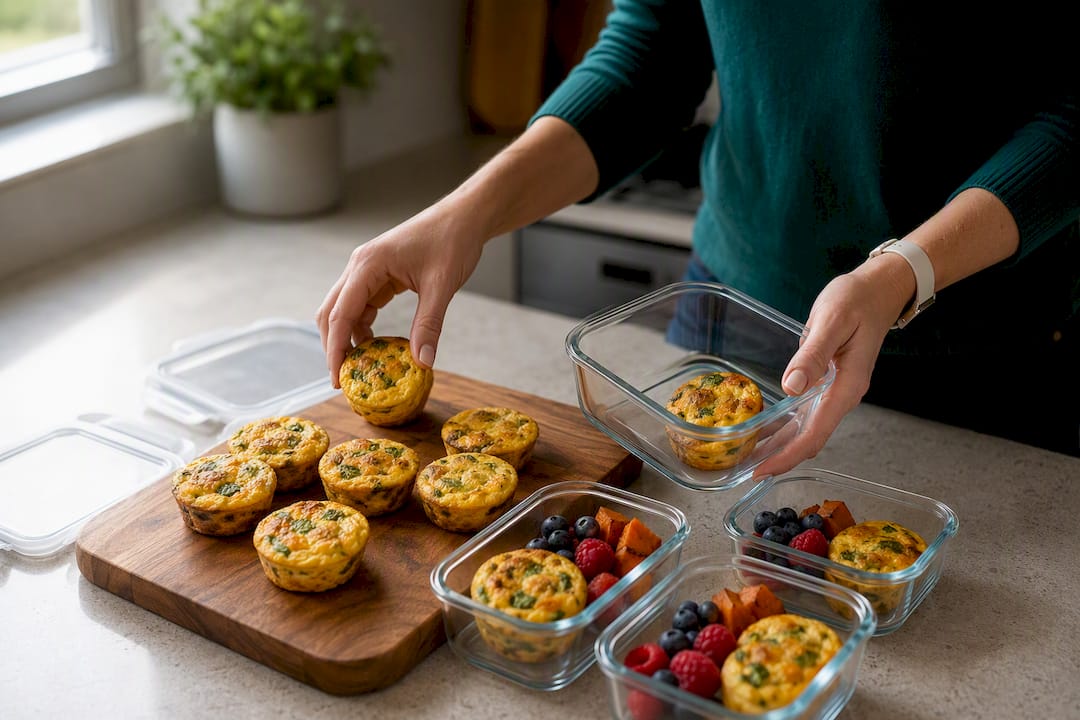
Egg muffins baked in a batch of six to twelve give you a grab-and-reheat option that holds up in the fridge for four to five days. Baked oatmeal blended with a scoop of protein powder before baking distributes protein evenly through the whole pan rather than leaving it floating on top. Freezer breakfast burritos, built with eggs, black beans, and cheese, reheat in under two minutes and typically run 25 to 30 grams per burrito. Assembled and make-ahead breakfasts perform just as well for satiety as anything cooked fresh, which removes the excuse that high-protein mornings require daily cooking.
3. Plant-based options
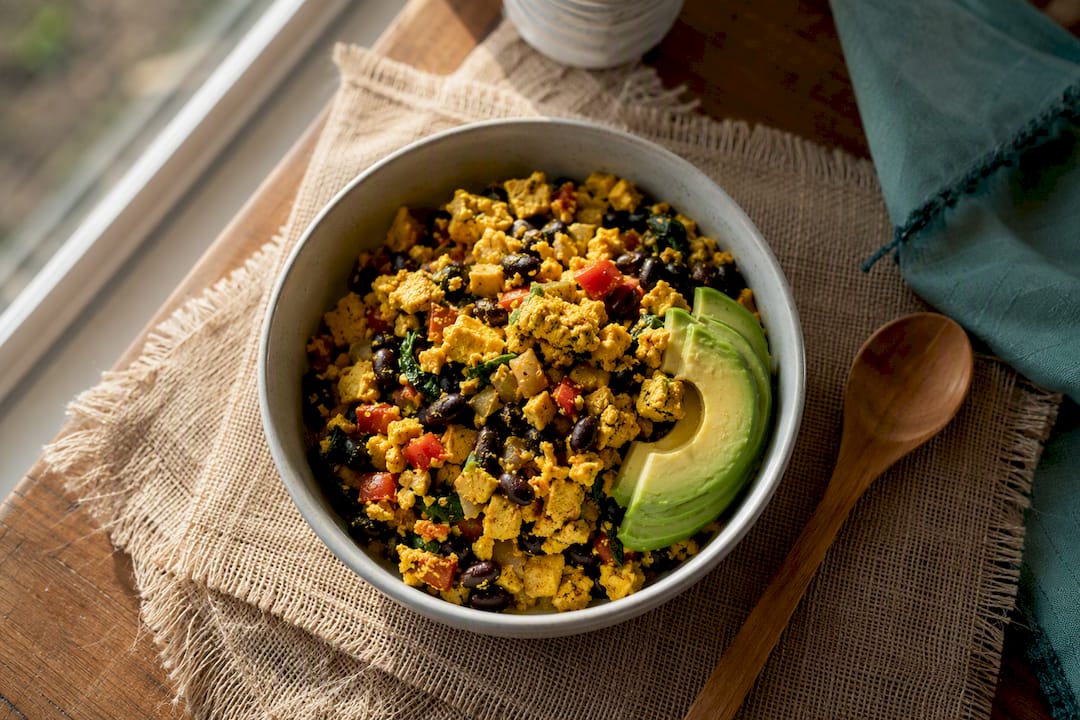
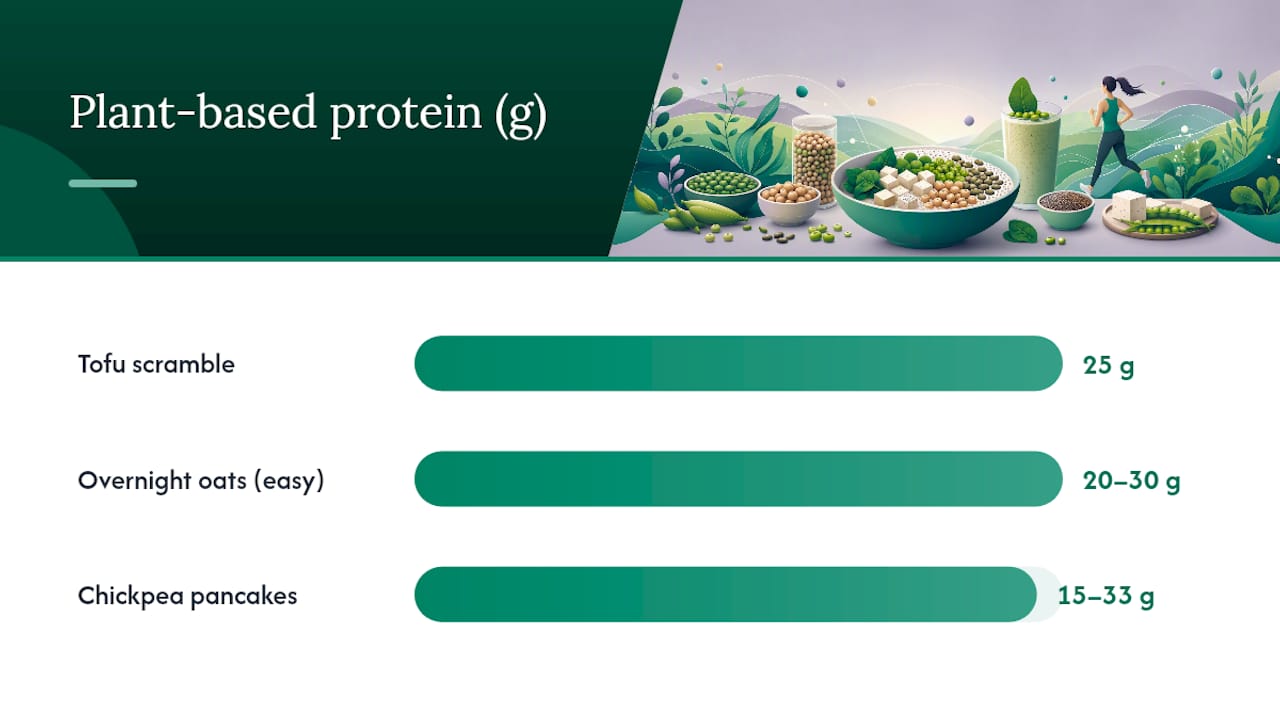
A tofu scramble bowl with black beans and avocado can hit 25 grams of protein without a single animal product. Overnight oats mixed with pea protein powder and a tablespoon of hemp seeds usually land between 20 and 30 grams, and they need zero morning effort since you build them the night before. Chickpea flour pancakes are a lesser-known swap, made from chickpea flour instead of wheat, they carry noticeably more protein per pancake than a standard batter.
Recipe ranges across popular high-protein breakfast collections commonly fall between 15 and 33 grams per serving, and stacking two items easily pushes you past 30.
Simple Ways to Boost Protein and Add Fiber
The anchor-plus-fiber rule is the easiest habit to build because it removes decision fatigue. Cottage cheese with berries. Eggs with sautéed spinach and whole-grain toast. Greek yogurt with chia seeds and sliced banana. Harvard Health’s own pairing suggestions echo this same logic, protein and fiber together, not one or the other.
A few small swaps raise protein without adding a new dish:
Stir a spoonful of Greek yogurt into plain oatmeal for extra creaminess and 5 to 8 grams more protein.
Add a scoop of protein powder to a fruit smoothie instead of relying on fruit alone for bulk.
Swap regular yogurt for cottage cheese in a parfait for a denser protein hit.
Pro Tip: If you’re on a GLP-1 medication or over 60, prioritize higher-quality protein sources (eggs, dairy, fish) over protein bars, and try to pair your morning protein with a short walk or light resistance movement. This combination helps protect muscle mass during periods of reduced appetite or calorie intake.
A 7-Day Rotation to Make This Automatic
Decision fatigue kills consistency faster than lack of willpower does. A simple weekly rotation solves that:
Monday: Greek yogurt bowl with granola and berries (25 g)
Tuesday: Egg muffins, pre-made (20 g)
Wednesday: Overnight oats with pea protein (28 g)
Thursday: Cottage cheese with pineapple (24 g)
Friday: Tofu scramble with black beans (25 g)
Saturday: Protein smoothie with spinach and berries (30 g)
Sunday: Eggs on toast with sautéed spinach (28 g)
Batch-cook eggs and grain bowls on Sunday, portion into containers, and mornings become an assembly job, not a cooking job. Most of these reheat or assemble in under three minutes. For your shopping list, keep it short: eggs, Greek yogurt, cottage cheese, a protein powder you like, plus a rotating fiber side (berries, spinach, oats).
How Coach Jill Byrne Helps Clients Stick With This
Coach Jill’s clients don’t rely on willpower alone, they build small, repeatable rituals. Pre-portioning eggs and yogurt into grab-and-go containers on a Sunday removes the morning decision entirely. A two-minute assembly ritual, same bowl, same anchor, different topping, tends to outlast an ambitious new recipe every week.
For clients managing appetite changes from GLP-1 medications, protein distribution across the day matters as much as the breakfast total, and pairing morning protein with light resistance movement helps preserve muscle during weight loss.
A practical starting experiment: pick three breakfasts from this list, track how full you feel at the two-hour and four-hour marks, and notice which one keeps cravings away longest.
Track fullness at 2 and 4 hours post-breakfast
Note energy levels through late morning
Compare cravings on high-protein days versus your usual breakfast
A note on flexibility, not restriction
Sustainable change comes from breakfasts that fit real life, not rigid meal plans. One client swapped a daily pastry for a five-minute yogurt bowl and stopped needing a 10 a.m. snack within two weeks. If you want a guided version of this, Coach Jill’s sustainable weight loss coaching walks through it step by step.
— Coach Jill
Build a Breakfast Routine That Actually Sticks
Recipes only get you so far. What actually changes your mornings long-term is a plan built around your schedule, your food preferences, and your goals, which is exactly what Coachjillbyrne’s coaching provides instead of another generic meal plan you’ll abandon in two weeks.

An initial consult with Coach Jill starts with real goal-setting: what your mornings currently look like, what protein sources you’ll actually eat, and where GLP-1 nutrition support or muscle-preservation strategies might fit if that applies to you. From there, you get a simple, personalized plan and ongoing accountability, not a PDF you never open again. If breakfast has been the hardest habit to change, book a consultation with Coach Jill Byrne and get a plan built around what you’ll actually eat.
Sources
FAQ
How much protein should I eat for breakfast?
Aim for roughly 30 grams of protein, which typically requires combining an anchor food (eggs, yogurt, or protein powder) with a side or a second serving.
What is a good no-egg high-protein breakfast?
Greek yogurt with chia seeds, a protein smoothie, cottage cheese with fruit, or a tofu scramble all deliver 20 grams or more without a single egg.
Does a high-protein breakfast really help with weight loss?
It supports weight loss indirectly by increasing fullness hormones and reducing mid-morning snacking, though total daily calorie balance still matters most.
What is the quickest high-protein breakfast idea?
A Greek yogurt bowl with nuts or a protein shake both take under five minutes and land between 20 and 30 grams of protein.
Can Coach Jill Byrne help me build a high-protein breakfast routine?
Yes. Coach Jill’s coaching includes personalized meal planning and habit-based accountability designed to make high-protein breakfasts a consistent, sustainable part of your routine.
Recommended
Comments