
High-Protein Snacks That Actually Keep You Full
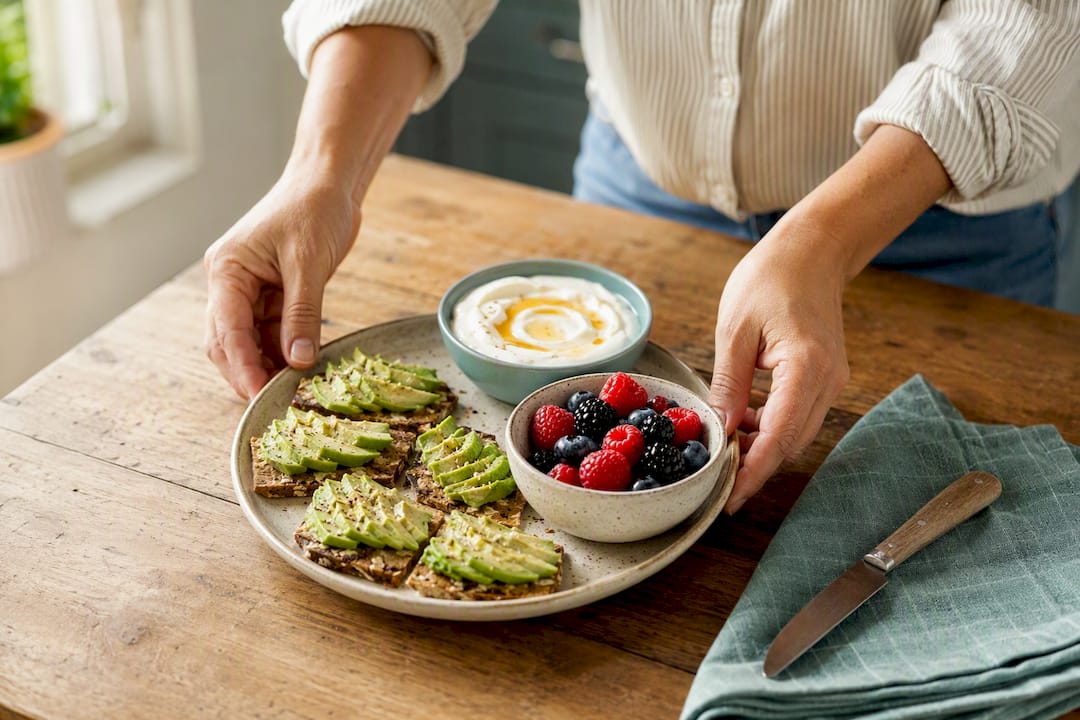
The most useful high-protein snacks deliver roughly 10 to 20 grams of protein per serving, and pair that protein with fiber so it actually holds you over. Push toward the higher end of the protein range if the snack follows a workout, as supported by research on peptides for recovery that aid muscle and tissue repair. You don’t need a spreadsheet to hit these numbers. You need six go-to options you can grab without thinking:
A single-serve Greek yogurt cup: no prep. Keep two in the fridge at all times.
Two hard-boiled eggs: batch a dozen on Sunday, good for the week.
One can of tuna: shelf-stable, toss in a bag with crackers for the car.
Half a cup of cottage cheese: pre-portion into small containers so it’s grab-and-go.
One cup of edamame: keep a bag frozen, microwave in two minutes.
One ounce of jerky: the truest no-prep option, but check the sodium and sugar on the label first.
Pro Tip: Pair any of these with a piece of fruit or a handful of raw vegetables. The fiber slows digestion and blunts hunger far better than protein alone.
Key Takeaways
Consistent high-protein snacking works best when each snack delivers 10 to 20 grams of protein, pairs with fiber, and comes from a rotation you’ve already prepped in advance.
Point | Details |
Target per snack | Aim for 10 to 20 grams of protein, closer to 20 to 30 grams after a workout. |
Pair with fiber | Add fruit, vegetables, or whole grains to slow digestion and improve fullness. |
Read labels closely | Compare protein grams to added sugar grams before trusting a package’s front-label claim. |
Batch prep weekly | Boil eggs, roast chickpeas, and portion yogurt or cottage cheese in one weekly session. |
Build a rotation | Keep four to five reliable snacks on hand so you’re not deciding from scratch daily. |
Table of Contents
How Much Protein Does a High-Protein Snack Actually Need?
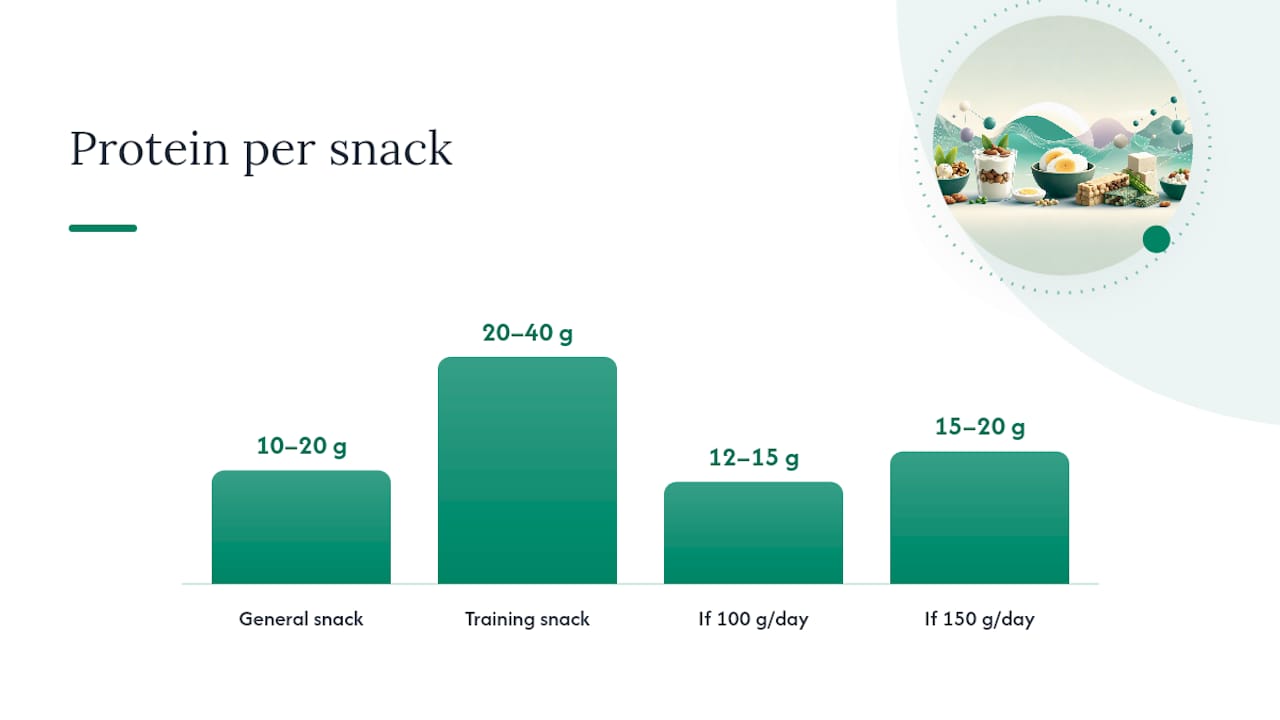
Ten to twenty grams per snack is the range Harvard Health Publishing points to for general appetite control and muscle maintenance. That’s the number to memorize if you’re grabbing something between meals to stop the 3 p.m. crash.
If you’re training seriously, the target shifts. Research on muscle protein synthesis generally supports a higher dose, in the 20 to 40 gram range, when a snack functions more like a mini recovery meal after a workout. A PMC review on protein timing found that spreading protein across the day, rather than loading it all into dinner, supports both appetite regulation and muscle repair more consistently.
Here’s the quick math. If your daily target is 100 grams, split it across three meals and two snacks: roughly 25 grams per meal and 12 to 15 grams per snack covers it. If you’re aiming for 150 grams, a common target for people focused on strength or weight loss, you’d want closer to 30 to 35 grams per meal and 15 to 20 grams per snack. The point isn’t precision. It’s making sure protein shows up more than once or twice a day.
Animal- and Dairy-Based Protein Snacks Worth Keeping on Hand
These are the workhorses. They’re widely available, protein-dense, and most travel well with minimal fuss.
Greek yogurt (¾ cup): 15 to 18 grams of protein, according to USDA FoodData Central. Refrigerate; skip leaving it in a hot car for more than an hour.
Cottage cheese (½ cup): 12 to 14 grams. Buy the single-serve cups if you know you won’t portion it yourself.
Two hard-boiled eggs: about 12 grams. Keep peeled or unpeeled eggs refrigerated for up to a week.
Canned tuna (3 oz): around 20 grams, one of the highest protein-to-calorie ratios on this list. Pick up pouches instead of cans if you’re packing it in a bag, since they need no opener and no draining.
String cheese (one stick): 6 to 8 grams. Shelf-stable enough for a few hours outside the fridge, which makes it a solid backpack or glovebox option.
Beef or turkey jerky (1 oz): 9 to 11 grams. The most shelf-stable option here, but also usually the highest in sodium, so check the label.
Turkey roll-ups (2 to 3 slices with cheese): 15 to 18 grams. Roll them the night before and they hold up fine in a cooler bag.
Almonds and other nuts often get lumped into “protein snacks,” and while they contribute, Harvard’s Nutrition Source notes they’re more valuable for their fat and fiber profile than as a standalone protein source. Pair a small handful with a dairy or animal protein if you want the combination to actually satisfy you past 3:30 p.m.
Batch prep is what makes this list sustainable instead of aspirational. Boil a dozen eggs every Sunday and you’ve solved breakfast and snacking for the week. Buy the large tub of cottage cheese and split it into five small containers the same day you buy it, so future-you isn’t negotiating with a serving spoon at 2 p.m. Canned tuna mixed with a spoon of plain Greek yogurt instead of mayonnaise turns into a protein-and-fat combo that keeps in the fridge for two to three days and works on crackers, cucumber rounds, or straight off a spoon.
Plant-Based High-Protein Snacks and How to Pair Them Right
Plant proteins can absolutely hit the same 10 to 20 gram range. The trick is knowing which ones carry real weight and which ones need a partner to get there.
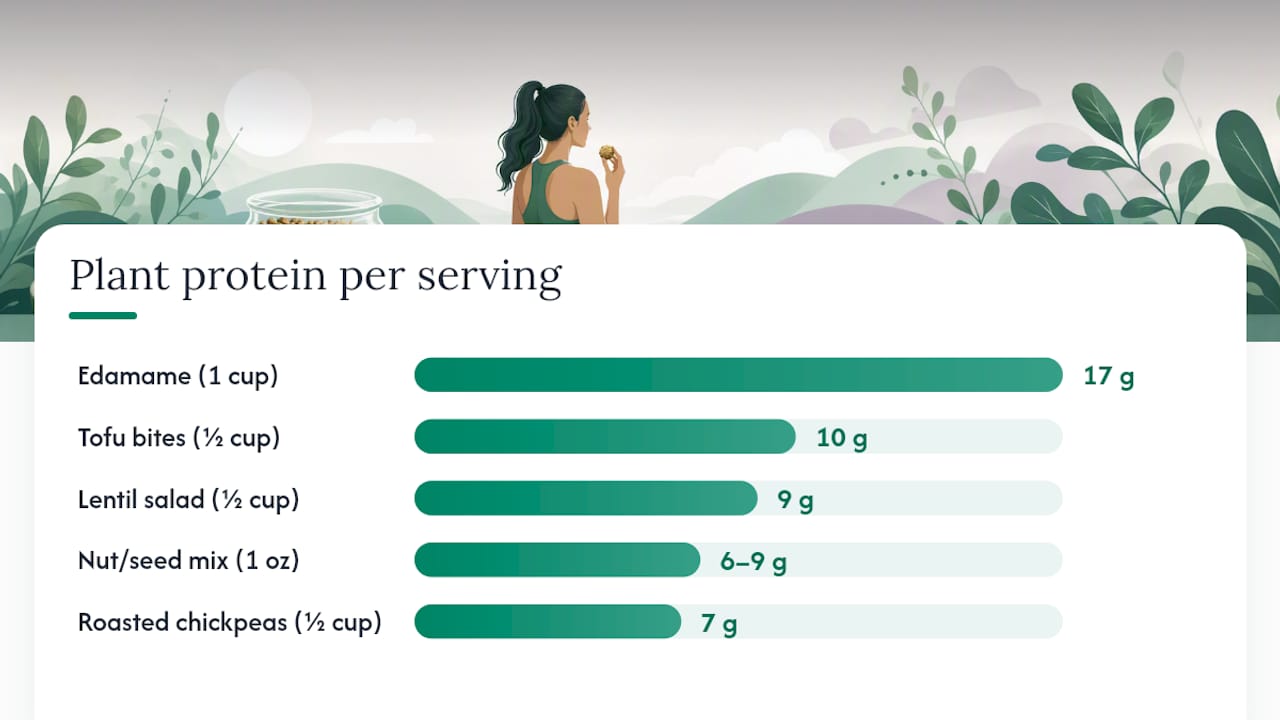
Edamame (1 cup, shelled): about 17 grams, making it one of the strongest plant-based options pound for pound.
Roasted chickpeas (½ cup): roughly 7 grams, plus a satisfying crunch that snack bars can’t replicate.
Hummus with pita (2 tablespoons plus one small pita): 6 to 8 grams combined.
Tofu bites (½ cup, baked or pan-seared): around 10 grams.
Nut or seed mix (1 oz): 6 to 9 grams, depending on the blend.
Lentil salad (½ cup): about 9 grams, and it holds up well made ahead.
Individually, most plant proteins land under the 20 gram mark, so the real strategy is pairing. Combine a legume with a grain, like chickpeas and pita, or a legume with dairy or egg if that fits your eating pattern, since the combination rounds out the amino acid profile more completely than either food alone. A small addition like a tablespoon of chia seeds or a scoop of soy yogurt stirred into a plant-based snack can meaningfully raise the protein density without bulking up the portion, which matters if you’re trying to keep something compact enough to actually carry around.
For portability, roasted chickpeas keep well in a sealed jar for days, pre-portioned nut mixes travel in small containers without needing refrigeration, and frozen edamame in single-serve bags thaws fast enough to eat within a few minutes of pulling it out of the freezer.
Choosing Packaged High-Protein Snacks Without Getting Fooled
Packaged convenience options have their place, especially on busy days, but the label is where marketing and reality often part ways.
Protein bars: typically 10 to 20 grams, but ingredient lists vary wildly between brands.
Single-serve Greek yogurt or cottage cheese cups: 12 to 18 grams, generally one of the more whole-food-friendly packaged choices.
Ready-to-eat egg bites: 12 to 16 grams, convenient but often higher in sodium than home-cooked eggs.
Prepared protein shakes: 15 to 25 grams, useful in a pinch but easy to over-rely on.
Jerky sticks: 9 to 11 grams, watch for added sugar in teriyaki or honey-glazed varieties.
Before anything goes in your cart, run it through a quick checklist:
Check the grams of protein per serving, not per package, since some containers hold more than one serving.
Scan the ingredient list for whole foods first. If sugar or a syrup outranks the protein source, that’s a flag.
Compare added sugar grams to protein grams. A bar with 12 grams of protein and 14 grams of added sugar isn’t the win it looks like.
Watch sodium on any processed meat or cheese snack, where levels can climb fast.
Clinical nutrition commentary from Tufts Now has flagged that many protein-enhanced packaged snacks are ultra-processed despite front-of-package claims, a pattern sometimes called “protein-washing.” A high protein number on the front doesn’t guarantee a good snack. Reserve bars and shakes for genuine convenience, not as your default choice, and let whole-food options do most of the work.
Build Your Own High-Protein Snack in 30 Seconds
The formula is simple: protein + fiber + a little fat or flavor. Protein alone digests fast and leaves you hungry again within an hour. Add fiber and a touch of fat, and digestion slows down, which is what actually keeps hunger at bay, a pattern University of Minnesota research on protein-fiber pairing backs up directly.
Five combos worth memorizing:
Greek yogurt, berries, and a spoon of chia seeds.
An apple sliced with two tablespoons of peanut butter.
Cottage cheese with cucumber and cracked pepper.
Canned tuna scooped onto cucumber rounds.
Hummus with whole-grain pita and a few olives.
Pro Tip: Aim for a ratio where the snack delivers roughly 10 to 20 grams of protein for every 150 to 250 calories. Below that ratio, you’re likely eating more filler than fuel. For more ideas on swapping processed snacks for combinations like these, see how real food replaces processed convenience without sacrificing satisfaction.
Batch Prep and Storage That Actually Holds Up
Boiled eggs keep 5 to 7 days refrigerated, which makes them the single best return on 15 minutes of effort each week. Egg muffins (eggs baked in a muffin tin with vegetables) freeze well and reheat in under a minute. Roast a batch of chickpeas on Sunday and they’ll stay crunchy in a sealed jar through midweek.
For storage safety, don’t let dairy-based snacks sit at room temperature for more than two hours, and use a small cooler with an ice pack if you’re carrying yogurt or cottage cheese to work or the gym. Portion everything into small jars or reusable silicone bags the day you prep it, not the day you plan to eat it. That five-minute habit is usually the difference between grabbing the planned snack and grabbing whatever’s fastest.
Coach Jill Byrne’s Approach to Making High-Protein Snacking Stick
The plan you don’t follow doesn’t work, no matter how well it’s designed on paper. That’s the core of how Coach Jill Byrne approaches snacking with clients: build a rotation of four to five snacks you actually like, then schedule one 20 to 30 minute prep block each week to portion them out.
Anchor snacks to predictable moments in your day, right after a workout, or the mid-afternoon slump, so you’re not deciding from scratch every time. Keep a couple of true no-prep options within reach for the days the schedule falls apart. For clients using GLP-1 medications, protein timing and volume often need closer attention to protect muscle mass and manage appetite changes, though this should be discussed with a healthcare provider rather than treated as general advice.
Consistency beats intensity here. A client who eats the same reliable protein snack four days a week outperforms someone chasing the “perfect” plan they only follow twice.
What the Research Actually Supports About Snacking Habits
Most advice on high-protein snacks focuses on the food and skips the behavior, which is backward. The research is fairly settled: protein spread through the day supports appetite control and muscle maintenance better than protein concentrated in one meal. What’s underrated is how much that finding depends on whether you actually have the snack available when hunger hits.
Conventional lists hand you fifty options and call it done. That’s not useful. What’s useful is narrowing it to four or five you’ll genuinely repeat, prepping them once a week, and treating label literacy as a real skill, not an afterthought. Protein-washed bars and shakes aren’t villains, but they shouldn’t be your default when a hard-boiled egg or a container of cottage cheese does the job for less money and fewer ingredients you can’t pronounce.
If you take one thing from this: prioritize the habit before the food. The best snack on paper is worthless if it’s not the one sitting in your bag at 2 p.m. Build the rotation first, then worry about optimizing the grams.
— Coach Jill
Sources
FAQ
What snack has the highest protein?
Among common whole-food options, canned tuna and cottage cheese rank highest, often delivering 20 grams or more per typical serving, according to USDA FoodData Central values.
How do I get 30 grams of protein in one snack?
Combine two high-protein foods, such as a cup of Greek yogurt (about 18 grams) with a handful of edamame (about 8 grams), or choose a prepared protein shake, which often delivers 20 to 25 grams on its own.
How can I get 100 grams of protein a day through snacks and meals?
Split the target across three meals and two snacks, aiming for roughly 25 grams per meal and 12 to 15 grams per snack, which lines up with the Harvard Health recommendation to distribute protein rather than front-load it.
What are good high-protein snack ideas to rotate through the week?
A solid rotation includes Greek yogurt, hard-boiled eggs, cottage cheese, edamame, canned tuna, roasted chickpeas, and turkey roll-ups, each delivering roughly 10 to 20 grams of protein per serving.
Recommended
Comments