
How Much Cinnamon You Need for Weight Loss

Research-backed dosing puts the effective range at 1–3 grams of cinnamon per day, with the strongest evidence pointing to at least 2 grams daily for a minimum of 12 weeks. A systematic review and dose-response meta-analysis published in Clinical Nutrition found that cinnamon supplementation produced statistically significant reductions in body weight (−1.02 kg), BMI (−0.51 kg/m²), waist circumference (−2.40 cm), and fat mass (−1.02%) — modest numbers, but real and measurable. The critical caveat: these effects appeared when cinnamon was used as an adjunct to a healthier lifestyle, not as a standalone fix.
Quick kitchen reference: ½ teaspoon of ground cinnamon ≈ 1 gram; 1 teaspoon ≈ 2.6 grams. A daily dose of 2 grams fits comfortably into one rounded teaspoon split across two meals.
Key Takeaways
Cinnamon supports modest, measurable weight-loss outcomes at doses of 2 grams per day or more, taken consistently for at least 12 weeks, as part of a broader lifestyle plan.
Point | Details |
Evidence-backed dose | 2–3 g/day (≥12 weeks) produced significant reductions in weight, BMI, waist, and fat mass in pooled trials. |
Choose Ceylon for daily use | Ceylon cinnamon carries far less coumarin than Cassia, making it the safer choice for consistent supplementation. |
Check medications first | Cinnamon can interact with anticoagulants, hypoglycemic drugs, and is contraindicated in active liver disease. |
Expect modest, real results | Pooled data shows −1.02 kg and −2.40 cm waist reduction; pair with diet, activity, and sleep for meaningful progress. |
Coachjillbyrne coaching | Personalized programs integrate cinnamon as one evidence-based habit within a custom nutrition and accountability plan. |
Table of Contents
What the research actually shows about cinnamon and weight
The PubMed-indexed meta-analysis pooled results from 12 randomized controlled trials involving 786 participants. The headline findings were consistent: cinnamon supplementation reduced body weight, BMI, waist circumference, and fat mass compared to placebo. Two subgroup patterns stood out. Adults under 50 years old showed larger responses than older participants, and those with a baseline BMI of 30 or higher saw more pronounced reductions in waist circumference and fat mass.
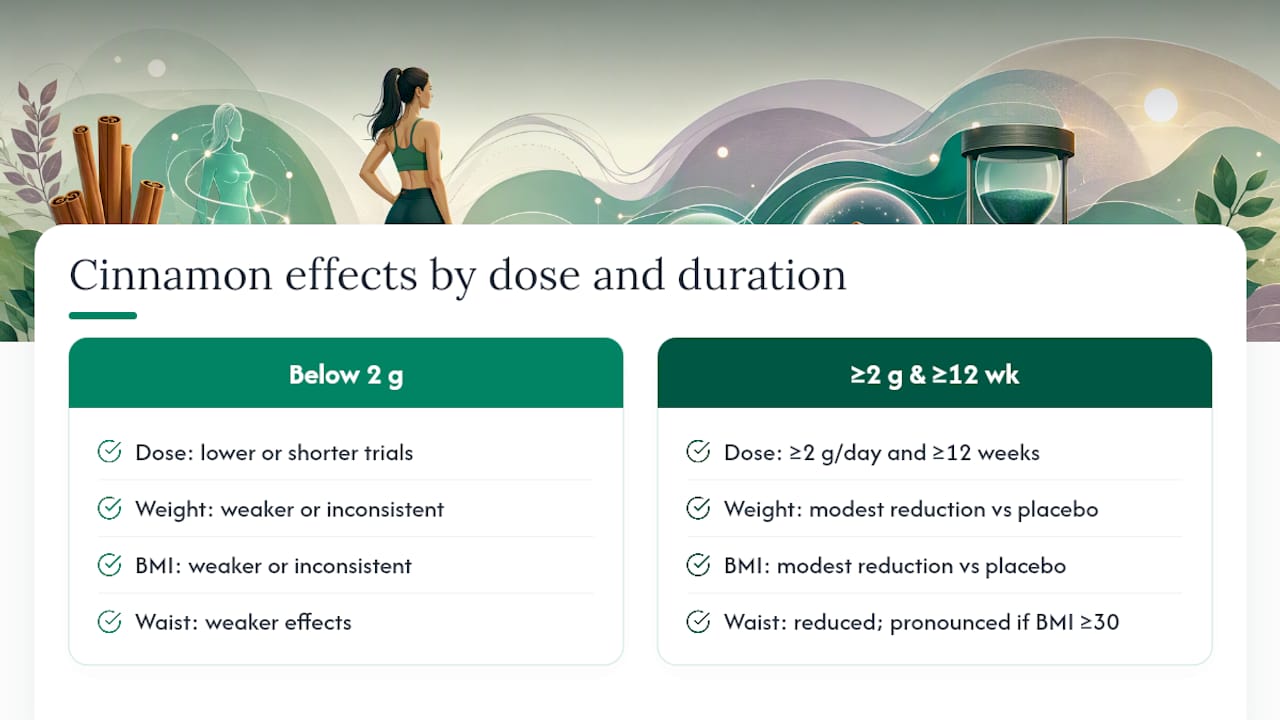
Doses across the included trials ranged from 1–6 grams per day, with most running 8–16 weeks. The dose-response analysis showed that effects became more reliable at or above 2 grams per day and after at least 12 weeks of consistent use. Shorter trials and lower doses produced weaker or inconsistent signals.
The limitations are worth naming plainly. Effect sizes are modest. Trial populations varied in age, health status, and baseline weight. Some studies used cinnamon extracts rather than ground spice, making direct comparisons imperfect. Medical News Today notes that some analyses find the strongest results around 3 grams per day, while calling for more large-scale clinical trials before firm conclusions can be drawn.
How much cinnamon for weight loss: practical dosing guidance
Start at approximately 1 gram per day (about ½ teaspoon) for the first one to two weeks to assess tolerance. If you experience no digestive discomfort, work toward 2–3 grams daily, which aligns with the dose range showing measurable effects in trials. Doses used in research spanned 1–6 grams per day, but there is no evidence that going above 3 grams adds proportional benefit, and higher doses increase coumarin exposure with Cassia cinnamon (more on that in the next section).
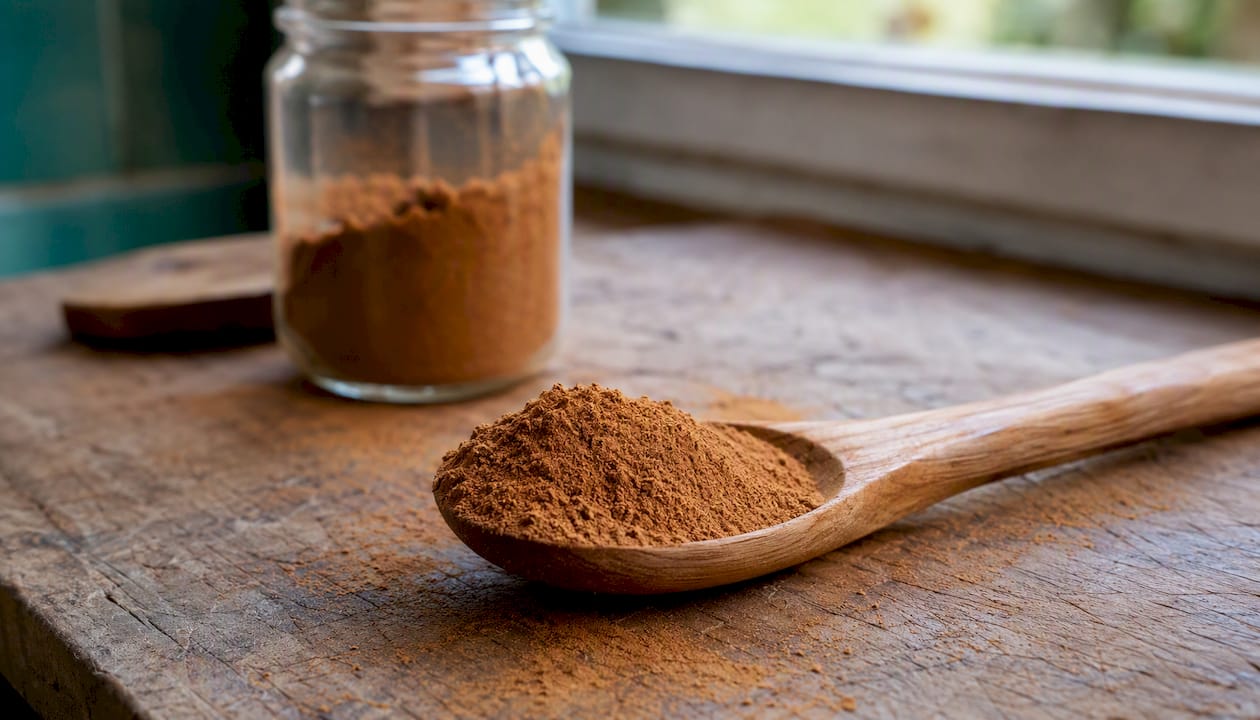
Measurement reference
Common forms compared
Ground spice: The most accessible form. Dose accuracy depends on how tightly you pack the spoon; a level measure is more consistent than a heaped one.
Standardized capsules: Offer the most precise dosing and eliminate coumarin variability when labeled as Ceylon extract. Useful for people who want a consistent daily intake without adjusting recipes. For guidance on choosing clean-label supplement options, supplement quality considerations are worth reviewing before purchasing.
Cinnamon extracts (water-soluble): Used in several clinical trials; typically standardized to a specific polyphenol content. Higher cost, but lower coumarin exposure than Cassia powder.
Three practical daily routines
Morning single dose: Stir ½–¾ teaspoon of Ceylon cinnamon into oatmeal or Greek yogurt at breakfast. Pairs well with protein to support satiety.
Split dose: ¼–½ teaspoon in morning coffee or a smoothie, plus ¼–½ teaspoon sprinkled on an afternoon snack like apple slices with almond butter.
Capsule equivalent: One 500 mg standardized capsule twice daily with meals reaches the 1 g/day starting range; two capsules twice daily reaches the 2 g/day threshold studied in trials.
Cassia vs. Ceylon: the safety distinction that changes everything
Not all cinnamon carries the same risk profile. Most cinnamon sold in U.S. grocery stores is Cassia (also labeled as Vietnamese or Chinese cinnamon), which contains significantly higher levels of coumarin than Ceylon cinnamon (sometimes called “true cinnamon”). Coumarin is a naturally occurring compound that, at high cumulative doses, can cause liver toxicity in susceptible individuals.
WebMD’s consumer guidance specifically flags coumarin risk with prolonged high-dose Cassia use and advises caution for anyone with existing liver disease. For daily supplementation at 2–3 grams, Ceylon cinnamon is the safer long-term choice. You can identify it by its lighter tan color, softer texture, and milder, slightly sweeter flavor compared to the darker, harder quills of Cassia.
Drug interactions and clinical cautions: Cinnamon can have an additive glucose-lowering effect when combined with insulin, sulfonylureas, or other hypoglycemic medications, raising the risk of hypoglycemia. It may also interact with anticoagulants like warfarin by affecting platelet function. People with liver disease, elevated liver enzymes, or a history of liver conditions should avoid regular high-dose supplementation. Pregnancy and breastfeeding are additional situations where supplemental doses — beyond typical culinary use — require clinician approval. The NCCIH recommends consulting a health professional before using cinnamon as a supplement if you take any medications or have an underlying condition.
Pro Tip: When buying cinnamon for daily use, look for “Ceylon” or “Cinnamomum verum” on the label. If the label says only “cinnamon” with no species name, assume it is Cassia and factor that into your dose.
Watch for these symptoms if you are using Cassia at higher doses: unusual fatigue, nausea, right-side abdominal discomfort, or jaundice. Any of these warrant stopping supplementation and consulting a clinician promptly.
Practical ways to add cinnamon to your daily routine
The most sustainable approach is one you will actually repeat. These options keep the daily cinnamon intake for weight loss within the evidence-based range without requiring special equipment or expensive products.
Stir ½ teaspoon into plain oatmeal with berries and a scoop of protein powder.
Add ¼ teaspoon to black coffee or an unsweetened latte.
Mix ½ teaspoon into a smoothie with spinach, frozen banana, and Greek yogurt.
Sprinkle ¼ teaspoon over sliced apple or pear with nut butter.
Brew a simple cinnamon tea: steep one Ceylon cinnamon stick in 8 oz of hot water for 10 minutes.
Blend ½ teaspoon into a savory marinade for chicken or roasted vegetables.
Two quick cinnamon weight loss recipes
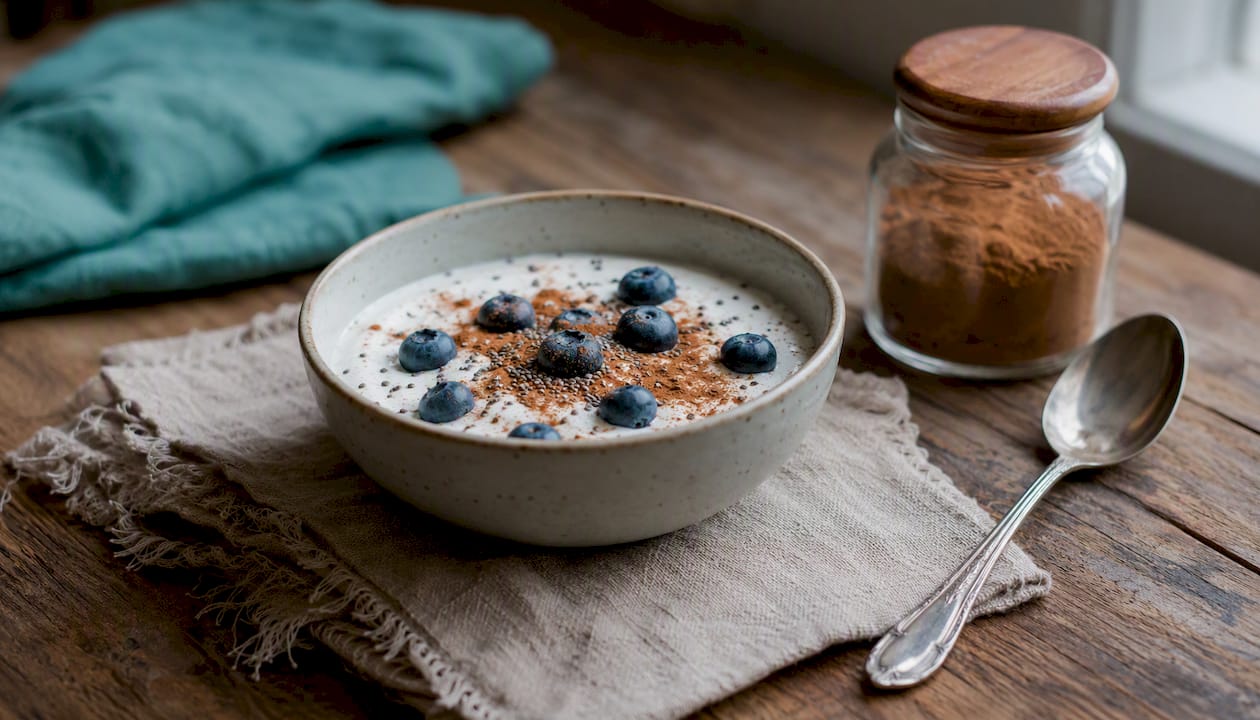
Cinnamon morning yogurt: Combine ¾ cup plain Greek yogurt, ½ teaspoon Ceylon cinnamon, 1 tablespoon chia seeds, and a handful of blueberries. Total cinnamon: ~1 gram. Protein and fiber slow digestion and support blood-sugar stability alongside the cinnamon.
Cinnamon weight loss drink (no sugar): Combine 8 oz warm water, ½ teaspoon Ceylon cinnamon, 1 teaspoon fresh lemon juice, and a pinch of ginger. Stir well and drink before or with breakfast. Total cinnamon: ~1 gram. For a split-dose day, repeat at dinner.
Registered dietitian Dawn Jackson Blatner frames cinnamon as a supportive flavor-and-satiety tool rather than a primary weight-loss agent, noting it can help reduce added sugar in recipes and may slow gastric emptying to support portion control. That framing is exactly right. Using cinnamon as a clean eating swap for sugar in coffee, oatmeal, or baked goods is where the real daily-habit value lives.
Pro Tip: Split your daily dose across two meals rather than taking it all at once. This keeps blood-sugar moderation more consistent throughout the day and reduces the chance of digestive discomfort.
Avoid commercial “cinnamon weight loss drinks” marketed as quick fixes. Many contain added sugar, artificial sweeteners, or stimulants that undermine the modest metabolic benefit cinnamon offers on its own.
When you should talk to a clinician before using cinnamon
Most healthy adults can add culinary amounts of cinnamon without concern. Supplemental doses — 1 gram per day and above, taken daily — are a different matter for certain groups. Consult a clinician before starting a regular cinnamon supplement if any of the following apply:
You take anticoagulants (warfarin, heparin, or newer blood thinners).
You use hypoglycemic medications — insulin, sulfonylureas, or GLP-1 receptor agonists — where additive glucose lowering could cause hypoglycemia.
You have liver disease, elevated liver enzymes, or a history of hepatic conditions.
You are pregnant or breastfeeding (supplemental doses beyond normal cooking use are not established as safe).
You have a known allergy to cinnamon or related spices (cassia bark, bay leaf).
When you speak with your clinician, bring the specific form (Cassia vs. Ceylon), the dose in grams, and a list of all current medications and supplements. Relevant monitoring may include liver function tests for long-term high-dose use. The NCCIH guidance and a qualified weight loss nutritionist are both useful resources for navigating supplement-medication interactions.
For children, daily supplemental doses should not be used without clinician supervision. Normal culinary use in food is generally considered safe, but concentrated supplementation in pediatric populations lacks adequate safety data.
What realistic results look like and how cinnamon fits a broader plan
The pooled trial data translates to roughly 1 kilogram of weight loss and 2.4 centimeters off the waist over 12 or more weeks at doses of 2 grams per day or above. That is a real, measurable change, but it is not dramatic on its own. The value of cinnamon in a weight-management plan comes from what it does alongside other habits, not instead of them.
Biologically, cinnamon’s active compound cinnamaldehyde has shown effects on thermogenesis and adipocyte metabolism in cellular and animal models, suggesting plausible mechanisms for modest fat-mass reduction. Clinically, cinnamon appears to moderate post-meal blood glucose, which may reduce hunger spikes and support more consistent energy levels throughout the day. Cinnamon also pairs well with herbs that support metabolic health more broadly, for those interested in a whole-food approach to blood-sugar management.
A coaching perspective on realistic timelines looks like this:
Weeks 1–2: Introduce cinnamon at ½ teaspoon per day; note any digestive changes.
Weeks 3–4: Increase to 1 teaspoon (approximately 2.6 grams) if tolerated; pair with protein at each meal.
Weeks 8–12: Assess waist measurement, energy consistency, and sugar cravings — these often shift before the scale does.
Beyond 12 weeks: Continue as a daily habit within a real whole-food eating plan rather than as a short-term supplement cycle.
Cinnamon works best as a flavor strategy that reduces added sugar, a consistent daily habit that accumulates small benefits over time, and one tool within a broader plan that includes calorie awareness, regular movement, and adequate sleep. Expecting it to produce significant weight loss in isolation is where most people get disappointed.
Cinnamon is a tool, not a treatment
The evidence on cinnamon is clearer than most spice-and-weight-loss headlines suggest, and also more modest. What stands out from the clinical data is not a dramatic fat-burning effect but a consistent, dose-dependent signal that appears when cinnamon is used daily, at meaningful amounts, for at least three months. That is actually a useful finding for anyone building sustainable habits.
Where the conventional framing gets it wrong is in treating cinnamon as either a miracle or a myth. Neither is accurate. The meta-analysis results are statistically significant and reproducible across multiple trials. A reduction of 1 kilogram in body weight and 2.4 centimeters in waist circumference over 12 weeks is not trivial when it comes from something as low-cost and low-risk as a daily teaspoon of Ceylon cinnamon in your breakfast.
The more interesting coaching question is not whether cinnamon works but how to use it in a way that actually sticks. Clients who add cinnamon to an existing morning routine — oatmeal they already eat, coffee they already drink — are far more likely to maintain the habit than those who try to build a separate supplement protocol. That consistency is what the meta-analysis was actually measuring. The trials that showed the strongest effects were the ones where participants took cinnamon every day for 12 weeks or more. Habit reliability, not dose intensity, drove the results.
One more point worth making: the safety distinction between Cassia and Ceylon is not a minor footnote. Most Americans are buying Cassia at the grocery store without knowing it. For culinary use once or twice a week, that is fine. For daily supplementation at 2–3 grams, it matters. Choosing Ceylon is a simple, inexpensive decision that removes the coumarin risk entirely and makes daily use genuinely sustainable long-term.
Personalized coaching that puts evidence-based tools to work
Knowing the right cinnamon dose is one thing. Building the daily habits that make it part of a lasting plan is another. Coachjillbyrne’s personalized nutrition coaching programs are designed for exactly that: taking evidence-based strategies and making them practical, sustainable, and specific to your health history, medications, and goals.

Working with Coachjillbyrne means you get custom meal planning that incorporates real-food strategies like cinnamon as a sugar-reducing swap, not just a supplement to add on top of an unchanged diet. Programs include medication and supplement interaction reviews, portion guidance, accountability check-ins, and progress tracking that goes beyond the scale. For clients on GLP-1 medications or managing blood sugar, that level of individualized oversight is particularly relevant when adding any supplement to a daily routine.
If you are ready to move from general information to a plan built around your specific situation, book a consultation with Coachjillbyrne to get started.
Sources
The following sources informed this article and are worth reading directly for additional depth.
FAQ
How much cinnamon should you take daily for weight loss?
The dose range supported by clinical trials is 1–3 grams per day, with the strongest evidence at 2 grams or more taken consistently for at least 12 weeks. In kitchen terms, 1 teaspoon of ground cinnamon provides approximately 2.6 grams.
Is it better to take cinnamon in the morning or at night?
Either timing can work, but splitting the dose across two meals — morning and evening — tends to support more consistent blood-sugar moderation throughout the day. There is no clinical evidence that one single timing window produces significantly better weight outcomes than another.
How do you use cinnamon to lose weight practically?
Add ½–1 teaspoon of Ceylon cinnamon to oatmeal, yogurt, coffee, or a smoothie each morning, and consider a second small dose at dinner. Pairing it with protein and fiber at the same meal supports satiety and helps moderate post-meal glucose.
What should you mix with cinnamon for a flat stomach?
Plain Greek yogurt, oatmeal, or warm water with lemon are practical, low-sugar bases. Avoid commercial cinnamon drinks with added sugar or stimulants, which offset any metabolic benefit. Combining cinnamon with protein-rich foods produces the most consistent satiety effect.
Does the type of cinnamon matter for weight loss?
Yes. Ceylon cinnamon is preferable for daily supplementation because it contains far less coumarin than Cassia, reducing the risk of liver toxicity with long-term use. Both types appear in the weight-loss research, but for sustained daily use at 2–3 grams, Ceylon is the safer and more practical choice.
This article provides general nutrition information and is not a substitute for professional medical or dietary advice. Consult a qualified health professional before starting any supplement regimen, particularly if you take medications or have an underlying health condition.
Recommended
Comments