
How to Cook Healthy Family Dinners on a Budget

Cooking healthy family dinners on a budget is defined as consistently preparing nutritious meals for a family of four at roughly $12 to $14 per dinner by combining affordable proteins, pantry staples, and smart shopping habits. That figure is achievable without sacrificing nutrition or flavor. The key tools are meal planning, ingredient overlap, and a short list of versatile staples that anchor every week. Families who apply these principles spend less, waste less, and eat better across the board.
What ingredients make budget-friendly healthy dinners possible?
The foundation of affordable, nutritious family meals is a short list of proteins and staples that work across multiple dishes. Rotating low-cost proteins like eggs, dried beans, lentils, chicken thighs, and ground turkey keeps protein costs between $0.50 and $1.50 per serving. That range makes it realistic to hit daily protein targets without overspending. Each of these proteins is also flexible enough to anchor at least three or four different meals.
Pantry staples anchor the cost structure of every dinner. Rice, pasta, and potatoes are inexpensive, filling, and pair with nearly any protein or vegetable. A 5-pound bag of rice or a box of pasta costs well under $3 and stretches across multiple meals. These items reduce the pressure to buy expensive specialty ingredients every week.

Vegetables deserve a practical approach. Frozen and canned vegetables often cost less than fresh, carry the same nutritional value, and eliminate spoilage risk. Frozen broccoli, for example, costs roughly half the price of fresh broccoli. Canned tomatoes, corn, and black beans add fiber and volume to meals at minimal cost. When fresh produce is in season and priced low, buy it. When it is not, frozen is the smarter choice.
Here is a practical starter list for a well-stocked budget kitchen:
Proteins: Chicken thighs, ground turkey, eggs, dried lentils, canned or dried beans
Grains and starches: Brown rice, pasta, potatoes, oats
Vegetables: Frozen broccoli, frozen peas, canned tomatoes, canned corn, seasonal fresh produce
Flavor staples: Garlic, onions, olive oil, cumin, paprika, soy sauce, canned coconut milk
Dairy: Plain yogurt, shredded cheese (used sparingly)
Pro Tip: Buy in-season produce at the peak of its availability, then freeze portions yourself. A bag of fresh spinach bought on sale and frozen at home costs a fraction of the pre-packaged frozen version.
How do you plan weekly meals and stay within a budget?
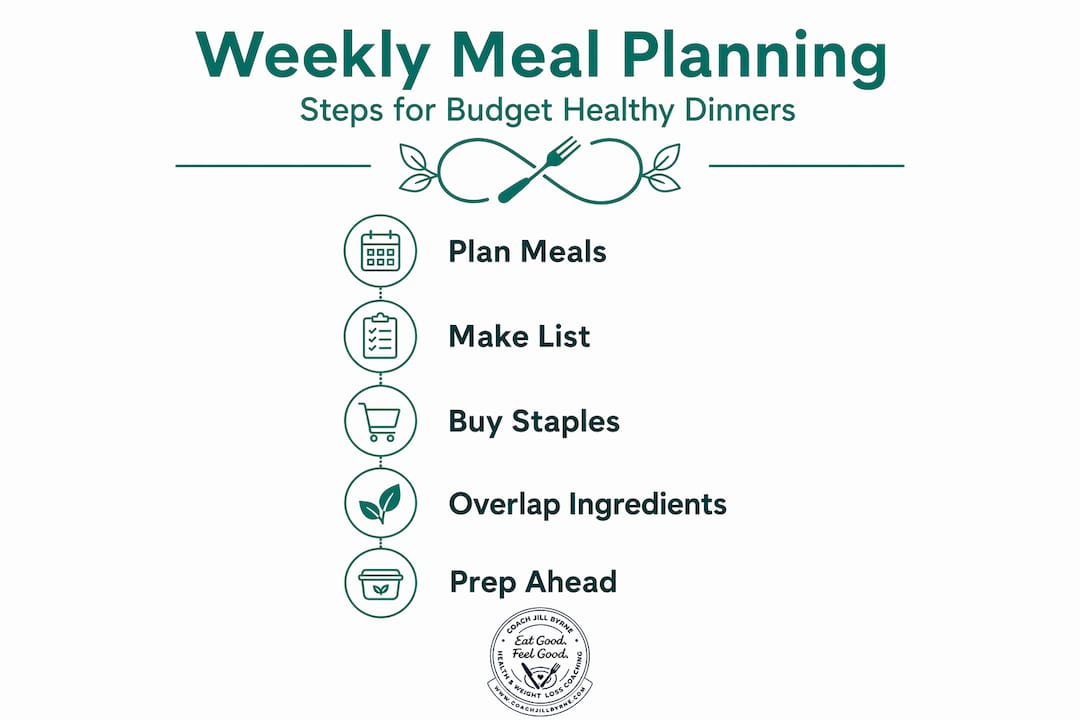
Meal planning is the single most effective tool for reducing food spending. Planning meals before shopping and sticking to a categorized grocery list cuts impulse purchases that add $15 to $25 per trip. Those unplanned items add up fast and rarely contribute to a coherent meal plan. A written list organized by store section, such as produce, proteins, canned goods, and dairy, keeps shopping focused and fast.
The most effective planning strategy is ingredient overlap. Every purchased ingredient should appear in at least two recipes during the week. A bunch of cilantro bought for taco night also tops a rice bowl on Thursday. A can of black beans used in soup on Monday becomes a taco filling on Wednesday. This approach eliminates the waste that quietly destroys food budgets.
Bulk buying proteins is another proven tactic. 5-pound chicken packs cost 30–50% less per pound than smaller trays. Buy in bulk, portion into meal-sized bags, and freeze what you will not use within two days. This one habit alone can reduce weekly protein costs significantly.
Here is a simple weekly planning process:
Check what is already in your pantry and freezer before writing any list.
Choose five dinner recipes that share at least three common ingredients.
Write your grocery list organized by store section, not by recipe.
Check store sales and swap one protein or vegetable if a better deal exists.
Assign each recipe to a specific night so nothing gets skipped or forgotten.
Pro Tip: Keep a “meal template” rotation: one sheet pan night, one pasta night, one taco night, one soup night, and one stir-fry night. Templates remove the daily decision of what to cook and make shopping lists nearly automatic.
The table below shows a sample weekly dinner plan built around ingredient overlap and a $100 budget for a family of four.
Night | Meal | Shared Ingredient |
Monday | Lentil soup with crusty bread | Lentils, canned tomatoes |
Tuesday | Sheet pan chicken thighs with potatoes | Chicken thighs, garlic |
Wednesday | Ground turkey tacos with black beans | Black beans, cilantro |
Thursday | One-pot pasta with canned tomatoes | Canned tomatoes, garlic |
Friday | Fried rice with eggs and frozen peas | Eggs, frozen peas |
Saturday | Slow-cooker bean and vegetable curry | Canned coconut milk, beans |
Sunday | Chicken and rice bowls with leftovers | Leftover chicken, rice |
What are easy meal ideas that nourish the whole family affordably?
Simple meal frameworks are the backbone of affordable family recipes that require under 30 minutes of active cooking. The goal is not culinary complexity. The goal is a meal with sufficient protein, fiber, and produce that the whole family will actually eat. The five formats below cover most of a family’s weekly dinner needs without requiring specialty skills or equipment.
Sheet pan chicken thighs: Toss bone-in chicken thighs with olive oil, garlic, paprika, and salt. Add cubed potatoes and frozen broccoli to the same pan. Roast at 425°F for 35 minutes. Total cost for a family of four runs well under $14, and cleanup takes five minutes.
Ground turkey taco night: Brown ground turkey with cumin and garlic. Serve in corn tortillas with canned black beans, shredded cabbage, and plain yogurt as a sour cream substitute. This meal costs roughly $10 for four people and takes 20 minutes.
One-pot pasta: Combine pasta, canned tomatoes, garlic, onion, and broth in a single pot. Simmer until the pasta absorbs the liquid. Add a handful of frozen spinach at the end. The result is a complete, fiber-rich meal for under $8.
Slow-cooker lentil or bean soup: Add dried lentils, canned tomatoes, onion, garlic, cumin, and broth to a slow cooker in the morning. Dinner is ready by 6:00 PM with zero active cooking time. A full pot feeds four generously for about $5.
Fried rice with eggs and vegetables: Use leftover rice, two or three eggs, frozen peas, soy sauce, and whatever vegetables are on hand. This meal costs almost nothing when built from leftovers and takes 15 minutes.
A practical definition of a healthy meal includes sufficient protein, dietary fiber, at least one vegetable serving, and minimal ultra-processed ingredients. Every meal format above meets that standard. Families who build dinners around these frameworks consistently eat well without overspending.
How do you avoid the most common mistakes in budget cooking?
The most common reason families abandon budget cooking is overcomplication. Avoiding perfectionism and maintaining a manageable core ingredient list prevents burnout and keeps the plan running week after week. Complex recipes with long ingredient lists cost more, take longer, and are harder to repeat. Simpler meals get made consistently, and consistency is what produces results.
Specific mistakes to avoid:
Buying specialty items for one recipe: A bottle of fish sauce or a specialty spice used once and forgotten adds cost without value. Stick to versatile seasonings that work across multiple dishes.
Relying on delicate fresh produce: Fresh herbs and leafy greens spoil quickly. Buy them only when you have a clear plan to use them within two days. Otherwise, choose frozen.
Over-preparing portions: Cooking too much of a perishable protein leads to waste. Portion proteins before freezing so you only thaw what you need.
Skipping the pantry check: Shopping without checking what you already have leads to duplicates and wasted money.
Ignoring family preferences: A meal that no one eats is a complete waste of money. Build the plan around foods the family already enjoys, then adjust nutrition from there.
“Flexibility is more sustainable than perfection. A family that eats a simple, nutritious dinner five nights a week is far ahead of one that attempts elaborate meal prep and gives up by Wednesday. The goal is a healthy food culture built on repeatable habits, not flawless execution.”
Meal planning reduces weekly dinner spending by $30 to $50 when families eliminate impulse buys and rotate pantry staples consistently. That savings compounds over a month into a meaningful reduction in grocery bills. The families who sustain it are the ones who keep their systems simple.
Key Takeaways
Families can consistently serve nutritious dinners for $12 to $14 per meal by combining affordable proteins, pantry staples, ingredient overlap, and a structured weekly shopping plan.
Point | Details |
Budget target is achievable | A family of four can eat nutritious dinners for $85–$100 weekly with smart planning. |
Protein rotation cuts costs | Eggs, beans, chicken thighs, and ground turkey keep protein costs at $0.50–$1.50 per serving. |
Ingredient overlap prevents waste | Every ingredient should appear in at least two recipes weekly to eliminate spoilage. |
Frozen produce is a smart choice | Frozen vegetables cost less, last longer, and carry the same nutritional value as fresh. |
Simplicity drives consistency | A core ingredient list and flexible meal templates prevent burnout and support long-term savings. |
What I have learned from coaching families on real-food budgets
After working with families across a wide range of budgets and lifestyles, the pattern is clear. The families who succeed at eating well without overspending are not the ones with the most elaborate meal plans. They are the ones who accept that Tuesday’s dinner does not need to be impressive. It needs to be on the table.
The biggest mindset shift I encourage is separating nutrition from complexity. A bowl of lentil soup with whole-grain bread meets every nutritional marker a family needs for dinner. It costs under $6 for four people. It takes 20 minutes if you use canned lentils. Parents often feel guilty serving something that simple, as if a “real” dinner requires more effort. That guilt is the enemy of consistency.
I also push families to involve kids in the process. When children help choose one meal per week from a short list of options, they are far more likely to eat it without complaint. That reduces waste and makes dinner a shared experience rather than a nightly negotiation. Research on children’s healthy eating habits consistently shows that involvement builds acceptance over time.
The dinner table is where home cooking shapes family health in ways that extend well beyond any single meal. Budget cooking done right is not a compromise. It is a practice that builds nutrition, connection, and financial discipline at the same time.
— Coach Jill
How Coachjillbyrne supports families with practical nutrition guidance
Eating well on a budget is a skill, and like any skill, it develops faster with structured support. Coachjillbyrne offers personalized nutrition coaching designed for real families with real constraints, including time, budget, and picky eaters.

Coachjillbyrne’s approach focuses on building practical, repeatable habits rather than prescribing rigid meal plans that fall apart after two weeks. Coaching sessions address meal planning, portion guidance, and how to align family nutrition goals with what is actually affordable at your local store. Families working with Coachjillbyrne learn to build a realistic nutrition plan that fits their lives without requiring a complete overhaul of how they shop or cook. Visit Coachjillbyrne to learn more about available coaching programs and resources.
FAQ
How much does a healthy family dinner cost per night?
A nutritious dinner for a family of four costs an average of $12 to $14 when built around affordable proteins and pantry staples. Families spending $85 to $100 per week on groceries can cover all seven dinners within that range.
What are the best budget proteins for family dinners?
Chicken thighs, ground turkey, eggs, dried lentils, and canned or dried beans are the most cost-effective proteins for family meals. These options cost $0.50 to $1.50 per serving and work across a wide range of meal formats.
Is frozen produce as nutritious as fresh?
Frozen vegetables carry the same nutritional value as fresh and often cost significantly less. Frozen broccoli costs roughly half the price of fresh broccoli, making it the better choice when spoilage risk is a concern.
How does meal planning reduce grocery spending?
Structured meal planning reduces weekly dinner spending by $30 to $50 by eliminating impulse purchases and keeping shopping focused on pantry staples. A written, categorized grocery list is the most direct tool for staying within budget.
What is the easiest way to avoid food waste on a budget?
Plan each week so that every ingredient appears in at least two recipes. Cross-meal ingredient use is the primary strategy for preventing spoilage and keeping the weekly grocery bill predictable.
Recommended
Comments