
Hydration and Family Wellness: What Every Parent Should Know

Hydration is defined as the process of maintaining adequate fluid levels so the body can perform its core functions, from regulating temperature to supporting brain activity. The role of hydration in family wellness is not a secondary concern. 80% of U.S. children do not meet dietary water intake guidelines, and 65% show clinical signs of underhydration. That figure means most families are already dealing with the effects of low fluid intake without realizing it. Parental habits directly shape children’s hydration status, making water intake a whole-family responsibility, not just a personal one.
What is the role of hydration in family wellness?
Hydration sustains nearly every system in the body. Proper hydration supports kidney filtration, blood volume maintenance, nutrient delivery, digestion, and cognitive function. When fluid intake drops, these systems slow down. Energy falls, concentration weakens, and physical performance suffers across every age group in the household.
Water is not a supplement or a wellness trend. It is the medium through which the body carries out its most basic work. Families who treat hydration as a daily priority, rather than an afterthought, tend to see measurable improvements in energy, mood, and overall health. Building that awareness at home is the first step toward lasting change.

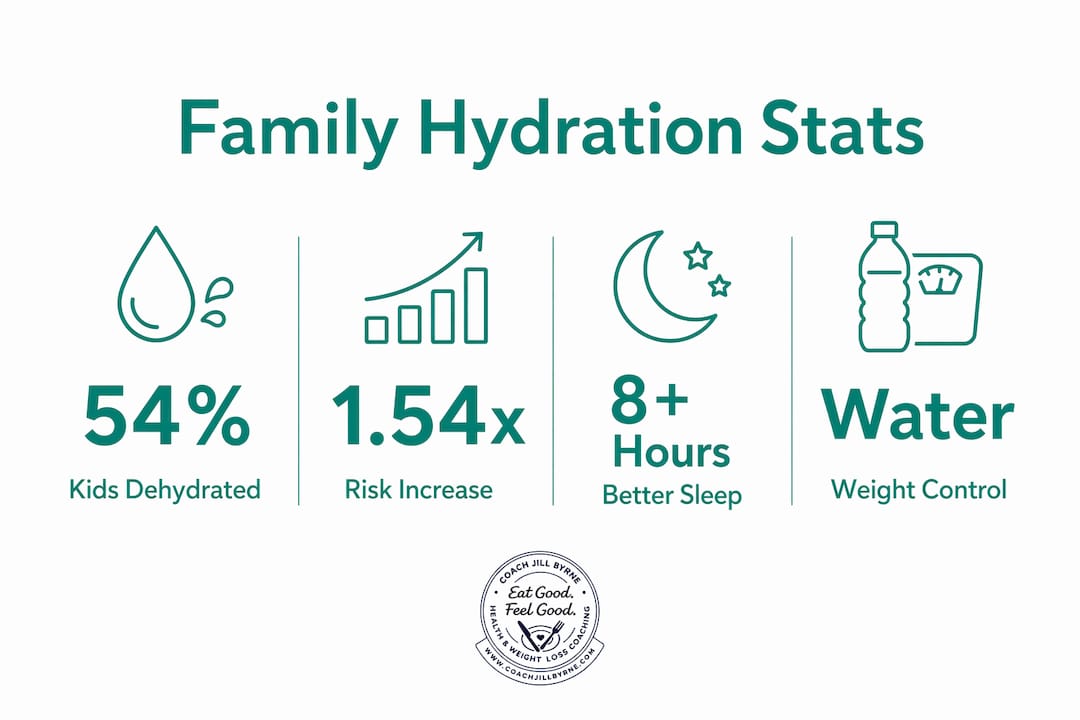
The importance of hydration for families also extends to weight management. Replacing sugary drinks with water reduces calorie intake and supports healthy weight. Water has zero calories and helps prevent conditions like kidney stones and constipation. That simple swap, done consistently, produces real results over time.
Why are children more vulnerable to dehydration?
Children have higher metabolic rates than adults and lose fluids faster. Dehydration in kids shows up as irritability, headache, and reduced concentration well before a child feels thirsty. Severe cases can escalate to heatstroke. Parents often misread these signals as behavioral problems rather than fluid deficits.
The challenge is that children do not reliably recognize or communicate thirst. Kids often show no thirst until dehydration is already underway. Waiting for a child to ask for water is not a reliable strategy. Routine-based hydration, scheduled throughout the day, works far better than reactive drinking.
Common signs of underhydration in children include:
Dark yellow urine or infrequent bathroom trips
Dry lips or mouth
Fatigue or low energy during normal activity
Difficulty focusing at school or during homework
Irritability or mood swings without a clear cause
Parental hydration habits directly predict children’s hydration levels. Children of underhydrated parents have 1.54 times higher odds of being underhydrated themselves. That statistic makes one thing clear: improving a child’s fluid intake starts with improving the parent’s.
Pro Tip: Place a filled water bottle at each child’s breakfast spot every morning. That single visual cue builds a consistent habit without requiring reminders.
How does hydration affect adult health and energy?
Adults who maintain consistent fluid intake support kidney function, stable digestion, and mental clarity throughout the day. Prolonged adult dehydration links directly to kidney stones, constipation, and mental fuzziness. These are not rare outcomes. They are common consequences of chronically low water intake that many adults normalize as just feeling tired or off.
Hydration also affects cognitive performance. Even mild fluid loss reduces focus, slows reaction time, and worsens mood. For parents managing work, household responsibilities, and childcare, that cognitive drag has real consequences. Staying hydrated is one of the most direct ways to maintain the mental energy the day demands.
Key benefits of consistent water intake for adults include:
Stable energy levels without relying on caffeine
Improved kidney function and reduced stone risk
Better digestion and reduced bloating
Clearer thinking and steadier mood
Support for healthy weight management through appetite regulation
Hydration also supports the effectiveness of a balanced diet. Water helps the body absorb nutrients from food and carry them to cells. Families focused on home cooking and nutrition get more from their meals when hydration levels are adequate.
Is the “8 glasses a day” rule actually true?
The “8 glasses per day” rule is not a medical requirement. Most healthy individuals can rely on thirst cues for adequate hydration, provided they eat a balanced diet. The eight-glass figure originated from a 1945 recommendation that was widely misquoted and stripped of its original context, which included fluids from food.
Overhydration is rare but real. Drinking far beyond thirst can cause hyponatremia, a dangerous drop in blood sodium levels. That risk is low for most families but worth knowing, especially for parents who push large volumes of water on children who are not thirsty.
Hydration Belief | What the Evidence Shows |
“Drink 8 glasses daily, no exceptions” | Thirst is a reliable guide for healthy people with balanced diets |
“Coffee and tea dehydrate you” | Caffeinated drinks contribute to fluid intake; mild diuretic effect is minimal |
“Clear urine means perfect hydration” | Pale yellow urine is the target; fully clear urine may signal overhydration |
“Sports drinks are better than water” | Water is sufficient for everyday hydration; electrolyte drinks suit illness or heavy activity |
Adults who drink to thirst and eat a varied diet rarely need to track exact volumes. The goal is consistency, not a specific number. Families benefit more from building reliable water habits than from counting ounces.
Pro Tip: Teach children to check their urine color. Pale yellow means well hydrated. Dark yellow means drink more. This gives kids a concrete, self-directed tool.
Practical family hydration strategies that actually work
Building consistent hydration habits across a household requires structure, not willpower. Habit stacking, which means attaching a new behavior to an existing routine, is the most reliable method. Routine-based hydration increases compliance far more effectively than general reminders to “drink more water.”
Here is a practical framework for building family-wide hydration habits:
Morning anchor: Every family member drinks a glass of water before breakfast. This replaces nothing and adds a consistent daily start.
Meal pairing: Water is served with every meal and snack, without exception. This removes the decision entirely.
School prep: Children’s water bottles are filled and placed in their bags the night before. Accessibility drives intake.
After-activity rule: After any physical activity, outdoor time, or sports practice, water comes before any other drink or snack.
Evening wind-down: A small glass of water before bed supports overnight hydration, especially for children who sweat during sleep.
Parents model the behavior that children adopt. Higher parental water intake correlates directly with higher child intake. Drinking water visibly, at meals and throughout the day, teaches children that hydration is normal and expected.
Making water more appealing also helps. Sliced fruit added to a pitcher, reusable bottles in favorite colors, and water served at the right temperature for each child all reduce resistance. These are not gimmicks. They are practical tools for teaching children healthy habits that last into adulthood.
Electrolyte solutions belong in the toolkit for specific situations: illness with vomiting or diarrhea, intense heat exposure, or prolonged athletic activity. They are not a daily replacement for water. Used strategically, they restore lost salts effectively. Used routinely, they add unnecessary sugar and cost.
Hydration also supports sleep quality and appetite regulation. Children who are well hydrated tend to sleep more soundly and wake with more stable energy. Pairing hydration habits with healthy food culture at home creates a foundation that supports the whole family’s wellbeing.
Key Takeaways
Adequate hydration is the single most accessible health habit a family can build together, and parental behavior is the strongest predictor of whether children maintain it.
Point | Details |
Children are high-risk for dehydration | Kids lose fluids faster and rarely signal thirst before dehydration begins. |
Parental habits drive child hydration | Children of underhydrated parents are 1.54 times more likely to be underhydrated. |
The 8-glasses rule is outdated | Healthy individuals should drink to thirst and focus on consistency, not volume. |
Habit stacking builds lasting routines | Attaching water intake to existing routines like meals and brushing teeth increases compliance. |
Electrolytes are situational, not daily | Reserve electrolyte drinks for illness, heat, or heavy activity, not everyday hydration. |
What I’ve learned from coaching families on hydration
Parents often come to me focused on food. They want meal plans, cleaner ingredients, and better portion control. Hydration rarely makes the list. That gap surprises me every time, because in my experience, fixing water intake often produces the fastest visible results: better energy, clearer skin, fewer afternoon crashes, and children who are noticeably calmer and more focused at school.
The insight that changed how I coach families is this: children do not fail at hydration. Parents do. Not through neglect, but through unawareness. When I show a parent that their own low water intake is statistically linked to their child’s, something shifts. It stops being a lecture about drinking more water and becomes a shared family goal.
I also push back on perfectionism here. Families do not need to hit a precise daily target. They need a few reliable anchors in their day. A glass at breakfast, water with every meal, a bottle in the school bag. That is enough to move the needle. Progress over perfection is not a motivational phrase. It is the only approach that actually sticks.
Hydration is also a gateway habit. Families who get consistent with water intake tend to become more aware of what else they are putting in their bodies. It opens the door to broader conversations about nutrition, sleep, and energy. That is where real, lasting wellness begins.
— Coach Jill
How Coachjillbyrne supports your family’s wellness goals
Coachjillbyrne works with families to build practical, sustainable health habits that fit real life. Hydration is one piece of a larger picture that includes balanced nutrition, meal planning, and consistent accountability.

If you are ready to move beyond general advice and get guidance tailored to your family’s specific needs, Coachjillbyrne offers personalized nutrition coaching that addresses hydration, food choices, and habit formation together. The coaching approach focuses on what works in everyday life, not what looks good on paper. Families who work with Coachjillbyrne build routines they can maintain long after the coaching ends. That is the standard every program is built around.
FAQ
How much water should children drink each day?
Children’s fluid needs vary by age, size, and activity level. A reliable guide is pale yellow urine, which signals adequate hydration without the need to count exact ounces.
Can dehydration cause behavioral problems in kids?
Yes. Dehydration symptoms in children often appear as irritability, difficulty focusing, and mood swings, which are frequently mistaken for behavioral issues rather than fluid deficits.
Is the 8-glasses-a-day rule accurate?
No. Healthy adults who drink to thirst and eat a balanced diet typically meet their hydration needs without tracking a specific volume.
When should families use electrolyte drinks?
Electrolyte solutions are appropriate during illness, intense heat, or heavy physical activity. Plain water remains the best choice for everyday hydration.
How can parents help children drink more water?
Habit stacking works best. Pair water intake with existing routines like meals, brushing teeth, and after-school snacks. Visible parental modeling also increases children’s water intake directly.
Recommended
Comments