
Long-Term Weight Management: What It Really Means

Long-term weight management is defined as the sustained process of maintaining a healthy weight through consistent eating habits, physical activity, and behavioral change. It is not a diet phase with an end date. The National Institute of Diabetes and Digestive and Kidney Diseases (NIDDK) identifies sustainable lifestyle habits as the foundation of lasting weight control, recommending at least 300 minutes of moderate physical activity per week for maintenance. That figure is notably higher than what most people follow during active weight loss. Understanding what does long-term weight management mean separates people who keep weight off from those who regain it within months.
What does long-term weight management mean in practice?
Long-term weight management means replacing short-term dieting with permanent lifestyle habits. A temporary calorie cut produces temporary results. Permanent change requires a shift in how you eat, move, and think about food every day.
The NIDDK draws a clear line between the weight loss phase and the weight maintenance phase. During active loss, the goal is a calorie deficit of 500–750 kcal per day, producing realistic weight loss of 1–2 pounds per week. Once a target weight is reached, the goal shifts to balancing intake with a higher level of physical activity to prevent regain.
Weight loss phase vs. weight maintenance phase
Phase | Primary goal | Calorie approach | Activity level |
Weight loss | Reduce body fat | 500–750 kcal daily deficit | Moderate activity |
Weight maintenance | Sustain healthy weight | Balanced intake | 300+ min/week moderate activity |

The behavioral habits that define successful maintenance include self-monitoring, goal setting, and stimulus control. Self-monitoring means tracking food intake and body weight regularly. Stimulus control means managing your environment so that unhealthy choices are harder to make by default.
Pro Tip: Weigh yourself at the same time each week, under the same conditions. Consistent tracking catches small gains before they become large ones.
Sustainable weight loss also requires patience with pace. A 10-year observational study found that structured nutritional and behavioral interventions produced a 23.1% reduction in fat mass alongside improved metabolic markers including HbA1c and LDL cholesterol. That kind of result does not come from a 30-day cleanse. It comes from years of consistent practice.
Why is long-term weight control so challenging?
The body actively resists weight loss after it occurs. Metabolism slows and hunger hormones increase after weight reduction, making it biologically harder to maintain a lower weight than it was to reach it. This is not a failure of willpower. It is a documented physiological response.
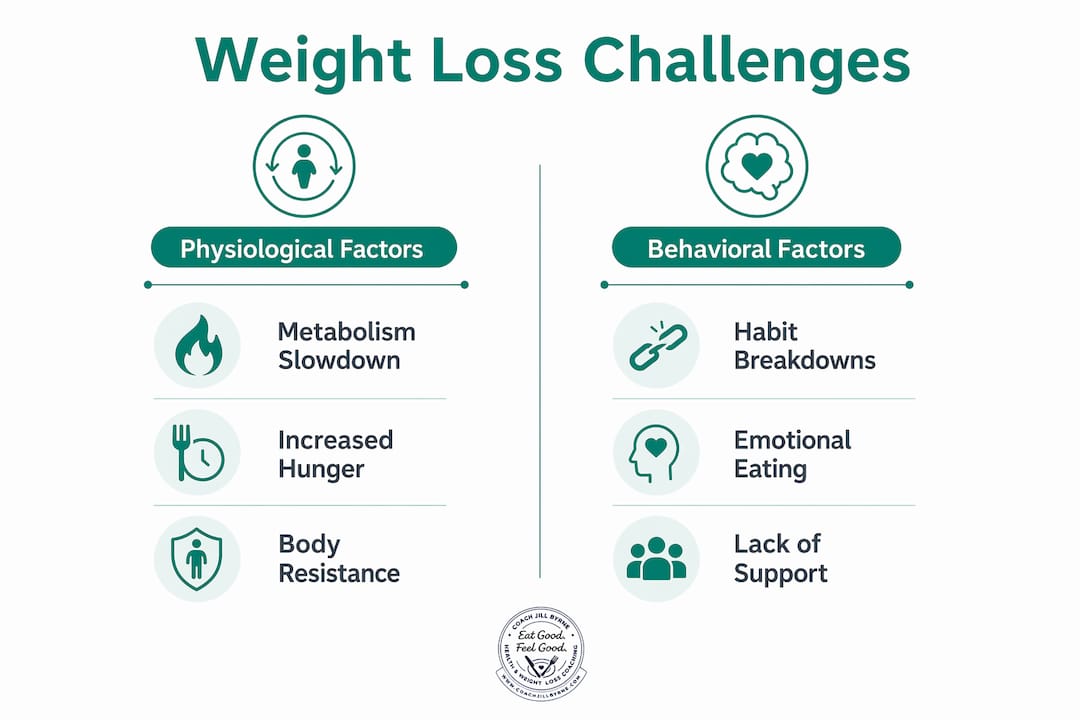
The NIDDK confirms that metabolic adaptation limits energy expenditure after weight loss. The body burns fewer calories at rest than it did before the loss, even at the same body weight. This means a person who has lost 30 pounds needs to eat less and move more than a person who has always weighed the same amount.
Psychological barriers compound the biological ones. Stress, life transitions, and social events all create pressure on eating habits. Willpower is a finite resource, and relying on it alone as a weight management strategy produces predictable failure.
Treating weight management like a chronic condition, similar to managing blood pressure, is the most accurate mental model for long-term success. It requires ongoing monitoring, periodic adjustments, and the acceptance that there is no point at which the work is finished.
The good news is that lapses are normal. People who succeed long-term are not people who never slip. They are people who catch setbacks early and return to their habits quickly. Mindfulness practices and consistent support networks are the most reliable tools for building that kind of resilience.
Metabolic slowdown reduces resting calorie burn after weight loss
Hunger hormones like ghrelin increase, raising appetite
Psychological fatigue weakens adherence over time
Life disruptions (travel, illness, stress) interrupt established routines
Social environments often normalize overeating
How do behavior and support systems affect weight maintenance?
Structured support is the single most effective tool for preventing weight regain. Frequent contact with an interventionist, through monthly or twice-monthly counseling sessions, is linked to sustained weight loss of more than 10% for up to nine years. That is a clinically significant result that education-only programs cannot replicate.
The National Weight Control Registry, which tracks individuals who have maintained significant weight loss long-term, consistently reports that successful maintainers exercise extensively. High physical activity levels exceeding 200 minutes per week characterize this group, a finding endorsed by the American College of Sports Medicine.
Behavioral science identifies four practices that predict maintenance success:
Regular self-monitoring. Weigh in weekly and log food intake. People who track consistently catch weight creep before it becomes significant regain.
SMART goal setting. Goals tied to specific dietary and activity targets predict better long-term outcomes than vague intentions like “eating healthier.”
Stimulus control. Restructure your home environment so that nutritious foods are visible and accessible, and high-calorie foods require deliberate effort to obtain.
Relapse prevention planning. Identify your personal high-risk situations (late-night stress eating, holiday gatherings, travel) and prepare a specific response in advance.
Pro Tip: Set one specific, measurable goal each month rather than overhauling everything at once. Early wins build the confidence that sustains long-term effort.
Online support tools and accountability programs extend the reach of professional guidance between sessions. The data is clear: people with structured accountability maintain more weight loss than those working alone.
What strategies actually work for sustainable weight management?
Effective long-term weight management strategies share one quality: they fit into real life without requiring perfection. Gradual habit adoption outperforms aggressive restriction every time. The transition from active weight loss to maintenance requires shifting from a calorie deficit to balanced intake paired with higher activity, not simply stopping the diet.
Physical activity is non-negotiable for maintenance. The key is choosing activities you will actually do consistently. Resistance training preserves muscle mass, which supports a higher resting metabolic rate. Aerobic activity burns calories and supports cardiovascular health. Combining both produces better results than either alone.
Nutrition quality matters as much as quantity. Adequate protein intake supports satiety and muscle retention. Whole foods with high fiber content reduce hunger between meals. Meal planning reduces the number of impulsive food decisions you make each day, and fewer impulsive decisions means fewer regrettable ones.
Strategy | Why it works | Practical example |
Meal planning | Reduces impulsive food choices | Prep lunches for the week on Sunday |
Protein focus | Supports satiety and muscle retention | Include a protein source at every meal |
Resistance training | Preserves metabolic rate | Two strength sessions per week minimum |
Regular weigh-ins | Catches weight creep early | Same time, same day, every week |
Professional support | Provides accountability and course correction | Monthly coaching or counseling sessions |
Adapting your approach as life changes is also part of the process. Metabolism shifts with age. Activity levels change with work schedules and family demands. A strategy that worked at 35 may need adjustment at 45. Sustainable weight loss requires periodic reassessment, not a fixed plan followed indefinitely without review.
Newer therapeutic options, including second-generation incretin-based medications, show clinical benefit for weight management when combined with lifestyle modification. These medications require ongoing use to sustain their cardiometabolic benefits, reinforcing that no single tool replaces consistent behavioral practice.
Key Takeaways
Long-term weight management requires permanent lifestyle habits, not temporary dieting, supported by consistent physical activity, self-monitoring, and structured accountability.
Point | Details |
It is a lifelong process | Weight management does not end at goal weight; maintenance requires ongoing effort and monitoring. |
Activity levels must be high | Maintaining weight loss requires 300+ minutes of moderate activity per week, more than during active loss. |
Biology works against you | Metabolic slowdown and increased hunger hormones make maintenance harder than initial loss. |
Support prevents regain | Monthly counseling or coaching contact sustains clinically significant weight loss over years. |
Habits beat willpower | Stimulus control, meal planning, and self-monitoring remove reliance on willpower alone. |
What I have learned about making weight management last
Weight management is the area where I see the most confusion and the most unnecessary suffering. People treat it like a project with a finish line. They lose the weight, declare victory, and then wonder why the scale climbs again six months later.
The most accurate way I can describe long-term weight maintenance is this: it is closer to managing blood pressure than finishing a race. You do not manage blood pressure for 90 days and then stop. You monitor it, adjust your approach when life changes, and accept that it requires attention indefinitely. Weight is the same.
What I have found, working with clients over time, is that the people who succeed are not the ones with the most willpower. They are the ones who build systems. They plan their meals. They schedule their workouts. They check in regularly with someone who holds them accountable. They do not rely on motivation, because motivation fluctuates. Systems do not.
The other thing I want you to hear is this: setbacks are not failures. They are data. A week of poor eating tells you something about your environment, your stress levels, or your planning. The right response is curiosity and course correction, not shame. New habits that last are built through recovery, not perfection.
Self-compassion is not soft advice. It is a practical tool. People who respond to lapses with harsh self-criticism are more likely to abandon their efforts entirely. People who respond with problem-solving are more likely to get back on track within days.
— Coach Jill
Personalized support for lasting results with Coachjillbyrne
Knowing what long-term weight management requires is one thing. Building the habits that make it real is another. Coachjillbyrne offers personalized nutrition coaching designed around sustainable habit formation, not restrictive dieting or unrealistic fitness expectations.

Programs focus on real food nutrition, meal planning, portion awareness, and consistent accountability, the exact combination that research links to lasting results. Whether you are starting fresh or working to prevent regain after previous weight loss, structured coaching provides the guidance and accountability that makes the difference between short-term results and permanent change. Visit Coachjillbyrne to learn how personalized support fits your goals and your life.
FAQ
What does long-term weight management mean?
Long-term weight management is the sustained practice of maintaining a healthy weight through permanent lifestyle habits, including balanced nutrition, regular physical activity, and behavioral self-monitoring. It is a lifelong process, not a temporary program.
How much exercise is needed to maintain weight loss?
The NIDDK recommends at least 300 minutes of moderate physical activity per week for weight maintenance. The National Weight Control Registry reports that successful long-term maintainers typically exceed 200 minutes per week.
Why do people regain weight after losing it?
Metabolic adaptation reduces resting calorie burn after weight loss, and hunger hormones increase, making the body actively resist staying at a lower weight. Long-term behavioral strategies and structured support are required to counteract these biological responses.
How does professional support help with weight maintenance?
Frequent contact with a counselor or coach, monthly or twice-monthly, is linked to sustained weight loss of more than 10% for up to nine years. Accountability and regular course correction prevent the gradual drift that leads to regain.
What is the most realistic rate of weight loss for long-term success?
A rate of 1–2 pounds per week, achieved through a 500–750 kcal daily deficit, provides a sustainable foundation for long-term maintenance. Faster loss typically involves muscle loss and metabolic changes that make maintenance harder.
Recommended
Comments