
Lose Weight: Habit Based Meal Planning with a 300–500 Cal Deficit
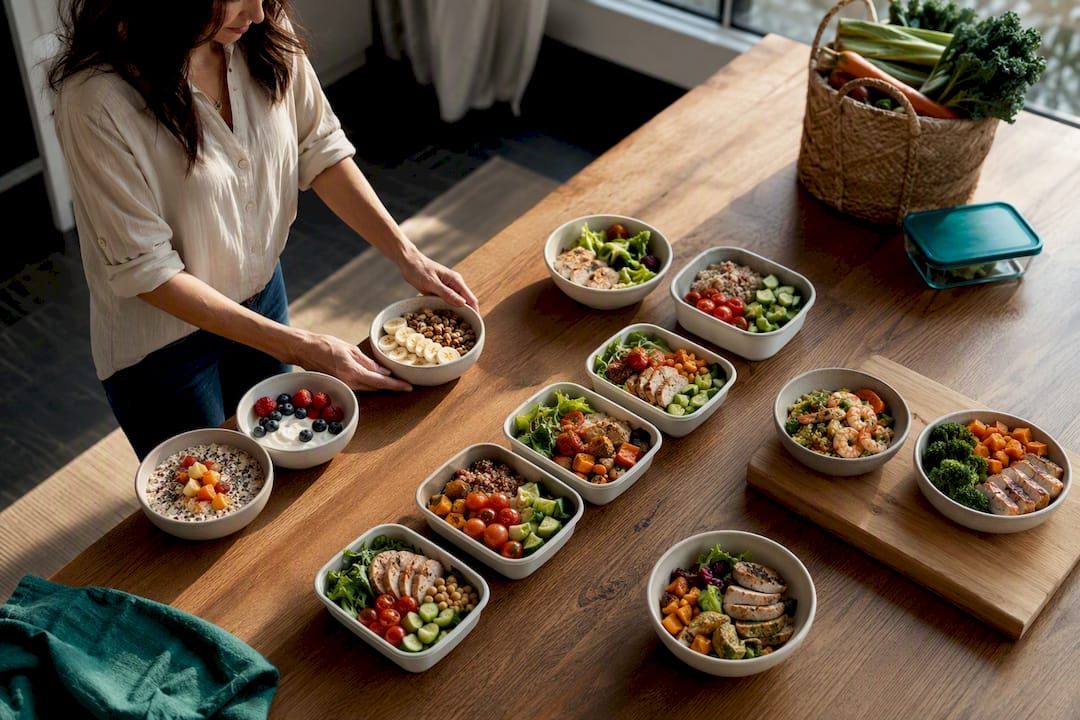
Meal planning for weight loss works best when you pick a moderate calorie deficit, hit a protein target, and build every plate from the same simple template. Set your calories at 300 to 500 below maintenance, aim for 0.7 to 1.0 grams of protein per pound of goal weight, and structure meals around half vegetables, a quarter protein, and a quarter whole grain or starch. Resources like the NIH’s menu planner and the framework Coach Jill Byrne teaches clients can personalize the math. Calculate your numbers, then follow the step-by-step plan below.
TL;DR:
Aim for 0.7 to 1.0 grams of protein per pound of goal weight, evenly distributed across three to four meals to preserve muscle and enhance satiety.
Building meals around half vegetables, a quarter protein, and a quarter whole grains or starch, with healthy fats, maintains variety and nutrient intake.
Tracking accuracy is crucial; stalls beyond two weeks often require calorie adjustments or increased activity, not just more restriction.
Consistent meal timing and hydration, like drinking water before meals, support appetite control, energy, and adherence to the plan.
Table of Contents
How Do You Build a Meal Plan for Weight Loss?
A meal plan that actually sticks starts with three numbers: your calorie target, your protein target, and how many meals fit your schedule. Get those right and the rest of the plan writes itself.
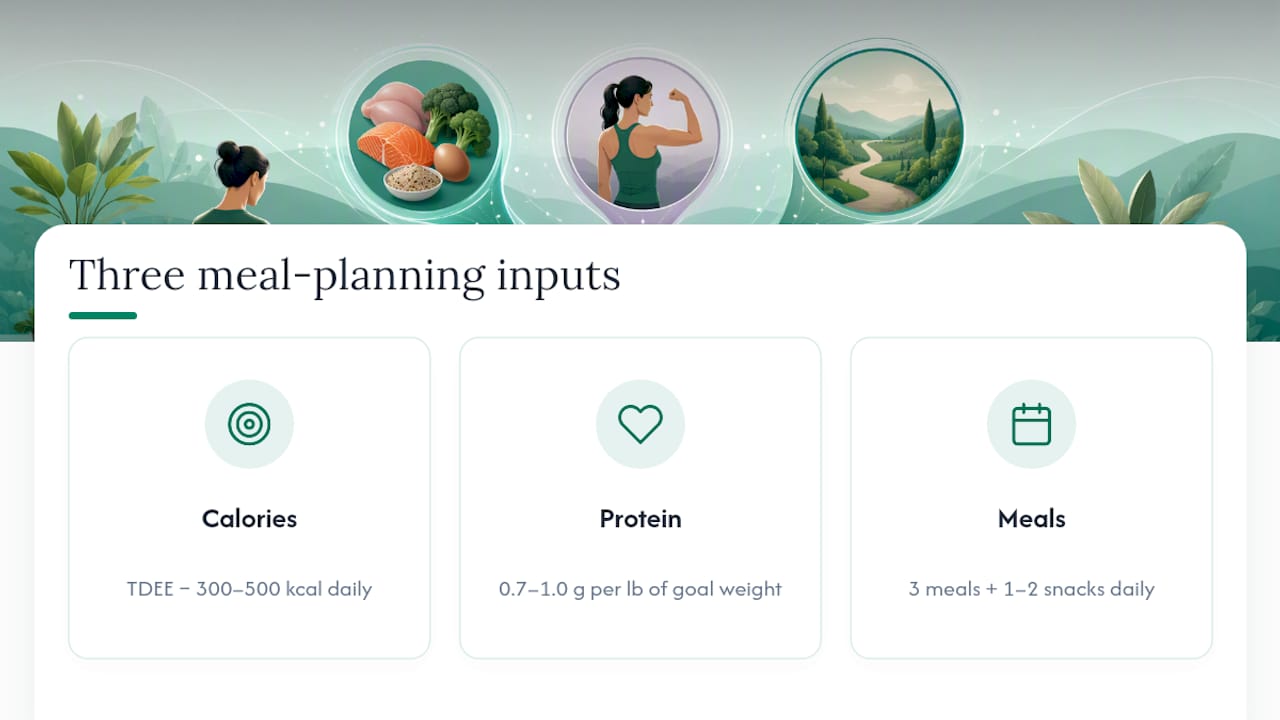
1. Estimate your calorie target. Start with your Total Daily Energy Expenditure (TDEE), the calories your body burns in a typical day. The Mifflin-St Jeor equation is the most commonly used formula for this, and most calorie calculators run on it. Once you have that number, subtract 300 to 500 calories to set your daily target. This range produces steady, sustainable weight loss without wrecking your energy, which matters more than speed if you want the results to last.
2. Set your protein target. Aim for 0.7 to 1.0 grams of protein per pound of your goal weight, not your current weight. A 160-pound goal weight means roughly 112 to 160 grams of protein daily. Spread it across meals instead of loading it all at dinner. Protein preserves muscle during a deficit and keeps you fuller longer than carbs or fat do.
3. Choose your meal frequency. Three meals plus one or two snacks works for most schedules and gives you natural checkpoints to hit your protein number. There’s no metabolic advantage to six small meals over three larger ones. Pick the pattern you’ll actually follow on a Tuesday, not just a Saturday.
4. Build every plate the same way. Fill half the plate with non-starchy vegetables, a quarter with lean protein, and a quarter with whole grains or starchy vegetables, then add a thumb-sized portion of healthy fat, as detailed in this foods for bone density guide that supports long-term nutrient balance. This plate method removes the need to weigh food at every meal once you get a feel for portions.
5. Write it down and shop for it. Pick three breakfasts, three lunches, and four dinners you’ll rotate through the week, then build your grocery list from that short list. Repetition isn’t a failure here. It’s what makes portion control automatic instead of exhausting.
What Does a Sample Week Look Like?
A day built on this structure typically breaks meals into reasonable calorie portions and includes sufficient protein at each meal to keep the daily total on track. Practical templates built this way tend to hold up better over a full week than plans that front-load protein into one meal.
A rotation for the week might look like this:
Monday: Greek yogurt with berries and nuts; grilled chicken salad with quinoa; salmon with roasted broccoli and rice.
Tuesday: Veggie omelet with whole-grain toast; turkey wrap with hummus; sheet-pan chicken and vegetables.
Wednesday: Overnight oats with protein powder; leftover sheet-pan chicken over greens; beef stir-fry with brown rice.
Thursday: Cottage cheese with fruit; lentil soup with a side salad; baked cod with sweet potato and green beans.
Friday: Smoothie with protein, spinach, and banana; grain bowl with chickpeas and vegetables; turkey chili.
Saturday: Eggs with avocado toast; leftover turkey chili; grilled shrimp with a large salad.
Sunday: Protein pancakes; tuna salad on greens; roast chicken with vegetables and quinoa.
Snacks: Apple with almond butter, edamame, string cheese, roasted chickpeas, or a protein shake.
Scaling this template up or down is straightforward. To move from 1,500 to 1,800 calories, add a palm-sized portion of protein at lunch and an extra snack. To drop to 1,200, trim grain portions and fats first, since those are the easiest calories to shave without losing satiety. Don’t go below 1,200 calories a day without clinical supervision. That threshold isn’t arbitrary; it’s where most people struggle to meet basic micronutrient needs, and the Mayo Clinic’s guidance specifically warns against extreme restriction in favor of sustainable habit change.
If you eat plant-based, swap animal proteins for lentils, tofu, tempeh, and edamame, and combine plant sources across the day to cover your amino acid bases. Pay attention to vitamin B12 and omega-3 intake, since both run lower in plant-based patterns and often need a supplement or fortified food to close the gap.
Meal Prep and Grocery Strategies That Make the Plan Realistic
A meal plan only works if the grocery list and prep routine make it easy to follow on a busy Wednesday night. Organize your list by store section: produce, proteins, pantry staples, frozen items, and dairy. Buying ingredients that overlap across two or three recipes cuts waste and shopping time.
Skip prepping five identical meals in one container. Batch-prep components instead: cook two proteins, one grain, chop a week’s worth of vegetables, and make one dressing. That gives you the pieces to build different meals all week instead of eating the same bowl five days running, which is where a lot of people lose interest and abandon the plan.
A few tactics that save real time:
Sheet-pan dinners: one pan, one protein, one vegetable, minimal cleanup.
One-pot soups or chilis that reheat well and improve after a day in the fridge.
Overnight oats prepped in jars for grab-and-go breakfasts.
Portioned snacks (nuts, cut vegetables, hard-boiled eggs) ready in the fridge at eye level.
Budget-friendly staples like frozen vegetables, canned beans, rotisserie chicken, and bulk grains keep costs down without sacrificing the plate structure. A weekly meal plan built around these staples tends to survive busy weeks better than one built on specialty ingredients.
Pro Tip: Prep your two proteins and one grain on Sunday, but leave vegetables for a quick Wednesday chop. Pre-cut veggies lose crunch and nutrients faster than you’d think, and a mid-week refresh keeps meals from tasting stale.
What Do You Do When Weight Loss Stalls?
Track three things weekly: your seven-day average morning weight (daily weight bounces too much to mean anything alone), your hunger and energy levels, and how closely you actually followed your plan.
If weight stalls for one to two weeks, check your tracking accuracy first. People routinely underreport intake by more than they realize, and a “close enough” estimate on sauces, oils, or weekend meals adds up fast.
If weight stalls for three or more weeks despite accurate tracking, adjust your calories down by 100 to 150 or add more daily movement, like an extra 2,000 steps.
If energy or hunger tanks, raise protein slightly before cutting calories further, or add a small amount of activity instead of restricting more.
A 500 to 750 calorie deficit typically produces about 1 to 2 pounds of weekly loss, but most people do better starting closer to 300 to 500 for sustainability. Seek professional guidance if you’re losing weight rapidly, managing a medical condition, or considering a very low-calorie diet.
Does Meal Timing Actually Matter for Weight Loss?
Total calories and protein matter more than the clock, but timing still shapes how easy the plan is to follow. Spacing protein across three or four meals instead of one large dinner helps control hunger and supports muscle retention better than front-loading or back-loading your intake.
Skipping meals to “save calories” for later often backfires. Arriving at dinner starving tends to produce poor food choices and portions that blow past your target. A steady rhythm, roughly the same three or four eating windows each day, keeps blood sugar and hunger more predictable, which makes the whole plan easier to stick to.
That said, there’s no fixed rule that you must eat breakfast within an hour of waking or stop eating by a certain time at night. What matters is consistency you can repeat for months, not weeks. If intermittent fasting patterns fit your lifestyle and you still hit your protein and calorie targets, they can work fine. If they leave you ravenous and prone to overeating at night, they’re working against you, not for you.
The bigger issue with irregular eating patterns is drift: skipped lunches turn into oversized dinners, and oversized dinners turn into a calorie total that no longer matches your plan. Meal timing for weight loss is less about optimizing a metabolic window and more about building a rhythm your schedule can actually hold.
How Does Hydration Affect Weight Management?
Water plays a bigger role in appetite regulation than most meal plans acknowledge. Thirst and hunger signals overlap in the brain, and it’s common to mistake mild dehydration for hunger, especially in the afternoon when water intake naturally drops.
Drinking a glass of water before meals is a simple habit that tends to reduce how much food it takes to feel satisfied, partly by adding volume to the stomach before eating starts. This costs nothing and takes no willpower, which makes it one of the easier adjustments to build into a meal-planning routine.

Hydration also affects energy and workout performance, both of which influence whether you stick to your movement goals. Mild dehydration shows up as fatigue and headaches before it shows up as obvious thirst, and low energy is a common reason people skip the walk or workout that would otherwise help close a calorie gap.
There’s no single hydration number that fits everyone; needs shift with body size, climate, and activity level. A practical approach is to drink water consistently through the day rather than trying to chug a fixed amount, and to treat pale yellow urine as a reasonable, low-effort marker that you’re keeping up. Swapping sugary drinks for water also removes hundreds of easy-to-miss calories that never show up on a food log but absolutely show up on the scale.
Why Does Variety Matter in a Weight-Loss Meal Plan?
Eating the same three meals for months might feel efficient, but it raises the risk of missing nutrients that different food groups provide. Rotating protein sources between chicken, fish, beef, eggs, and legumes brings in different amounts of iron, zinc, omega-3s, and B vitamins that no single protein covers completely.
The same logic applies to vegetables. Leafy greens, cruciferous vegetables like broccoli and cauliflower, and colorful produce like peppers and squash each carry a different mix of vitamins, minerals, and antioxidants. A plan that leans on the same two vegetables every week narrows that intake more than most people realize.
Variety also protects against diet fatigue, which is one of the more underrated reasons meal plans fail. A rotation of three breakfasts, three lunches, and four dinners, swapped out every few weeks, keeps meals interesting without requiring a completely new plan every Sunday. You’re not reinventing the plan, just refreshing the ingredients inside a structure you already trust.
Whole, minimally processed foods tend to deliver more of this variety naturally, since nutritionists point to whole-food-based plans as a better long-term fit than heavily processed, calorie-counted convenience meals. Fiber and nutrient density both climb when the plan is built from real ingredients rather than packaged substitutes.
How Do You Manage Cravings and Emotional Eating?
Cravings and genuine hunger feel similar but come from different places, and telling them apart is a skill worth building. Physical hunger builds gradually and can be satisfied by most foods; a craving or emotional pull toward food often hits suddenly and points to something specific, like chocolate or chips.
A few strategies help separate the two:
Wait 10 minutes before acting on a craving; many pass on their own once the initial urge fades.
Keep a satisfying, planned snack on hand so a craving doesn’t turn into an unplanned 800-calorie detour.
Ask what you’re actually feeling before eating: stress, boredom, and fatigue all masquerade as hunger.
Build in a planned treat once or twice a week instead of banning entire food categories, which tends to backfire into overeating later.
Emotional eating tends to worsen under overly restrictive plans, since deprivation increases the psychological pull toward “forbidden” foods. A flexible, non-restrictive approach that leaves room for the foods you actually enjoy, in planned portions, reduces the all-or-nothing thinking that derails otherwise solid meal plans. The goal isn’t eliminating cravings. It’s building a plan sturdy enough to absorb them without falling apart.
What Role Do Fiber and Low-Calorie Foods Play in Satiety?
Fiber slows digestion and stretches the stomach, both of which extend the feeling of fullness after a meal. Vegetables, legumes, whole grains, and fruit carry the most fiber per calorie, which is exactly why the plate method leans so heavily on the vegetable half of the plate.
Foods with low calorie density but high volume, think leafy greens, broccoli, berries, and soups built on vegetable broth, let you eat a satisfying amount of food without spending many calories to get there. This matters more for adherence than any macro trick, since feeling deprived is the single biggest reason people quit a meal plan early.
Beans and lentils do double duty here, delivering fiber and plant protein in the same bite, which makes them one of the most efficient foods for a calorie-deficit plan. Swapping refined grains for whole grains, white rice for brown rice or quinoa, adds fiber without changing the meal much in practice.
None of this requires giving up flavor or variety. A whole-food approach built around real ingredients naturally lands you in high-fiber, high-satiety territory, since minimally processed foods tend to carry more fiber than their packaged counterparts by default. The plan works because it’s boring in the best way: same structure, different ingredients, week after week.
Why Habit-Based Coaching Beats a Static Plan
What actually changes outcomes is the accountability layer: someone checking in when the rotation gets stale, when travel disrupts the routine, or when the scale stalls and the instinct is to slash calories further instead of troubleshooting properly.
Coach Jill Byrne has and has worked with clients through examples like, applying built around the same plate-and-protein structure outlined above, adapted to real schedules instead of ideal ones.
Coaching tip: rotate three go-to breakfasts and prep two proteins every Sunday. That single habit removes more daily decision fatigue than almost any other change a new client makes.
— Coach Jill
Ready for a Meal Plan Built Around Your Life?
A template gets you started, but it can’t adjust when your schedule changes, your weight stalls, or your cravings win on a Thursday night. Coachjillbyrne builds that adjustment directly into the process: personalized calorie and protein math, weekly meal rotations that fit your actual kitchen and calendar, and accountability check-ins that catch problems before they become three-week plateaus.

Clients working with Coach Jill Byrne typically get:
A calorie and protein target calculated for their body and goals, not a generic chart.
Weekly meal rotations built around foods they’ll actually eat.
Direct accountability support when motivation dips or life gets in the way.
Visit Coach Jill Byrne’s coaching programs to book a consultation and see which program fits your goals.
This article is general information, not a substitute for advice from a qualified doctor. Consult a qualified healthcare professional about your own circumstances before acting on anything here.
Sources
FAQ
How Many Calories Should I Eat to Lose Weight?
Subtract 300 to 500 calories from your estimated TDEE for sustainable loss; going below 1,200 calories daily requires clinical supervision.
How Much Protein Do I Need for Weight Loss?
Aim for 0.7 to 1.0 grams of protein per pound of your goal weight, spread across three or four meals.
What Is the Plate Method for Weight Loss?
Fill half your plate with non-starchy vegetables, a quarter with lean protein, and a quarter with whole grains or starchy vegetables, plus a small portion of healthy fat.
How Do I Know if My Meal Plan Isn’t Working?
Check tracking accuracy first if weight stalls for one to two weeks; if it stalls three or more weeks with accurate tracking, adjust calories by 100 to 150 or add daily activity.
Can Coach Jill Byrne Help Me Build a Personalized Meal Plan?
Yes. Coach Jill Byrne’s coaching programs build personalized calorie and protein targets, weekly meal rotations, and accountability support around each client’s schedule and goals.
Recommended
Comments