
30/30/30 Morning Routine for Weight Loss, Coach Backed for Busy Days

Drink 12 to 16 ounces of water soon after waking, weigh yourself right after the bathroom, eat about 30 grams of protein within a half hour, move for around 30 minutes at a light pace, get outside for 10 to 15 minutes of sunlight, and spend a few minutes planning your day. This sequence draws on the 30/30/30 routine, a protocol built around protein timing, low-intensity movement, and consistent weigh-ins. None of it requires drastic calorie cuts. It requires doing the same small things in the same order, most days, for months.
TL;DR:
Drinking 12 to 16 ounces of water immediately upon waking helps reduce false hunger signals caused by overnight dehydration.
Eating about 30 grams of protein within 30 minutes supports fullness and stabilizes blood sugar, aiding weight management.
Engaging in 30 minutes of low-intensity movement, such as brisk walking at or below 135 bpm, efficiently burns fat and improves appetite control.
Getting 10 to 15 minutes of sunlight within an hour of waking helps regulate circadian rhythms, improving sleep and hormonal balance.
Pre-planning meals and packing protein-rich options the night before significantly increases adherence to morning routines and overall healthy habits.
Table of Contents
Quick Morning Checklist For Weight Loss You Can Start Tomorrow
The order matters less than the consistency, but this sequence works because each step sets up the next one. Water curbs the false hunger cue you feel on waking. Protein stabilizes blood sugar before caffeine can spike it. Movement burns fat more efficiently on an empty stomach. Sunlight resets your body clock. Planning removes the decision fatigue that leads to a 10 a.m. vending machine run.
Drink 12 to 16 ounces of water within 15 to 30 minutes of waking, ideally with a pinch of electrolytes.
Weigh yourself immediately after using the bathroom, before eating or drinking anything.
Eat roughly 30 grams of protein within 30 minutes of getting up.
Move for about 30 minutes at a light, conversational pace.
Get 10 to 15 minutes of sunlight, ideally combined with the movement step.
Spend three minutes planning your meals and one priority task for the day.
The night before, lay out workout clothes, prep a grab-and-go breakfast, and set a water bottle by your bed. That five-minute setup is what makes step one and step three actually happen instead of getting skipped when you’re running late.
Why Hydration Comes Before Anything Else
Your body loses water overnight through breathing and sweat, and that mild overnight dehydration often gets misread as hunger. Drinking 12 to 16 ounces of water soon after waking can reduce that false hunger signal and support digestion before you’ve eaten a single calorie.
Drink your water before checking your phone, not after your first cup of coffee.
Add a pinch of an electrolyte mix if you wake up groggy or exercise before breakfast.
Wait about 30 minutes after that electrolyte water before your coffee, since caffeine’s mild diuretic effect can work against the rehydration you just achieved.
If you take levothyroxine or a similar thyroid medication, check with your doctor about timing. Many need it on an empty stomach, often 30 to 60 minutes before any food, drink, or coffee.
Pro Tip: Keep a filled water bottle on your nightstand the night before. Removing the “walk to the kitchen” step is often the difference between drinking water at 6 a.m. and forgetting until 9.

How Much Protein Should You Eat For Breakfast?
Thirty grams, eaten within about 30 minutes of waking, is the target the 30/30/30 routine is built around, and it’s a realistic number for a single meal. Protein slows digestion, which keeps you fuller longer, and it takes more energy to metabolize than carbs or fat, a small but real metabolic edge called the thermic effect of food. It also blunts the blood sugar spike that a carb-heavy breakfast, like a bagel or cereal, tends to cause.
A 30-gram protein breakfast isn’t as far off as it sounds. Three whole eggs plus a cup of cottage cheese gets you there in under ten minutes of prep, and a protein-forward breakfast tends to reduce how much you eat at your next meal.
Fast options that hit close to the target:
Greek yogurt (1 cup) with a scoop of protein powder mixed in
Three eggs with a slice of bacon
A protein smoothie with milk, protein powder, and frozen fruit
Cottage cheese with berries, for a dairy-forward, low-effort option
A plant-based protein shake with pea or soy protein for dairy-free readers
If you train fasted first thing, shift protein to right after your workout instead of before. And if 30 grams in one sitting feels heavy on your stomach, split it, half at breakfast and half an hour later, rather than skipping it. For more meal ideas that reach this target without much prep, this high-protein breakfast guide has specific combinations worth trying.
Is 30 Minutes Of Morning Movement Enough To Lose Weight?
Yes, if it’s consistent. The 30/30/30 routine calls for 30 minutes of low-intensity cardio, targeting a heart rate at or below roughly 135 beats per minute, and research on physical activity and weight management shows morning exercise is linked to lower BMI and better appetite control, largely because people who move consistently tend to make better food choices the rest of the day.
Low-intensity, sustained movement, think a brisk walk, not a sprint, keeps your body pulling more energy from fat stores rather than glycogen. That’s the whole appeal of keeping the pace easy instead of grinding through a hard interval session before coffee.
Aim for a pace where you can still hold a conversation.
Check your heart rate periodically; staying near or under 135 bpm keeps the intensity in the fat-burning zone for most people.
If 30 straight minutes doesn’t fit, split it into three 10-minute walks. The adherence benefits hold up fairly well even when the movement is broken up.
Prep shoes and clothes the night before to remove the biggest excuse for skipping it.
Pro Tip: If mornings are tight, walk during a phone call you already have scheduled. Stacking movement onto something you’re doing anyway beats trying to carve out a brand-new block of time.
When Is The Best Time To Weigh Yourself?
Right after you use the bathroom, before you eat or drink anything. That’s the timing clinicians recommend for the most consistent daily number, since food, fluid, and even a full bladder can shift the scale by a pound or more within hours.
Use the same scale, in the same spot, at the same time each day.
Weigh in similar clothing, or none, to remove another variable.
Expect daily swings of one to three pounds from water retention, sodium, and hormones. That’s normal, not failure.
Track a seven-day rolling average instead of reacting to any single morning’s number.
Log it somewhere consistent, a notebook or an app, so the trend is visible without you having to remember three weeks back.
The daily number tells you almost nothing on its own. The trend across a week or a month is the only version of the data worth acting on.
Why Morning Sunlight Matters As Much As What You Eat
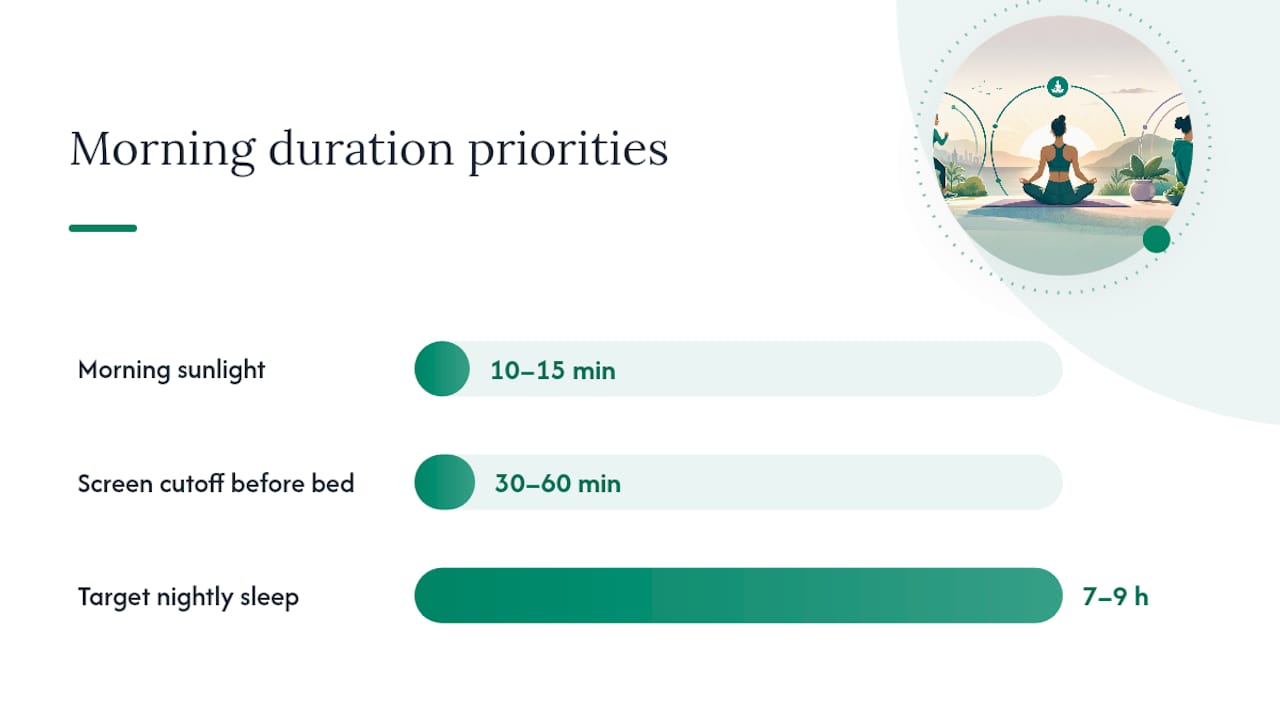
Ten to 15 minutes of morning light exposure helps align your circadian rhythm, which in turn supports better sleep and, in observational research, tracks with lower BMI. Light hitting your eyes early in the day signals your body to release cortisol on a healthy schedule and wind down melatonin production, which affects everything from energy levels to how your hunger hormones behave later that evening.
Sleep is the other half of this. Skimping on it disrupts leptin and ghrelin, the two hormones that regulate hunger and fullness, which is a big part of why sleep-deprived days tend to end in impulsive eating.
Get outside within an hour of waking, even on cloudy days, for 10 to 15 minutes.
Keep a consistent bedtime and wake time, including weekends.
Cut caffeine after early afternoon; it has a longer half-life than most people assume.
Set a screen cutoff 30 to 60 minutes before bed.
Target 7 to 9 hours of sleep as a baseline, not an aspiration.
Pairing your sunlight step with the movement step covers two habits in one 15 minute block, such as a walk right after breakfast.
Why Three Minutes Of Planning Prevents Ten Bad Decisions
A short planning ritual before you leave the house is what stands between you and the 3 p.m. vending machine. Decide your breakfast, lunch, and one snack while your coffee brews, and you’ve already removed the three moments during the day when hunger and inconvenience conspire to make the choice for you.
Pick your lunch and one snack, not just breakfast, while you’re already in the kitchen.
Pack a protein-forward lunch in a portioned container, grilled chicken over greens, a turkey wrap, or leftovers from dinner all work.
Glance at the label on anything packaged: check serving size first, since a “150 calorie” snack pack is often two servings, then scan added sugar.
If you’re traveling, pack shelf-stable protein options the night before so hotel breakfast buffets don’t become the default.
This step takes less time than scrolling your phone for three minutes, and it’s the difference between eating on purpose and eating on impulse.
Can A Few Minutes Of Mindfulness Reduce Cravings?
Short mindfulness practices, as little as two to five minutes, have been shown in behavioral research to reduce emotional eating and improve food-choice control over the rest of the day. The mechanism is simple: a few quiet minutes before the day starts gives you a pause between a stress trigger and a reflexive trip to the pantry.
Try three minutes of slow breathing before checking your phone.
Take a short mindful walk with no headphones, just noticing your surroundings.
Journal one sentence answering “what’s my one priority today?”
Habit stacking is what makes this stick. Attach the new habit to something you already do, breathing while the coffee brews, journaling while you eat breakfast. Start with one practice for two weeks before adding a second. Trying to install five new habits on day one is the most common reason morning routines collapse by week two.
Coach Jill’s Real-World Fixes For Busy Mornings
No two mornings look the same, and a routine that only works on a perfect day isn’t a routine. Here’s how these habits adapt for the schedules Coachjillbyrne clients actually live with.
Busy professional: Prep a grab-and-go protein shake the night before and take your 30 minutes of movement as a walking phone call between meetings.
Shift worker: Anchor “morning” to whenever you wake up, not the clock. The 30/30/30 sequence works the same at 2 p.m. as it does at 6 a.m.
GLP-1 medication user: Prioritize protein first since appetite is often blunted, and keep portions smaller but protein-dense, such as cottage cheese or eggs, to protect against muscle loss.
The single biggest adherence fix across these clients isn’t willpower. It’s night-before prep, laid-out clothes, a portioned breakfast, water by the bed. Removing friction beats adding motivation every time.
Pro Tip: Pick one habit fix and commit to it for seven straight days before layering on a second. Clients who try to overhaul everything Monday morning usually quit by Thursday.
A Note On Why Small Wins Beat Big Overhauls
I’ve watched more people fail at drastic morning overhauls than succeed at them. The routine that works is the boring one you actually repeat, not the ambitious one you abandon by Wednesday. Pick a single change, water first thing, or protein within 30 minutes, and track it for one week before adding anything else.
Momentum builds from small wins stacked in order, not from doing everything at once. If you want that process guided instead of self-taught, personalized coaching can shorten the trial-and-error considerably.
— Coach Jill
How Coaching Turns This Checklist Into A Habit That Sticks
A checklist tells you what to do. It doesn’t troubleshoot the Tuesday when you slept through your alarm, or tell you which protein swap fits your actual grocery budget. That’s the gap Coachjillbyrne closes for clients who want the 30/30/30 approach to survive real life, not just a perfect Monday.

Coaching with Jill Byrne adds three things a checklist can’t:
Accountability check-ins that catch a slipping habit before it becomes a two-week gap.
Meal plans built around your schedule.
Real-time troubleshooting for the mornings that don’t go as planned, shift work, travel, kids, all of it.
If mornings have never stuck before, the fix usually isn’t more discipline. It’s a plan built for your actual life. Book a session with Coachjillbyrne to find out what a sustainable version of this routine looks like for you.
This article is general information, not a substitute for advice from a qualified doctor. Consult a qualified healthcare professional about your own circumstances before acting on anything here.
Sources
FAQ
What is the 30/30/30 morning routine?
It’s a sequence built around eating about 30 grams of protein within 30 minutes of waking, followed by 30 minutes of low-intensity cardio at a heart rate around or below 135 bpm.
What burns belly fat in the morning?
No single food or move targets belly fat specifically, but low-intensity morning cardio combined with a protein-forward breakfast supports fat use as fuel and better appetite regulation throughout the day.
What is the 3-3-3 rule to lose weight?
This isn’t a clinically established framework, and definitions vary widely online; the 30/30/30 routine covered in this guide has stronger backing and a clearer, evidence-based structure.
How can I lose 20 pounds in 6 weeks safely?
That pace is faster than most sustainable programs recommend, and rapid loss often reverses. A steadier approach built on daily habits like the ones in this guide, paired with personalized coaching, tends to hold up far better long term.
Is it better to weigh myself daily or weekly?
Daily is fine, and often better for spotting trends, as long as you weigh at the same time each morning, after the bathroom and before food, and judge the number by its weekly average, not any single reading.
Recommended
Comments