
Nutrition Coaching and Your Zepbound Weight Loss Journey

Nutrition coaching is the structured behavioral and dietary support that transforms Zepbound’s biological appetite suppression into lasting, sustainable fat loss. Zepbound, a GLP-1 receptor agonist approved by the FDA, reduces hunger and improves insulin sensitivity. But GLP-1 medications like Zepbound do not address behavioral eating habits or metabolic health directly. The role of nutrition coaching in the Zepbound journey fills that gap. Coaching provides the behavioral framework, personalized meal structure, and accountability that medication alone cannot deliver. People who combine Zepbound with consistent health coaching report better outcomes than those relying on medication alone, typically requiring 12–18 months for sustainable results.
How does nutrition coaching complement Zepbound medication?
Zepbound suppresses appetite effectively. What it does not do is teach you why you reach for food when you are stressed, bored, or tired. That distinction matters more than most people realize when starting a Zepbound nutrition program.
Nutrition coaching translates the biological changes Zepbound creates into manageable, realistic eating patterns. A coach helps you identify what to eat during the windows when hunger is low, so your body still receives adequate protein, fiber, and micronutrients. Without that guidance, reduced appetite can quietly become inadequate nutrition.

Personalized nutrition plans account for your food preferences, schedule, and lifestyle. They are not generic meal templates. A coach working with a Zepbound client will adjust portion sizes, meal timing, and food choices based on how your body responds week to week. That level of customization is what separates structured coaching from a standard diet plan.
Coaching also addresses psychological triggers that medication does not touch. Emotional eating, habitual snacking, and social food pressures all continue regardless of how much Zepbound reduces your physical hunger. Behavioral coaching provides critical support in emotional regulation and prevents minor off-plan incidents from escalating into prolonged setbacks.
Coaching identifies emotional and habitual eating patterns separate from physical hunger
Personalized plans maintain nutrient quality despite reduced appetite
Behavioral support addresses psychological triggers Zepbound cannot reach
Accountability structures keep clients consistent through appetite fluctuations
Pro Tip: Track what you eat during low-hunger periods, not just calories. A coach can use that data to spot nutrient gaps before they cause fatigue or muscle loss.
What nutrition challenges does Zepbound create, and how does coaching solve them?
Appetite suppression sounds like a straightforward benefit. In practice, it creates a specific set of nutrition risks that catch many Zepbound users off guard.
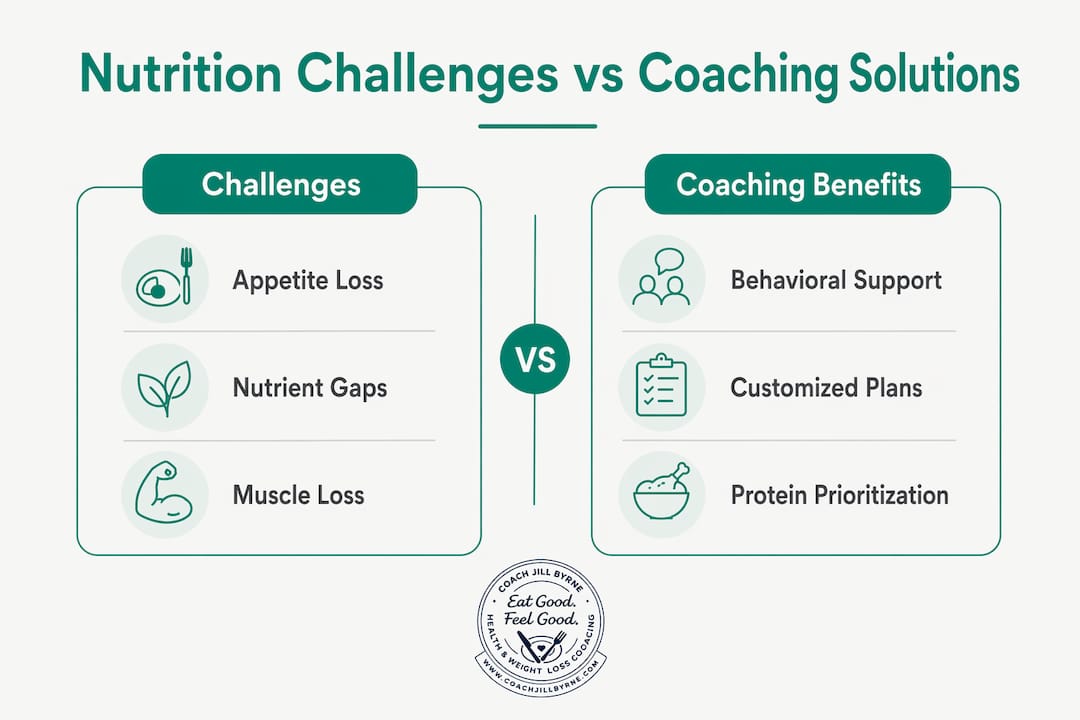
Many people experience what practitioners call “appetite blindness.” Neglecting nutrition quality due to reduced hunger can cause fatigue, muscle loss, and hair thinning. When you simply are not hungry, eating enough protein and fiber feels unnecessary. The consequences show up weeks later in energy levels, body composition, and lab results.
Coaching solves these problems through structured guidance rather than willpower. Here is how a coach addresses the most common Zepbound nutrition challenges:
Protein deficiency. A coach sets a daily protein target and helps you meet it through practical food choices, even when appetite is low. Adequate protein protects muscle tissue during fat loss.
Fiber and hydration gaps. Constipation is a common Zepbound side effect. A coach builds fiber-rich foods and consistent hydration habits into your daily routine from the start.
All-or-nothing thinking. Nutrition coaching helps mitigate the all-or-nothing mindset common among patients, preventing minor diet lapses from causing prolonged setbacks or emotional derailment.
Progress plateaus. Metabolic adaptation during Zepbound treatment can mislead users. Coaching helps interpret real-time data to inform timely adjustments rather than premature dose escalation.
Muscle loss risk. Coaching focuses on fat loss rather than just weight loss by ensuring adequate protein intake and resistance training to protect muscle metabolism during appetite suppression.
Pro Tip: If your weight loss stalls after several weeks on Zepbound, ask your coach to review your protein and calorie intake before assuming you need a higher dose.
How to build a personalized nutrition plan during the Zepbound journey
A well-structured nutrition plan for Zepbound users follows a “food first” philosophy. A “food first” approach integrated through coaching ensures nutrient density and balanced macronutrients rather than caloric fixation, supporting health and maximizing medication efficacy.
The practical structure looks like this: smaller meals spaced throughout the day, each anchored by a protein source and a fiber-rich vegetable. You are not eating less and hoping for the best. You are eating strategically within a reduced appetite window to give your body what it needs.
Meal structure and timing
Spacing meals every 3–5 hours prevents energy crashes and supports stable blood sugar. Each meal should include at least 20–30 grams of protein. Snacks, when needed, should combine protein and fiber rather than simple carbohydrates. This pattern keeps metabolism active and reduces the risk of muscle breakdown.
Adjusting for side effects
Nausea and digestive discomfort are common early in Zepbound treatment. A coach adjusts your plan during these periods, recommending easier-to-digest foods, smaller portions, and increased fluid intake. The goal is to maintain nutrition quality without worsening side effects.
Situation | Coaching adjustment |
Low appetite days | Focus on protein shakes, Greek yogurt, eggs, and soft vegetables |
Nausea present | Smaller, bland meals every 2–3 hours; avoid high-fat foods |
Social events | Pre-plan a protein-forward meal beforehand; choose lean proteins at the event |
Travel days | Pack portable protein snacks; identify restaurant options in advance |
Plateau weeks | Review macros with coach; add or adjust resistance training |
Navigating social situations is one area where coaching for healthy eating proves its value most clearly. Restaurants, family gatherings, and work events do not pause because you are on a Zepbound nutrition program. A coach gives you practical strategies for those moments rather than leaving you to figure it out alone.
Eat a protein-rich snack before social events to reduce impulsive choices
Choose grilled, baked, or steamed proteins as your anchor at restaurants
Drink water consistently throughout the day, not just at meals
Plan your grocery list weekly to avoid last-minute poor food decisions
What long-term benefits does nutrition coaching provide beyond Zepbound treatment?
Zepbound changes your biology during treatment. Nutrition coaching changes your behavior for life. That distinction determines whether your results last after the medication ends.
Coaching builds resilience by educating clients on hunger and fullness cues, balancing social factors, and establishing sustainable lifestyle habits beyond medication. You learn to read your body’s signals accurately rather than relying on a drug to manage them. That skill transfers directly to weight maintenance after treatment.
Food literacy is a concrete, measurable outcome of sustained coaching. Clients who complete a full coaching program understand portion sizes, macronutrient balance, and meal timing without needing a coach to remind them. They make better food decisions automatically because those decisions have become habits.
Ongoing accountability reduces the risk of weight regain. Clients using bundled Zepbound programs with dedicated health coaching show higher satisfaction and sustained success compared to medication-only approaches. Accountability structures, whether weekly check-ins or food journaling, keep clients engaged long after the initial motivation fades.
Coaching transitions clients from medication reliance to independent healthy habits
Food literacy reduces decision fatigue and improves daily food choices
Accountability structures prevent the gradual drift back to old eating patterns
Emotional regulation skills developed in coaching reduce stress-driven eating long term
For a deeper look at maintaining weight loss after medical interventions, the principles of sustained coaching apply directly to the post-Zepbound phase.
Key Takeaways
Nutrition coaching is the behavioral and metabolic support system that makes Zepbound results sustainable, protecting muscle, preventing nutrient gaps, and building the habits that outlast medication.
Point | Details |
Coaching fills the behavioral gap | Zepbound suppresses appetite; coaching addresses emotional and habitual eating patterns medication cannot reach. |
Nutrient quality requires active management | Appetite blindness from Zepbound can cause protein deficiency, fatigue, and muscle loss without structured guidance. |
Personalized plans adapt in real time | A coach adjusts macros, meal timing, and food choices based on side effects, plateaus, and lifestyle demands. |
Long-term habits outlast medication | Coaching builds food literacy and emotional regulation skills that sustain results after Zepbound treatment ends. |
Accountability drives sustained success | Clients with dedicated coaching show higher satisfaction and better long-term outcomes than those using medication alone. |
What I have learned coaching clients through the Zepbound process
GLP-1 medication users often arrive believing the medication will do most of the work. That belief is the single biggest obstacle I see. Zepbound is a powerful tool. It is not a replacement for understanding your relationship with food.
The clients who get the best results are the ones who treat coaching as the primary work and medication as the support. They show up to sessions ready to talk about what happened at dinner on Saturday, why they skipped their planned lunch, and what made Tuesday harder than Monday. That level of honest reflection is where real change happens.
One thing most people underestimate is how much their eating patterns are tied to routine and environment rather than hunger. When Zepbound removes the hunger signal, those patterns do not disappear. They become more visible. Coaching gives you the tools to address them directly rather than waiting for them to resurface after treatment ends.
Patience is not optional in this process. Sustainable results on a realistic weight loss timeline require 12–18 months of consistent effort. The clients who accept that timeline and focus on building habits rather than chasing a number on the scale are the ones who maintain their results years later.
— Coach Jill
Work with Coachjillbyrne for expert Zepbound nutrition support
Coachjillbyrne provides personalized nutrition coaching designed specifically for people integrating GLP-1 medications like Zepbound into their weight loss program. The coaching covers meal planning, protein and fiber targets, side effect management, and weekly accountability to keep you on track through every phase of treatment.

Coachjillbyrne’s approach focuses on real food and sustainable habits rather than restrictive dieting or short-term fixes. Clients receive customized guidance tailored to their goals, lifestyle, and how their body responds to Zepbound. If you are serious about making your Zepbound results last, personalized coaching support is the most direct path to getting there.
FAQ
What does nutrition coaching do that Zepbound cannot?
Zepbound reduces physical hunger but does not address emotional eating, habitual food patterns, or nutrient quality. Nutrition coaching provides the behavioral and dietary structure that turns appetite suppression into lasting fat loss.
How soon should I start nutrition coaching with Zepbound?
Starting coaching at the same time as Zepbound treatment gives the best results. Early coaching establishes protein targets, meal timing, and hydration habits before appetite suppression creates nutrient gaps.
Can nutrition coaching prevent muscle loss on Zepbound?
Coaching focuses on fat loss rather than just weight loss by prioritizing adequate protein intake and resistance training. This approach protects muscle metabolism during the appetite suppression Zepbound creates.
What happens to my results when Zepbound treatment ends?
Without coaching, many people regain weight after stopping GLP-1 medication because the behavioral habits were never established. Sustained coaching builds food literacy and independent healthy habits that maintain results after treatment ends.
How long does nutrition coaching alongside Zepbound typically last?
People combining Zepbound with consistent health coaching typically require 12–18 months for sustainable results. The full coaching period covers active treatment and the critical transition phase after medication ends.
Recommended
Comments