
Stop Guessing Your Portions in 2–4 Weeks: U.S. Portion Size Guide
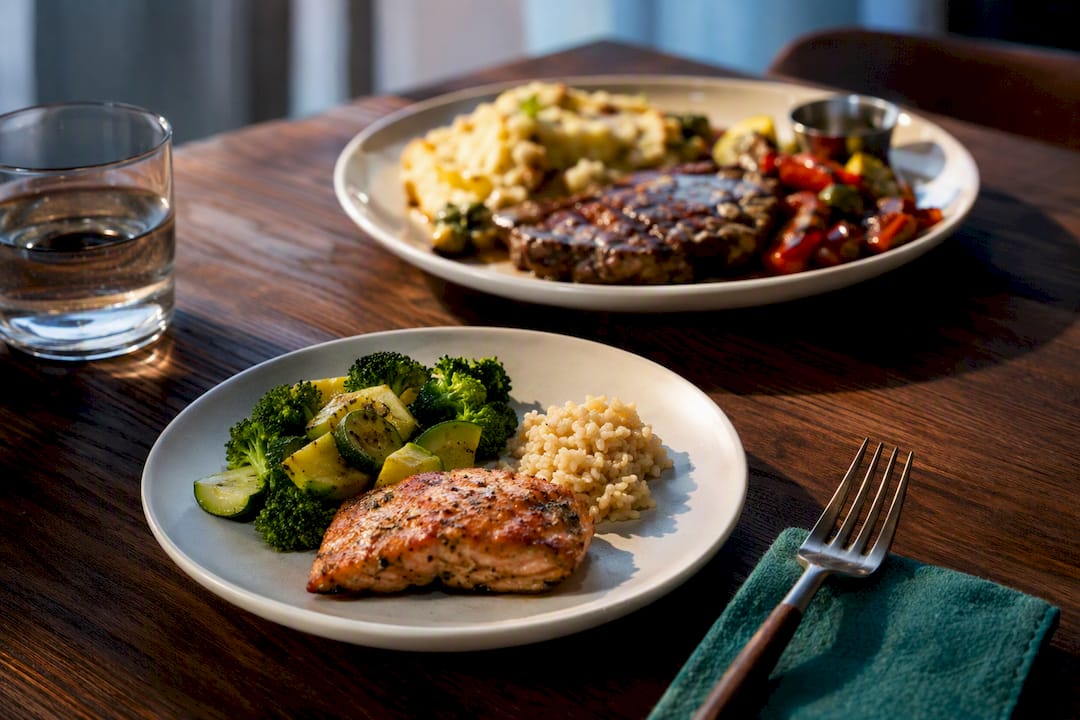
Use the plate method plus simple hand and object cues: half your plate of vegetables, a palm-sized portion of protein, and a fist of carbs. No scale required. This approach is backed by the Dietary Guidelines for Americans, NIDDK’s portion guidance, and the FDA’s Nutrition Facts framework, and it’s a common starting point used in nutrition coaching.
TL;DR:
The plate method adapts to different diets by adjusting the protein and carbohydrate portions while maintaining half vegetables, making it flexible for low-carb, Mediterranean, or plant-based eating.
Visual cues like hand sizes and everyday objects reliably help estimate portions, eliminating the need for scales in most situations and scaling proportionally with body size.
Treating “servings” as fixed units on labels differs from “portions,” which are actual servings on your plate, often inflated due to portion distortion supported by increasingly larger restaurant and package sizes.
Short-term measuring tools can retrain your eye and reduce habitual overestimating, with a recommended three- to four-week calibration plan emphasizing gradual reliance on visual cues over time.
Portion skills provide sustainable control across all ages and activity levels, helping prevent overfeeding or underfeeding and supporting goals like weight loss, maintenance, or muscle gain without relying solely on calorie counting.
Table of Contents
Portion vs. Serving Size: What the Words Actually Mean
A “serving” is a fixed, standardized amount printed on a Nutrition Facts label. It exists so nutrition scientists can compare foods on equal terms, not to tell you how much to eat, according to the Academy of Nutrition and Dietetics. A “portion” is whatever you actually put on your plate, which might be one serving, half a serving, or three.
That gap between the two is called portion distortion, and it’s grown for decades as restaurant plates and packaged snacks have gotten bigger, according to Michigan State University Extension. The FDA updated its Nutrition Facts label to reflect more realistic serving sizes, closer to what people actually eat, so the numbers on newer packages line up better with real behavior than older versions did.
Here’s how to translate a label into your actual plate:
Check the serving size and servings per container first, before you look at calories.
Multiply calories per serving by how many servings you actually eat to get your real total.
Compare your portion to a visual cue (more on that below) rather than trusting your eye alone.
Remember that “low calorie per serving” can hide a small stated serving size.
Visual Portion Guides: Hand Rules and Everyday Objects
You don’t need a food scale sitting on your counter to eat sensible portions. You need a handful of mental images you can call up anywhere, whether you’re at your own kitchen table or a friend’s barbecue.
The classic object comparisons still work because they’re built-in how your brain estimates size:
A deck of cards or a smartphone ≈ 3 ounces of cooked meat, poultry, or fish.
A computer mouse ≈ 1/2 cup of vegetables or fruit.
Four dice stacked together ≈ 1 ounce of cheese.
A tennis ball or baseball ≈ 1 cup, useful for pasta, rice, or fruit.
These proxies come from clinical nutrition education resources like URMC Rochester’s portion guide, and they hold up because you’re comparing food to something you already know the size of.
Your hand works even better because it’s always with you and scales naturally to your own body size. Mayo Clinic’s hand-based portion system breaks down like this:
Palm (thickness included) = one protein portion, roughly 3 to 4 ounces.
Fist = one cup of carbs like rice, pasta, or potatoes.
Cupped hand = one to two servings of fruits or vegetables.
Thumb = one tablespoon of fat, like nut butter or oil.
A larger, more active person naturally has a bigger hand and a higher energy need, so this scales itself without you doing any math.
The Plate Method: Building Three Balanced Meals
The plate method divides a standard dinner plate into three sections: half non-starchy vegetables, one quarter lean protein, and one quarter whole grains or starchy vegetables, according to Samaritan Health Services. It works because it front-loads volume from vegetables, which fill you up on fewer calories, before you even get to the calorie-denser foods on the plate.
Here’s what that looks like across three meals:
Breakfast: A cupped-hand portion of berries, two eggs (roughly a palm’s worth of protein), and a fist-sized serving of oatmeal.
Lunch: Half a plate of mixed greens and roasted vegetables, a palm of grilled chicken, and a fist of quinoa or brown rice.
Dinner: Half a plate of steamed broccoli and a side salad, a palm-sized piece of salmon, and a fist of sweet potato.
Increase portions when your activity or needs go up. Athletes, teenagers in growth spurts, and people who are pregnant or breastfeeding often need larger carb and protein portions than the standard palm-and-fist baseline. The plate ratios stay the same; the hand size you’re scaling from just gets bigger relative to your energy needs. Pairing this with a macronutrient balance approach helps make sure the protein and carb portions actually match your goals.
Controlling Portions at Home and When Eating Out
Small environmental changes do more for portion control than willpower does. Research on eating behavior consistently shows that plate size and food visibility change how much people eat without them realizing it, according to peer-reviewed findings published in PMC. A smaller plate makes a normal portion look complete instead of skimpy.
At home, try these adjustments:
Switch to a 9-inch dinner plate instead of the 11 or 12-inch plates common in most cabinets today.
Serve plates from the stove or counter instead of setting serving bowls on the table.
Pre-portion leftovers into containers the moment you put food away, not when you’re hungry later.
Eating out requires different tactics, since restaurant portions can run two to three times a standard serving. Ask for a to-go box when your meal arrives and box half before you start eating. Split an entrée with a dining companion, or order a lunch-sized portion at dinner if the menu allows it. Choose a vegetable-heavy side over fries or a second starch whenever you can.
Pro Tip: Drink a full glass of water before your meal, eat slowly, and wait 15 to 20 minutes before deciding on seconds. Your body needs that window to register fullness, and most “still hungry” feelings fade before the timer runs out.
These habits work well alongside a broader restaurant weight loss plan if dining out is a regular part of your week.
When to Measure and How to Retrain Your Eye
Measuring tools aren’t a permanent requirement. They’re a short-term calibration tool, useful when you’re starting a new eating pattern, trying unfamiliar foods, or tracking intake toward a specific weight goal. NIDDK recommends using them as a temporary learning phase, not a lifelong habit.
A simple two to four week recalibration plan looks like this:
Week 1: Measure your most common meals with cups and a food scale, and write down what a correct portion actually looks like on your plate.
Week 2: Keep measuring, but start guessing first, then checking. Note how close your hand and object estimates come.
Weeks 3 to 4: Drop the scale for familiar meals and rely on visual cues, spot checking once a week to confirm you’re still accurate.
Portion control plates with built in sections, pre-portioned snack containers, and an occasional weigh-in of a “usual” meal all work as lightweight alternatives once your eye is trained.
Coach Jill’s Approach: Train the Eye, Then Build the Habit
This coaching method follows the sequence outlined above, because it’s effective for habit building. Clients start by measuring a handful of typical meals to learn what their real portions look like, then shift to hand and object cues, and finally layer in accountability check-ins so the habit survives beyond the first few motivated weeks.
If you want to start this week, try three things:
Rebuild one meal using the plate method, no scale involved.
Measure just one meal a day for three days to check your eye against reality.
Keep a simple three-day food log, noting portions by hand size instead of grams.
Clients working through Coach Jill’s sustainable weight loss coaching often say the portion piece is what finally made healthy eating feel doable instead of restrictive.
Portion Sizes Across Ages and Activity Levels
A toddler’s portion and a marathon runner’s portion have almost nothing in common, and treating them the same can cause overfeeding or underfeeding. Young children generally require smaller portions than adults, with amounts increasing gradually through adolescence as they grow and become more active.
Teenagers, particularly active ones, often need portions that look more like an adult athlete’s than a typical adult’s, especially for carbohydrates and protein. Adults with sedentary jobs and light activity generally do well sticking close to the standard palm and fist baseline. Adults who train regularly, work physical jobs, or are pregnant or breastfeeding need measurably more, often adding an extra fist-sized carb portion or a second thumb of healthy fat per meal.
Older adults tend to need fewer total calories as activity and muscle mass naturally decline with age, but protein needs often stay level or even increase to help preserve muscle. That means the protein palm portion should not shrink with age even when the carb portion does.
The common thread across every age and activity level is that the plate method’s ratios, half vegetables, a quarter protein, a quarter carbs, stay consistent. What changes is the absolute size of each hand-based portion, not the proportions between them.
Matching Portions to Weight Loss, Maintenance, or Muscle Gain
Your goal changes which part of the plate you adjust, not the whole framework. For weight loss, the most effective lever is usually trimming the carb quarter slightly, maybe to a slightly smaller fist, while keeping vegetables generous and protein steady. Protein at a full palm portion per meal helps preserve muscle and manage hunger during a calorie deficit.
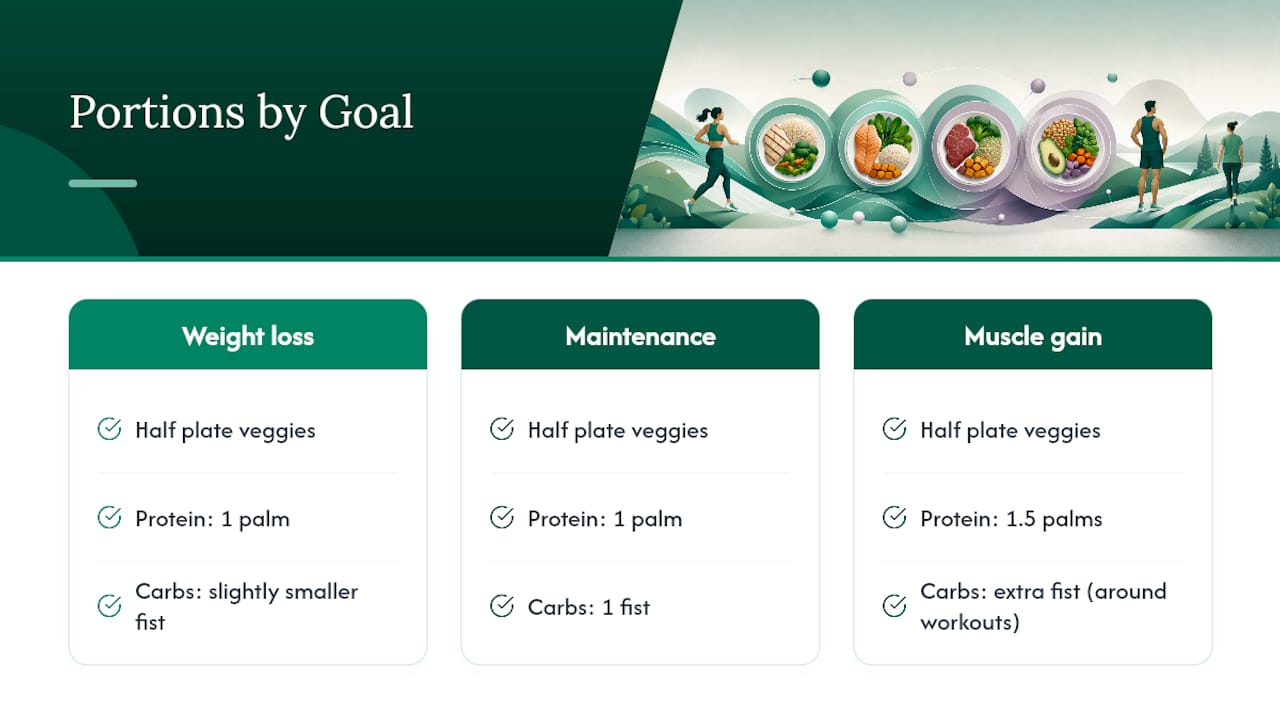
For weight maintenance, the standard plate method as described earlier, half vegetables, a palm of protein, a fist of carbs, tends to hold most adults at a stable weight when paired with regular activity. This is the version most people should default to once a weight goal has been reached.
Muscle gain usually calls for increasing both the protein and carb portions rather than shrinking either one. A muscle-building plate might include a palm and a half of protein and an extra fist of carbs around workouts, since muscle repair needs both amino acids and glycogen replenishment. Vegetables stay at the same half-plate baseline; they’re not the lever you’re adjusting for this goal.
The mistake many people make is applying a weight loss plate to a muscle gain goal, or vice versa. Building muscle on a portion plan designed for fat loss usually leaves someone under fueled and stalled, while eating a muscle gain plate while trying to lose weight tends to stall progress in the other direction.
Common Portion Mistakes Worth Fixing
The biggest misconception is that eyeballing gets easier the longer you avoid measuring. It doesn’t. Skills fade without occasional recalibration, and most people who “eyeball it” for years drift toward larger portions without noticing, largely because restaurant and packaged portions have grown around them, per Michigan State University Extension.
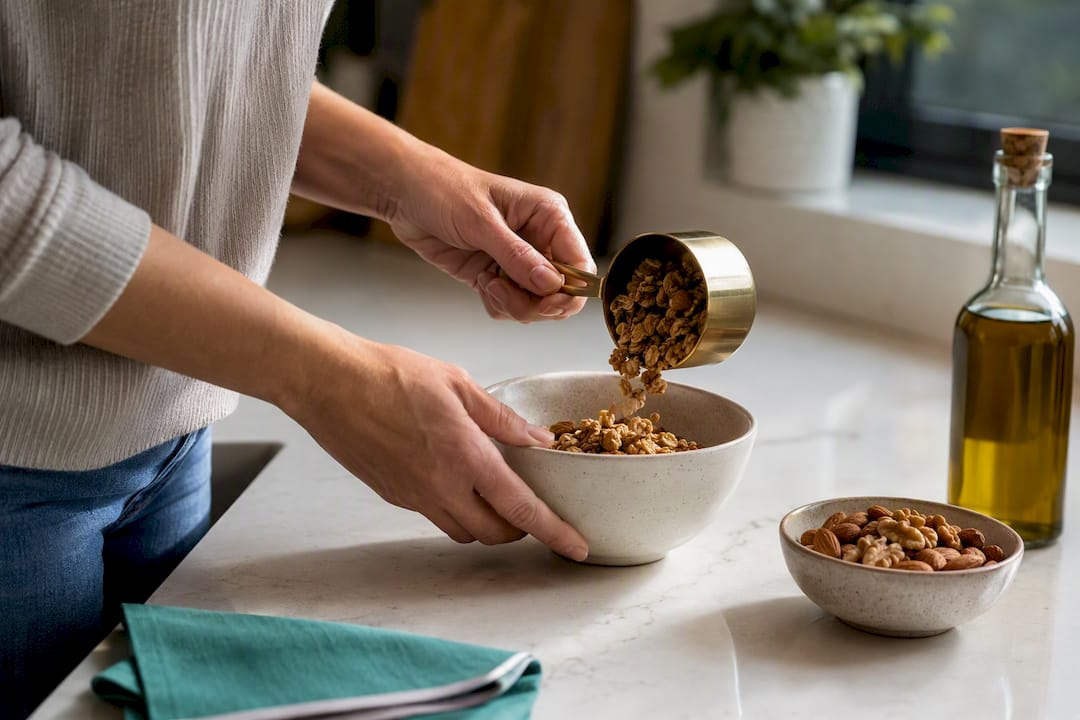
Another common error is treating “healthy” foods as exempt from portion awareness. Nuts, avocado, olive oil, and granola are nutrient-dense, but they’re also calorie-dense, and a “healthy” oversized portion still adds up the same way an unhealthy one does.
People also confuse the serving size on a label with a recommendation. A bag of chips listing 150 calories per serving might contain three servings, and eating the whole bag means eating 450 calories, not 150, a gap the FDA’s label guidance exists specifically to prevent.
Finally, many people set their baseline portions around restaurant meals rather than home cooking, which trains the eye toward oversized defaults. Rebuilding your sense of scale around a 9-inch plate at home, rather than a restaurant entrée, resets that baseline more reliably than any other single change.
Adjusting the Plate for Low-Carb, Mediterranean, and Plant-Based Eating
The plate method flexes for different eating patterns without breaking. For a low-carb approach, the carb quarter shrinks, sometimes to an eighth of the plate or less, and that space gets filled with additional non-starchy vegetables or a slightly larger protein portion. The core visual cues, palm for protein and cupped hand for vegetables, still apply.
A Mediterranean-style plate keeps the same half-vegetable base but leans on the thumb-sized fat portion more heavily, often two or three thumbs of olive oil across a day, along with fish or legumes as the protein quarter several times a week instead of red meat daily.
Plant-based eating changes what fills the protein quarter rather than the plate’s proportions. A palm-sized portion of protein might become a cup of lentils, a block of tofu, or a mix of beans and quinoa. Because plant proteins are often less calorie-dense than meat, the visual palm rule sometimes needs a slightly larger portion, closer to a palm and a half, to hit the same protein target. Swapping in foods from a list of clean eating alternatives makes this adjustment easier to plan around.
Across every version, the half-plate vegetable rule barely moves. It’s the protein source and the carb quarter that flex to match the dietary pattern.
Why Portion Skills Beat Short-Term Dieting
Diets that hinge on rigid daily calorie counts tend to collapse the moment life gets busy or a vacation throws off the routine. Portion skills don’t have that failure point, because a trained eye works at a birthday party just as well as it works in your own kitchen. That’s the real argument for learning visual cues over counting: the skill travels with you.
Clients who make this shift tend to describe it less as a diet and more as a lens they can’t unsee once it clicks into place, whether they’re plating dinner at home or scanning a buffet line.
— Coach Jill
Ready for Guided Portion Coaching That Fits Your Life?
Reading a portion guide gets you the framework. Having someone check your plates, troubleshoot your specific restaurant habits, and adjust your ratios as your goals shift, that’s what actually makes the skill stick long term. Some coaching programs pair visual methods covered here with accountability, meal planning, and support for people navigating GLP-1 nutrition needs alongside portion changes.

Coaching works well for anyone who wants tailored portion training instead of a generic printable, especially people who’ve tried counting calories before and found it exhausting. The first step is typically a single intro session where Coach Jill reviews your current eating pattern, flags where portion distortion is likely creeping in, and builds a starter plan around your actual meals. If you’re ready to stop guessing at your own plate, book a session with Coach Jill and get a plan built around how you actually eat.
Where to Verify This Information
NIDDK’s food portion guidance covers the serving versus portion distinction and temporary measuring strategies.
The Dietary Guidelines for Americans lays out MyPlate food group targets.
The FDA’s Nutrition Facts label guide explains how to read calories and servings per container.
Mayo Clinic’s portion control guide offers the hand-based measurement system.
For plating ideas that make smaller portions feel satisfying, Wild Foodz’s presentation tips are worth a look.
Sources
FAQ
How Do I Figure Out My Portion Size?
Start by comparing your plate to a familiar object, a palm for protein, a fist for carbs, a cupped hand for fruits and vegetables, and adjust the fat portion to about a thumb’s worth per meal.
What Is the 5-4-3-2-1 Food Rule?
Definitions of this rule vary across sources, and it isn’t a standard federal or clinical guideline, so it’s worth treating any specific breakdown you see online with caution rather than as an official portion standard.
What Are the Recommended Portion Sizes?
General guidance from the Dietary Guidelines for Americans points to a plate that’s half non-starchy vegetables, one quarter lean protein around the size of your palm, and one quarter carbs about the size of your fist, adjusted up or down based on activity level and goals.
What Is the 3-3-3 Rule for Meals?
This isn’t an official nutrition standard from federal or clinical sources, and definitions circulating online vary widely, so it’s best approached as informal advice rather than a verified guideline.
Can Coach Jill Help Me Build These Skills Faster?
Yes. Some coaching programs pair the plate method and hand-based cues covered here with meal planning and accountability check-ins, which can shorten the learning curve compared to working through it alone.
Recommended
Comments