
Postpartum Weight Loss Nutrition: A Safe, Evidence-Based Plan

The safest, most effective approach to postpartum weight loss nutrition is a nutrient-dense diet with a modest calorie deficit, paired with gradual physical activity and clinical oversight when needed. Research consistently supports diet combined with exercise over either approach alone, and safety comes down to timing, calorie floors, and protecting your milk supply if you’re breastfeeding.
You don’t need to overhaul your entire diet in week one. You need a plan that respects your recovery, fits into a newborn’s chaotic schedule, and doesn’t compromise breastfeeding if that’s part of your routine.
Here’s what to do this week:
Wait for medical clearance (typically your 6-week postpartum visit) before starting any intentional weight loss effort.
Add a palm-sized portion of protein to every meal, including snacks.
Keep a water bottle within reach at all times, especially during nursing sessions.
Skip calorie counting for now; focus on food quality and meal regularity instead.
If breastfeeding, avoid dropping below roughly 1,800 calories a day without a clinician’s guidance.
A realistic timeline is 6 to 12 months to return to a comfortable, healthy weight, with a safe pace of about 0.5 to 1.5 pounds a week once you begin actively losing.
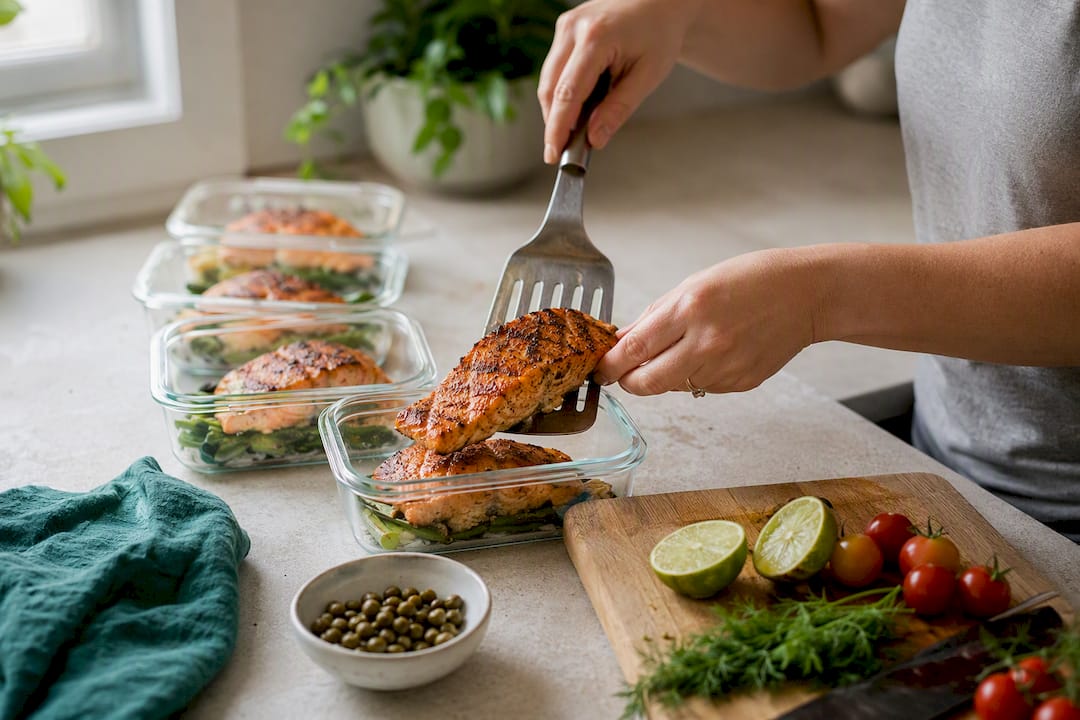
Pro Tip: Batch-cook a protein source (shredded chicken, hard-boiled eggs, or lentils) every three days. Having it ready removes the biggest barrier to eating well when you’re running on four hours of sleep.
Key Takeaways
Safe postpartum weight loss depends on adequate calorie intake for breastfeeding, gradual pacing over 6 to 12 months, and a nutrient-dense plan built around protein and fiber.
Point | Details |
Wait for clearance | Hold off on intentional weight loss until your 6-week checkup, or 8–12 weeks if breastfeeding, per MedlinePlus guidance. |
Aim for a modest deficit | Target 300–500 calories below maintenance for a safe 0.5–1.5 lb/week pace, never dropping below 1,800 kcal while breastfeeding. |
Prioritize protein and fiber | Build each meal around a palm-sized protein portion and fiber-rich carbs to preserve muscle and support satiety. |
Combine diet with movement | Diet plus resistance training preserves lean mass better than diet alone, according to Cochrane review findings. |
Get personalized guidance | Coachjillbyrne offers one-on-one coaching that adapts calorie targets and meal strategy to your specific feeding status and schedule. |
Table of Contents
What the Research Says About Postpartum Weight Loss Nutrition
The evidence is clearer than most new moms realize, and it points in one consistent direction: diet changes work better than exercise alone, and combining the two works best.
A comprehensive Cochrane review of postpartum weight loss interventions pooled results from multiple randomized controlled trials and found that both diet-alone and diet-plus-exercise interventions produced statistically significant weight loss compared with usual postpartum care. Exercise alone improved cardiovascular fitness meaningfully, but it didn’t move the scale nearly as much as dietary change did.
Diet-alone interventions produced average weight loss, while diet combined with exercise produced slightly greater loss in pooled trial data. The numbers sound modest, but they represent real, sustained loss compared with no structured intervention at all.
That gap between diet and exercise matters for how you spend your limited energy in the fourth trimester. If you have thirty minutes and can either meal-prep or squeeze in a workout, the research suggests food choices move the needle further, at least early on.
A few caveats keep this evidence honest rather than oversold:
Many trials were small, and results varied widely between studies, which limits how confidently any single number can be applied to you personally.
Few trials had enough breastfeeding participants to draw firm conclusions specific to lactating mothers, so guidance for that group leans more on clinical consensus than trial data.
“Usual care” control groups varied by study, meaning some comparisons are stronger than others.
A more recent clinical review reinforces the same theme with an added layer of nuance. The Current Obstetrics and Gynecology Reports analysis recommends a multimodal approach, meaning structured nutrition counseling paired with physical activity, as the front-line strategy. It also notes that medical adjuncts like GLP-1 medications or bariatric surgery belong in the conversation only after a multidisciplinary team has evaluated the patient, never as a first move.
The takeaway isn’t that exercise doesn’t matter. It’s that food is doing more of the heavy lifting than most postpartum advice admits, and pairing it with movement rather than replacing it with movement gets you the best outcome the science can currently support.
Safe Timing and Calorie Targets for New Moms
Most obstetric guidance points to the same starting line: wait until your 6-week postpartum checkup before beginning any intentional weight loss effort, according to MedlinePlus patient guidance on postpartum weight loss. Your body needs that window to heal, whether you delivered vaginally or by cesarean, and rushing calorie restriction before then can slow tissue repair and drain the energy your recovery actually requires.
If you’re breastfeeding, extend that timeline further. Most lactation guidance recommends waiting 8 to 12 weeks, until your milk supply is well established, before introducing a sustained calorie deficit. Cutting calories too early can signal your body to reduce milk production, and that’s a risk not worth taking for a faster number on the scale.
Once you’re cleared, aim for a safe, steady pace. A loss of about 0.5 to 1.5 pounds per week is the range most clinical sources support, achieved through a modest 300 to 500 calorie daily deficit rather than a dramatic cut. Healthline’s evidence-based postpartum guidance notes that a 500-calorie deficit roughly corresponds to one pound of loss per week, which lines up with the broader clinical consensus.
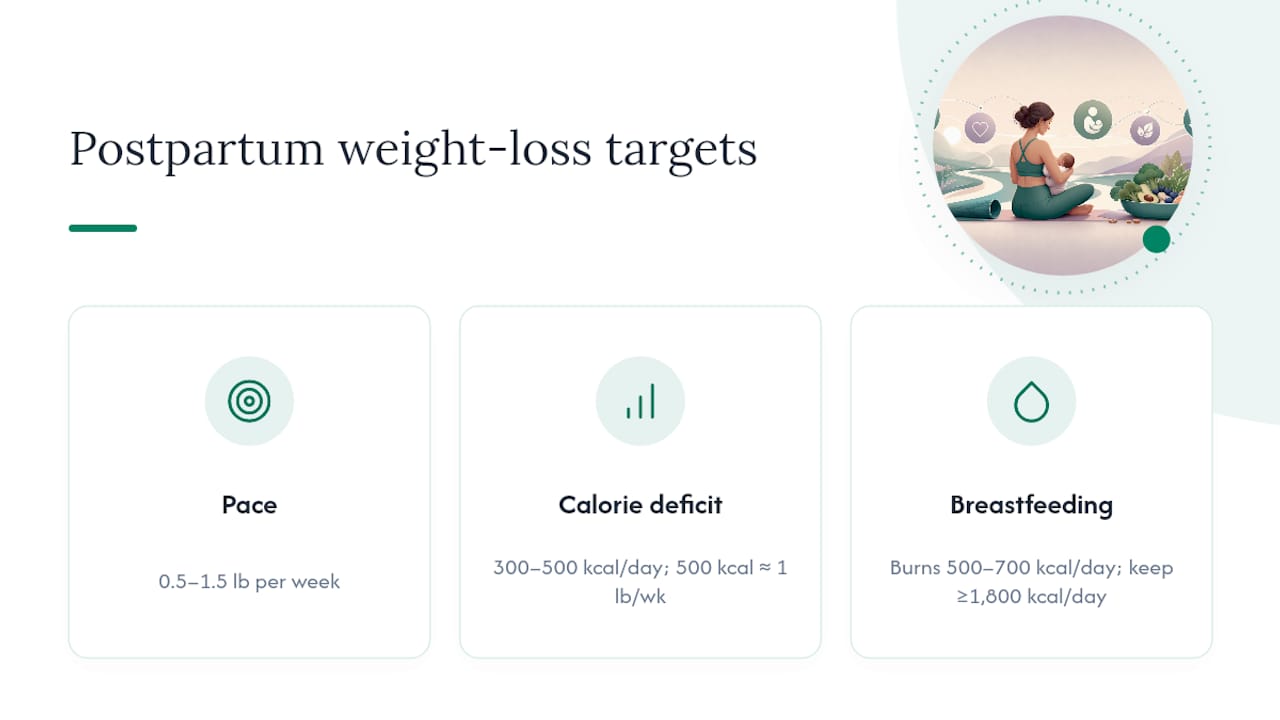
Breastfeeding mothers should not eat like they’re trying to shrink quickly. According to La Leche League International, nursing typically burns an additional 500 to 700 calories a day, and mothers should maintain a minimum of about 1,800 calories daily to protect both supply and energy levels.
Watch for warning signs that you’ve cut too far: persistent dizziness, a noticeable drop in milk supply, or extreme fatigue beyond normal newborn exhaustion. Any of those mean it’s time to eat more, not less. If you want a deeper look at what a sustainable pace actually looks like over months rather than weeks, this guide to realistic weight loss rates breaks down the math in plain terms.
Building a Postpartum Nutrition Plan That Actually Works
Forget restrictive meal plans built around what you can’t eat. A working postpartum nutrition plan starts with what your body needs more of: protein, fiber, and nutrient density, structured into a rhythm you can maintain on broken sleep.
Protein deserves top billing here, and not just because it’s trendy advice. Adequate protein helps preserve lean muscle mass while you’re in a calorie deficit, and it keeps you fuller longer than carbohydrates or fat alone, which matters enormously when you’re too exhausted to plan your next meal. Aim for a source of protein (chicken, eggs, Greek yogurt, beans, fish) at every meal and most snacks.
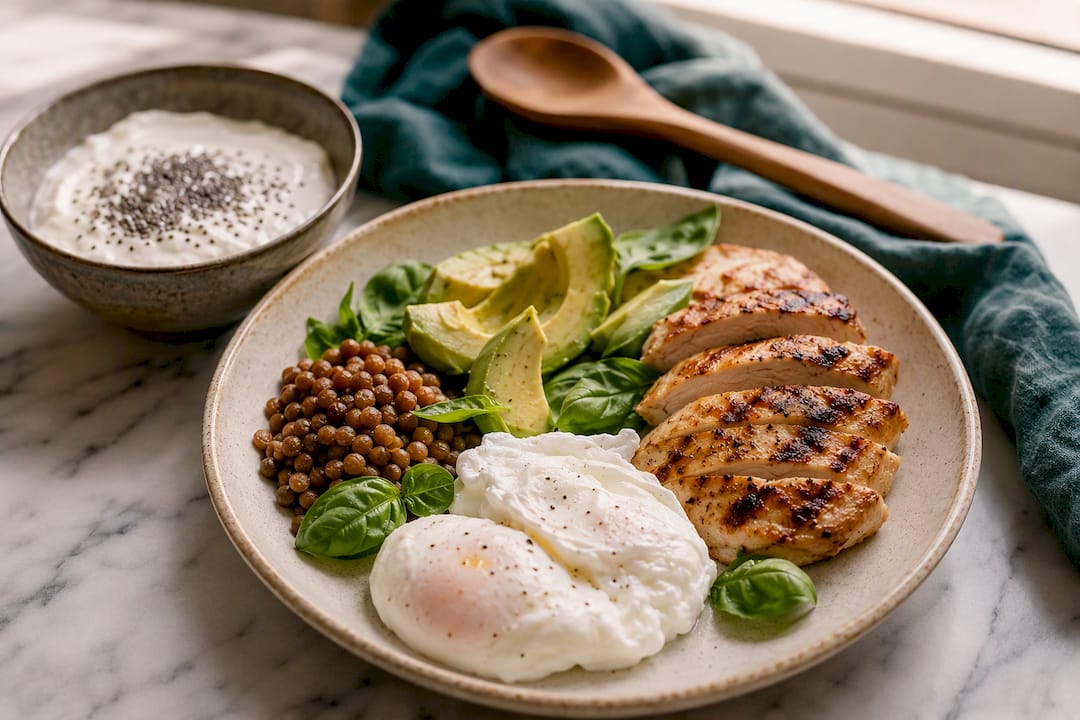
Fiber-rich carbohydrates come next: oats, whole grains, lentils, and plenty of vegetables. Fiber slows digestion, stabilizes blood sugar, and helps manage the constipation many new moms deal with postpartum. Round it out with healthy fats like avocado, olive oil, and nuts, which support hormone regulation and help your body absorb fat-soluble vitamins.
If counting calories feels like one more task you don’t have bandwidth for, skip it. A simple plate model works just as well for most people:
Fill half your plate with vegetables or fruit.
Fill one quarter with a palm-sized portion of protein.
Fill the last quarter with a fist-sized portion of fiber-rich carbs.
Add a thumb-sized portion of healthy fat.
ChooseMyPlate’s guidance on healthier weight management uses this same portion-based approach precisely because it removes the mental math that makes so many diets collapse by week three.
A few meal rules make the biggest difference in practice. Eat something every three to four hours rather than skipping meals and overcompensating later; this steadies your energy and reduces the 3 PM crash that sends most exhausted parents straight for whatever’s fastest. Keep water visible and within reach, since dehydration masquerades as hunger more often than people realize. Limit sugary beverages, which add calories without any nutritional return, and if you drink alcohol, know that it can pass into breast milk and should be timed carefully around nursing sessions.
Pro Tip: Pair convenience with nutrition instead of choosing between them. Keep a stash of pre-portioned nuts, string cheese, and fruit at your changing station or nursing chair, so the easiest option in a 2 AM feeding session is also a nourishing one.
If you want a full breakdown of macronutrient targets tailored to your specific goals, this guide to realistic nutrition planning for weight loss walks through the numbers without turning it into a math assignment.
Sample Postpartum Meal Plans and Time-Saving Tips
Theory is one thing. Getting food on the table between feedings, diaper changes, and approximately four minutes of alone time is another. Here are two full sample days, one built for breastfeeding mothers and one for mothers who are not nursing.
Breastfeeding-friendly sample day: Breakfast: Greek yogurt with berries and a tablespoon of ground flaxseed. Mid-morning snack: an apple with a tablespoon of peanut butter. Lunch: a turkey and avocado sandwich on whole-grain bread with a side salad. Afternoon snack: hard-boiled eggs and whole-grain crackers. Dinner: baked salmon, roasted sweet potato, and steamed broccoli. Evening snack (common during night feeds): a small bowl of oatmeal with milk.
Non-breastfeeding sample day: Breakfast: scrambled eggs with spinach and a slice of whole-grain toast. Mid-morning snack: cottage cheese with pineapple. Lunch: grilled chicken salad with mixed greens, chickpeas, and olive oil dressing. Afternoon snack: carrot sticks with hummus. Dinner: lean ground turkey stir-fry with brown rice and mixed vegetables.
Both days lean on the same principle: protein and fiber at every eating occasion, portioned by the palm-and-fist method rather than a scale or app.
A weekly grocery list built around these meals stays simple: eggs, Greek yogurt, cottage cheese, chicken breast, ground turkey, salmon, mixed frozen vegetables, sweet potatoes, brown rice, oats, whole-grain bread, avocados, mixed berries, apples, nut butter, hummus, and olive oil.
To keep this realistic on almost no sleep:
Cook proteins in bulk once or twice a week (a rotisserie chicken counts).
Pre-wash and chop vegetables the moment you get home from the store.
Keep frozen vegetables on hand; they’re just as nutritious as fresh and require zero prep.
Prepare overnight oats in mason jars for grab-and-go breakfasts.
Freeze meals in individual portions during any rare burst of energy, so future-you has backup on the hardest days.
For more convenience-focused snack ideas that don’t sacrifice nutrition, this guide to healthy convenience snacks for busy lifestyles offers practical options for exactly this stage of life.
Does Exercise Actually Help With Postpartum Weight Loss?
Exercise plays a supporting role here, not a starring one, and the evidence backs that up clearly. Combining diet with resistance training preserves lean muscle mass better than dieting alone, which matters because muscle loss during a calorie deficit slows your metabolism and makes long-term maintenance harder.
Once you’re medically cleared, a realistic weekly starting plan looks like this:
Daily short walks, starting at 10 to 15 minutes and building gradually.
Pelvic floor exercises most days, especially important after vaginal delivery or cesarean recovery.
Two to three sessions of light bodyweight resistance work per week (squats, modified push-ups, resistance bands).
One rest day built in without guilt.
If you had a cesarean delivery, avoid core-intensive movements and heavy lifting until your provider clears you, typically well beyond the standard 6-week mark. Cleveland Clinic’s guidance on postpartum weight loss recommends easing in gradually and prioritizing sleep and hydration just as much as structured workouts.
Fit movement into what already exists in your day:
Walk the stroller during your baby’s first nap window instead of scrolling your phone.
Do pelvic floor exercises during feeding sessions since your hands are already occupied.
Use baby’s tummy time as your own floor-stretch time.
Vitamins and Minerals That Matter Most After Birth
Weight loss goals can accidentally crowd out the nutrients your body most needs to recover, and a handful of them deserve specific attention. Iron tops the list, particularly if you experienced blood loss during delivery; low iron shows up as fatigue that feels different from normal newborn exhaustion. Vitamin D and calcium support bone health and mood regulation, both of which take a hit postpartum. B12 needs extra attention if you follow a vegan or vegetarian diet, since it’s found almost exclusively in animal products. Iodine and DHA matter specifically for breastfeeding mothers, since both influence breast milk composition and infant development.
Continue your prenatal vitamin through the postpartum period unless your provider tells you otherwise; it’s not just a pregnancy supplement. Vitamin D is worth discussing with your doctor as well, especially if you have limited sun exposure or live somewhere with long winters.
Be cautious with anything marketed as a postpartum weight loss supplement. These products are largely unregulated, and restricting entire macronutrient groups (very low-carb or very low-fat approaches) while breastfeeding carries real risk, including nutrient deficiencies for you and altered milk composition for your baby.
If you’re vegan, vegetarian, or simply feeling persistently drained, ask your provider to check iron, thyroid function, and B12 levels. These are quick blood tests that catch deficiencies before they become bigger problems.
Pro Tip: Keep your prenatal vitamin bottle next to your toothbrush. Pairing a new supplement habit with an existing one you never skip makes it far more likely to stick during the fog of early parenthood.
Warning Signs That Mean It’s Time to Call Your Doctor
Most postpartum weight loss journeys proceed without complication, but certain symptoms warrant a call to your provider rather than waiting it out. A noticeably diminished milk supply, severe or worsening fatigue, dizziness, or a racing heartbeat are all signals that something needs medical attention, not just a diet adjustment.
Watch, too, for signs of postpartum depression or anxiety, including persistent sadness, loss of interest in things you used to enjoy, or intrusive worry that doesn’t ease. Mental health struggles frequently disrupt eating patterns in both directions, either suppressing appetite entirely or driving stress eating, and they deserve treatment on their own terms, separate from any weight goal.
Lactational ketoacidosis is rare, but it’s worth knowing the signs: nausea, vomiting, and rapid breathing, usually tied to very low carbohydrate intake while breastfeeding. If you experience these symptoms, seek care promptly.
If you had gestational diabetes or notice weight that simply won’t budge despite consistent effort, ask about a thyroid panel. Postpartum thyroid dysfunction is common and easily mistaken for “just needing to try harder.”
For ongoing support, know which specialist fits which concern:
A registered dietitian (RDN) for personalized nutrition planning and troubleshooting plateaus.
A lactation consultant for supply concerns or feeding difficulties.
Your primary care provider for general health monitoring and referrals.
An endocrinologist for suspected thyroid dysfunction or metabolic concerns.
The Springer Nature review referenced earlier notes that medical adjuncts like GLP-1 medications or bariatric surgery are appropriate considerations only for patients meeting specific clinical criteria, and only after multidisciplinary evaluation, never as a starting point.
How One-on-One Coaching Supports Safe Postpartum Nutrition
A personalized calorie range means more than a generic app recommendation ever will, because it accounts for your specific feeding pattern, activity level, sleep deficit, and medical history. That’s the gap most self-guided plans can’t close.
Coaching support typically includes:
A calorie and macronutrient plan built around whether you’re breastfeeding, formula feeding, or combination feeding.
Lactation-safe meal strategies that protect milk supply while still creating a modest deficit.
Regular accountability check-ins that catch plateaus early and adjust the plan before frustration sets in.
Troubleshooting for the specific obstacles new parents face, like unpredictable schedules and sleep deprivation.
One recurring pattern among new moms working through structured coaching: the biggest shift isn’t the food itself, it’s the accountability that keeps a reasonable plan from quietly falling apart during a hard week.
Clients frequently arrive already knowing what “healthy eating” looks like in theory. What they’re missing is a structured, personalized plan that adjusts as their baby’s feeding schedule changes, plus a check-in point that catches drift before it becomes a month of skipped meals and takeout.
Coaching complements medical care rather than replacing it. If you’re managing GLP-1 medication postpartum, personalized guidance can help coordinate nutrition timing and contraception planning around that treatment, since these medications carry specific considerations during and after pregnancy. Any coaching relationship should work alongside your OB, primary care provider, or endocrinologist, not instead of them.
An Honest Look at What Postpartum Weight Loss Really Requires
Most postpartum weight loss content oversells speed and undersells patience. The research doesn’t support rapid transformation, and frankly, chasing it works against you: crash approaches routinely backfire on energy, mood, and milk supply, while slower, sustainable changes tend to actually stick.
What surprises most new moms isn’t the food advice. It’s how much mental space self-compassion frees up for the actual habit changes to take root. Progress postpartum rarely moves in a straight line, and a plateau at month four doesn’t mean the plan failed. It often means your body is doing exactly what it should while protecting milk supply and recovery.
Two things worth holding onto: pace yourself against a 6 to 12 month window, not a 6 week one, and treat any week where you simply ate three real meals a day as a win worth counting.
Get Personalized Support for Your Postpartum Nutrition Goals
Generic meal plans and calorie calculators can’t account for your feeding schedule, your sleep debt, or the plateau that shows up in month four for reasons that have nothing to do with effort. Coachjillbyrne closes that gap with one-on-one coaching built around your actual life, not a template pulled from an app store.

What personalized coaching solves that a generic plan can’t:
A calorie and macronutrient range calculated for your specific feeding status, whether breastfeeding, formula feeding, or mixed.
Ongoing accountability that catches a stalled plateau before it turns into weeks of frustration.
Support coordinating nutrition around GLP-1 medication if that’s part of your current treatment plan.
Real food strategies that fit around night feeds and unpredictable schedules, not around willpower.
This coaching is not a substitute for medical care, and any plan should work alongside your OB, primary care provider, or lactation consultant. If you’re ready for a plan built specifically around your postpartum stage rather than a one-size template, explore Coach Jill Byrne’s personalized nutrition coaching and book a consultation to get started.
Sources
FAQ
How do you lose weight safely postpartum?
Wait until your medical clearance visit, create a modest 300 to 500 calorie deficit through nutrient-dense whole foods, and pair it with gradual activity like walking and resistance training once cleared.
What is the 3-3-3 rule for postpartum recovery?
Definitions of this rule vary across sources and it isn’t part of formal clinical guidance, so treat any specific version you encounter online with caution and rely instead on your provider’s individualized timeline for activity and recovery.
Is it normal to still have baby weight 10 months after giving birth?
Yes. Clinical guidance points to a realistic timeline of 6 to 12 months for gradual, sustainable weight loss, and factors like breastfeeding, sleep, and stress can extend that further for many mothers.
Is it normal to feel heavier or larger 6 weeks postpartum?
Yes, this is common and expected. Your body is still recovering from pregnancy and delivery at 6 weeks, and intentional weight loss efforts typically haven’t even started yet at this stage under standard medical guidance.
Does breastfeeding help you lose weight after pregnancy?
It can. Breastfeeding often burns an additional 500 to 700 calories a day according to La Leche League, though many mothers also experience a plateau as the body protects milk supply, which typically resolves over time.
When should I consider working with a coach or dietitian postpartum?
If you’re struggling to build a sustainable plan, hitting an unexplained plateau, or managing breastfeeding alongside weight goals, personalized guidance from a coach like Coachjillbyrne or a registered dietitian can tailor the plan to your specific situation.
Recommended
Comments