
1.2–2.0 g/kg Protein Targets for Weight Loss in Adults
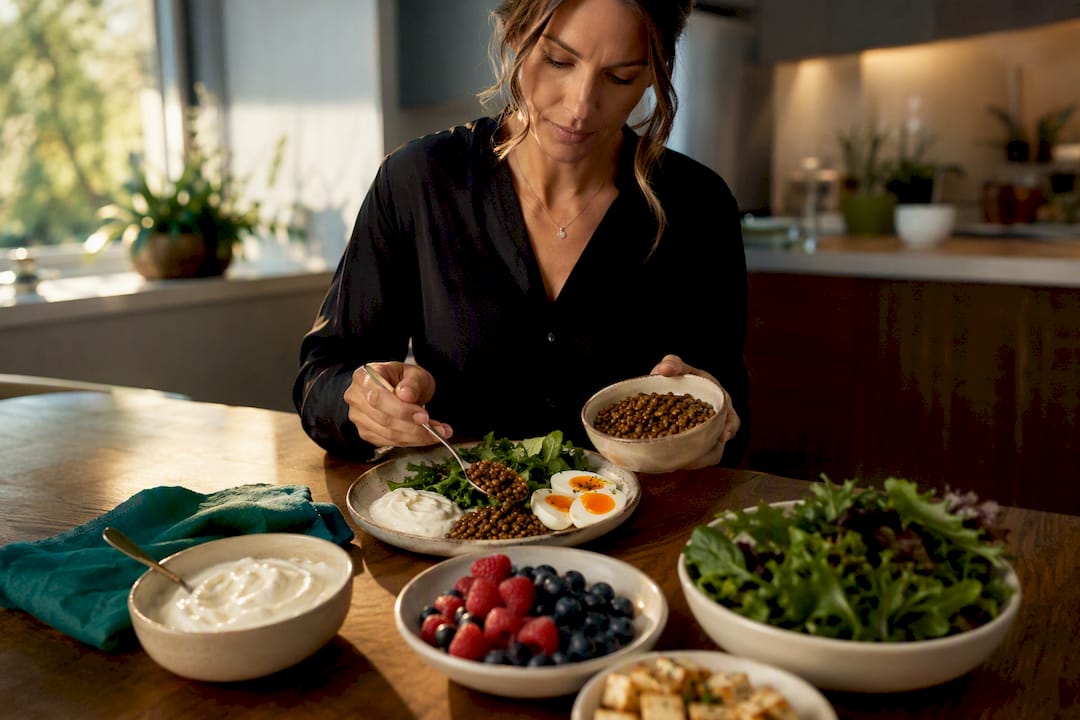
Yes, protein helps you lose weight, but only inside a calorie-controlled plan. It works by curbing appetite, nudging up the calories you burn digesting food, and protecting the muscle you already have. Aim for roughly 1.2–2.0 grams per kilogram of body weight daily (about 0.5–0.9 grams per pound), favor whole foods over powders, and check with a clinician first if you have kidney disease or another condition that affects protein metabolism.
TL;DR:
Consuming 1.2 to 2.0 grams of protein per kilogram of body weight daily maximizes fat loss and muscle preservation during calorie-controlled diets.
Protein sources such as eggs, dairy, chicken, fish, legumes, and plant proteins all support weight loss, especially when paired with fiber-rich foods.
Distributing protein intake evenly across three to four meals enhances muscle maintenance and overall satiety more effectively than consuming it all at once.
Protein shakes are useful for busy individuals, vegetarians, or those with lower appetites, but should supplement, not replace, whole foods.
People on GLP-1 medications should consult a healthcare professional before increasing protein intake to prevent potential risks and ensure muscle preservation.
Table of Contents
How Does Protein Help With Weight Loss?
Protein changes the chemistry of hunger. Eating it triggers a rise in GLP-1 and PYY, hormones that signal fullness, while lowering ghrelin, the hormone that drives hunger. That combination is why a protein-heavy breakfast tends to carry you further into the afternoon than a bagel does.
Digesting protein also costs your body more energy than digesting carbs or fat. Protein’s thermic effect runs about 20 to 30% of its calories, compared to roughly 5 to 10% for carbohydrates. Eat 100 calories of chicken and your body burns 20 to 30 of those calories just processing it.
The third piece matters most over time: protein protects fat-free mass during a calorie deficit. Muscle drives your resting metabolic rate, so hanging onto it while losing fat means your metabolism doesn’t slow down as much as it would on a low-protein diet.
Higher satiety hormones mean fewer spontaneous snacks between meals.
A higher thermic effect adds a small but real calorie burn to every meal.
Preserved muscle mass helps keep resting energy expenditure from dropping as sharply during weight loss.
Consistent finding across trials: high-protein diets produce small but reliable improvements in fat loss and lean-mass retention compared to standard-protein diets, according to a clinical review of high-protein weight-loss mechanisms.
How Much Protein Do You Need to Lose Weight?
The evidence-based target for fat loss and muscle preservation sits between 1.2 and 2.0 grams per kilogram of body weight per day, or about 0.5 to 0.9 grams per pound. Intakes above roughly 2.0 g/kg rarely produce extra benefit, according to a review of protein requirements for active adults, so more isn’t automatically better past that point.
One decision matters before you do the math: which weight do you calculate from? If you have a large amount of excess weight to lose, base the target on your goal weight rather than your current weight. Calculating from current weight can produce an absolute gram target so high it crowds out fiber and food variety, which backfires on digestion and long-term adherence.
Once you have a daily number, break it into meals:
Multiply your goal weight in pounds by 0.6 to 0.8 for a solid starting range.
A 150-pound person lands around 90 to 120 grams per day.
Split 90 grams across three meals for about 30 grams each, or across four meals for roughly 22 grams each.
Resistance training pushes your target toward the upper end of the range, since building or maintaining muscle demands more raw material than sedentary maintenance does.
What Are the Best Protein Sources for Weight Loss?
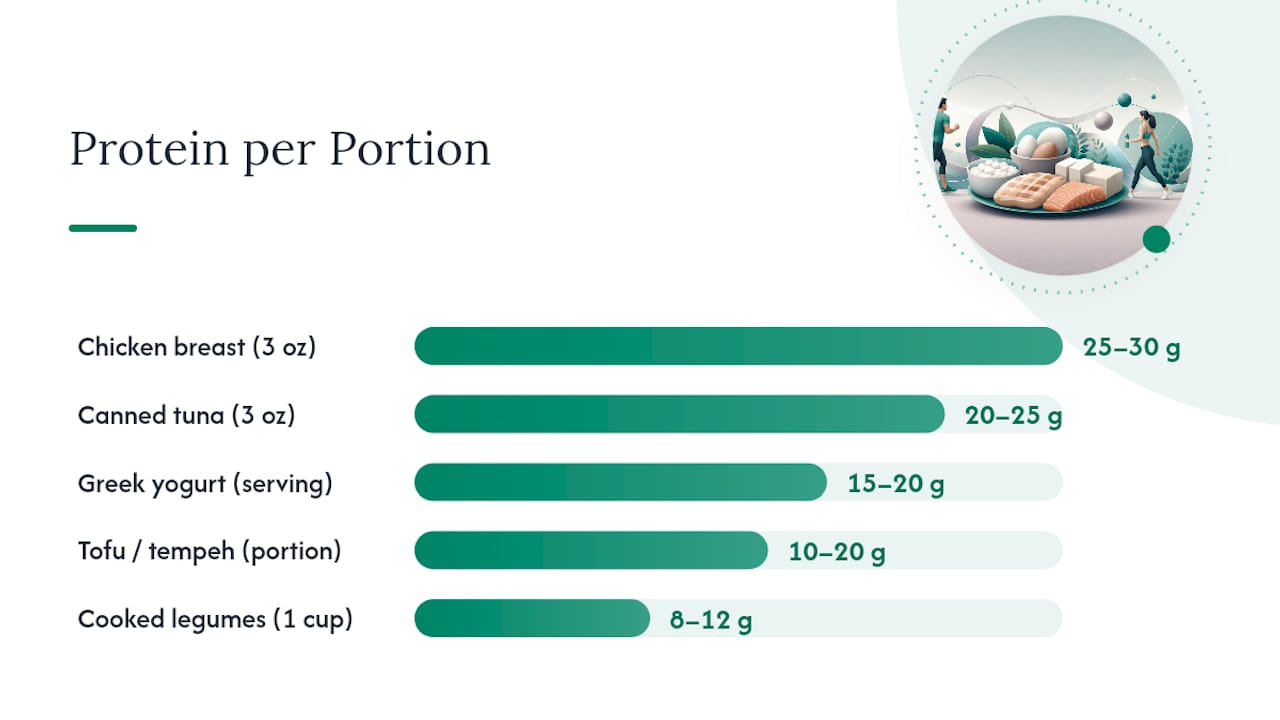
Whole foods should be your foundation, with supplements filling in the gaps. Here’s what typical portions deliver:
Eggs: about 6 to 7 grams each
Greek yogurt: 15 to 20 grams per serving
Chicken breast: 25 to 30 grams per 3 ounces
Canned tuna: 20 to 25 grams per 3 ounces
Tofu or tempeh: 10 to 20 grams per portion
Cooked legumes: 8 to 12 grams per cup
Nuts and seeds: solid protein, but watch portions since calories add up fast
Small swaps compound quickly. Trade an afternoon candy bar for cottage cheese with berries and you add roughly 15 grams of protein while cutting sugar. Check out these high-protein snacks that actually keep you full for more ideas that fit into a real schedule.
Plant and animal proteins both work for weight loss. Animal sources tend to deliver complete amino acid profiles in smaller portions, while plant sources bring fiber that supports fullness on its own. Mixing both, rather than picking a side, gives you the widest range of practical sustainable weight loss food swaps.
Pro Tip: Pair any protein source with a fiber-rich food, like beans with vegetables or eggs with a side of fruit, to extend the fullness effect longer than protein alone provides.
Do Protein Shakes Actually Help You Lose Weight?
Protein shakes earn their place when whole food falls short of your target, not as a replacement for eating well. They help most for people who are short on time, training hard, older adults with lower appetites, or vegetarians and vegans who struggle to hit higher gram totals through food alone.
The type matters less than consistency. Whey absorbs quickly and pairs well with post-workout recovery and appetite control, while casein digests more slowly and can support fullness between meals. Plant blends work fine when they combine sources, like pea and rice protein, to cover the full amino acid profile.
Use a shake to replace a lower-protein, higher-calorie snack, not to stack on top of meals you already eat.
Adjust your other meals down slightly if you add a shake, so total calories stay in your target range.
Reserve shakes for genuine convenience gaps rather than defaulting to them at every meal.
How Should You Spread Protein Across the Day?
Spreading protein across three to four meals works better for preserving muscle than loading it all into one large dinner. Your body can only use so much protein at once to build and repair tissue, so distributing it gives you more opportunities throughout the day, a pattern supported by research on meal-by-meal protein timing.
Breakfast: 25 to 30 grams (eggs, Greek yogurt, or a shake)
Lunch: 25 to 30 grams (chicken, tuna, or legumes)
Dinner: 25 to 30 grams (fish, tofu, or lean beef)
Optional snack: 10 to 15 grams (cottage cheese, nuts, or jerky)
Pair this with resistance training at least twice a week. Exercise gives your muscles a reason to use the protein you’re eating, rather than letting your body treat it as just another calorie source.
Pro Tip: Eat protein within a couple hours of a workout, whether before or after, to make the most of the muscle-preserving window training opens up.
When Should You Talk to a Clinician About Increasing Protein?
Higher protein intake is generally safe for healthy adults, but a few groups should check in with a clinician first, as covered in guidance on protein and bone density. People with kidney disease, certain liver or metabolic conditions, and those who are pregnant or nursing all need individualized guidance before making a significant change, according to Mayo Clinic’s guidance on high-protein diet safety.
Very restrictive high-protein approaches carry their own risks: low fiber intake, higher saturated fat if you lean on fatty meats, and gaps in micronutrients that come from cutting other food groups too hard. If you’re on a GLP-1 medication, protein needs and muscle-loss risk deserve extra attention since appetite suppression can make it harder to hit targets through food alone.
Bring recent labs, especially kidney function markers, to any conversation about raising intake.
List current medications, since some interact with dietary changes.
Note your typical eating pattern so a clinician can spot gaps quickly.
What Does a High-Protein Day of Eating Look Like?
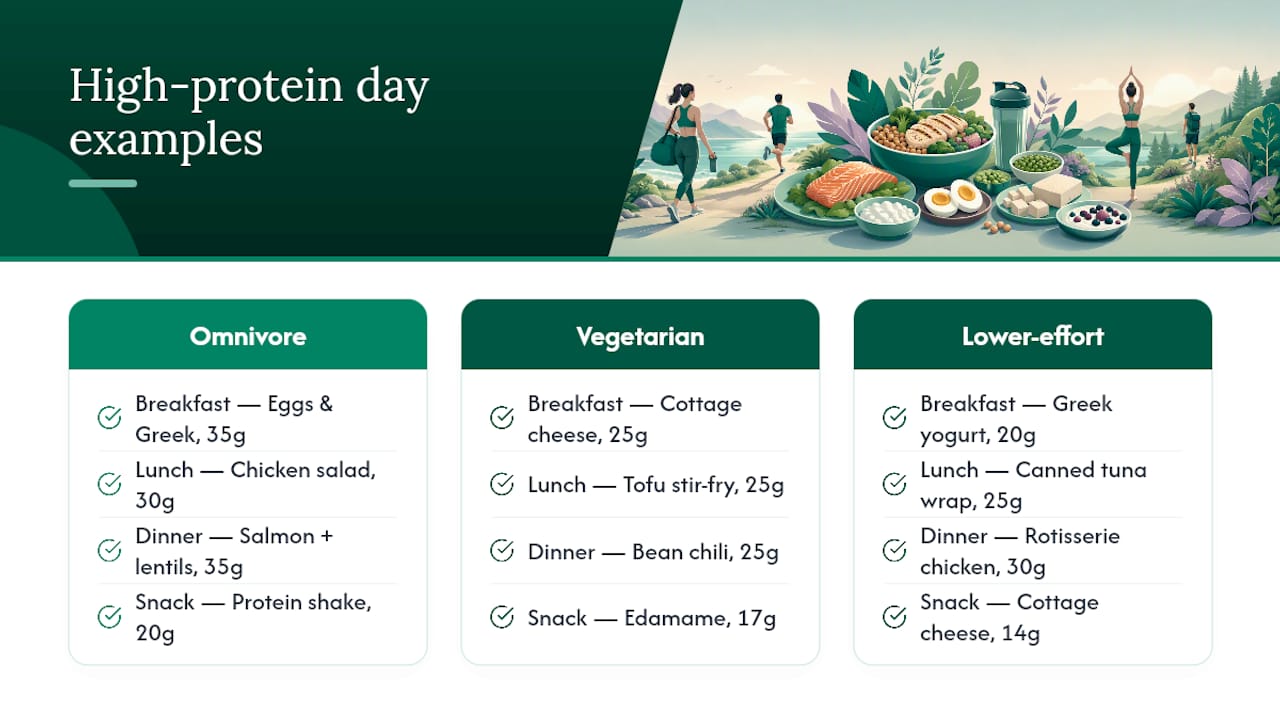
A practical menu beats a theoretical target every time. Here are three compact days that hit roughly 100 to 120 grams of protein:
Omnivore day: Eggs and Greek yogurt at breakfast (35g), chicken salad at lunch (30g), salmon with lentils at dinner (35g), plus a protein shake if needed (20g).
Vegetarian day: Cottage cheese and berries at breakfast (25g), tofu stir-fry at lunch (25g), bean chili at dinner (25g), and a handful of edamame as a snack (17g).
Lower-effort day: Greek yogurt at breakfast (20g), canned tuna wrap at lunch (25g), rotisserie chicken with vegetables at dinner (30g), and cottage cheese before bed (14g).
Converting a low-protein day into a high-protein one often just means swapping cereal for eggs and adding a serving of legumes at dinner, small edits with a real cumulative effect. Keep portions in check as you add these swaps. Piling on protein without watching total calories can stall the deficit that actually drives fat loss, a balance covered in more detail in these portion control tips for weight loss.
A Coaching Perspective on Making Protein Stick
Most people don’t fail at hitting protein targets because the math is hard. They fail because they try to overhaul every meal at once. Start with one swap, like breakfast, and build from there. Track whether you’re eating protein consistently, not whether every single day is perfect. Adherence, more than any specific gram target, determines whether the changes last.
That’s exactly where structured coaching earns its keep: translating a number into a realistic meal plan, adjusting for GLP-1 medication use, and providing accountability when motivation dips. Explore how muscle preservation differs from simple weight loss to understand why the details matter more than the scale number alone.
— Coach Jill
Ready for a Protein Plan Built Around Your Life?
Generic gram targets only get you so far. Your ideal protein range depends on your current weight, your activity level, whether you’re on a GLP-1 medication, and the foods you actually enjoy eating, which is exactly the kind of detail a calculator can’t account for.

Personalized nutrition coaching is built around real food, not restrictive rules or rigid meal plans that fall apart after two weeks. Instead of guessing at portion sizes or wondering if your protein is spread out correctly, you get a plan calibrated to your body, your schedule, and your goals, with accountability built in to help it stick. For those managing a GLP-1 medication, nutrition guidance can include strategies to protect muscle mass while the medication curbs appetite. Visit Coach Jill Byrne’s coaching page to see how personalized nutrition coaching can turn these protein targets into a plan you’ll actually follow.
Sources
This article is general information, not a substitute for advice from a qualified doctor. Consult a qualified healthcare professional about your own circumstances before acting on anything here.
FAQ
Can I lose belly fat by eating more protein?
Protein alone won’t spot-reduce belly fat, but higher protein intake supports overall fat loss and helps preserve muscle while you’re in a calorie deficit, which improves body composition over time.
How much protein a day do I need to lose 20 pounds?
Use the same evidence-based range, about 1.2 to 2.0 grams per kilogram of body weight, calculated from your goal weight rather than your current weight if you have significant weight to lose.
What is the 30/30/30 rule for weight loss?
This popular routine suggests eating 30 grams of protein within 30 minutes of waking, then doing 30 minutes of low-intensity exercise; it isn’t a clinically established standard, but it does align with the evidence that early protein supports satiety and steady energy.
What should I eat in a week to lose weight?
Focus on hitting your daily protein range at every meal, filling the rest of your plate with vegetables and fiber-rich carbs, and keeping overall calories in a modest deficit rather than following a rigid seven-day script.
Is it safe to increase protein if I take a GLP-1 medication?
Yes for most people, but appetite suppression from GLP-1 medications can make it harder to eat enough protein, so working with a coach or clinician to structure smaller, protein-focused meals helps protect muscle mass.
Recommended
Comments