
Replace Processed Snacks with Real Food That Satisfies
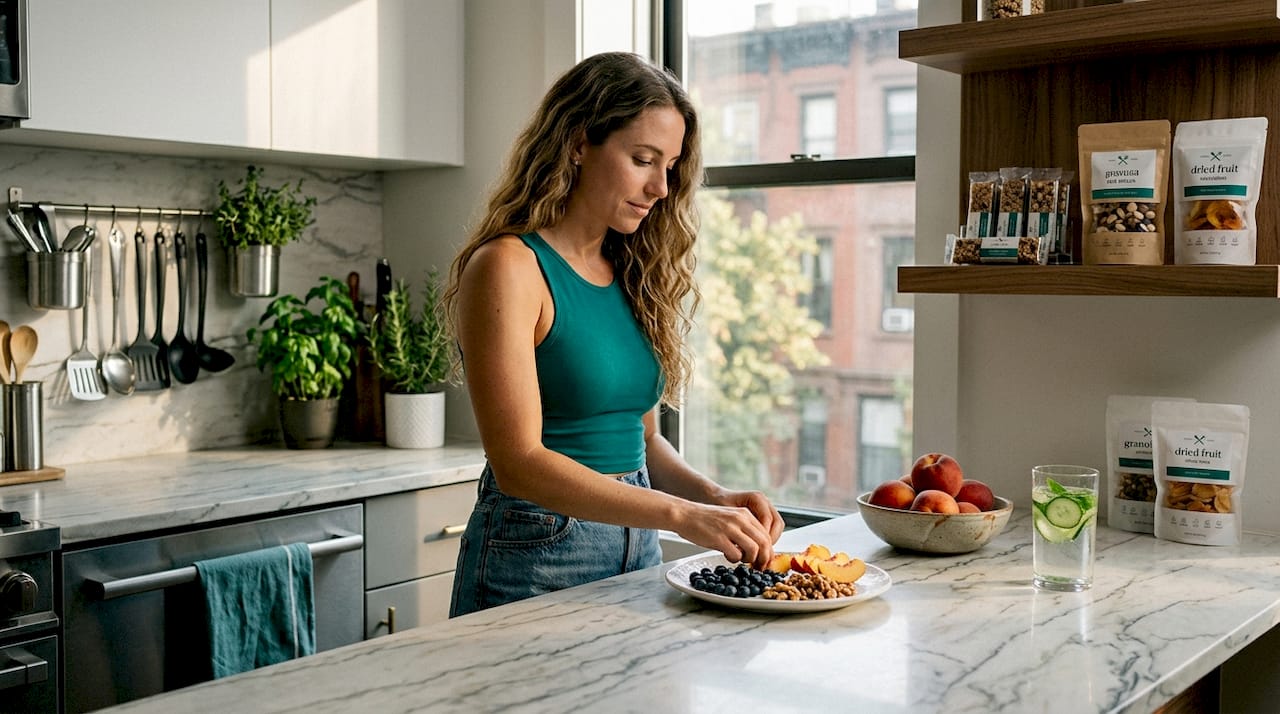
Most people reach for processed snacks out of habit, not hunger. The bag of chips at 3 p.m., the granola bar between meetings, the crackers after dinner. These choices feel harmless, but the cumulative effect on your health is real. When you replace processed snacks with real food, you do not need a strict diet or a total lifestyle overhaul. You need a practical plan. This guide gives you exactly that: clear strategies, satisfying swaps, and a mindset that makes the change stick for the long term.
Table of Contents
Key Takeaways
Point | Details |
Start with one swap daily | Replacing one ultra-processed snack with a whole food option improves dietary quality measurably within weeks. |
Use the half-and-half strategy | Mix a small amount of a processed snack with a whole-food alternative to reduce deprivation and support habit change. |
Read labels with purpose | Avoid items with many unpronounceable ingredients to stay within healthy sodium and added sugar limits. |
Match the sensory experience | Choose crunchy, high-fiber alternatives like roasted chickpeas or air-popped popcorn to satisfy the same cravings. |
Track and adjust gradually | Monitor which swaps feel satisfying and refine your choices over time rather than overhauling everything at once. |
Why replacing processed snacks with real food matters
Not all packaged foods are created equal, and understanding the difference helps you make faster, smarter choices at the grocery store. Whole foods are foods in their natural or minimally altered state: fresh fruit, raw nuts, eggs, vegetables, plain yogurt. Ultra-processed foods, on the other hand, contain ingredients you would not find in a home kitchen. Think emulsifiers, artificial flavors, modified starches, and synthetic preservatives.
The health consequences of eating too many ultra-processed snacks are well documented. Processed snacks with saturated fats and synthetic additives place significant strain on the liver, and regular consumption of processed meats, fried snacks, and synthetic cream substitutes can contribute to liver steatosis over time. Beyond liver health, these foods are typically high in sodium and added sugars, two areas where most Americans already exceed recommended amounts.
Reading labels is one of the most practical skills you can build. A useful rule: keep daily sodium under 2,000 mg and added sugars below 6% of your total daily calories. When a label lists more than five ingredients and several of them are unpronounceable, that product is almost certainly ultra-processed.
Here is what to look for when scanning a label:
More than five ingredients total
Ingredients ending in “-ose” (fructose, maltose, dextrose) indicating added sugars
Hydrogenated or partially hydrogenated oils
Artificial colors or flavors listed by number or code
Preservatives like BHA, BHT, or TBHQ
Pro Tip: Shop the perimeter of the grocery store first. The produce section, meat counter, and dairy aisle are where most whole food snack options live. Fill your cart there before walking the center aisles.
Getting your pantry and mindset ready
The biggest mistake people make when trying to eat better is attempting to change everything at once. A total pantry overhaul causes overwhelm and relapse. The research is clear: starting with one snack replacement per day builds habit competence far more sustainably than a dramatic reset.
The mindset shift that makes this work is moving from elimination to reduction. You are not banning chips forever. You are choosing something better most of the time. That framing removes the guilt and the all-or-nothing pressure that derails so many well-intentioned efforts.
Before you start swapping, stock your kitchen with whole-food snack staples:
Raw or lightly salted nuts (almonds, walnuts, cashews)
Fresh and frozen fruit
Plain Greek yogurt
Hard-boiled eggs
Baby carrots, celery, and sliced bell peppers
Hummus
Canned or dried chickpeas for roasting
Organization matters as much as what you buy. Place whole-food options at eye level in the fridge and on the counter. Move processed snacks to less accessible spots. This is not about willpower. It is about designing your environment to make the better choice the easier one.
Here is a simple weekly snack planning framework:
Day | Processed snack to replace | Whole-food swap |
Monday | Chips | Air-popped popcorn with sea salt |
Tuesday | Granola bar | Apple with almond butter |
Wednesday | Flavored crackers | Veggies with hummus |
Thursday | Candy | Plain yogurt with berries |
Friday | Packaged cookies | Dark chocolate with a handful of walnuts |
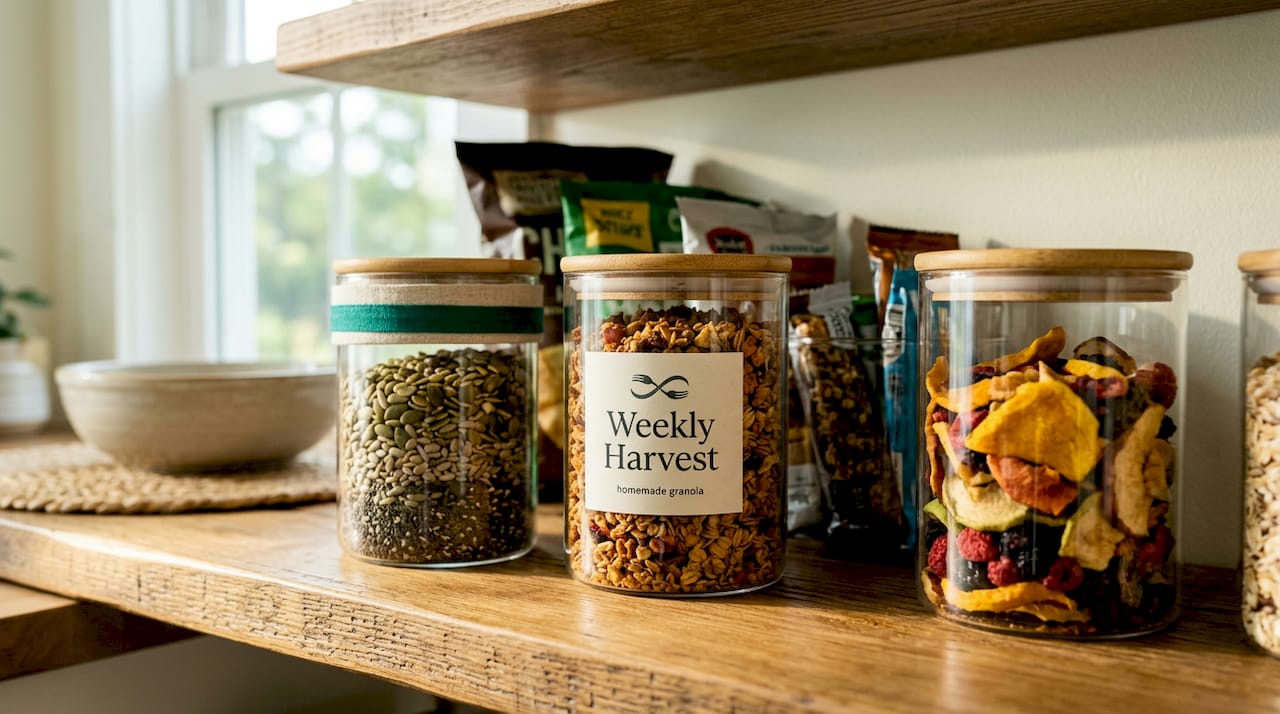
Pro Tip: Prep snacks on Sunday. Wash and cut vegetables, hard-boil a batch of eggs, and portion out nuts into small containers. When real food snack options are ready to grab, you will not reach for the processed alternative.
Practical swaps for every craving type
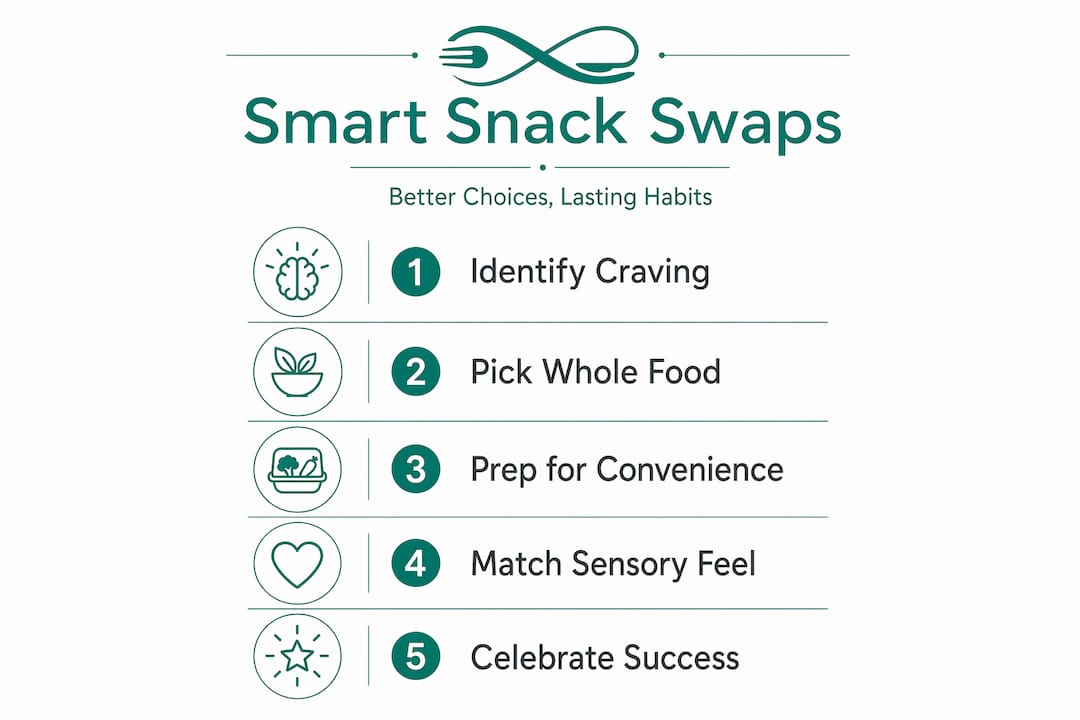
This is where the real work happens. The key to making snack swaps for health stick is matching the sensory experience of the processed snack you are replacing. Crunch, sweetness, saltiness. These are the cues your brain responds to. Satisfy them with whole foods and the transition feels natural rather than punishing.
Crunchy cravings
Chips and crackers deliver crunch and salt. Air-popped popcorn gives you the same experience at roughly 90 to 100 calories per 3 cups, compared to about 150 calories and 10 grams of fat per ounce of chips. Roasted chickpeas are another strong option, providing around 6 to 7 grams of protein per quarter cup while delivering a satisfying crunch. Carrots, celery, and jicama sticks also work well, especially when paired with hummus or a simple guacamole.
Sweet cravings
Flavored yogurts, candy bars, and sweetened granola bars are among the most common processed snacks people reach for when they want something sweet. Plain unsweetened yogurt topped with fresh or frozen berries gives you natural sweetness, probiotics, and protein without the additives. Fresh fruit paired with a tablespoon of nut butter satisfies both sweetness and fat cravings at the same time. A square or two of dark chocolate with a small handful of walnuts rounds out the sweet category nicely.
Savory cravings
For savory snacks, unsalted or lightly salted nuts are one of the most nutritionally dense options available. They provide protein, fiber, healthy fats, and key vitamins and minerals. Hard-boiled eggs, whole-grain crackers with avocado, and sliced turkey on cucumber rounds are all satisfying real food snack options that replace junk food with healthy options without feeling like a compromise.
Here is a quick comparison to make the swap decision easier:
Processed snack | Whole-food alternative | Calories | Protein | Fiber |
Potato chips (1 oz) | Roasted chickpeas (1/4 cup) | 150 vs 120 | 2g vs 6g | 1g vs 4g |
Flavored yogurt (6 oz) | Plain Greek yogurt + berries | 150 vs 110 | 5g vs 15g | 0g vs 2g |
Candy bar (1.5 oz) | Dark chocolate + walnuts | 220 vs 180 | 2g vs 4g | 1g vs 2g |
Packaged crackers (1 oz) | Air-popped popcorn (3 cups) | 140 vs 95 | 2g vs 3g | 1g vs 4g |
Pro Tip: Try the half-and-half bowl approach when a craving feels strong. Fill half your bowl with the processed snack you want and half with a whole-food alternative. This gradual reduction method prevents the sense of deprivation that causes people to abandon healthy eating efforts entirely.
Common challenges and how to handle them
Even with the best preparation, obstacles come up. Knowing how to handle them in advance is what separates people who sustain change from those who revert to old habits after two weeks.
Cravings and the hand-to-mouth habit. Many processed snack cravings are not about hunger. They are about ritual. The act of reaching, grabbing, and chewing is comforting. Snack satisfaction often depends on tactile and ritual cues, which is why crunchy, high-fiber alternatives work so well. They replicate the physical experience of the processed snack.
Time and convenience. This is the most common barrier. Processed snacks are fast. Real food takes more preparation. The solution is batching: prepare whole-food snacks in advance so they are just as convenient. Pre-portioned nuts, washed fruit, and cut vegetables remove the friction entirely.
Social situations. Parties, work events, and family gatherings are full of processed options. You do not need to refuse everything. Eat a satisfying whole-food snack before you arrive, then make one or two deliberate choices at the event rather than grazing mindlessly.
Emotional eating. Food and emotion are deeply connected for many people. Mindful eating and portion rewrites reduce guilt and improve adherence better than strict bans. When you catch yourself eating for emotional reasons, pause and ask whether you are physically hungry. If not, try a short walk or a glass of water first.
“Progress is built on small, consistent choices. One better snack today is more valuable than a perfect diet that lasts three days.”
Pro Tip: Celebrate small wins out loud. Tell someone when you made a good swap. Write it down. Positive reinforcement builds the neural pathways that make healthy choices feel automatic over time.
Tracking progress and building lasting habits
Once you have been making snack swaps for a few weeks, it is worth pausing to assess what is working. Not every swap will feel satisfying, and that feedback is useful. If roasted chickpeas feel like a chore, try a different crunchy option. If plain yogurt is not doing it for you, experiment with toppings until you find a combination you genuinely enjoy.
Here are a few ways to monitor your progress effectively:
Note which swaps you reach for without thinking. Those are your anchors.
Track your energy levels in the afternoon, when processed snack cravings typically peak.
Pay attention to hunger patterns. Whole foods with fiber and protein keep you fuller longer.
Check in on your wellness markers: sleep quality, digestion, and mood often improve as processed food intake drops.
Revisit your snack plan monthly and add one or two new whole-food options to keep things from feeling repetitive.
Replacing one processed item daily and gradually cooking more meals at home builds the kind of habit competence that lasts. The goal is not a perfect score. It is a consistent upward trend in how often you choose real food over processed alternatives.
My take on snack swaps after years of coaching
I have worked with enough clients to know that the word “healthy” can feel like a threat. When someone hears they need to replace processed snacks with real food, the first reaction is often loss, not excitement. Loss of convenience, loss of comfort, loss of the foods they actually enjoy.
What I have learned is that the clients who succeed are not the ones who white-knuckle through cravings. They are the ones who find real food options they genuinely like. That takes experimentation, not discipline. My job is to help people discover that a handful of good almonds or a bowl of plain yogurt with honey and blueberries can be just as satisfying as a bag of chips, once the habit is established.
I have also seen how the all-or-nothing mindset destroys progress. One client told me she had “ruined” her week because she ate crackers at a work event. That thinking is the real problem, not the crackers. The half-and-half approach and the one-swap-per-day method exist precisely because perfection is not the goal. Consistency is. You can read more about maintaining those gains in this piece on weight loss maintenance, which covers how small behavioral shifts compound over time.
The most practical lesson I can share: do not try to change your snacks and your meals and your exercise habits all at once. Start with snacks. They are small, frequent, and highly changeable. Win there first, and the rest becomes easier.
— Jill
How Coachjillbyrne supports your real food journey

Making snack swaps is a great starting point, but lasting change happens when you have a structured plan and someone to keep you accountable. Coachjillbyrne offers personalized nutrition coaching services designed specifically for people who want sustainable results without restrictive dieting. Jill’s approach centers on practical habits, real food strategies, and consistent support tailored to your lifestyle and goals.
Whether you are just beginning to replace processed snacks with real food or you are ready to build a complete nutrition plan, Coachjillbyrne provides the guidance to get there. You can explore pricing and coaching plans to find the right level of support, or book a session online to get started with personalized coaching today. Small changes, done consistently, produce real results.
FAQ
What is the easiest way to replace processed snacks with real food?
Start by swapping one processed snack per day with a whole-food alternative like fresh fruit, raw nuts, or plain yogurt. This gradual approach builds lasting habits without triggering the deprivation that causes relapse.
What are the best healthy snack alternatives to chips?
Air-popped popcorn and roasted chickpeas are among the most satisfying alternatives to chips, providing fiber and protein at fewer calories. Both replicate the crunch and saltiness that make chips appealing.
How do I handle sweet cravings without processed snacks?
Plain Greek yogurt topped with fresh berries or a piece of fruit paired with almond butter satisfies sweet cravings while delivering protein and fiber. Choosing plain yogurt over flavored varieties also cuts added sugars and preservatives significantly.
Are all packaged nuts considered processed snacks?
Most plain nuts with minimal ingredients are a whole food snack option, but heavily salted, sweetened, or flavored varieties cross into ultra-processed territory. Choose nuts with one or two ingredients for the best nutritional value.
How long does it take to stop craving processed snacks?
Most people notice a reduction in processed snack cravings within two to four weeks of consistent whole-food swaps, as blood sugar stabilizes and new habits form. The timeline varies, but small daily swaps accelerate the adjustment significantly.
Recommended
Comments