
Restart Weight Loss With a 500–750 Cal Deficit and Habit First Plan

To restart weight loss, recalculate your calorie target for your current body weight, aim for a safe 500–750 calorie daily deficit, add resistance training regularly, and track your intake for one to two weeks. Plateaus are a normal, reversible part of losing weight, not a sign that something has gone wrong. Anchor your restart to 1 to 2 pounds of loss per week and 150 to 300 minutes of weekly activity, and consider working with a nutrition coach for tailored accountability.
TL;DR:
Recalculate your calorie needs based on your current weight, aiming for a daily deficit of 500 to 750 calories to sustain 1 to 2 pounds of weekly loss.
Track your food intake honestly for three to seven days to identify small extras that may be rebuilding your calorie surplus.
Incorporate two resistance training sessions per week and gradually increase daily steps by 1,000 to 2,000 to boost metabolism and prevent plateaus.
Adjust your workouts by rotating cardio intensity and building toward 150 to 300 weekly minutes of activity for ongoing weight management.
Address sleep and stress factors, as poor habits can silently stall progress despite consistent eating and exercise efforts.
Table of Contents
Your Quick Action Checklist to Restart Weight Loss
A stalled scale usually means your habits drifted or your calorie needs shifted, not that your body has stopped responding. The fastest way to get moving again is a short, structured reset rather than another round of guessing.
Recalculate your calorie needs. Your body burns fewer calories at a lower weight, so the number that worked 20 pounds ago is probably too high now.
Track everything for 3 to 7 days. A short, honest food log usually uncovers small extras like dressings, drinks, or weekend portions that quietly rebuilt your deficit.
Add two resistance sessions this week. Bodyweight squats, rows, and presses count. Consistency matters more than equipment.
Increase your daily steps by 1,000 to 2,000. Park farther out, take a lap during calls, or walk after dinner.
Fix your bedtime routine. Dim screens an hour before bed and aim for a consistent wake time.
Set two process goals, not outcome goals. “Track 5 days” and “complete 2 strength sessions” are things you control today.
Pro Tip: Pick one habit from this list, not all six. A single change done consistently for two weeks beats a perfect plan abandoned by Thursday.
What Nutrition Changes Actually Restart Fat Loss?
Your metabolism isn’t broken. It’s just smaller. As you lose weight, your body requires less energy to function, so a calorie target that once produced steady loss can quietly become your new maintenance level. This is one of the most common, and most fixable, reasons progress stalls.
Recalculating is simple: many people just need to reduce intake moderately from their current number, or use an online estimate based on their new weight, and reassess from there. Harvard Health notes that a safe, sustainable deficit falls between 500 and 750 calories a day, which typically produces the 1 to 2 pounds of weekly loss most guidelines recommend. Dropping below roughly 1,200 calories a day is where things get risky. Extreme restriction tends to backfire through fatigue, muscle loss, and eventual overeating.
Protein and fiber do the heavy lifting for appetite control during a restart:
Aim for approximately 1.2 to 1.5 grams of protein per kilogram of body weight daily to protect muscle while in a deficit.
Build meals around vegetables, legumes, and whole grains to add volume and fiber without piling on calories.
Use the plate method: half vegetables, a quarter lean protein, a quarter whole grains, as a default template instead of counting every gram.
Prep two or three meals in advance so decision fatigue doesn’t push you toward the easiest, not the smartest, option.
Quick math: a 500-calorie daily deficit adds up to roughly 3,500 calories a week, which is close to one pound of fat loss. That’s the entire mechanism behind the 1 to 2 pound weekly target, and it’s why small, sustainable calorie control beats crash dieting for keeping the loss off.
How Should You Change Your Workouts to Break a Plateau?
Cardio alone tends to lose effectiveness over time because your body adapts and becomes more efficient at the same routine. Resistance training changes the equation by protecting the muscle mass that drives your metabolic rate, which matters more the further you get into a weight loss program.
Start with two structured strength sessions per week. A simple full-body routine (squats, push-ups, rows, planks) covers the major muscle groups without requiring a gym membership.
Increase your non-exercise movement gradually. Standing desks, short walking breaks, and taking stairs add up to real energy expenditure over a week, often called NEAT.
Rotate your cardio intensity. Mix two steady, moderate-paced sessions with one shorter interval session weekly instead of doing the same 30 minutes every day.
Build toward the 150 to 300 minute range. Federal guidelines point to 150 minutes weekly for general health, with up to 300 minutes often supporting continued weight management.
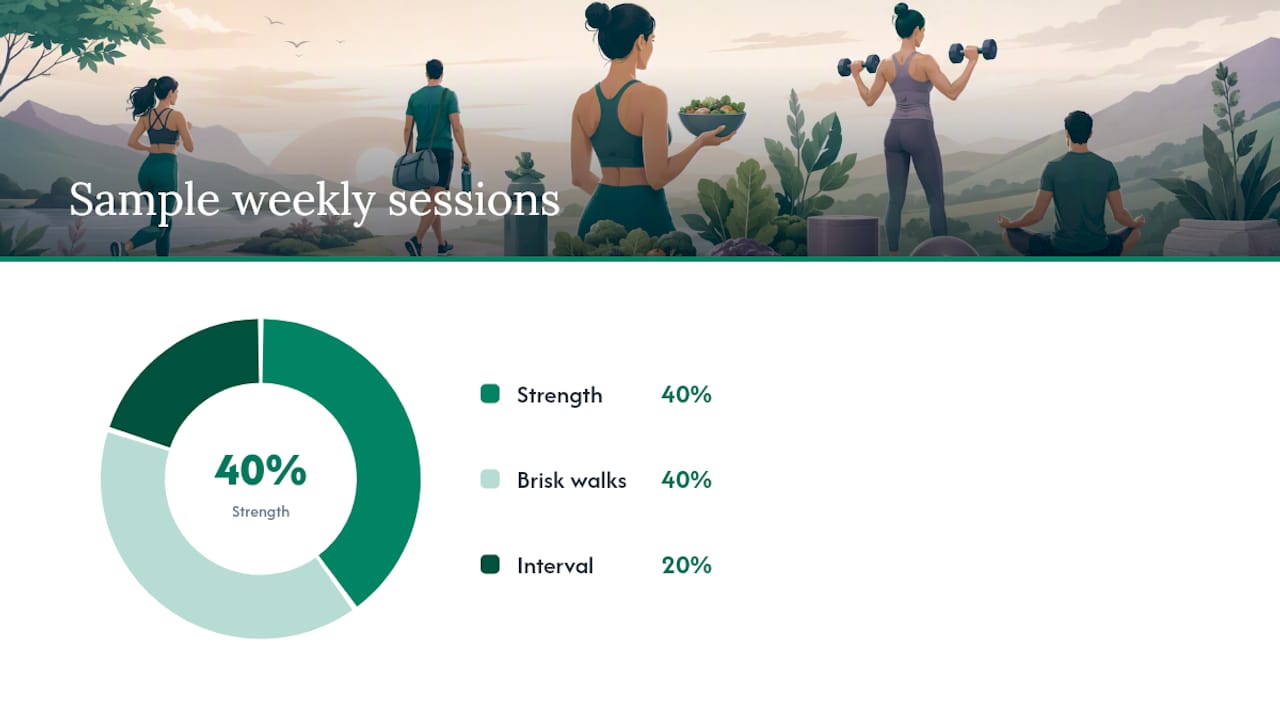
A sample week might look like strength on Monday and Thursday, a brisk 30 minute walk on Tuesday and Saturday, and one interval session on Friday, leaving weekends flexible.
Pro Tip: If joint pain or bone density is a concern, these safe strength progressions show how to modify resistance training without adding injury risk.
Do Sleep and Stress Really Affect Weight Loss?
Poor sleep and chronic stress raise circulating hunger hormones and blunt your motivation to stay active, which can quietly stall progress even when your food log looks fine on paper. Fixing this rarely requires anything dramatic.
Keep a consistent wake time, even on weekends, to stabilize your body’s hunger signals.
Cut screens 60 minutes before bed and dim household lighting in the evening.
Watch for thyroid issues, certain medications, or PCOS if fatigue and stalled loss appear together with other symptoms. These warrant a conversation with your doctor.
If you’re using a GLP-1 medication, know that plateaus can still occur partway through treatment. These medications extend the window of loss but don’t eliminate the need for nutrition and activity habits, and any dosing questions belong with your prescribing clinician.
How Do You Track Progress Without Getting Discouraged?
Expect roughly 1 to 2 pounds of loss per week, and expect that pace to slow as your total body weight drops. That’s physiology working as intended, not failure.
Weigh in weekly, same day and time, rather than daily, to smooth out water-weight swings.
Track process metrics like days logged, steps walked, and strength sessions completed, since these predict long-term success better than the scale alone.
Distinguish a true plateau from healthy maintenance. Three or more weeks of no movement despite consistent tracking signals a real plateau; occasional flat weeks are normal variability.
Reassess your calorie target roughly every 10 to 15 pounds lost, since your energy needs keep shifting as your body changes.
When Should You Talk to a Doctor About Weight Loss?
Most plateaus respond to the nutrition and exercise adjustments above. Some don’t, and that’s worth recognizing early rather than months later.
Rapid, unexplained weight regain despite consistent habits.
Severe fatigue, hair loss, or cold intolerance, which can point to thyroid dysfunction.
Irregular cycles alongside stalled loss, which sometimes signals PCOS.
No progress after 4 to 6 weeks of genuinely consistent tracking and training.
Bring a record of your weight history, current medications, and recent sleep patterns to that appointment. A registered dietitian or weight loss nutritionist can review labs, adjust your plan, and refer you to a specialty clinic if pharmacotherapy or further evaluation makes sense.
Why Small Habit Restarts Beat Dramatic Overhauls
Most people try to restart weight loss by blowing up their entire plan: new diet, new gym schedule, new supplements, all on Monday. It rarely survives past week two.
The more durable approach is picking one or two anchors, a consistent breakfast time, a 15 minute walk after dinner, and building outward from there. Small commitments get kept. Kept commitments compound. That’s the logic behind habit-based coaching, and it’s why accountability tends to outperform willpower alone over the long run, whether that support comes from a structured coaching program or a trusted person checking in weekly. Coaching adds something a spreadsheet can’t: someone reviewing your actual week, adjusting your plan for GLP-1 side effects or a bad sleep stretch, and catching drift before it becomes another six-week plateau.
— Coach Jill
Ready to Restart With a Plan Built Around You?
Generic calorie calculators and app reminders can only take you so far once your body has adapted. A coach can build a plan around your current weight, your schedule, and any medication or medical factors involved, so you’re not guessing at the next adjustment.

A coaching engagement typically includes personalized calorie and macro targets, habit-based coaching focusing on sustainable changes, regular accountability check-ins to prevent stalls, and nutrition support tailored for those on GLP-1 medication experiencing plateaus.
This fits best if you’ve tried the DIY recalculation and tracking above and still feel stuck, or if you simply want someone reviewing your week instead of doing it alone. Visit the Coach Jill Byrne coaching page to book a consultation and get a plan built around your current numbers, not the ones from three months ago.

Where This Guidance Comes From
This article draws on the Mayo Clinic’s plateau guidance, StatPearls’ clinical review of plateau management, Harvard Health’s calorie deficit research, and NIDDK’s activity guidelines, alongside CDC guidance on weight loss factors.
This article is general information, not a substitute for advice from a qualified doctor. Consult a qualified healthcare professional about your own circumstances before acting on anything here.
Sources
FAQ
Is it normal to hit a weight loss plateau after a month?
Yes. Plateaus commonly appear within the first several weeks as your body adapts to a lower calorie intake and reduced mass, and they’re a predictable part of the process rather than a sign your plan has failed.
What is the 3-3-3 rule for weight loss?
This isn’t a recognized clinical guideline, and definitions vary widely online. Instead of chasing an informal rule, rely on tracked evidence-based ranges like a 500 to 750 calorie daily deficit and 1 to 2 pounds of weekly loss.
How can I mimic Ozempic naturally?
No food or supplement replicates GLP-1 medication. You can support similar appetite control through higher protein and fiber intake, consistent meal timing, and adequate sleep, all of which influence the same hunger hormones these medications target.
How do you restart stalled weight loss?
Recalculate your calorie target for your current weight, keep the deficit between 500 and 750 calories daily, add two resistance training sessions weekly, and track your food intake for at least a week to spot what changed.
Recommended
Comments