
15 Minute Rule to Stop Emotional Eating, Coach Backed and Evidence Based

When the urge to eat hits after a stressful call or a lonely evening, pause and ask one question: am I physically hungry, or am I trying to feel better? If the answer is the latter, wait a short while and do something else first, such as a short walk, a call, or a few slow breaths. That single delay is often enough to let the urge pass. When it isn’t, cognitive behavioral therapy and mindful eating practices are the next evidence-based step.
TL;DR:
Delaying eating for 10 to 15 minutes often reduces emotional cravings, while physical hunger typically persists during that period.
Keeping a two to three-week food and emotion diary helps identify repeat triggers such as specific times, activities, or people.
Mindful eating and distraction techniques can help manage cravings temporarily, but lasting change often requires consistent habits and environmental control.
Professional support, especially cognitive behavioral therapy, is recommended if emotional eating becomes uncontrollable or affects physical health.
Small, routine adjustments, like structured meal plans and regular check-ins with coaching, outperform drastic overhauls for sustainable progress.
Table of Contents
What Emotional Eating Is (and How It Differs From Real Hunger)
How Do You Identify Your Personal Emotional Eating Patterns?
What Are the Best Coping Strategies to Stop Emotional Eating?
When Should You Seek Professional Help for Emotional Eating?
How Coach Jill’s Coaching Puts These Strategies Into Practice
What Emotional Eating Is (and How It Differs From Real Hunger)
Emotional eating means reaching for food to manage a feeling rather than to satisfy physical hunger. Clinicians at Mayo Clinic describe common triggers as stress, boredom, fatigue, and conflict with the people around you. Food becomes a stand-in for comfort, and the relief it offers is real but short.
The two hungers feel different once you know what to look for. Physical hunger builds gradually and accepts almost any food. Emotional hunger tends to show up suddenly and demands something specific, usually a comfort food like chips or ice cream, and it often shows up alongside a mood shift rather than a growling stomach.
Two quick checks help you tell them apart:
The 10 to 15 minute test: delay eating and see if the craving fades. Physical hunger stays; emotional hunger often loses its grip.
The specificity cue: if only one exact food will do, that craving is usually about emotion, not fuel.
Learning to spot hunger versus cravings is the first skill that makes every other strategy in this guide actually work.
How Do You Identify Your Personal Emotional Eating Patterns?
You can’t change a pattern you haven’t named. A simple food and emotion diary, kept for two to three weeks, tends to surface the same triggers appearing on repeat: a 3 p.m. slump, a tense phone call with a parent, a Sunday night alone. Harvard Health recommends a template simple enough to fill out in under a minute per entry.
Log six things each time you eat outside a planned meal:
Time of day
What you ate
Hunger level on a 1 to 5 scale
The emotion you were feeling
Where you were and who you were with
What you did about it
After two or three weeks, reread the entries and look for repeats, not one bad day, but the same time, person, or activity showing up again and again. Once a pattern is visible, you can build a rule around it: keep trigger foods out of easy reach, plan a snack before the 3 p.m. slump hits, or schedule a call with a friend instead of scrolling alone on Sunday nights. Planned treats matter here too; banning a food outright usually backfires, while deciding in advance when and how much you’ll have it keeps you in control.
Pro Tip: Keep the diary on your phone’s notes app instead of a notebook. You’re far more likely to log an entry within two minutes of the craving than to remember it later.
What Are the Best Coping Strategies to Stop Emotional Eating?
Mindful eating and short delay tactics form the core toolkit clinicians recommend, and most people only need two or three of these to see a real shift.
Mindful eating slows the whole process down. Eat without a screen, take smaller bites, chew thoroughly, and switch to a smaller plate. A literature review of mindfulness-based eating interventions found this approach reliably improves recognition of fullness and reduces emotional and binge eating, even though it doesn’t guarantee weight loss on its own. Use it at every meal, not just the risky ones.
Bridge activities work for the moment a craving actually hits. Harvard Health points to distraction as one of the most effective short-term tools: a brief walk lasting several minutes, a call to a friend, four rounds of slow breathing, or even a fidget tool to keep your hands occupied. The goal isn’t to suppress the urge forever, just to let its peak pass so you can decide with a clearer head.
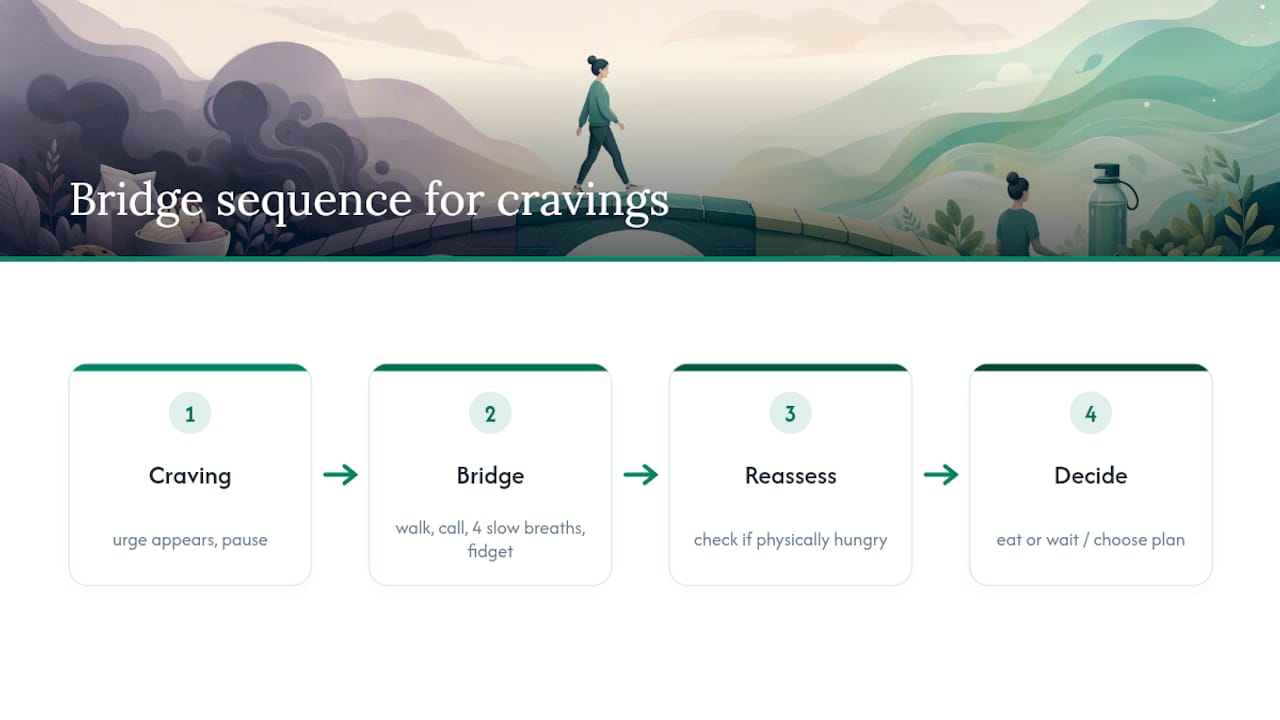
Stimulus control removes the decision entirely. Keep trigger foods out of the house, or at least out of arm’s reach, and plan meals and snacks on a rough schedule so you’re rarely running on empty when stress strikes. Sleep and movement matter more than people expect here: a mindful-eating approach paired with basic nutritional awareness tends to reduce emotional eating more reliably than either strategy alone.
None of this works if it turns into another way to criticize yourself. Reframe the moment in plain language: “I’m stressed, and I want comfort. Let me try the walk first, and if I’m still hungry after, I’ll eat.” That’s a plan, not a punishment. Learn more about mindful eating habits for a deeper walk-through of the technique.
When Should You Seek Professional Help for Emotional Eating?
Self-help strategies solve most day-to-day emotional eating. But when food is your only coping mechanism, or when the diary shows the same crisis pattern week after week with no improvement, it’s time to bring in outside support.
Cognitive behavioral therapy is the most established professional route. It works by helping you identify the specific thought patterns that drive reward-based eating and replace them with responses that don’t involve food, a process Harvard Health singles out as one of the more effective tools available for this problem.
Beyond CBT, several supports can fill in the gaps:
A registered dietitian, for structured meal planning and nutrition guidance
A group program, for accountability and shared experience
Medical oversight, if there’s a co-occurring condition like binge eating disorder or a medical need tied to weight
Watch for warning signs that call for more urgent attention: eating episodes that feel completely out of control, secretive eating, or a pattern that’s affecting your physical health. When you look for a clinician, ask directly about their experience with emotional or binge eating specifically, not just general nutrition counseling. That one question filters out a lot of mismatched fits fast.
How Coach Jill’s Coaching Puts These Strategies Into Practice
Habit-based coaching takes the tactics above and builds them into a person’s actual week. Meal planning replaces the guesswork that leads to 4 p.m. panic eating. Portion control training works alongside mindful nutrition, so clients practice the slow, distraction-free eating this guide describes, at real meals, not just in theory.
The process usually starts small: one habit change, tracked for a couple of weeks, reviewed together, then adjusted. Accountability check-ins do the work that a solo food diary often can’t sustain past week two. For readers who’ve read this far and want a guided version of the diary and bridge-activity system, a mindful nutrition coaching consultation is a practical next step.
Progress Over Perfection
Most people treat a single overeating episode as proof the whole effort failed. It isn’t. It’s one data point in a food diary, nothing more. The useful question after a lapse isn’t “why did I fail again,” it’s “what was happening right before I reached for food.” That’s information, not a verdict.
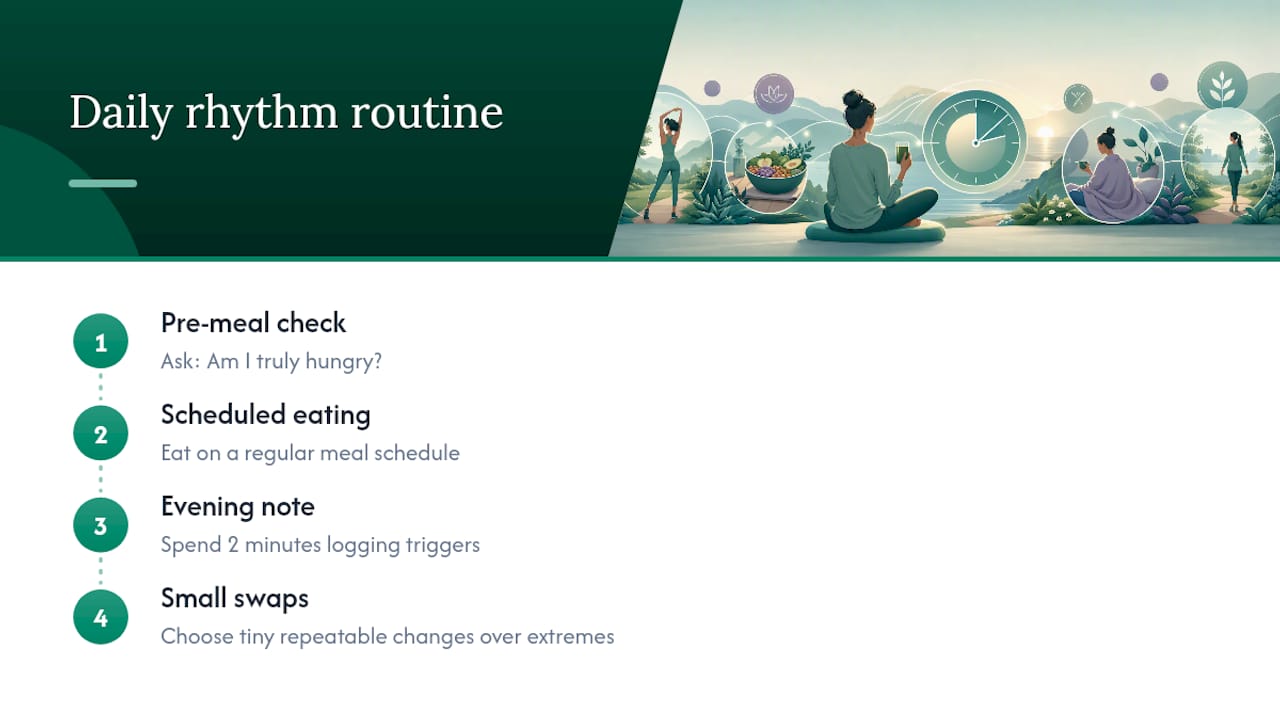
A simple daily rhythm builds momentum faster than any rulebook: check in with your hunger before each meal, eat on something close to a schedule, and spend two minutes in the evening noting what actually triggered your urges that day. Small, repeatable swaps beat all-or-nothing overhauls every time. The nine habits that rebuild healthy eating routines reflect this same idea: consistency in small things outperforms intensity in rare bursts.
— Coach Jill
Ready for Guided Support to Stop Emotional Eating for Good?
A food diary and a 15-minute delay tactic take you far, but they work better with a second set of eyes tracking your patterns alongside you. That’s the gap Coachjillbyrne’s coaching fills: instead of guessing which trigger to tackle first, you get a personalized meal plan, habit coaching built around your actual schedule, and regular accountability check-ins that keep the small changes from quietly slipping.

An initial consultation starts with a look at your current eating patterns, stress triggers, and goals, then maps out realistic, sustainable changes rather than a restrictive overhaul. If you’re already working with a therapist on the emotional side of things, coaching complements that work by handling the practical side: what to cook, when to eat, and how to build routines that hold up on a hard week. If you’re ready to move from a diary entry to an actual plan, book a consultation with Coach Jill Byrne and start building a routine that fits your real life.
This article is general information, not a substitute for advice from a qualified doctor. Consult a qualified healthcare professional about your own circumstances before acting on anything here.
Sources
FAQ
Why Do I Stress Eat?
Stress raises cortisol and often narrows cravings toward high-sugar, high-fat comfort foods, while emotions like boredom, fatigue, and loneliness create the same pull toward food as a quick source of relief. Mayo Clinic identifies these as the most common emotional eating triggers.
How Do You Stop Emotional Eating Psychologically?
The most effective psychological approach is cognitive behavioral therapy, which helps you notice the thought pattern that precedes an eating urge and replace it with a non-food response. Validating the underlying emotion rather than suppressing it also reduces the urgency to reach for food.
How Do I Train Myself Not to Overeat?
Mindful eating, slowing down, removing screens, and chewing thoroughly, helps you recognize fullness cues before you’ve eaten past comfortable, and pairing that with a regular meal schedule prevents the extreme hunger that often triggers overeating in the first place.
How Do I Mentally Stop Food Cravings?
Wait 10 to 15 minutes before acting on a craving and use that window for a bridge activity like a walk, a call, or a few minutes of slow breathing; many cravings driven by emotion rather than hunger fade during that pause, according to Harvard Health.
What if a Craving Comes Back After the Delay?
That’s useful information, not failure. Log it in your food and emotion diary, eat something planned rather than the first thing available, and treat the pattern as data for your next stimulus-control adjustment.
Recommended
Comments