
Stop Sugar Cravings in 10–20 Minutes: 8 Quick Tactics Plus Habit Plan

The fastest way to stop a sugar craving is a short delay paired with a satisfying protein- or fat-containing bite. The only way to reduce cravings long term is consistent meal balance, sleep, and stress management. The Harvard T.H. Chan School of Public Health links blood sugar swings to craving intensity, and Coaching plans often build around a two-part approach related to this.
TL;DR:
Maintaining consistent meal timing with protein, fiber, and healthy fats reduces blood sugar swings that trigger cravings most effectively.
Short-term coping strategies, like delaying for 5 to 10 minutes and pairing treats with protein, can diminish cravings during peak moments.
Addressing underlying habits such as sleep quality, hydration, and environmental cues is essential for long-term craving reduction.
Emotional and stress-driven cravings respond better to mindfulness and acceptance-based techniques than to controlling or suppressing urges.
Unusual symptoms like extreme thirst or unexplained weight changes require medical evaluation to rule out metabolic issues.
Table of Contents
What Causes Sugar Cravings in the First Place?
Sugar cravings usually come from one of three sources: a drop in blood sugar, a stress response, or a habit loop tied to time of day or emotion. When blood sugar dips after a carb heavy meal or a skipped lunch, your brain reads that dip as an emergency and pushes you toward fast fuel, which almost always means something sweet.
Stress adds a second layer. Chronic stress raises cortisol, and elevated cortisol increases the pull toward hyperpalatable foods high in sugar and fat, according to a review on stress and eating behaviors. That’s part of why afternoon sugar cravings hit so hard. By 3 p.m., blood sugar has often dipped, willpower reserves are lower after a full workday, and cortisol from morning stress is still circulating.
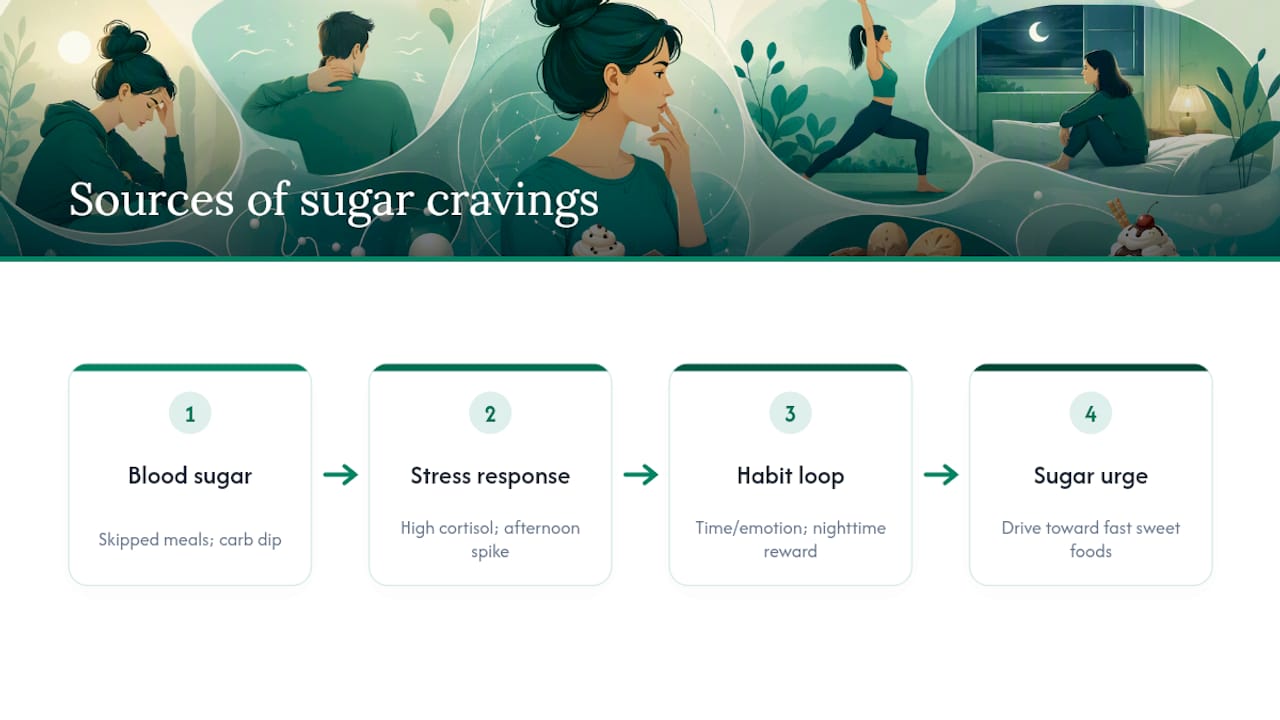
Nighttime carb cravings work a little differently. After dinner, dopamine driven reward seeking takes over as the day’s decision fatigue sets in, and sugar becomes an easy, low-effort reward. None of this means you lack discipline. It means your biology is doing exactly what it evolved to do, just in an environment full of convenient, ultra-processed triggers.
Quick Fixes: Eight Practical Tactics To Stop A Craving Now
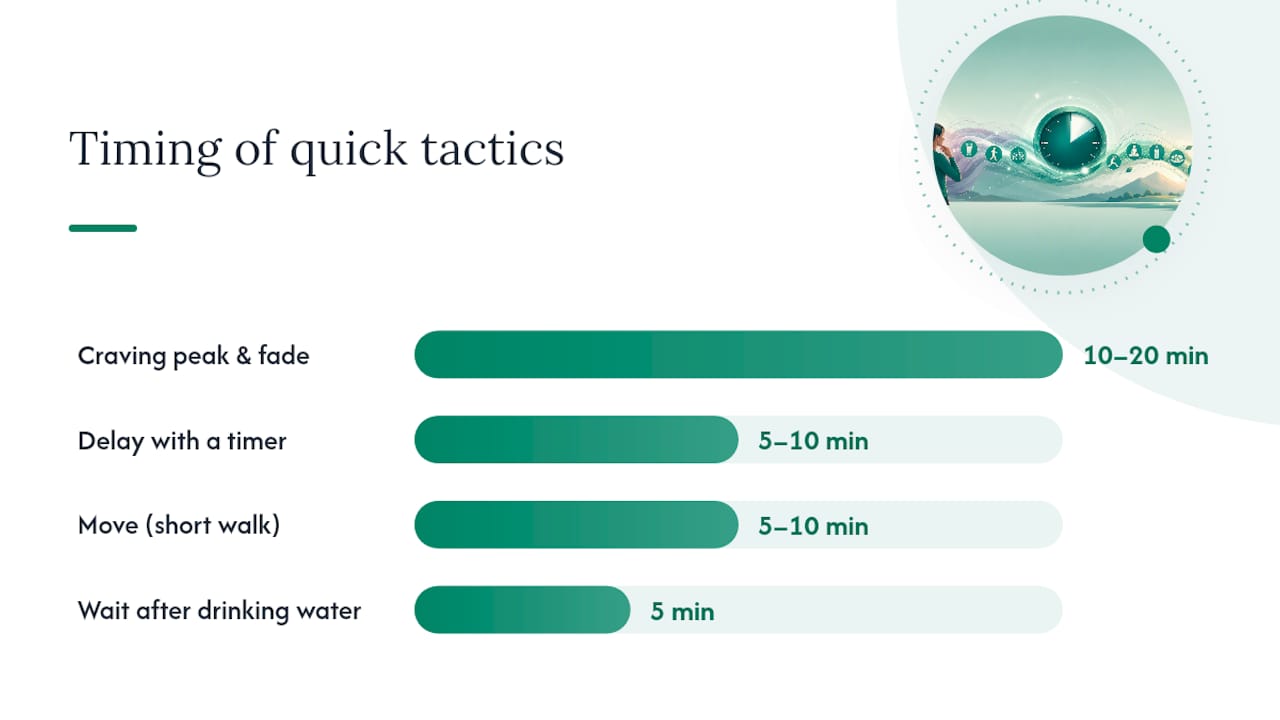
Most cravings peak and fade within 10 to 20 minutes. Riding that window out, rather than fighting it, is often the single most useful skill in this article.
Delay for 5 to 10 minutes. Set a timer and do something else; urge surfing works because cravings are waves, not permanent states.
Drink a full glass of water first. Thirst mimics hunger surprisingly often, and waiting five minutes after drinking clarifies whether you’re actually hungry.
Reach for a protein or fat snack. A handful of almonds, string cheese, or a hard-boiled egg blunts the urge better than an apple alone.
Move for 5 to 10 minutes. A short walk shifts attention and lowers stress hormones that fuel the craving.
Change your environment. Store treats out of sight or skip the aisle; visibility drives impulse eating more than hunger does.
Try a body scan or slow breathing. Three or four deep breaths while noticing physical sensations reduces craving intensity in controlled studies.
If you decide to indulge, keep it small. A roughly 150-calorie portion, eaten slowly and without distraction, satisfies the craving without triggering a binge.
Pair any treat with protein or fiber. A few nuts alongside a small dessert slows the blood sugar spike that would otherwise trigger another craving an hour later.
Cleveland Clinic’s guidance on stopping sugar cravings backs several of these tactics as first-line, no-equipment options.
Pro Tip: Keep a “treat swap” list on your phone, three or four planned substitutions you actually enjoy, so you’re never deciding under pressure. Decision fatigue is what turns one cookie into the whole sleeve.
Which Daily Habits Actually Reduce Cravings Long Term?
Quick fixes handle the moment. Reducing sugar cravings for good means addressing what causes them to spike in the first place, and that comes down to five habits repeated daily.
Build every meal around protein, fiber, and healthy fat. A plate with grilled chicken, a cup of vegetables, and a serving of quinoa keeps blood sugar steadier than a pasta bowl alone, a pattern the Harvard Nutrition Source points to directly.
Don’t skip meals. Plan three meals and one or two snacks; skipped meals are the single biggest setup for an evening binge.
Protect 7 to 9 hours of sleep on a consistent schedule. Short sleep disrupts ghrelin and leptin, the hormones that regulate hunger and fullness, which is part of why sleep-deprived days feel like nonstop grazing.
Hydrate through the day and cut back on sugar-sweetened drinks. Liquid sugar spikes and crashes blood sugar faster than food does.
Curate your food environment. Plan groceries around whole foods and limit how many ultra-processed snacks are within arm’s reach at home or at your desk.
If nightly dessert is a fixture, don’t try to quit cold. SELF reports that strict elimination tends to backfire into rebound overeating. Instead, space treats out gradually, nightly to every other night, then to a planned weekend treat, so the habit fades without triggering a deprivation response. Readers managing evening snacking specifically may find a protein-first approach to nighttime cravings useful for building that structure.
CBT, Mindfulness, or Visualization: Which Fits Your Craving?
Not every craving has the same root, so not every technique fits every craving. Physiological hunger from a skipped meal responds well to structured, control-based methods. Emotional or stress-driven cravings respond better to acceptance-based work.
Cognitive behavioral techniques (CBT) treat the craving as a thought to challenge and restructure. Ask yourself what triggered it, and interrupt the pattern before it becomes automatic. This suits cravings tied to a clear habit loop, like the 9 p.m. TV snack.
Acceptance-based approaches (ACT and mindful eating) work differently: instead of fighting the urge, you observe it without acting on it. A 2024 review on cravings in medical weight management found that short mindfulness and ACT programs, often just seven or eight weeks, produced measurable reductions in craving scores. This approach tends to outperform pure willpower for stress or emotion driven cravings, because it doesn’t ask you to suppress a feeling that will just resurface later.
Four exercises worth trying without a therapist:
Urge surfing: Picture the craving as a wave, rising, peaking, and falling, and simply watch it happen.
Decentering: Mentally label the thought (“I’m having the thought that I want candy”) to create distance from it.
Guided imagery: Visualize a calming, unrelated scene for two minutes when a craving spikes.
A 5-minute distraction checklist: Text a friend, tidy one drawer, stretch, or step outside.
Pro Tip: If cravings are tied to sadness, boredom, or anxiety more often than actual hunger, a 15-minute rule for emotional eating is often more effective than any food swap. When cravings feel constant or overwhelming despite consistent practice, structured therapy adds real value beyond self-guided exercises.
Smart Food Swaps That Actually Satisfy a Sweet Tooth
The goal with substitutions isn’t deprivation. It’s finding options that hit the same texture or sweetness note while keeping blood sugar steadier.
Greek yogurt with a handful of walnuts delivers protein and healthy fat in one bowl, ideal for a 3 p.m. slump.
Hard-boiled eggs with a small piece of fruit covers protein and natural sweetness without a sugar spike.
Berries with a sprinkle of cinnamon or baked apple slices satisfy dessert cravings with fiber doing most of the work.
Chia pudding made with unsweetened milk and a few drops of honey feels indulgent but stays low on added sugar.
Apple slices with almond butter combine fiber and fat for one of the most reliably filling sweet-adjacent snacks.
Watch the artificial sweetener trap. Diet sodas and “sugar-free” packaged snacks can keep your palate calibrated to intense sweetness, which may keep cravings for genuinely sweet foods alive rather than resolving them. For a broader menu of substitutions, clean eating swaps for weight loss covers meal-level ideas beyond snacks. A simple dinner template, protein, a vegetable, and a modest serving of a whole grain or starchy vegetable, covers most nights without much planning.
Do Supplements Like Magnesium Actually Stop Cravings?
Magnesium is the supplement most often mentioned for cravings, and it has some rationale behind it. The NIH Office of Dietary Supplements notes it’s worth discussing with a provider if deficiency is suspected, but evidence for magnesium as a craving blocker specifically remains mixed and far from conclusive.
Other supplements, including inositol and L-glutamine, show similarly weak or inconsistent evidence. None of these belong at the center of a craving-reduction plan. They’re worth a conversation with your provider about dosing and interactions, not a substitute for meal structure and sleep. If you take a GLP-1 medication, any change in appetite or cravings should be discussed with the prescribing clinician before adding a supplement.
When Should You See a Doctor About Sugar Cravings?
Most cravings are normal. Some patterns aren’t. Extreme thirst, frequent urination, unexplained weight change, or cravings paired with severe fatigue can point to a metabolic issue like diabetes and deserve a medical evaluation rather than another self-help tactic.
Frequent binge-eating episodes are also a signal worth taking to a professional, whether that’s a primary care provider, a registered dietitian, or a therapist who specializes in eating disorders. Before the appointment, track your food intake, when cravings hit, your sleep, current medications, and mood triggers for about a week.
Coach Jill’s Take: Turning Tactics Into a Real Plan
Coaching often centers on real food, habit-based routines, and steady accountability rather than restriction. In practice, that means a protein-first snack rule, a weekly meal-planning check-in, and a personalized swap list built around client preferences. If cravings keep derailing your progress despite trying the tactics above, Coach Jill Byrne’s coaching plans offer that structure with a real person checking in.
— Coach Jill
Sources
FAQ
Which Deficiency Causes Sugar Cravings?
No single deficiency has been proven to cause sugar cravings directly. Some practitioners raise magnesium as a possibility when deficiency is suspected, but the NIH factsheet on magnesium notes the evidence connecting it to cravings specifically is limited and mixed.
What Is the Best Sugar Craving Blocker?
There’s no single blocker that works for everyone. The combination that performs best across research and clinical guidance is a short delay, a protein or fat snack, and steady meal timing, the same approach Cleveland Clinic recommends for both immediate relief and long-term reduction.
What Happens When You Give Up Sugar?
In the first few days, many people notice more intense cravings, mood dips, or fatigue as the body adjusts to steadier blood sugar. Within one to two weeks, energy tends to stabilize and cravings usually become less frequent, especially when meals include enough protein and fiber.
What Does Sugar Addiction Look Like?
It typically looks like strong, repeated urges tied to specific times or emotions rather than actual hunger, along with difficulty stopping after one small portion. It’s driven by blood sugar swings, habit loops, and stress hormones rather than a single addictive compound, and frequent binge patterns are worth discussing with a provider.
Recommended
Comments