
Top Food Types for Sustained Energy Levels All Day

The food types that reliably produce sustained energy are complex carbohydrates, lean and plant proteins, healthy fats, fiber-rich fruits and vegetables, legumes, nuts and seeds, and adequate fluids. As the Cleveland Clinic notes, sustained energy comes from consistent intake of minimally processed, nutrient-rich foods and balanced meals, not from chasing one “superfood.”
Steady glucose release. Complex carbohydrates and fiber slow digestion, preventing the sharp blood-sugar spikes that lead to crashes.
Satiety and muscle support. Lean proteins and healthy fats slow digestion, keeping you fuller longer and reducing the urge to reach for quick-sugar fixes.
Cellular energy production. B vitamins, magnesium, and iron, found in whole grains, leafy greens, and legumes, are required at the cellular level for converting food into usable energy.
Pro Tip: Turn any quick-carb snack into a sustained-energy option by pairing it with 7–10 grams of protein or a small portion of healthy fat. An apple alone spikes blood sugar; an apple paired with protein or fat does not.
Key Takeaways
Sustained energy comes from consistent, balanced meals built around complex carbohydrates, lean protein, healthy fats, and adequate hydration, eaten every 3–4 hours throughout the day.
Point | Details |
Pair every meal and snack | Combine a carbohydrate with protein or fat to prevent blood-sugar spikes and crashes. |
Eat every 3–4 hours | Three moderate meals plus one to two balanced snacks prevents blood-sugar dips and afternoon fatigue. |
Prioritize fiber-rich whole foods | Oats, legumes, leafy greens, and whole grains provide the B vitamins and magnesium that fuel cellular energy. |
Hydrate consistently | Spread fluid intake across the day; mild dehydration impairs concentration and increases perceived effort. |
Coachjillbyrne coaching | Personalized meal templates and accountability support help translate food knowledge into consistent daily habits. |
Table of Contents
Why do some foods give you steady energy while others cause crashes?
Sustained energy depends on how quickly glucose enters your bloodstream after a meal. Slow digestion, driven by fiber, protein, and fat, produces a gradual glucose release and a modest, manageable insulin response. Fast digestion, typical of refined carbohydrates and sugary drinks, floods the bloodstream with glucose, triggers a sharp insulin surge, and then drops blood sugar below baseline. That drop is the crash: fatigue, difficulty concentrating, and the urge to eat again within an hour.
Glycemic index (GI) measures how quickly a carbohydrate raises blood glucose relative to pure glucose. Glycemic load (GL) adjusts for portion size, making it a more practical guide. Research reviews link high-GI diets to reduced alertness and increased sleepiness, which is why choosing low-GI carbohydrates, such as oats, sweet potatoes, and legumes, consistently outperforms white bread or sugary cereals for daytime energy. Harvard Health confirms that pairing carbohydrates with protein or fat blunts the glucose spike and the subsequent insulin-driven drop.
Statistic callout: A review published in PMC found that high-glycemic-load diets are associated with reduced alertness and greater post-meal sleepiness compared with low-GI eating patterns.
Hydration belongs in this picture too. Even mild dehydration impairs concentration and increases perceived effort. The Academy of Nutrition and Dietetics identifies adequate fluid intake as one of the most overlooked factors in maintaining steady energy, because water is required for the cellular reactions that produce ATP, the body’s primary energy currency.
What types of foods support sustained energy levels throughout the day?
The categories below form a practical shopping and meal-planning inventory. Each one contributes to steady glucose, satiety, or cellular energy production. Harvard’s nutrition guidance confirms that whole grains, legumes, vegetables, and lean proteins provide the fiber, B vitamins, and minerals that support steady energy and long-term health. PMC’s special issue on nutrient-rich foods reinforces that nutrient-dense eating patterns produce measurable improvements in nutritional status and health outcomes.
Complex carbohydrates and whole grains
Oats (rolled or steel-cut): high in beta-glucan fiber; one-half cup dry makes a filling breakfast base.
Quinoa: a complete protein and complex carb; one cup cooked works as a grain bowl base or side.
Brown rice and farro: slower-digesting than white rice; pair with a palm-sized protein portion.
Sweet potato: rich in fiber and potassium; one medium baked sweet potato is a reliable lunch or dinner carb.
Whole-grain bread: choose varieties with at least 3 grams of fiber per slice.
Snack combo: Whole-grain crackers + 1 oz part-skim cheese.
Lean proteins and plant proteins
Chicken breast and turkey: palm-sized portions (about 3–4 oz cooked) at lunch or dinner.
Eggs: two eggs provide roughly 12 grams of protein and B12; hard-boiled eggs are a portable snack.
Greek yogurt: plain, non-fat or low-fat; one cup delivers approximately 17 grams of protein (B12, calcium).
Canned tuna or salmon: quick, affordable; 3 oz provides omega-3 fatty acids that support cognitive alertness. NIH’s Office of Dietary Supplements notes that omega-3s from fatty fish contribute to cognitive function and daytime alertness.
Edamame: one cup shelled provides about 17 grams of plant protein.
Snack combo: Greek yogurt + a handful of berries + 1 tablespoon of ground flaxseed.
Healthy fats, nuts, and seeds
Almonds and walnuts: 1 oz (about a small handful) supplies magnesium, which NIH confirms plays a direct role in energy metabolism.
Chia seeds and flaxseed: add 1–2 tablespoons to oatmeal or yogurt for omega-3s and fiber.
Avocado: one-quarter to one-half avocado on whole-grain toast provides monounsaturated fats that slow carbohydrate absorption.
Olive oil: a thumb-sized drizzle over vegetables or grains adds healthy fat without excess calories.
Snack combo: 1 oz mixed nuts + a piece of whole fruit.
Fiber-rich fruits and vegetables
Bananas: provide natural sugars, potassium, and B6; best eaten with a protein to moderate the glucose response.
Berries (blueberries, strawberries, raspberries): low-GI, high in antioxidants; add to yogurt or oatmeal.
Leafy greens (spinach, kale): rich in iron and magnesium, both critical for oxygen transport and energy metabolism.
Apples and pears: fiber-dense; pair with nut butter for a sustained-energy snack.
Bell peppers and broccoli: high in vitamin C, which supports iron absorption from plant sources.
Legumes
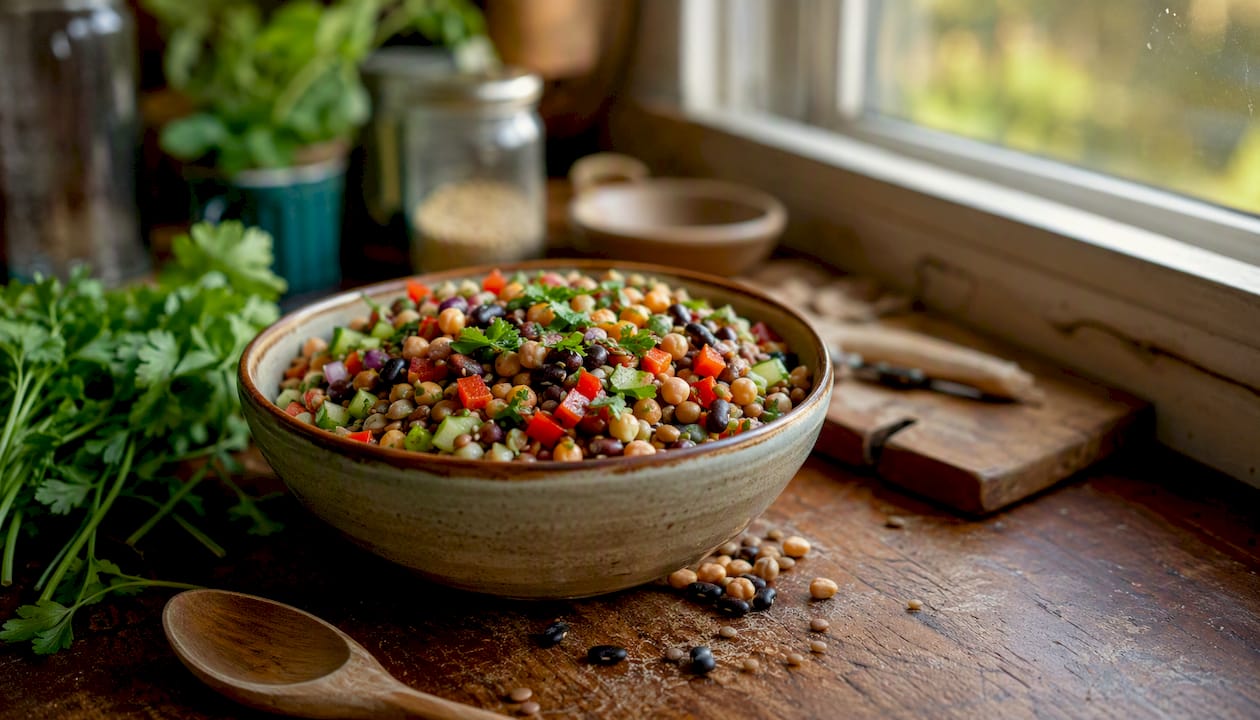
Lentils, black beans, chickpeas, and kidney beans are among the most underused energy-sustaining foods. They combine complex carbohydrates, plant protein, and soluble fiber in one package, producing a very low glycemic load. A half-cup of cooked lentils provides roughly 9 grams of protein and 8 grams of fiber. Add them to soups, grain bowls, or salads.
Dairy and dairy alternatives
Plain Greek yogurt and low-fat cottage cheese are high-protein, moderate-carb options that fit the pairing rule well. Unsweetened fortified soy milk is the closest plant-based match for protein content among dairy alternatives.

Hydration options
Water is the baseline. Aim for consistent intake across the day rather than large amounts at once. Unsweetened green or black tea provides mild caffeine (25–50 mg per cup) without the sharp spike of energy drinks. For caffeine-aware guidance, a detailed breakdown of effective doses and hidden sources can help you calibrate intake without disrupting sleep.

How should you combine and time meals for all-day energy?
The core rule is simple: pair a carbohydrate with a protein or fat at every meal and snack. Time magazine’s nutrition reporting confirms that balanced meals combining protein, fiber-rich carbs, and healthy fats stabilize blood sugar and make energy levels more consistent throughout the day.
Three pairing examples that work:
Fruit + nut butter. A banana or apple with 1 tablespoon of almond butter slows glucose absorption. The fat and protein in the nut butter reduce the insulin response that fruit alone would trigger.
Whole-grain toast + egg. Two eggs on one slice of whole-grain toast delivers protein, B vitamins, and slow-digesting carbohydrates. This combination reduces mid-morning slumps better than toast with jam.
Greek yogurt + oats. Mixing plain Greek yogurt into overnight oats adds 15–17 grams of protein to a fiber-rich carbohydrate base, producing a breakfast that holds energy for 3–4 hours.
Meal timing. Hospital for Special Surgery guidance recommends eating every 3–4 hours, structured as three moderate meals plus one to two balanced snacks, to prevent blood-sugar dips and energy slumps. Long gaps between meals, especially skipping breakfast, are a common cause of afternoon fatigue. For those doing heavy exercise, an additional small carbohydrate-protein snack within 30–60 minutes post-workout supports recovery without disrupting the overall pattern.
Mini meal templates:
Breakfast: One-half cup rolled oats cooked in water or unsweetened almond milk + 1 tablespoon chia seeds + one-half cup blueberries + 2 tablespoons plain Greek yogurt on top. Add water or unsweetened tea.
Mid-morning snack: 1 oz almonds + one medium apple.
For a deeper look at balancing macronutrients with real food sources, the portion guidance there complements these templates directly.
Which foods and drinks commonly cause energy crashes?
These items trigger rapid glucose spikes followed by insulin-driven drops. Limiting them is as important as adding the right foods.
Sweetened sodas and fruit juices: Pure liquid sugar with no fiber or protein; glucose enters the bloodstream within minutes, producing a sharp spike and a fast crash. Swap: Sparkling water with a squeeze of lemon or unsweetened iced tea.
Candy, cookies, and pastries: Refined flour and added sugar with minimal fiber; the crash typically arrives 60–90 minutes after eating. Swap: A piece of whole fruit + 1 oz nuts.
Most commercial energy bars: Many contain 20–30 grams of added sugar with little protein or fiber. Read labels; choose bars with at least 10 grams of protein and under 10 grams of added sugar. Swap: Hard-boiled egg + piece of fruit.
White bread and instant white rice: High-GI carbohydrates with fiber removed; digest quickly and produce a pronounced glucose spike. Swap: Whole-grain bread or brown rice.
High-sugar coffee beverages: A flavored latte with syrup can contain 40–50 grams of added sugar. Swap: Coffee or espresso with a splash of milk and no added syrup, paired with a protein-containing snack.
Standard energy drinks: High caffeine combined with large amounts of sugar creates an initial alertness spike followed by a pronounced crash. For context on safe caffeine thresholds and hidden sources, see this evidence-based caffeine guide.
A practical one-day meal plan for steady energy
Use visual portion cues: a palm-sized protein, a cupped-hand of whole-grain or starchy carbohydrate, and a thumb-sized fat portion at each meal. This approach, drawn from Harvard’s balanced-meal guidance, keeps portions practical without calorie counting.
Breakfast (7:00 AM): One-half cup steel-cut oats + 1 tablespoon almond butter + one-half cup raspberries + 16 oz water.
Mid-morning snack (10:00 AM): One cup plain Greek yogurt + one-half cup blueberries + 1 tablespoon ground flaxseed. (~17 g protein)
Lunch (12:30 PM): 3–4 oz grilled chicken breast over 1 cup cooked quinoa + 2 cups mixed greens + one-quarter avocado + olive oil and lemon dressing + 16 oz water.
Afternoon snack (3:30 PM): 1 oz walnuts + one medium apple. (~4 g protein, healthy fat)
Dinner (6:30 PM): 3–4 oz baked salmon + one-half cup cooked lentils + 1 cup roasted broccoli and bell peppers + 16 oz water.
Optional evening snack (if needed): One hard-boiled egg + a few whole-grain crackers. (~6 g protein)
Three alternative snack options targeting 7–12 grams of protein per snack:
2 tablespoons hummus + sliced bell peppers + 1 oz pumpkin seeds (~8 g protein)
One-half cup low-fat cottage cheese + sliced cucumber + a sprinkle of hemp seeds (~14 g protein)
One hard-boiled egg + one medium banana (~7 g protein)
Pro Tip: Plan your snacks the night before and portion them into containers. Snacks that require no decision-making in the moment are the ones you actually eat. Set a water reminder on your phone at 10 AM, 1 PM, and 4 PM to spread fluid intake across the day.
For a full daily framework, how to regain energy through real food daily walks through the habit steps in sequence.
When should you see a doctor about low energy?
Most low energy responds to the dietary and hydration changes described above. Persistent fatigue that does not improve after two to three weeks of consistent, balanced eating, or fatigue accompanied by specific symptoms, warrants a conversation with your primary care provider.
A clinician may order:
CBC (complete blood count): Checks for iron-deficiency anemia, a common and correctable cause of fatigue, especially in women of reproductive age.
TSH (thyroid-stimulating hormone): Screens for hypothyroidism, which slows metabolism and causes persistent low energy.
HbA1c and fasting glucose: Identifies blood-sugar dysregulation or type 2 diabetes.
Vitamin B12 and vitamin D levels: Deficiencies in either are frequently linked to fatigue and are straightforward to address.
Sleep evaluation: Obstructive sleep apnea causes daytime fatigue regardless of diet; a provider can refer for a sleep study if symptoms suggest it.
Consult your primary care provider if fatigue is persistent, unexplained, or accompanied by unintentional weight change, hair loss, or mood changes. Chest pain, fainting, or shortness of breath require immediate emergency care.
This article provides general nutrition information and is not a substitute for personalized medical or dietary advice. Confirm current recommendations with a qualified healthcare professional.
What consistent habits actually move the needle on energy
The clients who see the most durable improvement in energy are not the ones who found a new superfood. They are the ones who stopped skipping breakfast, started pairing their afternoon snack with protein, and drank water before reaching for a second coffee. Those changes sound small, but they address the actual mechanisms: blood-sugar stability, adequate micronutrient intake, and hydration.
What gets overlooked in most energy-focused nutrition content is the gap between knowing which foods work and actually eating them consistently. A list of “best foods for energy” is only useful if it translates into a grocery list, a meal prep habit, and a snack that is ready when hunger hits at 3 PM. Consistency with ordinary whole foods outperforms any single nutrient or supplement. The evidence for that is not subtle.
Personalized nutrition coaching that puts this into practice
Knowing which food types support sustained energy is one thing. Building the habits that make those choices automatic is another. Coachjillbyrne offers personalized nutrition coaching designed to close that gap, with tailored meal templates, real-food portion guidance, and accountability support that fits your actual schedule and preferences.

Unlike a generic meal plan, Coachjillbyrne’s coaching addresses the specific barriers that derail consistent eating: busy mornings, afternoon cravings, travel, and the moments when willpower alone is not enough. Clients receive structured support for meal planning, snack preparation, and habit building, including GLP-1 nutrition guidance for those navigating medication-assisted weight management. The result is a practical, repeatable routine rather than a temporary fix.
Ready to build a real-food eating pattern that keeps your energy steady? Book a coaching consultation with Coachjillbyrne and get a personalized plan built around your goals.
Sources
FAQ
What types of foods give you the most sustained energy?
Complex carbohydrates, lean proteins, healthy fats, legumes, and fiber-rich vegetables produce the steadiest energy by slowing glucose absorption and supporting consistent blood-sugar levels. Pairing a carbohydrate with protein or fat at every meal is the most reliable strategy.
What foods should you avoid to prevent energy crashes?
Sweetened sodas, candy, white bread, high-sugar energy drinks, and flavored coffee beverages cause rapid glucose spikes followed by insulin-driven drops. Replacing them with whole fruit, nuts, whole-grain options, and water removes the most common crash triggers.
How often should you eat to maintain steady energy?
Eating every 3–4 hours, structured as three moderate meals plus one to two balanced snacks, prevents the blood-sugar dips that cause fatigue. Long gaps between meals, particularly skipping breakfast, are among the most common dietary causes of afternoon energy slumps.
What is the best drink for sustained energy?
Water is the most effective drink for sustained energy, as even mild dehydration impairs concentration and increases perceived effort. Unsweetened green or black tea provides a modest caffeine boost without the sharp spike-and-crash pattern associated with energy drinks or high-sugar coffee beverages.
What are the four main types of energy-providing foods?
Nutrition frameworks generally group energy-providing foods into carbohydrates (the body’s preferred fuel), proteins (for repair and satiety), fats (for slow-burning fuel and fat-soluble vitamins), and micronutrient-rich foods such as fruits and vegetables that support the cellular processes converting macronutrients into usable energy.
Recommended
Comments