
What Does Real Food Nutrition Mean for Your Health

Real food nutrition is the practice of eating whole, minimally processed foods that are recognizable in their natural form and rich in nutrients. This approach forms the foundation of the 2025–2030 Dietary Guidelines, which define real food as anything whole or minimally processed and not heavily reformulated by industrial production. Think fresh vegetables, eggs, legumes, whole grains, dairy, seafood, and fruit. The goal is not perfection. The goal is shifting your diet toward nutrient-dense foods and away from products that deliver calories with little nutritional return.
What does real food nutrition mean, exactly?
Real food nutrition centers on one practical principle: eat foods that look like food. An apple, a piece of salmon, a bowl of oats, a handful of walnuts. These are whole food nutrition in action. The term “real food” is not a precise scientific classification, but it functions as a useful guide to distinguish between foods that nourish and products that are engineered primarily for shelf life, palatability, and profit.
The official real food framework describes this as choosing foods that are whole or minimally processed and recognizable as food, while avoiding highly reformulated industrial products. That distinction matters because the modern food supply contains thousands of products that technically qualify as food but deliver little beyond refined starch, added sugar, and synthetic additives.

Whole food nutrition, the more clinical term used by registered dietitians and researchers, refers to the same concept with more precision. It emphasizes foods that retain their natural nutrient profile, including fiber, vitamins, minerals, and phytonutrients, rather than foods stripped of those components during manufacturing. Both terms point in the same direction: eat closer to the source.
What the 2025–2030 U.S. Dietary Guidelines say about real food
The 2025–2030 Dietary Guidelines represent a significant policy shift, explicitly placing real food at the center of federal nutrition guidance for the first time. The guidelines prioritize six food categories as the foundation of a healthy diet:
Protein foods: eggs, meat, poultry, seafood, beans, nuts, and seeds
Dairy: milk, cheese, and yogurt from whole or minimally processed sources
Vegetables: all types, with emphasis on variety and color
Fruits: whole fruits over juices, fresh or frozen
Healthy fats: olive oil, avocado, nuts, and fatty fish
Whole grains: oats, brown rice, quinoa, and whole wheat products
The guidelines also set a clear limit on added sugars: no more than 10 grams per meal. That figure is lower than what most Americans consume in a single breakfast. A standard flavored yogurt, a glass of orange juice, and a granola bar can collectively deliver three to four times that amount before lunch.
Seafood receives particular attention in the updated guidelines. Fresh, frozen, and canned seafood all count toward real food nutrition goals, making this category accessible regardless of budget or geography. The guidelines also recommend water and unsweetened beverages as the primary drinks, replacing sugar-sweetened options entirely.
The policy reset described by the USDA and HHS signals that federal nutrition messaging now explicitly frames the problem as a processed-food-centric diet and the solution as a return to nutrient-dense whole foods. This is a meaningful shift from previous guidelines that focused primarily on macronutrient ratios rather than food quality.
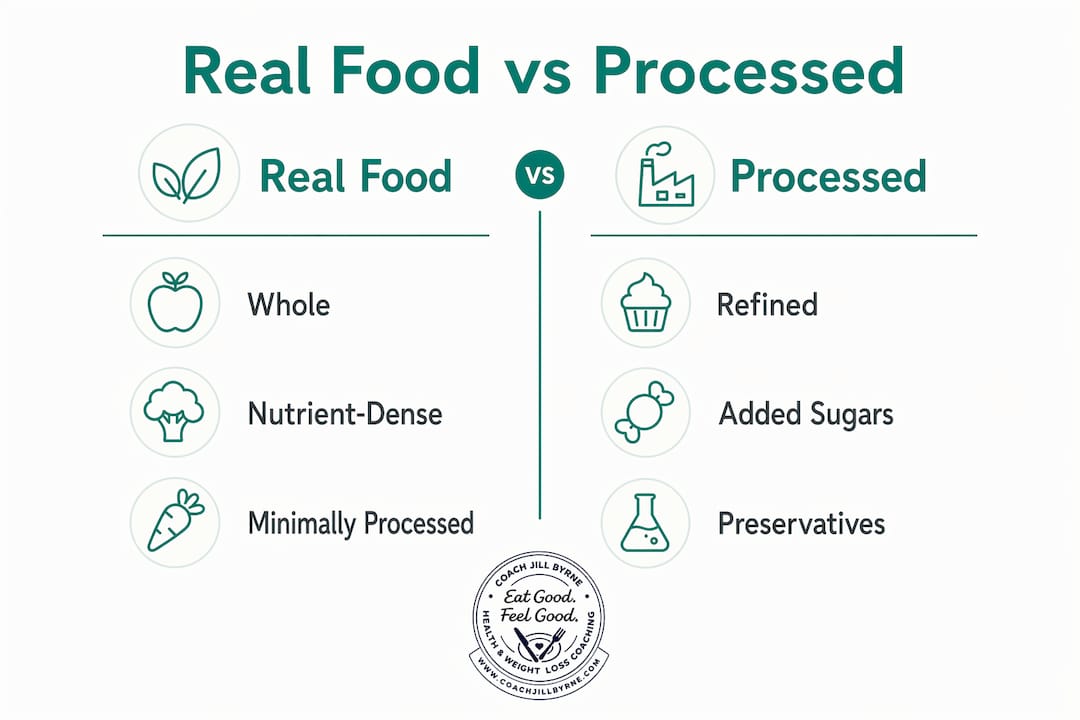
How real food compares to processed and ultra-processed foods
Understanding real food benefits requires understanding what it is being compared against. Not all processing is equal, and this distinction is where most people get confused.
Food type | Processing level | Nutritional profile | Examples |
Whole/real food | None or minimal | Full nutrient profile intact | Fresh salmon, oats, spinach, eggs |
Minimally processed | Low | Nutrients largely preserved | Frozen vegetables, canned beans, plain yogurt |
Processed food | Moderate | Some nutrients altered or added | Cheese, whole grain bread, canned tomatoes |
Ultra-processed food | High | Nutrients stripped; additives added | Packaged snacks, fast food, flavored cereals |
Minimally processed foods, such as frozen spinach, canned chickpeas, or plain Greek yogurt, are entirely consistent with real food nutrition. The concern lies with ultra-processed products, which are formulated with ingredients rarely found in a home kitchen: emulsifiers, flavor enhancers, modified starches, and artificial colorings. These products are not nutritionally equal to whole foods, even when their macronutrient labels appear similar.
Experts also caution that real is not a moral term. Eating a processed cracker does not make you a bad person or a failed dieter. The practical value of the real food framework is that it redirects attention toward nutrient density and ingredient simplicity rather than rigid food rules.
Pro Tip: When reading a food label, scan the ingredient list before the nutrition facts panel. If the list contains more than five to seven ingredients, or includes words you cannot pronounce, the product is likely ultra-processed regardless of what the front of the package claims.
What are the real food benefits for health and wellbeing?
The importance of real nutrition extends well beyond weight management. Diet quality improvements consistently track with better long-term health outcomes, including lower risk of type 2 diabetes, cardiovascular disease, and certain cancers. This relationship holds across different dietary patterns, from Mediterranean to plant-forward to omnivore, as long as the foundation is whole, nutrient-dense food.
The specific benefits of a real food approach include:
Sustained energy: Whole foods with fiber and protein stabilize blood sugar, reducing the energy crashes associated with refined carbohydrate consumption.
Better weight management: Real food patterns support sustainable weight loss because whole foods are more satiating per calorie than ultra-processed alternatives.
Improved micronutrient intake: Vegetables, legumes, and whole grains deliver magnesium, potassium, B vitamins, and antioxidants that processed foods lack.
Gut health support: Fiber from real food feeds beneficial gut bacteria, which research increasingly links to immune function and mental health.
“The shift from a processed-food-centric diet to a nutrient-dense, whole foods approach is not a trend. It is the direction that decades of nutrition science and now federal policy are pointing.” — HHS, 2026
The balance between animal and plant proteins also matters. Overemphasis on any single protein source is not fully aligned with the broader evidence base. A real food approach works best when it includes a variety of protein sources: eggs, legumes, seafood, poultry, and dairy, rather than treating any one category as superior. Learning how to regain energy through real food daily is one of the most practical benefits clients report when they shift away from processed eating patterns.
How to eat real food every day: practical strategies
Knowing what real food nutrition means is one thing. Putting it into practice across a busy week is another. The following steps reflect what actually works for people managing real schedules, real budgets, and real food environments.
Anchor every meal with three components. Build each plate around a protein source, a vegetable or fruit, and a whole grain or legume. This structure, recommended by realfood.gov, prevents the drift toward convenience foods by giving you a clear template before you open the refrigerator.
Use food labels as a screening tool, not a nutrition report. Scan for added sugars and refined starches in the first three ingredients. A label with oats, water, and salt is real food. A label with high-fructose corn syrup, enriched wheat flour, and soybean oil is not.
Batch cook once or twice a week. Roasting a sheet pan of vegetables, cooking a pot of brown rice or lentils, and grilling several chicken thighs on Sunday gives you real food components that assemble into meals in under ten minutes. Home cooking is one of the most reliable supports for family health and real food consistency.
Replace one processed snack per day. Swapping a packaged granola bar for an apple with almond butter, or a bag of chips for roasted chickpeas, creates a meaningful shift in diet quality without requiring a complete overhaul. Practical real food snack substitutions make this step easier to sustain.
Acknowledge access and cost barriers honestly. Harvard researchers note that food assistance recipients face system-level challenges that complicate real food adoption. Canned beans, frozen vegetables, eggs, and oats are among the most affordable real foods available and should be treated as first-tier options, not budget compromises.
Pro Tip: Frozen vegetables are harvested and frozen at peak ripeness, which means their nutrient content is often higher than fresh produce that has traveled several days to reach a store shelf. Stock your freezer with frozen spinach, broccoli, and edamame as reliable real food staples.
Key takeaways
Real food nutrition means choosing whole, minimally processed foods that retain their natural nutrient profile, and this approach is now the explicit foundation of U.S. federal nutrition policy through the 2025–2030 Dietary Guidelines.
Point | Details |
Core definition | Real food is whole or minimally processed and recognizable in its natural form. |
Federal guidance | The 2025–2030 Dietary Guidelines limit added sugars to 10 grams per meal and prioritize six whole food categories. |
Processing nuance | Not all processed foods are harmful; ultra-processed products with long ingredient lists are the primary concern. |
Health benefits | Consistent real food eating improves diet quality scores and reduces chronic disease risk over time. |
Practical adoption | Anchoring meals with protein, vegetables, and whole grains is the most reliable daily strategy. |
What I’ve learned from coaching real food nutrition in real life
After working with clients across a wide range of starting points, one thing stands out clearly: the people who make lasting changes are not the ones who follow the strictest rules. They are the ones who understand the principle well enough to apply it flexibly.
Real food nutrition is a direction, not a destination. When a client tells me they swapped their afternoon vending machine habit for a hard-boiled egg and some grapes, that is real food nutrition working. It does not require a perfect pantry or a subscription meal kit. It requires a clear enough understanding of what whole food nutrition means that you can make a better choice in an imperfect situation.
I also want to be direct about something the wellness industry tends to avoid: real food is not accessible to everyone in the same way. Cost, geography, time, and cooking confidence all affect what ends up on the plate. Applying real food principles realistically means acknowledging socio-economic constraints rather than pretending that a farmers market haul is a universal solution. Canned salmon, frozen broccoli, and dried lentils are real food. They are also affordable and available in most grocery stores.
The goal I set with every client is progress in diet quality, not compliance with an idealized food list. Real food nutrition works because it shifts the overall pattern of eating, and patterns are what determine long-term health outcomes.
— Coach Jill
Start your real food nutrition journey with personalized coaching
Understanding the principles of real food nutrition is the first step. Putting them into practice consistently, across your specific schedule, preferences, and health goals, is where most people benefit from structured support.

Coachjillbyrne offers personalized nutrition coaching built around real food principles, habit formation, and practical meal planning. Whether you are managing weight, improving energy, or simply trying to eat better without overhauling your entire life, the coaching programs at Coachjillbyrne provide the accountability and guidance to make real food nutrition sustainable. Clients consistently report meaningful improvements in how they eat, how they feel, and how they approach food decisions long after their coaching program ends.
FAQ
What is the definition of real food in nutrition?
Real food is defined as whole or minimally processed food that is recognizable in its natural form and not heavily reformulated through industrial production. The 2025–2030 U.S. Dietary Guidelines use this definition as the foundation of federal nutrition policy.
How does real food nutrition differ from clean eating?
Real food nutrition focuses on nutrient density and minimal processing, while clean eating is an informal term with no standardized definition. Real food nutrition is grounded in federal dietary guidance and nutrition science, making it a more reliable framework for food decisions.
Is frozen or canned food considered real food?
Yes. Frozen vegetables, canned beans, and canned seafood all qualify as real food because they are minimally processed and retain their natural nutrient profile. The 2025–2030 Dietary Guidelines explicitly include frozen and canned options as valid whole food choices.
How much added sugar is too much on a real food diet?
The 2025–2030 Dietary Guidelines recommend no more than 10 grams of added sugar per meal, with the ideal being as little as possible. Most packaged breakfast foods exceed this limit in a single serving.
Can real food nutrition support weight loss?
Yes. Real food patterns support sustainable weight management because whole foods are more satiating per calorie than ultra-processed alternatives, and consistent diet quality improvements are linked to better long-term health outcomes.
Recommended
Comments