
Why Dieting Together Improves Success and Results

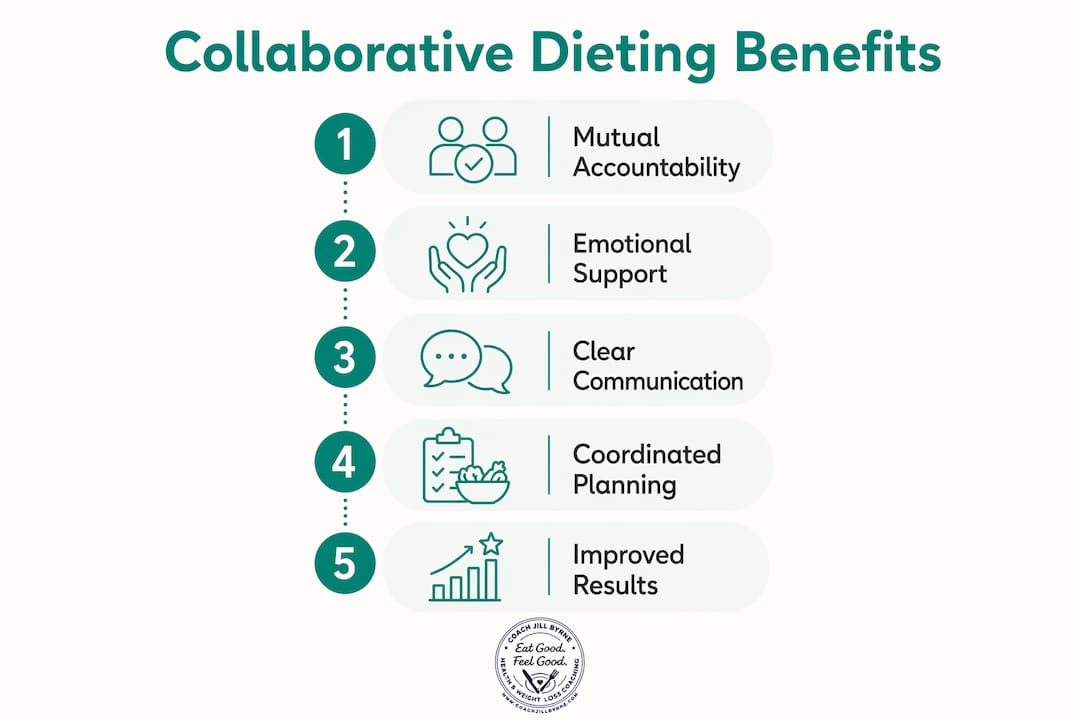
Collaborative dieting is defined as two or more people pursuing shared weight loss goals through coordinated habits, mutual accountability, and aligned nutrition strategies. Research confirms that why dieting together improves success comes down to one core mechanism: social reinforcement. When you share the process with someone else, you are less likely to quit, more likely to stay consistent, and more inclined to make better food choices. Coachjillbyrne works with clients who use this partnership model and consistently sees stronger long-term results compared to solo efforts.
Why dieting together improves success through mutual accountability
Accountability is the single most underrated factor in weight loss. When you diet alone, the only person who knows you skipped your meal plan is you. When you diet with a partner, that invisible safety net disappears, and a real one takes its place.
Couples who combine goal coordination with shared emotional support and clear communication lose more weight and report higher life satisfaction after one year. That finding matters because it links the psychological benefits directly to measurable physical outcomes, not just mood.

Emotional support also reduces the stress that typically derails dieting. Stress triggers cortisol, which increases appetite and promotes fat storage. A partner who acknowledges your hard day without pushing you toward a cheat meal is doing real nutritional work, even if it does not look like it.
Shared progress tracking adds another layer. When both people log meals, weigh in together, or review weekly goals side by side, transparency replaces guesswork. That visibility keeps both partners honest without requiring confrontation.
Key accountability practices that work in dieting partnerships include:
Weekly check-ins with a shared review of meals, activity, and energy levels
Joint goal-setting at the start of each week to align expectations
Shared meal logs using a tracking app both partners can view
Agreed consequences for skipping planned meals, such as cooking the next healthy meal together
Pro Tip: Set your communication norms in the first week. Decide how you will flag a bad day, how you will respond to each other’s setbacks, and what “support” looks like for each of you. Misaligned expectations cause more partnership breakdowns than misaligned diets.
How communication and cooperative planning keep partnerships on track
Clear communication is the structural backbone of any successful dieting partnership. Without it, even well-intentioned partners drift into blame, resentment, or silent competition. Weight loss collaborations that focus on emotional regulation improve communication habits and reduce irritability over time. That means the act of dieting together, done well, actually makes you better at talking to each other.
Shared meal planning is one of the most practical tools available. When both partners contribute to the weekly grocery list and meal schedule, dietary goals stay aligned without one person carrying the full cognitive load. Syncing healthy eating habits with your partner works best when it starts at the planning stage, not at the dinner table.
Open dialogue about setbacks is equally critical. When one partner slips, the conversation that follows either strengthens or weakens the partnership. Framing setbacks as shared data rather than personal failures keeps both people moving forward.
Effective communication habits for dieting partners include:
Neutral language during setbacks: say “what happened?” not “you ruined the week”
Separate individual needs from shared goals: one partner may need more protein; that does not mean the plan fails
Celebrate non-scale victories together: better sleep, more energy, and improved mood all count
Rotate meal planning responsibilities so neither partner feels like the default food manager
Success in joint dieting comes from aligning shared values and environment while respecting individual nutritional needs. Dietitian Julie Meek’s work reinforces this point: one plan does not fit two bodies, but one shared environment can support two personalized plans.
Pro Tip: Schedule a 15-minute weekly “nutrition check-in” that is separate from your regular conversations. Keeping it structured and brief prevents it from becoming a source of tension.
What pitfalls should you avoid when dieting together?
Only 1 in 10 couples successfully sustain shared dieting goals long-term. That number is low, and poor communication combined with unhealthy competition explains most of the failures. Knowing the pitfalls in advance gives you a real advantage.
Unhealthy competition is the most common trap. When one partner loses weight faster, the other often feels demoralized or resentful. Men and women have different metabolic rates, and bodies respond differently to the same caloric deficit. Comparing results week to week is a reliable way to undermine motivation.
Common pitfalls and how to avoid them:
Misaligned pace: one partner loses faster due to metabolism, not effort. Acknowledge this early and agree not to use the scale as a competition metric.
Guilt spiraling: when one partner slips, guilt can spread to the other. Agree in advance that setbacks are individual, not shared failures.
Overloading one partner: if one person does all the cooking and planning, resentment builds. Distribute responsibilities clearly.
Focusing only on weight: building systems rather than chasing numbers produces more durable results. Track habits, not just pounds.
“Unhealthy competition leads to resentment and sabotage. The focus should be on system building and handling setbacks with compassion, not on who loses more weight each week.”
Peer support acts as a strategic tool similar to a coach or advisor, bypassing individual limits in self-regulation. That means your partner is not just moral support. They are actively reducing the cognitive load that makes healthy choices hard to sustain alone.
Pro Tip: Define “winning” together before you start. If winning means both of you feel healthier and more energized in 90 days, you have a shared definition that does not pit you against each other.
Practical ways to integrate collaborative dieting into daily life
Knowing the theory is useful. Applying it daily is what produces results. These steps translate the principles of team dieting success into concrete weekly habits.
Schedule regular check-ins. Set a fixed time each week, such as Sunday evening, to review the past week and plan the next one. Consistency in the check-in builds consistency in the diet.
Cook and eat meals together without distractions. Cooking and eating together without screens or phones strengthens communication, cooperation, and mutual respect. The meal itself becomes a reinforcement of the shared goal.
Build a joint grocery routine. Shop together using a pre-agreed list. This removes impulsive purchases and keeps both partners invested in what enters the kitchen. Behavioral engineering, such as placing healthy foods at eye level and keeping snacks out of sight, works better when both people set it up together.
Create individual exercise plans with shared check-ins. Exercise preferences differ. One partner may prefer walking; the other may prefer strength training. Respect those differences, but schedule shared activity at least once a week to reinforce the partnership dynamic.
Use a shared tracking tool. A shared meal and activity log keeps both partners visible to each other without requiring constant conversation. Realistic weight loss goals logged together create a shared record of progress that motivates both people over time.
Celebrate milestones together. When one partner hits a goal, both partners acknowledge it. Recognition reinforces the behavior and signals that the partnership is working.
Collaborative dieting reduces the cognitive load of decision-making by making healthy habits the default through structured support. When your environment and your partner both point toward the same choices, willpower becomes far less necessary.
Key Takeaways
Dieting together improves success because shared accountability, clear communication, and coordinated habits remove the isolation that causes most solo diets to fail.
Point | Details |
Accountability drives consistency | Partners who track and review progress together stay on plan longer than solo dieters. |
Communication prevents resentment | Setting clear norms early stops blame and competition from undermining the partnership. |
Respect individual needs | Personalized nutrition within a shared environment outperforms one-size-fits-all plans for both partners. |
Avoid unhealthy competition | Defining success as shared habit-building rather than scale numbers protects motivation and the relationship. |
Systems beat willpower | Behavioral engineering and shared routines reduce decision fatigue and make healthy choices automatic. |
What I have learned from coaching couples through weight loss
After working with many clients who diet alongside a partner, the pattern I see most often is this: the couples who succeed are not the ones who are most disciplined. They are the ones who are most honest with each other.
The partners who struggle tend to treat weight loss as a performance. They hide slip-ups, compete silently, and measure their worth by the number on the scale. The ones who thrive treat it as a shared project. They talk about what is hard, they adjust the plan when life gets complicated, and they celebrate progress that has nothing to do with weight.
One thing I tell every client who is building wellness goals with a partner: the goal is not to become the same person. It is to create an environment where both of you can become healthier versions of yourselves. That distinction changes everything about how you plan, communicate, and respond to setbacks.
Patience is not optional in this process. Bodies change at different rates. Motivation fluctuates. Life interrupts. The partnerships that last are the ones where both people agree, from the start, that the relationship matters more than the result on any given week. When you hold that perspective, setbacks stop being failures and start being information.
— Coach Jill
Personalized support for your weight loss partnership
Dieting with a partner is one of the most effective approaches to sustainable weight loss. Getting the structure right from the start makes the difference between a partnership that strengthens over time and one that adds stress to an already challenging process.

Coachjillbyrne offers personalized nutrition coaching programs designed to support individuals and partners who want real, lasting results without restrictive plans or unrealistic expectations. From coordinated meal planning to accountability frameworks that fit your lifestyle, the coaching process is built around what actually works for your body and your relationship. Visit Coachjillbyrne to learn how structured, habit-based support can help you and your partner reach your goals together.
FAQ
Why does dieting with a partner increase success rates?
Partners provide accountability and emotional support, two factors that directly reduce the likelihood of quitting. Research shows that couples who coordinate goals and communicate openly lose more weight and report higher satisfaction after one year.
What is the biggest mistake couples make when dieting together?
Unhealthy competition is the most common pitfall. When partners focus on who loses more weight rather than building shared habits, resentment and demotivation follow. Defining success as a shared system rather than a number prevents this.
How often should dieting partners check in with each other?
A weekly structured check-in works best for most partnerships. It keeps communication consistent without making every meal a performance review.
Can partners follow different diets while still supporting each other?
Yes. Personalized nutrition within a shared environment is the most effective model. Both partners can follow plans suited to their individual needs while sharing meals, grocery shopping, and accountability routines.
Does cooking together actually help with weight loss?
Cooking and eating meals together without distractions strengthens cooperation and mutual respect, which reinforces healthy habits over time. The shared ritual builds consistency, which is the foundation of lasting weight loss.
Recommended
Comments