
Why Food Quality Affects Performance: What You Need to Know

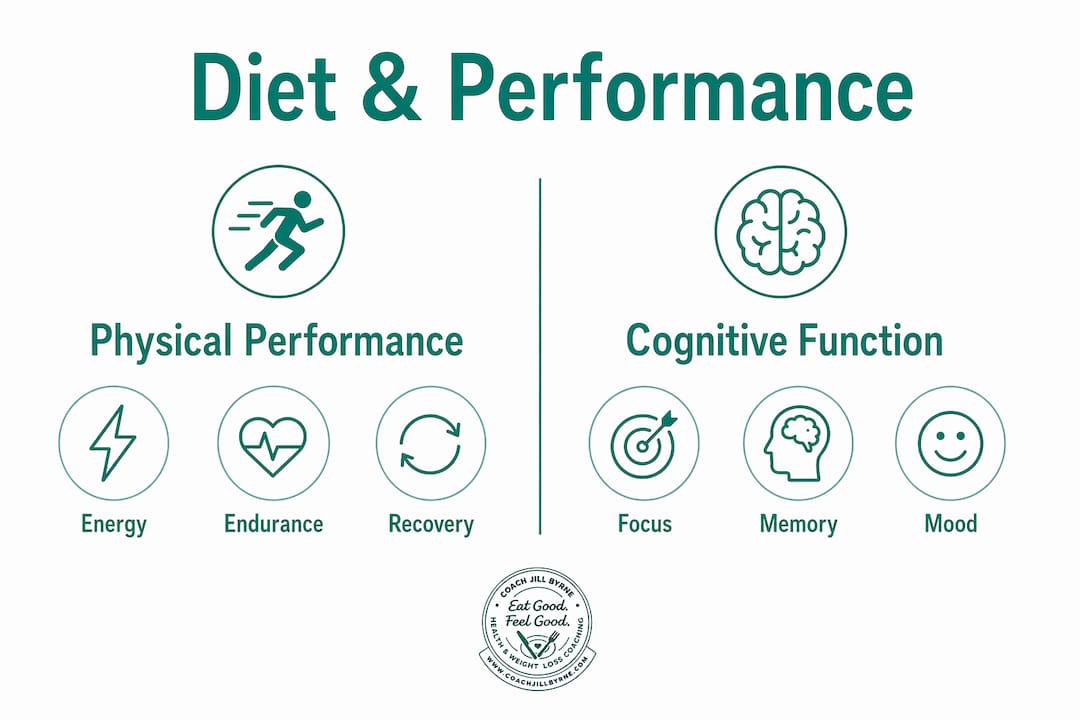
Food quality is a fundamental determinant of physical energy, cognitive function, and recovery capacity. Employees with unhealthy, low-quality diets are 66% more likely to report lower productivity, while nutrient-dense diets can deliver productivity gains of up to 20%. That gap is not a minor inconvenience. It represents the difference between getting through your day and actually performing at your best. Whether you exercise regularly or simply want to think more clearly at work, the nutritional quality of what you eat shapes every outcome. Coachjillbyrne builds every coaching program around this principle because the science behind it is clear and consistent.
Why food quality affects performance at the cellular level
The body does not treat all food equally. Nutrient-rich foods supply the raw materials for muscle repair, energy production, and immune regulation. Poor-quality foods, especially ultra-processed options, disrupt these same processes through inflammation and nutrient deficits.
Food quality regulates cell signaling pathways essential for training adaptations, muscle repair, and immune health. This means the nutrients in your food directly control how efficiently your body recovers from physical stress. A meal of whole grains, lean protein, and vegetables sends different biochemical signals than a bag of chips or a fast-food combo. The first supports repair. The second creates interference.
Macronutrients each play a distinct role. Carbohydrates supply glucose, the brain’s and muscle’s preferred fuel source. Protein provides amino acids for tissue repair. Dietary fats, particularly polyunsaturated and monounsaturated fats (PUFAs and MUFAs), resolve inflammation post-exercise and support day-to-day recovery in ways that protein alone cannot. This finding challenges the common assumption that protein is the only nutrient that matters for performance.

How does food quality influence physical performance and exercise capacity?
Physical performance depends on the body’s ability to generate energy, sustain effort, and recover between sessions. Food quality determines how well each of those processes works.
The Mediterranean diet provides one of the clearest examples. Research shows it increases plasma propionate and butyrate levels by over 42% and 57% respectively, correlating with a 1.1 mL/kg/min greater improvement in VO2max. VO2max measures how efficiently your body uses oxygen during exercise. A higher VO2max means better endurance, and this dietary pattern moves that number in the right direction.
Nutrient timing also matters. Eating every 3–4 hours with balanced carbohydrates and protein prevents energy dips and supports sustained output during both exercise and daily tasks. Skipping meals or eating irregularly creates glucose instability, which shows up as fatigue, reduced strength, and slower reaction times.
Personalized nutrition takes these benefits further. Tailored nutrition interventions in athletes improve sport-specific performance by 5.8%, compared to 0.9% with generic approaches. That difference reflects what happens when food quality is matched to individual needs rather than applied as a one-size-fits-all rule.
Dietary factor | Performance impact |
Mediterranean diet pattern | Improves VO2max and endurance markers |
Balanced carb and protein timing | Prevents energy dips every 3–4 hours |
PUFAs and MUFAs | Resolve inflammation and support recovery |
Personalized nutrition plans | Deliver 5.8% sport-specific performance gains |
Pro Tip: Pair a complex carbohydrate like oats or sweet potato with a protein source before exercise. This combination fuels the session and slows glucose absorption, keeping energy levels stable throughout.
In what ways does food quality affect cognitive function and mental performance?
The brain consumes roughly 20% of the body’s total energy, making it highly sensitive to the quality of fuel it receives. Diet quality shapes memory, attention, decision-making, and mental stamina in measurable ways.
Ultra-processed food consumption is directly linked to poorer executive function and memory deficits, with 78.5% of studies showing significant negative cognitive associations. Executive function covers the mental skills used for planning, focus, and impulse control. When those skills degrade, everyday tasks take longer and feel harder.
The mechanism is neuroinflammation. High ultra-processed food intake impairs cognition via metabolic disruptions and chronic low-grade brain inflammation. Long-term exposure increases the risk of dementia and accelerated cognitive decline. This is not a distant concern for older adults only. The effects begin accumulating with each dietary pattern established in younger years.
Key cognitive domains affected by poor diet quality include:
Memory: Nutrient deficiencies, particularly in omega-3 fatty acids and B vitamins, reduce the brain’s ability to form and retain new information.
Attention: Blood glucose instability from high-sugar, low-fiber meals causes concentration to fluctuate throughout the day.
Executive function: Chronic inflammation from processed food disrupts the prefrontal cortex, the region responsible for planning and self-regulation.
Mental energy: Inadequate micronutrient intake, especially iron and vitamin D, leads to persistent mental fatigue even without physical exertion.
“The effects of food on cognitive function are not subtle. What you eat today shapes how clearly you think tomorrow. Nutrient-dense foods stabilize blood glucose, reduce neuroinflammation, and supply the building blocks the brain needs to function at full capacity.”
Stable blood glucose is the most direct lever for mental performance. Meals built around fiber-rich vegetables, whole grains, and quality protein slow glucose absorption and prevent the energy crashes that derail focus and productivity. This is one reason why real food nutrition consistently outperforms supplement-heavy approaches for sustained cognitive output.
What are the critical nutrients and dietary patterns that optimize overall performance?
No single nutrient carries all the weight. Performance depends on a combination of macronutrients, micronutrients, and the timing of intake across the day.
Carbohydrates remain the primary fuel for high-intensity effort. Protein supports muscle repair and immune function. Dietary fats, particularly PUFAs and MUFAs found in olive oil, fatty fish, nuts, and avocados, predict performance better than protein in non-athletes by resolving exercise-induced inflammation. This finding is especially relevant for people who are active but not competitive athletes.
Micronutrients are equally critical. Vitamin D supports muscle contraction and immune defense. Calcium maintains bone density under physical load. Iron carries oxygen to working muscles, and even mild iron deficiency produces noticeable drops in stamina and mental sharpness. These nutrients come reliably from whole foods, not from processed alternatives stripped of their nutritional content.
Nutrient category | Key sources | Primary performance role |
Complex carbohydrates | Oats, sweet potato, brown rice | Sustained energy and glucose stability |
Protein | Eggs, legumes, lean meat, Greek yogurt | Muscle repair and immune support |
PUFAs and MUFAs | Olive oil, salmon, walnuts, avocado | Inflammation resolution and recovery |
Vitamin D and calcium | Fatty fish, dairy, fortified foods | Bone health and muscle function |
Iron | Red meat, spinach, lentils | Oxygen transport and stamina |
Periodized nutrition strategies align intake with training demands across different phases of activity. The 4Ps framework, which stands for personalize, periodize, prefuel, and prepare, provides a practical structure for adjusting carbohydrate and protein intake based on what the body actually needs on a given day. High-intensity training days call for more carbohydrates. Rest days require less. This approach prevents both under-fueling and unnecessary caloric surplus.
Pro Tip: Use a simple color-coded carbohydrate periodization approach: green days (rest) for lower carb intake, amber days (moderate training) for moderate carbs, and red days (hard sessions) for higher carb intake. This keeps fueling matched to demand without obsessive calorie counting.
How can you apply food quality principles to everyday life?
Knowing the science is useful. Applying it consistently is what produces results. The gap between the two is where most people struggle, and it is usually not a knowledge problem. It is a habit problem.
Choose minimally processed foods as your default. Build meals around whole ingredients: vegetables, fruits, legumes, whole grains, and quality proteins. These foods deliver the micronutrients and fiber that processed alternatives remove. Regaining energy through real food starts with this single shift.
Eat on a consistent schedule. Eating every 3–4 hours with balanced macronutrients stabilizes blood glucose and prevents the mental and physical fatigue that comes from irregular meals. Skipping meals is not a neutral act. It creates a deficit that compounds across the day.
Prioritize fat quality, not just quantity. Replace saturated fats from fried and processed foods with PUFAs and MUFAs from whole food sources. This supports both physical recovery and cognitive clarity without requiring a complete dietary overhaul.
Avoid rigid eating rules. Sustainable nutrition requires flexibility that respects cultural preferences and personal enjoyment. Strict rules often backfire, reducing adherence and increasing the risk of disordered eating patterns. A plan you can follow consistently beats a perfect plan you abandon after two weeks.
Adjust intake based on activity level. More demanding days require more fuel, particularly carbohydrates. Lighter days need less. Matching intake to output prevents both under-fueling and unnecessary surplus, which is the core principle behind periodized nutrition.
Pro Tip: Prepare two or three base ingredients at the start of each week, such as cooked grains, roasted vegetables, and a protein source. Mixing and matching these throughout the week removes the daily decision fatigue that leads to poor food choices.
Key Takeaways
Food quality directly shapes physical endurance, cognitive function, and recovery through nutrient-driven cell signaling, inflammation control, and glucose stability.
Point | Details |
Food quality drives productivity | Poor-quality diets increase low productivity risk by 66%; nutrient-dense diets can improve it by up to 20%. |
Diet shapes physical endurance | Mediterranean diet patterns improve VO2max and endurance markers through gut-derived metabolites. |
Cognitive function depends on food | Ultra-processed foods impair memory and executive function via neuroinflammation and metabolic disruption. |
Fat quality matters as much as protein | PUFAs and MUFAs resolve post-exercise inflammation and predict performance better than protein in non-athletes. |
Flexibility supports long-term results | Rigid eating rules reduce adherence; sustainable, personalized approaches produce consistent performance gains. |
What I’ve learned from watching food quality change people’s lives
Most people come to me focused on weight. They want to lose a certain number of pounds, and they expect a list of foods to cut out. What they discover, usually within the first few weeks, is that the biggest change is not on the scale. It is in how they feel and function every single day.
I have worked with clients who could not get through an afternoon without a coffee and a sugar fix. Within a month of shifting to balanced, whole-food meals eaten consistently throughout the day, that pattern disappears. Not because of willpower. Because the food is actually fueling them properly.
The misconception I push back on most often is that performance nutrition is only for athletes. The research does not support that view. A 66% higher risk of low productivity from poor diet quality affects office workers, parents, students, and retirees just as much as it affects runners or cyclists. The body does not distinguish between a boardroom and a track. It responds to the quality of what you feed it.
What I advocate for is a mindful eating approach that is grounded in evidence but flexible enough to fit real life. Perfection is not the goal. Consistency is. A realistic nutrition plan built around whole foods, eaten at regular intervals, adjusted to your activity level, and maintained without obsessive restriction will outperform any short-term diet every time.
— Coach Jill
How Coachjillbyrne helps you put food quality into practice
Understanding why nutrition matters for success is the first step. Knowing how to apply it to your specific life, schedule, and goals is where real change happens.

Coachjillbyrne offers personalized nutrition coaching built around real food, practical habits, and consistent accountability. Every plan is tailored to your activity level, food preferences, and daily routine, so you are not following a generic template. You are building a way of eating that fits your actual life. Whether you are working on energy levels, physical performance, or long-term weight management, the coaching programs at Coachjillbyrne provide the structure and support to make lasting changes. Explore the options and take the first step toward eating in a way that actually works for you.
FAQ
Why does food quality affect performance more than calories?
Calories measure energy quantity, but food quality determines how that energy is delivered and used. Nutrient-dense foods regulate cell signaling, inflammation, and glucose stability in ways that calorie counts alone cannot capture.
What foods most directly improve cognitive function?
Whole foods rich in omega-3 fatty acids, B vitamins, iron, and complex carbohydrates support memory, attention, and mental energy. Ultra-processed foods impair these same functions through neuroinflammation and metabolic disruption.
How quickly does diet quality affect physical performance?
Dietary changes can influence energy levels and recovery within days through improved glucose stability and reduced inflammation. Measurable endurance gains, such as VO2max improvements linked to the Mediterranean diet, develop over weeks to months of consistent eating patterns.
Is nutrient timing as important as food quality?
Both matter, but food quality sets the foundation. Eating every 3–4 hours with balanced macronutrients prevents energy dips and supports sustained performance, but those benefits depend on choosing quality ingredients in the first place.
Do non-athletes benefit from performance nutrition principles?
The evidence is clear: poor diet quality raises the risk of low productivity by 66% across all populations, not just athletes. Balanced, nutrient-dense eating improves cognitive function, physical stamina, and recovery for anyone engaged in daily activity.
Recommended
Comments