
Why Most Weight Loss Programs Fail to Deliver Results

Most weight loss programs fail because they ignore the biological mechanisms that actively resist fat loss. Approximately 80% of people who lose significant weight regain most of it within five years, regardless of the diet they followed. That number reflects a pattern, not a personal failing. The real reasons weight loss plans fail run deeper than motivation or meal choices. They involve metabolic adaptation, hormonal shifts, and programs built on unrealistic expectations that no amount of willpower can overcome long term.
Why most weight loss programs fail: the metabolism problem
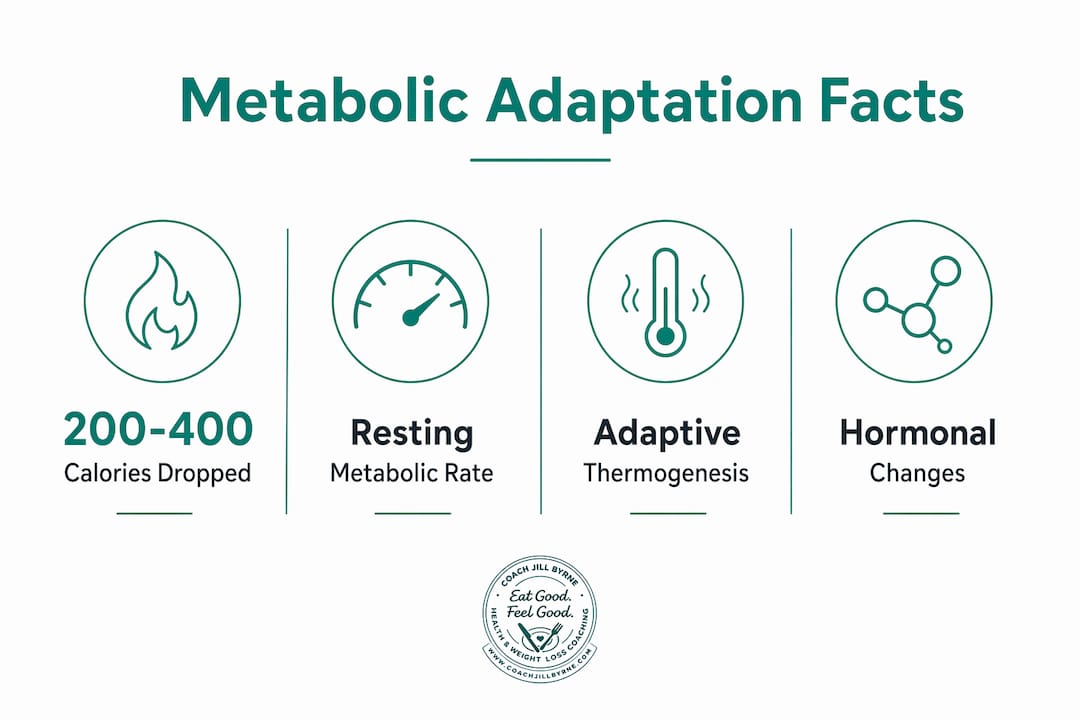
Adaptive thermogenesis is the body’s built-in response to prolonged calorie restriction. When you eat less, your body reads that as a threat and slows down energy use to compensate. Resting metabolic rate drops by 200–400 calories per day beyond what your smaller body size would normally require. That gap is significant. A person eating 1,500 calories daily may effectively be running a much smaller deficit than they calculated, which explains why weight loss stalls even when they stay consistent.
This process, known as adaptive thermogenesis, is one of the most underappreciated factors in weight loss failure. The body becomes more efficient at using fewer calories, meaning the same diet that produced results in week two produces nothing in week ten. Most generic programs do not account for this shift. They set a calorie target at the start and never adjust it, leaving people confused and frustrated when progress stops.

Understanding sustainable weight loss requires accepting that your metabolism is not static. It responds to what you eat, how much you move, and how long you have been restricting. Programs that treat metabolism as a fixed number are built on a flawed premise.
Pro Tip: If your weight loss has stalled for more than three weeks despite consistent effort, your resting metabolic rate may have adapted. Consider a diet break of one to two weeks at maintenance calories before resuming a deficit. This can help reset metabolic rate and improve adherence.
Metabolic factor | What it means for your diet |
Adaptive thermogenesis | Calorie burn drops 200–400 calories daily after weight loss begins |
Resting metabolic rate | Decreases beyond what body size alone predicts |
Metabolic efficiency | Body conserves more energy with each successive diet attempt |
Plateau timing | Most people hit a plateau within 6–12 weeks of consistent restriction |
How hormones drive hunger and weight regain after dieting
The hormonal environment after weight loss actively works against keeping it off. Ghrelin rises and leptin falls significantly after dieting, and these changes persist for at least 12 months. Ghrelin is the hormone that signals hunger. Leptin is the hormone that signals fullness. When ghrelin goes up and leptin goes down at the same time, you feel hungrier and less satisfied after meals. That combination is biologically powerful.
This is not a willpower problem. Biological mechanisms like hormonal shifts and metabolic slowing explain most of the difficulty people face, not a lack of discipline. Treating weight regain as a character flaw misses the point entirely and leads people to blame themselves instead of adjusting their approach.
“Temporary diet interventions fail to address the persistent hormonal environment that promotes weight regain. Long-term hormonal management, not short-term restriction, is what produces lasting results.”
The practical implication is clear. A 12-week diet program ends, but the hormonal changes it triggered do not. Hunger stays elevated. Fullness signals stay suppressed. Without a plan to manage that biological reality, most people return to old eating patterns within months.
Key hormonal changes that drive failed weight loss strategies include:
Elevated ghrelin: Hunger signals increase after calorie restriction, making it harder to maintain a deficit
Suppressed leptin: Reduced fullness cues mean you need more food to feel satisfied
Cortisol elevation: Chronic stress raises cortisol, which increases cravings for calorie-dense foods
Insulin sensitivity shifts: Rapid weight loss can temporarily alter how the body processes carbohydrates
Why unrealistic expectations and generic plans set you up to fail
Many weight loss programs promise fast results because fast results sell. The problem is that one-size-fits-all diets fail because weight regulation is shaped by genetics, sleep quality, stress levels, and environment. None of those factors appear in a generic meal plan. A program designed for an average person is, by definition, designed for no one in particular.
Setting realistic weight loss goals matters more than most people realize. When a program promises 20 pounds in 30 days and delivers 8, people feel like they failed. They did not fail. The program set an unrealistic benchmark. That gap between expectation and reality is one of the most consistent reasons people abandon diets before they have a chance to work.
Strict, restrictive diets often produce nutrient deficiencies and a damaged relationship with food. Cutting entire food groups creates cravings, not compliance. Over time, the psychological burden of restriction outweighs the motivation to continue. Most people do not quit because they lack discipline. They quit because the program was never designed to be livable.
Here is a practical framework for evaluating whether a weight loss plan is built to last:
Does it account for your lifestyle? A plan that requires two hours of meal prep daily will not survive a busy work week.
Does it allow for flexibility? Programs with zero tolerance for deviation produce guilt and abandonment, not results.
Does it set weekly, not daily, targets? Daily perfection is unsustainable. Weekly averages are manageable.
Does it include a maintenance phase? Any program that ends without a transition plan is incomplete.
Does it address stress and sleep? Ignoring these factors means ignoring two of the most powerful drivers of weight regain.
Pro Tip: Before starting any new eating plan, ask one question: “Can I eat this way in five years?” If the answer is no, the plan is a temporary fix, not a lasting solution. Learning how to start weight loss without restriction is a more reliable path forward.
Common diet mistakes that quietly derail your progress
Skipping meals is one of the most common diet mistakes people make, and it consistently backfires. Skipping breakfast disrupts leptin and ghrelin balance, raising the risk for metabolic disorders and increasing overeating later in the day. The short-term calorie saving creates a larger hormonal problem that costs more than it saves.
Stress is another factor that most diet programs ignore entirely. Cortisol increases cravings and disrupts calorie intake control, making emotional eating a biological response rather than a simple bad habit. Understanding how stress affects weight loss is not optional. It is a core part of any plan that expects to work long term.
Other common errors that contribute to weight loss failure include:
Underestimating portion sizes: Even healthy foods carry calories. Almonds, avocado, and olive oil are nutritious but calorie-dense.
Ignoring hydration: Mild dehydration mimics hunger signals, leading to unnecessary snacking.
Cutting carbs completely: Eliminating carbohydrates often leads to low energy, poor workout performance, and eventual bingeing.
Relying on exercise alone: Physical activity supports weight loss but cannot compensate for a poor diet. Nutrition drives the majority of results.
Treating weekends differently: A consistent approach seven days a week outperforms five days of restriction followed by two days of excess.
Key Takeaways
Most weight loss programs fail because they treat a biological, hormonal, and behavioral challenge as a simple math problem.
Point | Details |
Metabolic adaptation is real | Resting metabolic rate drops 200–400 calories daily after weight loss, stalling progress. |
Hormones resist weight loss | Ghrelin and leptin stay dysregulated for at least 12 months post-diet, driving hunger. |
Generic plans lack personalization | Genetics, sleep, stress, and environment all influence weight loss and require tailored approaches. |
Restriction creates failure cycles | Overly strict diets cause nutrient deficiencies and poor food relationships, reducing adherence. |
Sustainable habits outperform short programs | Long-term lifestyle changes, not temporary diets, produce lasting weight management results. |
What I have learned from watching people struggle with weight loss programs
After working with clients across many different backgrounds and health histories, one pattern stands out clearly. People do not fail weight loss programs. Weight loss programs fail people. The biology is real, the hormonal resistance is real, and the metabolic slowdown is real. Programs that pretend otherwise set clients up for a cycle of short-term results followed by frustration and regain.
What I have also seen is that repeated dieting cycles may reinforce metabolic efficiency, making each successive attempt harder than the last. That means the person who has tried ten diets is not more disciplined or more experienced. They may actually be working against a more resistant metabolism than when they started. That is not a reason to give up. It is a reason to change the approach entirely.
The clients who see lasting results are not the ones who follow the strictest plans. They are the ones who build consistent, flexible habits around real food, manage stress, sleep well, and have structured support when motivation dips. Weight loss is not a 12-week project. It is a long-term practice that requires a program built around your biology, not someone else’s average.
— Coach Jill
Personalized nutrition coaching built around how your body actually works
Generic programs ignore the biology that drives weight regain. Coachjillbyrne takes a different approach, building personalized nutrition plans around your metabolism, habits, and real-life schedule.

Coachjillbyrne’s nutrition coaching programs focus on real food, portion awareness, and consistent accountability rather than restriction or short-term fixes. Clients receive guidance tailored to their specific goals, including meal planning support, habit-based coaching, and ongoing check-ins that adapt as their body changes. Whether you are managing weight for the first time or recovering from years of failed diets, the approach is built to last. Visit Coachjillbyrne to learn how personalized coaching can help you build a sustainable path forward.
FAQ
Why do most weight loss programs fail long term?
Most programs fail because they do not account for adaptive thermogenesis and hormonal changes that resist weight loss. Resting metabolic rate drops and hunger hormones stay elevated for months after dieting ends, making regain nearly inevitable without ongoing support.
Is weight regain after dieting a willpower failure?
Weight regain is primarily a biological response, not a discipline problem. Ghrelin rises and leptin falls after weight loss, creating a hormonal environment that drives hunger and reduces fullness for at least 12 months.
What are the most common diet mistakes people make?
Skipping meals, underestimating portion sizes, ignoring stress, and cutting entire food groups are the most frequent errors. Each disrupts hormone balance and reduces the likelihood of long-term adherence.
Why do one-size-fits-all diets not work?
Weight regulation is influenced by genetics, sleep quality, stress levels, and environment. A generic plan cannot account for those individual factors, which is why personalized approaches produce more consistent results.
How long does hormonal disruption last after a diet?
Hormonal dysregulation, including elevated ghrelin and suppressed leptin, persists for at least 12 months after significant weight loss. This is why maintaining results requires a long-term strategy, not just a short-term eating plan.
Recommended
Comments