
Why Real Food Matters on Ozempic: 2026 Guide

Real food is essential when taking Ozempic because it provides the nutrients and metabolic support the medication alone cannot deliver. Ozempic, the brand name for semaglutide, suppresses appetite and slows gastric emptying. Those effects reduce how much you eat, but they do not change what your body needs. Without deliberate attention to nutrition quality, you risk muscle loss, vitamin deficiencies, and poor long-term outcomes. Understanding why real food matters on Ozempic is the first step toward making your medication work as effectively as possible.
Why real food matters on Ozempic
Ozempic works by mimicking the GLP-1 hormone, which signals fullness and slows gastric emptying. Your hunger drops, your meals shrink, and your digestion slows. That sounds like a straightforward path to weight loss. The problem is that eating less does not automatically mean eating well.
When your total food volume drops, every bite carries more nutritional responsibility. A diet built on crackers, processed snacks, or low-nutrient convenience foods will leave you deficient in protein, fiber, calcium, iron, and B-vitamins. Those deficiencies show up as fatigue, muscle weakness, bone loss, and stalled weight loss. Real food, meaning whole, minimally processed ingredients, delivers concentrated nutrition in the smaller portions Ozempic allows.
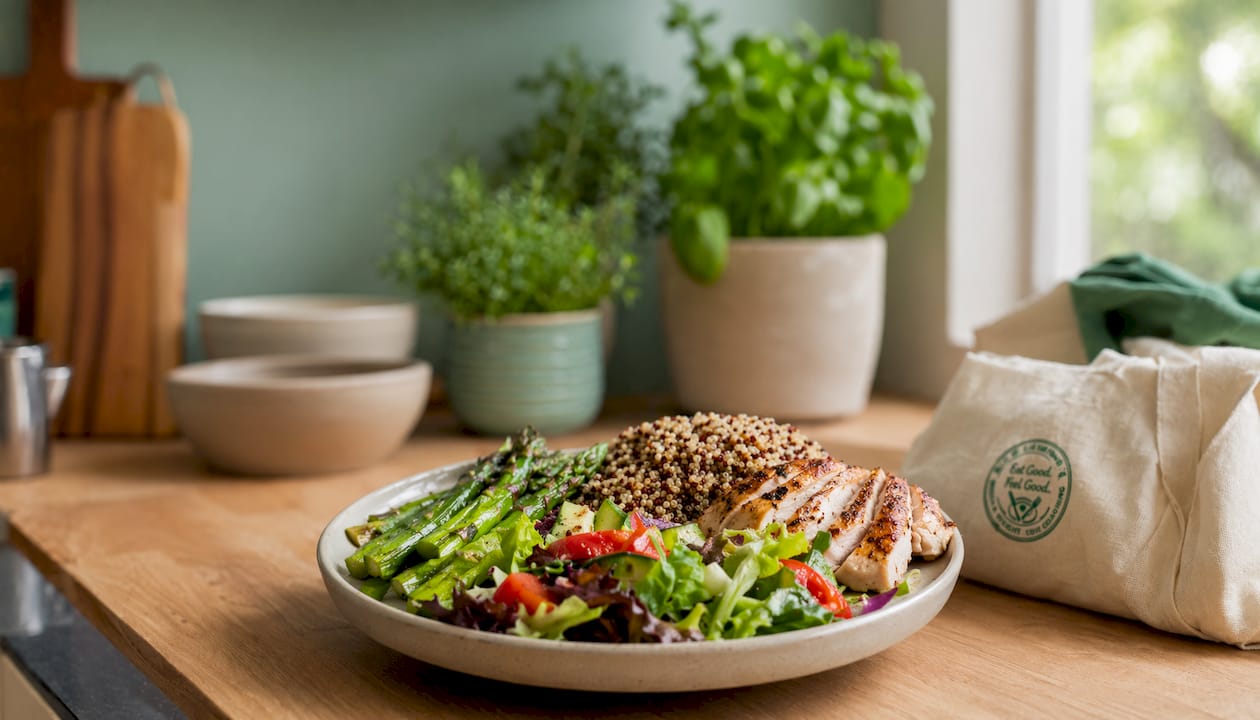
The Cleveland Clinic confirms that whole foods regulate digestion and prevent blood sugar spikes in ways that medication alone cannot replicate. Ozempic manages glucose through hormonal signaling. Real food manages glucose through fiber, protein, and micronutrient density. Both mechanisms work better together than either does alone.
How does Ozempic change appetite and digestion?
Ozempic mimics GLP-1 hormone effects, directly altering hunger signals and the speed at which food moves through your stomach. Most people notice they feel full after just a few bites. Others experience nausea, especially in the first weeks of treatment or after a dose increase.
These physiological changes have direct consequences for how you eat:
Smaller meal sizes become the norm, which means nutrient density per bite must increase.
Nausea and digestive discomfort are common side effects that can make eating feel unappealing.
Slowed gastric emptying changes the timing of nutrient absorption, making meal composition more important.
Reduced thirst signals can accompany appetite suppression, raising dehydration risk.
Irregular eating patterns can develop if nausea leads to skipping meals entirely.
Understanding these changes helps you see why food quality is not optional. When you eat less, the nutritional value of what you do eat determines whether your body thrives or struggles.
Pro Tip: If nausea hits after a dose increase, do not skip meals entirely. Eat a small amount of something cold and bland, wait 15–30 minutes, and try again. Skipping meals entirely accelerates muscle loss and nutrient depletion.
What nutrients should you prioritize on Ozempic?
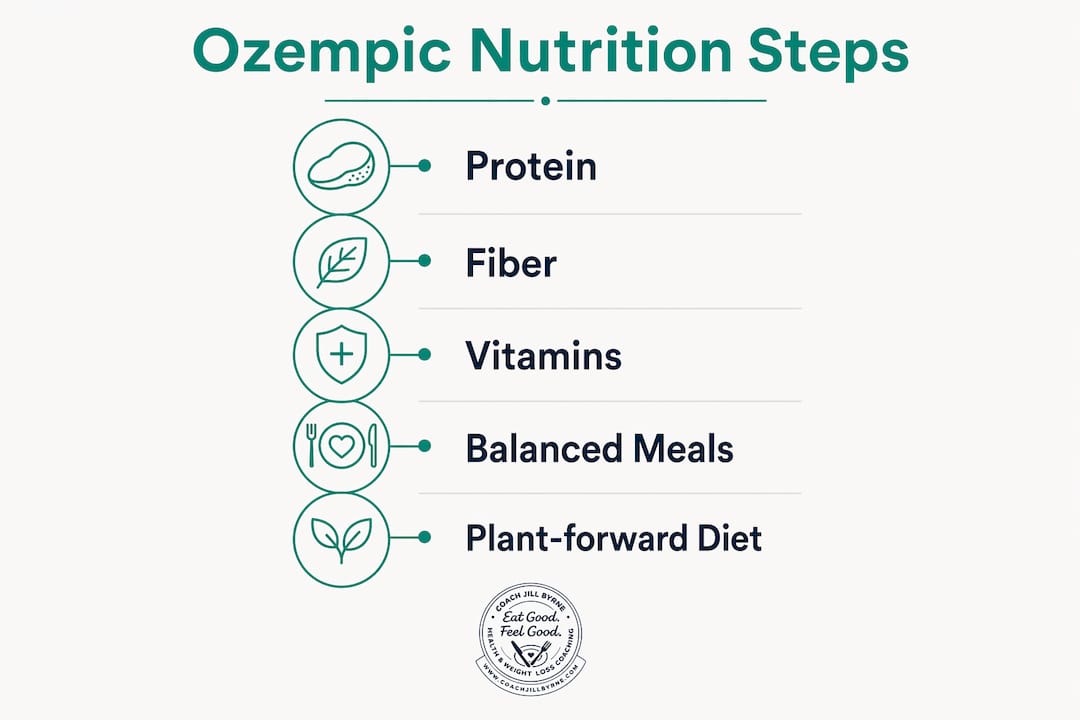
Protein, fiber, vitamins, and minerals are the four pillars of nutrition that Ozempic users most commonly under-consume. Each one serves a specific protective function during medically supported weight loss.
1. Protein: protecting lean muscle mass
Protein is the most critical nutrient to track by grams, not by plate proportion. Clinical guidance recommends 1.2–1.6 g of protein per kilogram of body weight per day. For an 82 kg person, that means 98–131 g of protein daily. Spread across meals, the practical target is 30–35 g of protein per meal, or two smaller meals plus a 20–40 g protein shake. Sources like eggs, Greek yogurt, chicken, fish, legumes, and cottage cheese deliver that protein in compact portions that suit a reduced appetite.
2. Fiber: gut health and blood sugar stability
Fiber from vegetables, legumes, and whole grains directly addresses two of the most common Ozempic side effects: constipation and blood sugar fluctuation. Health authorities recommend at least 5 servings of vegetables and 2 servings of fruit daily for gut health and glucose stability. That is a meaningful target when your appetite is suppressed. Prioritize fiber-dense, low-volume options like spinach, broccoli, lentils, berries, and oats.
3. Vitamins and minerals: energy and bone health
Calcium, iron, and B-vitamins are the micronutrients most at risk when total food intake drops. Calcium protects bone density during weight loss. Iron supports energy and prevents fatigue. B-vitamins, particularly B12, support nerve function and metabolism. Dairy products, leafy greens, lean meats, and fortified whole grains cover these needs without requiring large portions.
4. Hydration: often overlooked
Dehydration risk increases when smaller food and fluid intake combines with slowed digestion. Aim for at least 6–8 glasses of fluid daily from water, herbal tea, coffee, and hydrating foods like cucumber and watermelon. Adequate hydration supports digestion, metabolic control, and energy levels.
Statistic callout: A systematic review of 40 studies conducted between 2015 and 2025 confirms that whole-food dietary patterns outperform restrictive diets for metabolic health and sustainable weight management. The evidence is clear: food quality drives long-term outcomes.
What are the benefits of a plant-forward diet on Ozempic?
A plant-forward, real food dietary pattern does more than fill nutritional gaps. It actively improves the metabolic outcomes that Ozempic is designed to support. The Mediterranean dietary pattern, which centers vegetables, legumes, whole grains, fish, and healthy fats, is the most studied example of this approach.
Research confirms that plant-forward, fiber-rich diets reduce cardiometabolic risk and improve glycemic control more effectively than calorie-restricted diets built on processed foods. That matters because many Ozempic users are managing type 2 diabetes or prediabetes alongside weight loss goals. Real food benefits for diabetes management extend well beyond what medication can achieve alone.
The contrast between real food and ultra-processed food becomes especially clear on Ozempic. Ultra-processed foods are calorie-dense but nutrient-poor. They trigger inflammation, disrupt gut bacteria, and provide little satiety beyond the initial bite. Real foods, by contrast, deliver fiber that feeds beneficial gut bacteria, antioxidants that reduce inflammation, and protein that preserves lean tissue. When your appetite is suppressed and every meal counts, whole food eating principles become the foundation of your results.
Food type | Effect on Ozempic outcomes |
Whole vegetables and legumes | Provides fiber, reduces constipation, stabilizes blood sugar |
Lean proteins (chicken, fish, eggs) | Preserves lean muscle during caloric deficit |
Whole grains (oats, quinoa, brown rice) | Delivers sustained energy and B-vitamins |
Ultra-processed snacks | Nutrient-poor, promotes inflammation, poor satiety |
Fried or high-fat foods | Worsens nausea, slows digestion further |
How do you build balanced meals while on Ozempic?
Building a satisfying, nutrient-dense meal on Ozempic requires a different approach than standard meal planning. Your appetite is smaller, your digestion is slower, and nausea can make certain foods unappealing. The following strategies work with those changes rather than against them.
Lead with protein. Put your protein source on the plate first and eat it before anything else. This protects your muscle mass even if nausea cuts the meal short.
Add fiber-rich vegetables second. Broccoli, spinach, zucchini, and leafy greens add volume, fiber, and micronutrients without overwhelming a reduced appetite.
Choose cold options during nausea. Cold protein shakes, yogurt, and broth reduce nausea side effects compared to hot or fried foods. Chilled Greek yogurt with berries is one of the most practical options.
Eat smaller, more frequent meals. Three small meals with intentional protein targets work better than two large meals that trigger discomfort.
Sip fluids between meals, not during. Drinking large amounts of water during a meal can intensify fullness and reduce your ability to meet protein targets.
Retry after a break. Experienced clinicians manage GLP-1 nausea by encouraging small portions, slow pacing, and retrying meals after short breaks to maintain nutrient goals.
Pro Tip: Prepare protein-rich foods in advance so they are ready when appetite appears. A batch of hard-boiled eggs, pre-portioned Greek yogurt, or a ready-made protein shake removes the barrier of cooking when nausea is present.
What happens if you ignore nutrition while on Ozempic?
Relying solely on appetite suppression without building nutrition skills creates real risks. Weight loss without nutrition education risks muscle loss and rapid weight regain after medication stops. Muscle is metabolically active tissue. Losing it slows your resting metabolism, making future weight management harder.
The risks of neglecting real food habits on Ozempic include:
Muscle loss and metabolic slowdown from inadequate protein intake during caloric restriction.
Nutrient deficiencies in iron, calcium, and B-vitamins that cause fatigue, bone loss, and nerve problems.
Weight regain after stopping medication due to metabolic adaptations and no established eating habits.
Poor food relationship built on avoidance rather than nourishment, which makes long-term success unlikely.
Eating habits beyond medication are what determine whether weight loss lasts. Ozempic creates a window of opportunity. Real food habits are what you build inside that window. The medication is a tool. The nutrition is the foundation.
Key Takeaways
Real food on Ozempic is not optional. It is the nutritional foundation that determines whether your results are lasting or temporary.
Point | Details |
Protein is non-negotiable | Aim for 30–35 g per meal to protect lean muscle during caloric restriction. |
Fiber prevents side effects | At least 5 vegetable servings daily reduces constipation and stabilizes blood sugar. |
Real food fills medication gaps | Whole foods deliver micronutrients that Ozempic’s hormonal effects cannot provide. |
Nausea has practical solutions | Cold, bland, low-volume foods allow continued nutrient intake during difficult days. |
Habits outlast medication | Building real food routines now prevents weight regain if medication stops. |
What I’ve learned from working with GLP-1 clients
The clients who get the best results on Ozempic are not the ones who eat the least. They are the ones who use the reduced appetite as a chance to rebuild their relationship with food. I have seen this pattern consistently. When appetite suppression removes the noise of constant hunger, people finally have the mental space to ask what their body actually needs.
The mistake I see most often is treating Ozempic as a passive solution. People assume the medication does the work and food is secondary. That thinking leads to muscle loss, fatigue, and weight regain the moment the prescription ends. Healthy eating alongside GLP-1 therapy is not a bonus strategy. It is the strategy.
Real food also does something medication cannot. It builds confidence. When you learn to construct a meal that satisfies you in a smaller portion, that skill stays with you. When you discover that chilled salmon and cucumber actually tastes good and keeps nausea at bay, you have added a practical tool to your long-term toolkit. Medication is temporary for most people. Nutrition knowledge is permanent.
— Coach Jill
Personalized nutrition support for Ozempic users
Building the right eating habits while managing medication side effects is specific work. It requires knowing which foods to prioritize, how to structure meals around a reduced appetite, and how to stay consistent when nausea makes eating feel difficult.

Coachjillbyrne provides personalized GLP-1 nutrition coaching designed for exactly this situation. The focus is on practical meal planning, protein targeting, and building sustainable habits that complement your medication. Clients receive structured guidance on what to eat, how much, and when, so that every meal supports their weight loss and metabolic health goals. The coaching is grounded in real food principles and built for long-term success, not short-term restriction.
FAQ
What should I eat on Ozempic to avoid muscle loss?
Prioritize protein at every meal, targeting 30–35 g per sitting. Clinical guidance recommends 1.2–1.6 g of protein per kilogram of body weight daily to protect lean mass during weight loss.
Can real food improve Ozempic results?
Yes. A plant-forward, whole-food diet improves glycemic control and reduces cardiometabolic risk beyond what medication alone achieves. Real food provides fiber, protein, and micronutrients that directly support the outcomes Ozempic targets.
How do I manage nausea while still eating well on Ozempic?
Choose cold, bland, low-volume foods like chilled Greek yogurt, protein shakes, or broth. Wait 15–30 minutes after nausea and retry with a small portion rather than skipping the meal entirely.
How many vegetables should I eat on Ozempic?
Health authorities recommend at least 5 servings of vegetables and 2 servings of fruit daily to support gut health and blood sugar stability while on Ozempic.
What happens to my weight if I stop Ozempic without good eating habits?
Weight regain is the most common outcome. Without established nutrition habits, metabolic adaptations and muscle loss from the medication period make it significantly harder to maintain results after stopping.
Recommended
Comments