
Family Nutrition Coaching: A Parent's Complete Guide

Family nutrition coaching is a professional support service that helps parents and caregivers build sustainable healthy eating habits tailored to their household’s real life. Unlike a generic diet plan, this approach combines personalized nutrition guidance, behavior change strategies, and consistent accountability to create lasting results. Coachjillbyrne defines what is family nutrition coaching as the structured process of working with a trained coach to improve how your family eats, shops, plans meals, and responds to everyday food challenges. The goal is not perfection. It is progress that sticks.
What is family nutrition coaching and what does it include?
Family nutrition coaching is a behavior-based support system that addresses both what families eat and how they think about food. The industry term for this practice is habit-based nutrition coaching, and it applies the same principles used in individual coaching to the more complex dynamics of a household. A coach works with parents and caregivers to assess current eating patterns, identify barriers, and build practical systems that fit real schedules.
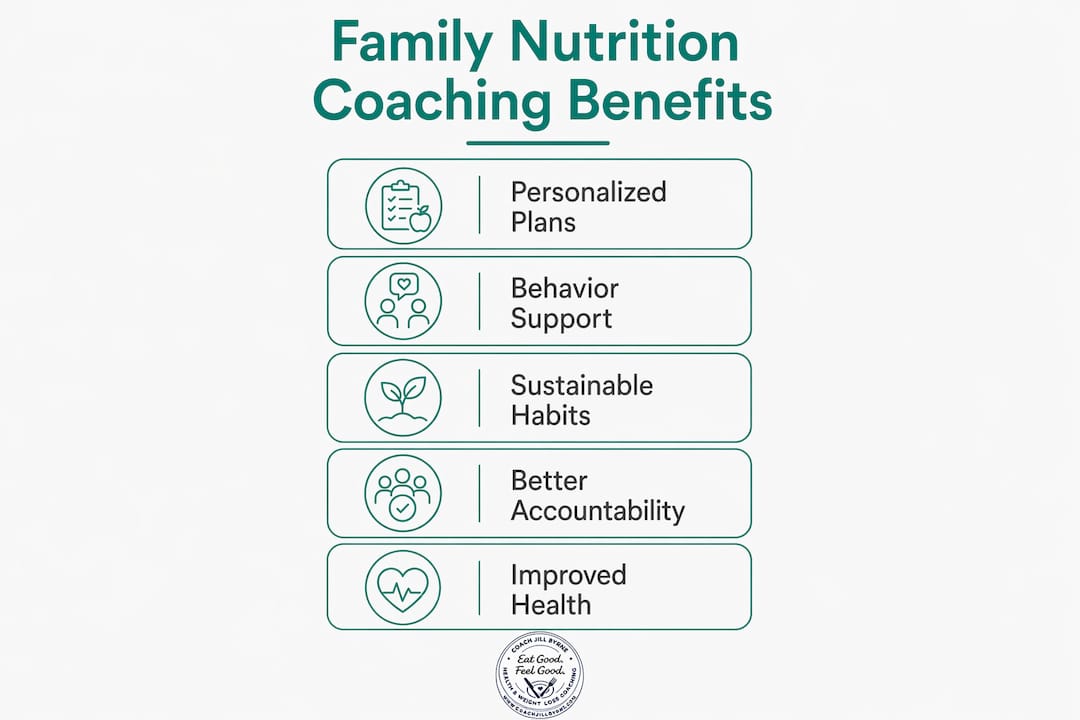
The core components of family nutrition coaching typically include:
Personalized nutrition plans built around your family’s food preferences, schedules, and health goals
Regular coaching check-ins on a weekly or bi-weekly basis to review progress and adjust strategies
Nutrition education covering balanced meals, portion sizes, and age-appropriate nutrient needs for children
Flexible meal planning assistance focused on ingredient prep and adaptable meal assembly rather than rigid daily menus
Behavioral coaching to address habits like emotional eating, picky eating in children, and all-or-nothing thinking patterns
Nutrition coaching combines personalization, accountability, and education for sustainable habit change, unlike generic diet plans or one-size-fits-all approaches. That combination is what separates professional coaching from a downloaded meal plan or a wellness app.
Pro Tip: Ask any prospective coach how they handle off-plan weeks. A coach who focuses on learning from setbacks rather than punishing them will serve your family far better long-term.

How does family nutrition coaching benefit families vs. self-led efforts?
Self-led nutrition efforts fail most families not because of a lack of information, but because of a lack of structure and support. Parents often struggle with conflicting online nutrition advice, and a coach filters that noise while building customized systems that fit busy lives. The result is a clearer path and stronger follow-through.
“Coaching that uses real data for progress adjustments outperforms static diet advice.” The difference is not motivation. It is the feedback loop that keeps families on track when life gets complicated.
The measurable benefits of nutrition coaching for families include:
Better adherence through regular coaching check-ins that create accountability and consistent feedback
Customized adjustments based on real-life progress rather than a fixed plan that ignores your actual week
Greater sustainability because realistic, flexible meal plans reduce burnout and increase long-term follow-through
Shared family goals that strengthen household connection around food and mealtimes
Reduced confusion by replacing conflicting nutrition information with one clear, personalized system
Clients who partner with coaches who align with their lifestyle and personal situations show significantly better behavior change implementation. This is why family nutrition guidance works best when the coach understands your household’s specific rhythms, not just general nutrition science.
What strategies do nutrition coaches use for busy families?
Nutrition coaches who work with families rely on practical, low-friction strategies that fit into chaotic schedules. The goal is never a complete lifestyle overhaul. It is a series of small, sustainable changes that compound over time.
Start with one meal. Most coaches begin by improving breakfast or dinner rather than overhauling all three meals at once. Mastering one meal builds confidence and momentum.
Shift from meal plans to ingredient prep. Rigid meal plans typically fail families because life rarely follows a script. Coaches favor prepping versatile ingredients like roasted vegetables, cooked grains, and proteins that can be assembled into multiple meals throughout the week.
Use adult-led plating for young children. Increasing family meal frequency from none to 1–2 times weekly improves children’s intake of fiber, folate, and vitamins A, C, E, and B6. Coaches teach parents to plate balanced portions for children rather than relying on children to self-regulate.
Reframe setbacks as data. Successful coaching helps families handle real-world barriers like social eating, stress, and schedule conflicts. A coach teaches parents to treat an off-plan meal as a learning moment, not a failure.
Build food literacy over time. The end goal of family health coaching is a household that no longer needs a rigid plan because parents understand nutrition well enough to make confident decisions independently.
Pro Tip: Batch-cook one protein and one grain every Sunday. Those two ingredients alone can form the base of five different weeknight meals and cut daily decision fatigue significantly.
Coachjillbyrne applies this exact approach with clients, focusing on home cooking habits that align with family nutrition goals rather than asking families to follow unrealistic plans. The emphasis is always on building consistent routines that survive real life.
How does family nutrition coaching differ from dietitians and self-help plans?
Family nutrition coaching occupies a specific space between clinical dietitian services and self-directed approaches. Understanding the difference helps parents choose the right level of support for their household.
Support Type | Primary Focus | Accountability | Customization | Best For |
Nutrition coach | Behavior change and habit formation | High, ongoing check-ins | High, lifestyle-based | Healthy families building better habits |
Registered dietitian | Medical nutrition therapy and clinical advice | Moderate, appointment-based | Moderate, condition-based | Families managing medical conditions |
Self-help plan | Information delivery | None | Low, generic | Motivated individuals with clear goals |
Nutrition coaching is not a strict, judgmental diet plan. It is a progressive support process focused on achievable progress, not perfection. That mindset supports long-term dietary adherence and mental wellness in ways that a one-time dietitian visit or a downloaded meal plan cannot replicate.
Registered dietitians hold clinical credentials and provide medical nutrition therapy for conditions like diabetes, celiac disease, or eating disorders. A nutrition coach focuses on the behavioral and lifestyle side of eating. The two roles complement each other. For families without a specific medical diagnosis, a coach is often the more practical and accessible first step.
Parents benefit most from coaching systems that incorporate realistic, flexible approaches instead of chasing perfect diet formulas. Self-help plans lack the ongoing accountability and real-time adjustment that make coaching effective. A PDF meal plan cannot tell you what to do when your child refuses dinner or your schedule collapses on a Wednesday.
Key Takeaways
Family nutrition coaching delivers lasting results because it combines personalized meal planning, behavioral support, and consistent accountability into one structured system built for real family life.
Point | Details |
Coaching beats self-led plans | Regular check-ins and real-data adjustments produce better outcomes than static diet advice. |
Flexible prep beats rigid menus | Ingredient-based meal assembly adapts to busy schedules and reduces burnout. |
Behavior change is the core skill | Coaches address all-or-nothing thinking and teach families to recover from setbacks without losing progress. |
Coaching differs from dietitian care | Coaches focus on habits and lifestyle; dietitians address clinical and medical nutrition needs. |
Family meals improve child nutrition | Eating together 1–2 times weekly measurably improves children’s intake of key vitamins and fiber. |
Why I believe family nutrition coaching changes everything for busy parents
I have worked with enough parents to know that the problem is almost never knowledge. Most parents already know vegetables are better than chips. What they lack is a system that works when the week falls apart, when a child refuses dinner, or when stress sends everyone to the drive-through.
Behavior-change frameworks are more critical than raw nutrition information. Coaches address all-or-nothing thinking and routine disruptions in ways that a book or a blog post simply cannot. That is the gap I focus on with every family I work with.
What I have found is that parents do not need more recipes. They need permission to be imperfect and a clear plan for what to do next. The families who see the most progress are not the ones who follow a plan perfectly. They are the ones who learn to build a healthy food culture at home, one small habit at a time.
Coaching is not a luxury. For a busy parent trying to feed a family well without burning out, it is the most practical investment you can make in your household’s long-term health.
— Coach Jill
Ready to put family nutrition guidance into practice?
Coachjillbyrne offers personalized nutrition coaching programs designed specifically for parents and caregivers who want real results without restrictive dieting or unrealistic plans. The programs focus on meal planning, portion control, and habit-based accountability that fits into your actual schedule.

Whether you are starting from scratch or trying to fix what has not worked before, Coachjillbyrne provides the structured support and real food nutrition guidance your family needs. Scheduling a consultation is the first step toward building eating habits your household can maintain for years. Visit Coachjillbyrne to learn more about available programs and find the right fit for your family.
FAQ
What is family nutrition coaching in simple terms?
Family nutrition coaching is a structured support service where a trained coach helps parents and caregivers improve their household’s eating habits through personalized plans, regular check-ins, and behavior-based guidance.
How does family nutrition coaching differ from seeing a dietitian?
A nutrition coach focuses on habit formation, meal planning, and behavioral accountability, while a registered dietitian provides clinical nutrition therapy for specific medical conditions. Both roles are valuable but serve different needs.
How long does it take to see results from nutrition coaching for families?
Results vary by household, but families who commit to regular coaching check-ins and incremental habit changes typically notice measurable improvements in eating patterns and energy levels within the first few weeks.
What should parents expect from their first nutrition coaching session?
The first session typically covers a full assessment of current eating habits, family schedules, food preferences, and specific goals, followed by an initial plan focused on one or two manageable changes.
Can nutrition coaching help with picky eaters?
Yes. Coaches use adult-led plating strategies and gradual food exposure techniques to help parents introduce new foods to children without conflict, building a broader and more balanced diet over time.
Recommended
Comments