
How to Balance Macronutrients with Real Food Sources

Balancing macronutrients means consuming the right proportions of carbohydrates, proteins, and fats from whole, nutrient-rich foods to support energy, health, and weight management. This approach, formally called macronutrient distribution, gives you a practical framework for building meals that actually sustain you. The Acceptable Macronutrient Distribution Ranges (AMDR), established by the Institute of Medicine, define the evidence-based targets most nutrition professionals use. When you learn to balance macronutrients with real food sources, you stop relying on processed products and start eating in a way your body recognizes and uses efficiently.
What are the ideal macronutrient ratios for balanced meals?
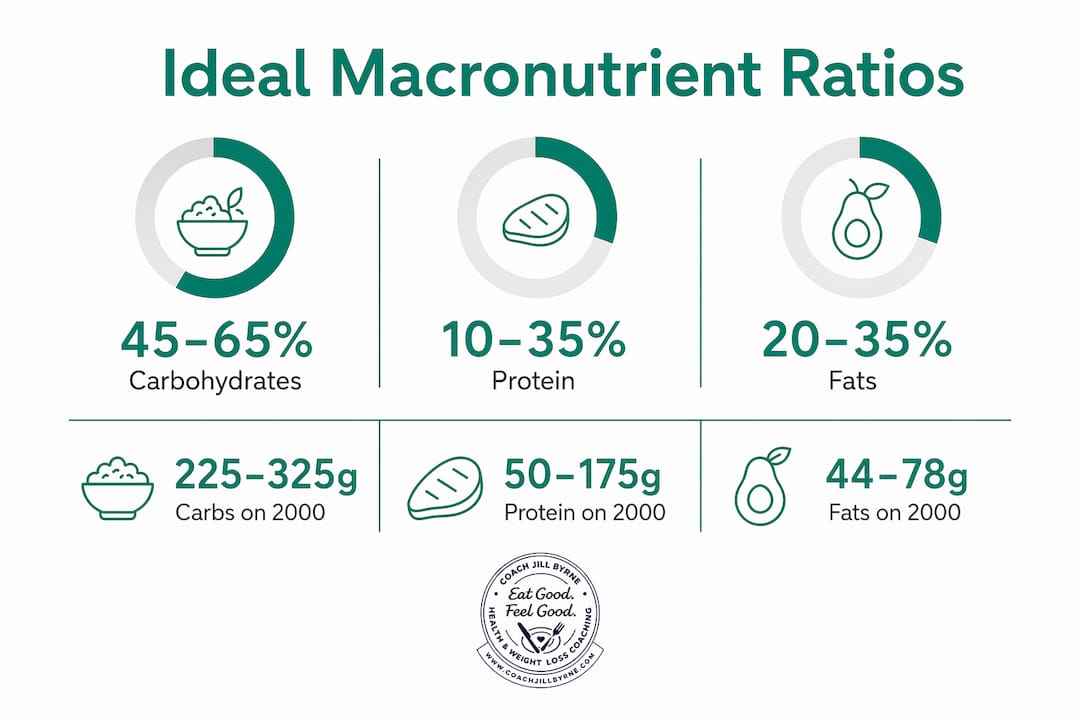
The AMDR recommends that healthy adults get 45–65% of calories from carbohydrates, 10–35% from protein, and 20–35% from fat. These ranges are intentionally wide because individual needs vary based on activity level, age, and health goals. A person focused on weight loss may shift toward higher protein and lower carbohydrates within these ranges. Someone training for endurance events may push carbohydrates toward the upper end.
For a 2,000-calorie diet, the AMDR translates to roughly 225–325g of carbohydrates, 50–175g of protein, and 44–78g of fat per day. That spread gives you real flexibility. You are not locked into one rigid number. The goal is to find a distribution that fits your lifestyle and keeps you consistent over time.
Macronutrient | AMDR Range | Grams on 2,000 Calories |
Carbohydrates | 45–65% | 225–325g |
Protein | 10–35% | 50–175g |
Fat | 20–35% | 44–78g |
Adjusting your ratio based on your goal is not guesswork. A higher protein intake supports muscle retention during weight loss. A moderate fat intake supports hormone production and vitamin absorption. Carbohydrates fuel the brain and working muscles. Getting the balance right means all three systems work together rather than competing.
Pro Tip: Start with a moderate split of 40% carbohydrates, 30% protein, and 30% fat. Track how you feel for two weeks, then adjust based on energy levels and hunger patterns.
Which real foods best supply carbohydrates, proteins, and fats?
Real food sources deliver macronutrients alongside vitamins, minerals, and fiber that processed alternatives strip away. Choosing whole food nutrient sources is the single most effective way to meet your macro targets while also covering your micronutrient needs.

Quality carbohydrate sources
Complex carbohydrates from whole grains, legumes, and vegetables break down slowly, supporting steady energy and satiety. Refined carbohydrates spike blood sugar and leave you hungry within hours. The difference matters for both energy management and long-term weight control.
Strong carbohydrate choices include:
Whole grains: oats, brown rice, quinoa, farro, and whole wheat bread
Legumes: black beans, lentils, chickpeas, and edamame
Vegetables: sweet potatoes, beets, butternut squash, and corn
Fruits: berries, apples, bananas, and oranges
Leafy greens like spinach, kale, and arugula are rich in vitamins A, C, and K1, plus folate and minerals. Legumes add fiber, folate, iron, potassium, and plant protein in one package. These foods do double duty as both carbohydrate and micronutrient sources.
High-quality protein sources
Animal proteins such as meat, fish, eggs, and dairy provide complete amino acid profiles along with B12, heme iron, zinc, choline, and vitamin D. These nutrients are difficult to obtain in sufficient amounts from plants alone. Anchoring meals on animal protein simplifies meeting both macro and micronutrient targets at once.
Strong protein choices include:
Animal-based: eggs, chicken breast, salmon, tuna, Greek yogurt, cottage cheese, and beef
Plant-based: lentils, black beans, tofu, tempeh, edamame, and hemp seeds
Plant proteins are valuable, but they require more planning. Combining different plant sources across the day covers the full amino acid spectrum. For plant-based eaters, pairing iron-rich legumes with vitamin C-rich foods like bell peppers or citrus improves iron absorption significantly.
Healthy fat sources
Dietary fat from olive oil, avocado, nuts, seeds, and fatty fish provides essential fatty acids and fat-soluble vitamins A, D, E, and K. Unsaturated fats support cardiovascular health and enhance the absorption of fat-soluble nutrients from vegetables. Replacing saturated fats with unsaturated sources is one of the most well-supported dietary changes for long-term health.
Strong fat choices include:
Oils: extra-virgin olive oil and avocado oil
Whole foods: avocado, walnuts, almonds, chia seeds, and flaxseeds
Fatty fish: salmon, mackerel, sardines, and trout
How to build balanced meals using real foods
Constructing a balanced meal is straightforward when you follow a consistent framework. The goal is to combine all three macronutrients in each meal so your body gets sustained energy, adequate protein for repair, and fat for absorption and satiety. Coachjillbyrne recommends building every meal around a practical nutrition plan that starts with protein and builds outward.
Start with a quality protein source. Choose 4–6 ounces of chicken, fish, eggs, or a plant-based equivalent. Protein anchors the meal and covers the most critical micronutrient needs.
Add fiber-rich carbohydrates. Fill half your plate with non-starchy vegetables like broccoli, spinach, or zucchini. Add a portion of whole grains or legumes for sustained energy.
Include a healthy fat. Drizzle olive oil over vegetables, add a quarter of an avocado, or include a small handful of nuts. Fat supports vitamin absorption from the vegetables on your plate.
Distribute protein across meals. Spreading protein intake across 3–4 meals with 30–40 grams each maximizes muscle synthesis better than one large protein meal. This means breakfast, lunch, and dinner each need a protein anchor.
Avoid common planning mistakes. Skipping fat to cut calories reduces vitamin absorption. Eating most carbohydrates at one meal spikes blood sugar. Concentrating all protein at dinner wastes its anabolic potential.
Pro Tip: Prep your protein sources in bulk on Sunday. Having cooked chicken, hard-boiled eggs, or lentils ready in the fridge removes the biggest barrier to balanced eating on busy weekdays.
A simple way to check your plate: one quarter protein, one quarter whole grain or starchy vegetable, and one half non-starchy vegetables with a thumb-sized portion of healthy fat. This visual check works without any app or food scale.
What are the best strategies for tracking and maintaining macro balance?
Tracking macronutrients in real foods is easier than most people expect. Nutrition apps like Cronometer and MyFitnessPal have extensive databases that include fresh whole foods, not just packaged products. You can log a piece of salmon or a cup of lentils and get an accurate macro breakdown in seconds. The goal is not perfection. It is consistency over time.
Practical strategies that work:
Use a food scale for the first two weeks. Eyeballing portions is notoriously inaccurate. Two weeks of weighing food builds a reliable mental reference you can use without the scale afterward.
Read nutrition labels on packaged whole foods. Canned beans, Greek yogurt, and whole grain bread all carry labels. Use them.
Adjust ratios based on activity. On high-activity days, shift carbohydrates upward. On rest days, increase protein slightly and reduce carbohydrates. Fat stays relatively stable across both.
Meal prep reduces tracking fatigue. Cooking in batches means you log once and eat the same meal multiple times. This cuts the mental load of tracking significantly.
Handle social eating with a protein-first strategy. At restaurants, identify the protein source on the menu first, then build the rest of the meal around it. This keeps your macro balance intact without requiring you to calculate every item.
Variety is not the enemy of consistency. Rotating between different whole food eating principles keeps meals interesting while maintaining the same macro framework. Swap salmon for sardines, brown rice for quinoa, or spinach for kale. The macros stay similar. The meals stay fresh.
One underrated strategy is grocery shopping with a macro-aware list. Stock proteins, complex carbohydrates, and healthy fats in roughly equal priority. If your cart is heavy on carbohydrates and light on protein, your meals will reflect that imbalance before you even start cooking.
Key Takeaways
Balancing macronutrients with real food sources requires anchoring meals on quality protein, adding fiber-rich carbohydrates, and including healthy fats to support absorption and sustained energy.
Point | Details |
Use AMDR ranges as your guide | Target 45–65% carbs, 10–35% protein, and 20–35% fat based on your goals. |
Choose whole food sources | Real foods deliver macronutrients plus vitamins, minerals, and fiber that processed foods lack. |
Anchor every meal on protein | Start with 4–6 oz of quality protein to cover micronutrient needs and control hunger. |
Spread protein across meals | Eating 30–40g of protein at 3–4 meals maximizes muscle synthesis better than one large serving. |
Track with apps and adjust | Use tools like Cronometer or MyFitnessPal to estimate macros and adjust ratios based on activity. |
What I have learned from building meals around real food macros
Working with clients over the years, I have seen one pattern repeat itself: people who focus on food quality first get their macro balance right almost automatically. When you fill your plate with eggs, salmon, lentils, leafy greens, and olive oil, you are not far from the AMDR targets without counting a single gram. The math follows the food choices.
The mistake I see most often is treating macronutrient tracking as the goal rather than the tool. Tracking is useful for building awareness. It is not meant to be a permanent, rigid practice. Once you understand what a balanced plate looks like using real food best practices, you can maintain that balance by feel most of the time.
I also want to push back on the idea that you need a perfect ratio. The AMDR ranges are wide for a reason. A 45% carbohydrate day and a 60% carbohydrate day are both within guidelines. What matters more is that your carbohydrates come from whole grains and vegetables rather than refined flour and sugar. Quality drives outcomes more than precision.
The clients who sustain results long-term are the ones who make real food eating enjoyable, not punishing. Rotate your proteins. Try new vegetables. Experiment with different healthy fats. Sustainable eating habits are built on variety and satisfaction, not restriction.
— Coach Jill
Personalized support for whole-food macro balance
Knowing the principles is one thing. Applying them consistently to your own life, schedule, and food preferences is where most people need support.

Coachjillbyrne’s nutrition coaching philosophy is built around real food eating, practical meal planning, and accountability that fits your actual life. The focus is not on rigid tracking or eliminating food groups. It is on building consistent habits around nutrient-dense whole foods that support your weight and energy goals over the long term. If you are ready to put these macronutrient principles into practice with personalized guidance, Coachjillbyrne provides the structured support to make that happen.
FAQ
What does it mean to balance macronutrients?
Balancing macronutrients means consuming carbohydrates, proteins, and fats in proportions that support your energy needs and health goals. The AMDR recommends 45–65% carbohydrates, 10–35% protein, and 20–35% fat for healthy adults.
Which real foods are highest in protein?
Eggs, chicken, salmon, Greek yogurt, cottage cheese, lentils, and tofu are among the best real food protein sources. Animal proteins provide complete amino acid profiles along with critical micronutrients like B12 and zinc.
How do I adjust my macronutrient ratio for weight loss?
Shift toward the higher end of the protein range (25–35%) and the lower end of carbohydrates (45–50%) to support satiety and muscle retention during weight loss. Keep fat intake within the 20–35% range to maintain hormone function and vitamin absorption.
Do I need to track macros every day?
Daily tracking is most useful during the first few weeks to build awareness of portion sizes and food composition. Once you recognize what balanced meals look like, most people maintain their macro balance without daily logging.
Can I balance macronutrients on a plant-based diet?
Yes, but it requires more planning. Combine varied plant proteins across meals to cover all essential amino acids, and pair iron-rich legumes with vitamin C-rich foods to improve mineral absorption.
Recommended
Comments