
Low-Calorie, High-Volume Foods with 20–30g Protein per Meal
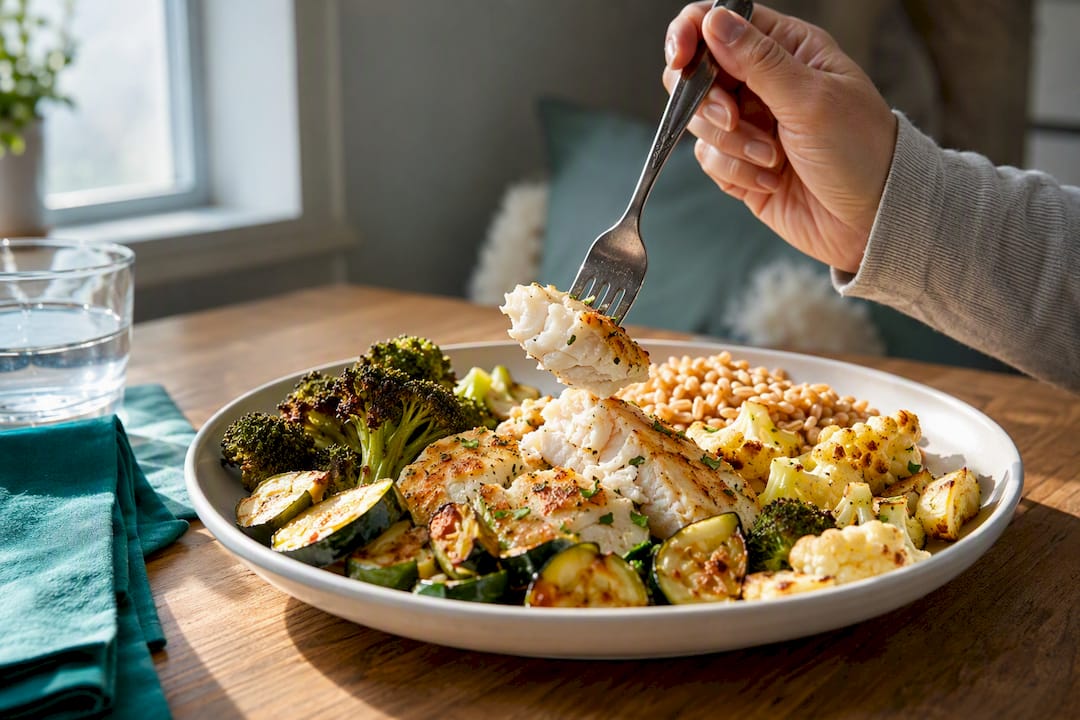
Yes, foods high in water and fiber let you eat large portions for relatively few calories, and that combination is what drives real fullness on a reduced-calorie plan. The rule that matters most: pair those foods with a lean protein and a measured serving of healthy fat every time. Skip that pairing and even the biggest bowl of vegetables leaves you hunting for a snack an hour later.
TL;DR:
Most low-calorie, high-volume foods are nonstarchy vegetables and water-rich fruits, offering large portions with minimal calories—some contain as few as 15 calories per cup.
Pairing these foods with a measured serving of healthy fat and lean protein enhances satiety and prevents hunger shortly after meals.
Gradually increasing fiber intake and preparing vegetables in advance helps avoid digestive discomfort and makes volume eating easier to sustain.
Incorporating broth-based soups, konjac noodles, or popcorn as starters or snacks can significantly boost stomach fullness without adding many calories.
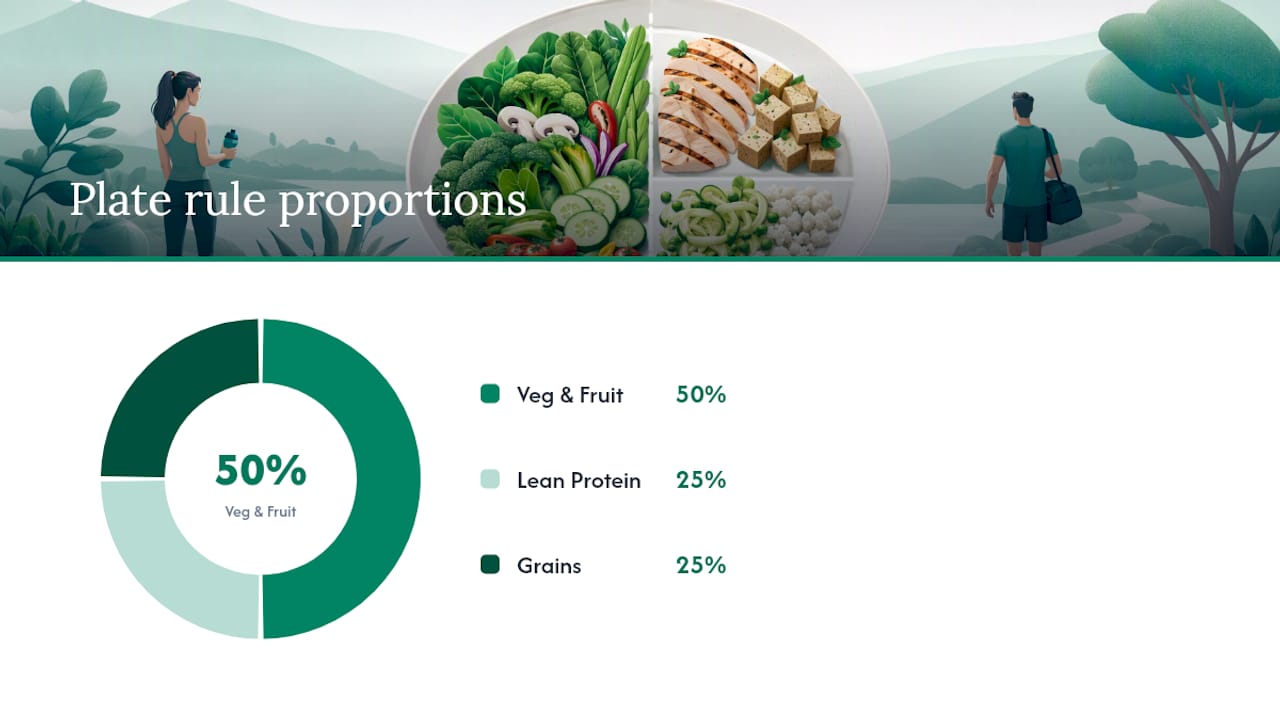
Building meals with half vegetables or fruits, a quarter lean protein, and a quarter grains or starchy vegetables follows the plate rule and promotes lasting fullness.
Table of Contents
What “High-Volume, Low-Calorie Foods” Actually Means
Energy density is the concept behind this entire approach. It’s simply the number of calories packed into a gram of food, and water and fiber are the two ingredients that push that number down without shrinking your plate. A food that’s mostly water, like cucumber or watermelon, delivers a full serving for a small calorie cost. Fiber adds bulk that slows gastric emptying and triggers stomach stretch receptors that signal your brain you’ve eaten enough, according to Cleveland Clinic’s overview of volume eating.
The FDA’s own labeling standard classifies a food as “low-calorie” when it contains 40 calories or less per serving, a useful benchmark when you’re scanning a nutrition label. A few real numbers make the point clearer:
Raw mushrooms: about 15 calories per cup
Chopped zucchini: about 21 calories per cup
Air-popped popcorn: approximately 30 calories per cup
Quick stat: a cup of mushrooms costs you 15 calories. A cup of potato chips costs roughly 150. Same “cup,” ten times the energy density.
Best Low-Calorie Filling Foods, Grouped by Category
This is the working list. Keep it on your fridge if you need to.
Nonstarchy vegetables are the foundation of any high-volume diet, and they’re where the calorie math works hardest in your favor. Broccoli runs about 31 calories per cup raw, zucchini sits around 21, and mushrooms come in at just 15, according to EatingWell’s breakdown of top volume foods. Cauliflower, spinach, bell peppers, and cabbage all land in a similarly low calorie range. Roast them, grill them, or toss them raw into a salad. The prep barely changes the calorie count, but it dramatically changes whether you’ll actually eat them.
Water-rich fruits solve the sweet-craving problem without wrecking your calorie budget. Watermelon is mostly water and comes in at a moderate calorie level per cup. Berries, oranges, and grapefruit all offer a lot of chewing and swallowing for a small calorie hit, plus fiber that vegetables alone don’t always match in the same bite.
Lean proteins keep the whole approach from collapsing into a salad-only diet that leaves you hungry by 3 p.m. Egg whites run about 17 calories each with 3.6 grams of protein. Cod and tilapia both average around 90 to 100 calories per 4-ounce serving with over 20 grams of protein. Low-fat Greek yogurt delivers 100 to 130 calories per cup alongside 15 to 20 grams of protein, making it one of the most efficient volume-and-protein combinations available.
Legumes and whole grains add fiber and staying power, but they need portion attention because they’re denser than nonstarchy vegetables. Cooked lentils and cooked quinoa contain over 100 calories per 100 grams, per Harvard Health’s nutrient-density guidance. Edamame and oatmeal fall in a similar calorie range. These aren’t foods to eat without measuring, but they’re far more filling per calorie than refined grains.
Broth-based soups, konjac noodles, and popcorn round out the high-volume toolkit as meal starters or snack swaps. A cup of vegetable or chicken broth soup often runs under 100 calories while taking up significant stomach space before the main course arrives. Konjac (shirataki) noodles are nearly calorie-free and work as a pasta substitute when you skip heavy, oily sauces. Air-popped popcorn, at approximately 30 calories per cup, beats most packaged snacks by a wide margin as long as you skip the butter.
Food category | Example | Approx. calories | Serving |
Nonstarchy vegetable | Mushrooms, raw | 15 | 1 cup |
Nonstarchy vegetable | Broccoli, raw | 31 | 1 cup |
Water-rich fruit | Watermelon | moderate calories | 1 cup |
Lean protein | Egg white | 17 | 1 egg white |
Lean protein | Cod, cooked | around 90 to 100 | 4 oz |
Legume | Lentils, cooked | over 100 | 100 g |
Whole grain | Quinoa, cooked | over 100 | 100 g |
Snack | Air-popped popcorn | 30–31 | 1 cup |
Pro Tip: Keep a bag of pre-washed, pre-chopped vegetables at eye level in your fridge. The single biggest reason people skip volume foods isn’t taste, it’s the ten minutes of prep standing between them and a snack.
How to Build a Filling Meal Around Volume Foods
The plate rule is the simplest way to put this into practice without weighing every ingredient. Fill half your plate with nonstarchy vegetables or water-rich fruit, a quarter with lean protein, and the last quarter with a grain or starchy vegetable. This proportion works because it stacks fiber and water against a real protein source, which Cleveland Clinic’s coaching guidance points to as one of the more reliable satiety combinations.
Aim for 20 to 30 grams of protein per meal. That’s roughly a palm-sized chicken breast, a cup of Greek yogurt, or four egg whites plus one whole egg. Fat still matters here. Measure it rather than eyeballing it: one tablespoon of olive oil, a quarter of an avocado, or one ounce of almonds are the standard reference points.
Two examples you can copy tonight:
Breakfast bowl: two eggs plus two egg whites scrambled, one cup of sautéed spinach and mushrooms, a quarter avocado, and a slice of whole grain toast.
Dinner stir-fry: four ounces of chicken breast or tofu, two cups of mixed peppers, broccoli, and zucchini, half a cup of cooked quinoa, and one tablespoon of sesame oil for cooking.
Both meals lean heavily on volume vegetables, hit a real protein target, and use a measured fat instead of an unmeasured one. That’s the entire formula.
Small Habits That Make Volume Eating Stick
Starting a meal with a broth-based soup or a large salad is one of the easiest levers you have, since front-loading water and fiber before the calorie-dense part of the meal arrives tends to reduce total intake, a pattern echoed in research on strategies that boost perceived fullness.
Batch-cook vegetables on Sunday so weekday meals take five minutes, not thirty.
Pre-chop produce the moment you get home from the store.
Sip sparkling water with meals; the carbonation adds a fullness cue some people respond to strongly.
Eat slowly. Fifteen to twenty minutes per meal gives your stomach’s stretch signals time to catch up to your fork.
Pair a high-protein snack with a volume base, like cottage cheese and cucumber, to prevent the mid-afternoon energy crash that leads to overeating at dinner.
Pro Tip: If you tend to eat fast when stressed, put your fork down between bites for one meal a day. It sounds small, but it’s one of the more effective ways to let fullness signals actually register before you’re already full.
Where Volume Eating Goes Wrong
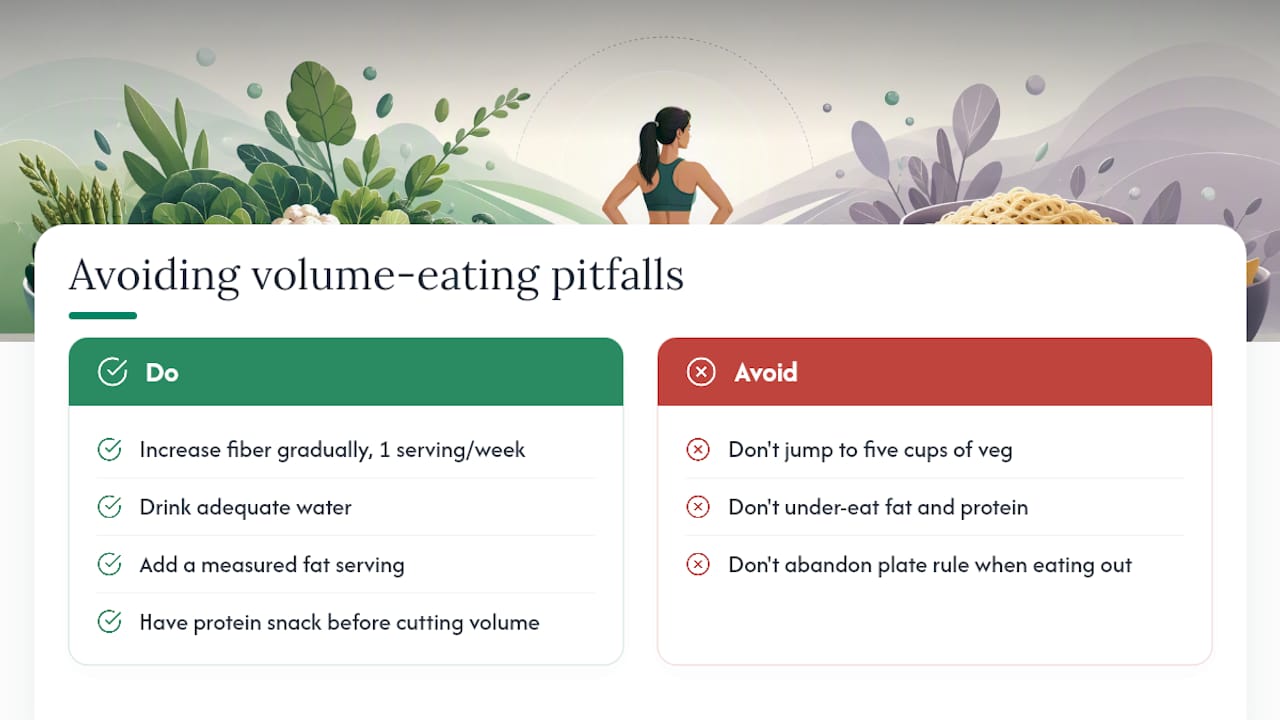
Fiber is the most common place people overcorrect. Jumping from a low-fiber diet straight to five cups of vegetables a day can cause bloating, gas, and cramping, since a PMC review on dietary fiber links abrupt fiber increases to GI symptoms that gradual increases with adequate water intake largely avoid. Add one extra serving of vegetables every one to two weeks rather than overhauling your plate overnight.
The second failure point is under-eating calories or protein because vegetables feel like “free food.” If you’re constantly cold, tired, or losing hair, you’re probably shortchanging your fat and protein intake, not your vegetables. Add a measured fat serving and a protein-rich snack before cutting volume foods further.
Eating out is where the plan tends to break down socially. Order a side salad or broth soup before your entrée, ask for dressing on the side, and don’t treat a restaurant meal as a reason to abandon the plate rule entirely.
See a healthcare provider if bloating persists beyond a few weeks of gradual fiber increases, or if weight loss happens faster than one to two pounds per week without explanation.
How Coach Jill Applies Volume Eating With Real Clients
Volume eating works best as a framework, not a rulebook clients follow alone. In coaching sessions, Coach Jill layers high-volume vegetables and fruit onto a foundation of lean protein and a measured fat serving, using the same plate rule and 20 to 30 gram protein target outlined above, then adjusts portions to each client’s activity level and food preferences.
Fiber increases happen gradually and get tracked against how a client actually feels day to day, not just the scale. Clients working through GLP-1 medication support often need smaller, more frequent volume-based meals rather than three large ones, since appetite suppression changes how much food feels comfortable at once.
Credentials, certifications, and client outcome data are available on request through coaching programs.
A Practical Note on Why This Approach Works, and When It’s Not Enough
Volume eating reduces hunger. It doesn’t fix inconsistent habits, emotional eating patterns, or the Tuesday nights when takeout wins regardless of how much broccoli is in the fridge. The food list in this guide gets you most of the way there, but the plate rule only works if you actually build the plate, week after week, when you’re tired and not particularly motivated.
That’s the gap between reading a food list and changing what’s on your table. Coaching exists for the readers who know the rules, have tried them alone, and still find themselves back at square one by the third week. If that’s you, a structured, accountable plan tends to outperform willpower every time.
— Coach Jill
Ready to Turn This List Into a Real Meal Plan?
Reading a food list is one thing. Building a week of meals around it, on a real schedule, with real cravings and a real fridge, is another. Coaching programs can take the plate rule and protein targets from this article and turn them into a plan built around your actual routine, whether managing GLP-1 nutrition needs or seeking sustainable eating habits.

A first consultation focuses on goal-setting and a review of your current eating patterns, followed by sample meal builds using the same volume-and-protein pairing covered here. From there, coaching includes ongoing meal planning support, macronutrient balancing, and accountability check-ins so the habits actually hold past week two. If you’re ready for a plan built around your kitchen instead of a generic list, book a discovery call with Coach Jill to get started.
Sources
The claims in this guide draw on Harvard Health’s guidance on nutrient-dense, low-calorie foods, Cleveland Clinic’s explanation of volume eating, and EatingWell’s calorie data on high-volume foods. For fiber-related side effects and safe progression, the PMC review on dietary fiber offers a useful deeper dive, and readers looking for holiday or travel-specific meal ideas can check Wild Foodz’s tips for eating healthy while traveling.
This article is general information, not a substitute for advice from a qualified doctor. Consult a qualified healthcare professional about your own circumstances before acting on anything here.
FAQ
What Is the Lowest-Calorie, Highest-Volume Food?
Raw mushrooms are among the lowest, at about 15 calories per cup, with cucumber, celery, and lettuce landing in a similarly low range while still filling a large portion of your plate.
What Foods Are Very Filling but Low in Calories?
Nonstarchy vegetables like broccoli and zucchini, water-rich fruits like watermelon and berries, broth-based soups, and lean proteins like egg whites and white fish all deliver high fullness for relatively few calories.
How Do You Feel Full on 1,200 Calories a Day?
Build most meals around high-volume vegetables and fruit, keep 20 to 30 grams of protein at each meal, and include a small measured fat serving. This combination stretches meal size without a matching calorie increase, though a personalized coaching plan can help you find a sustainable, adequately-nourished version of a lower-calorie target.
How Do You Get 3,000 Calories in a Day Without Losing the Volume-Eating Benefit?
Add calorie-dense but nutrient-rich additions, like nuts, olive oil, avocado, and larger portions of whole grains and legumes, on top of your usual volume vegetables and lean protein rather than replacing them.
Recommended
Comments