
Why Cooking Together Improves Habits and Relationships
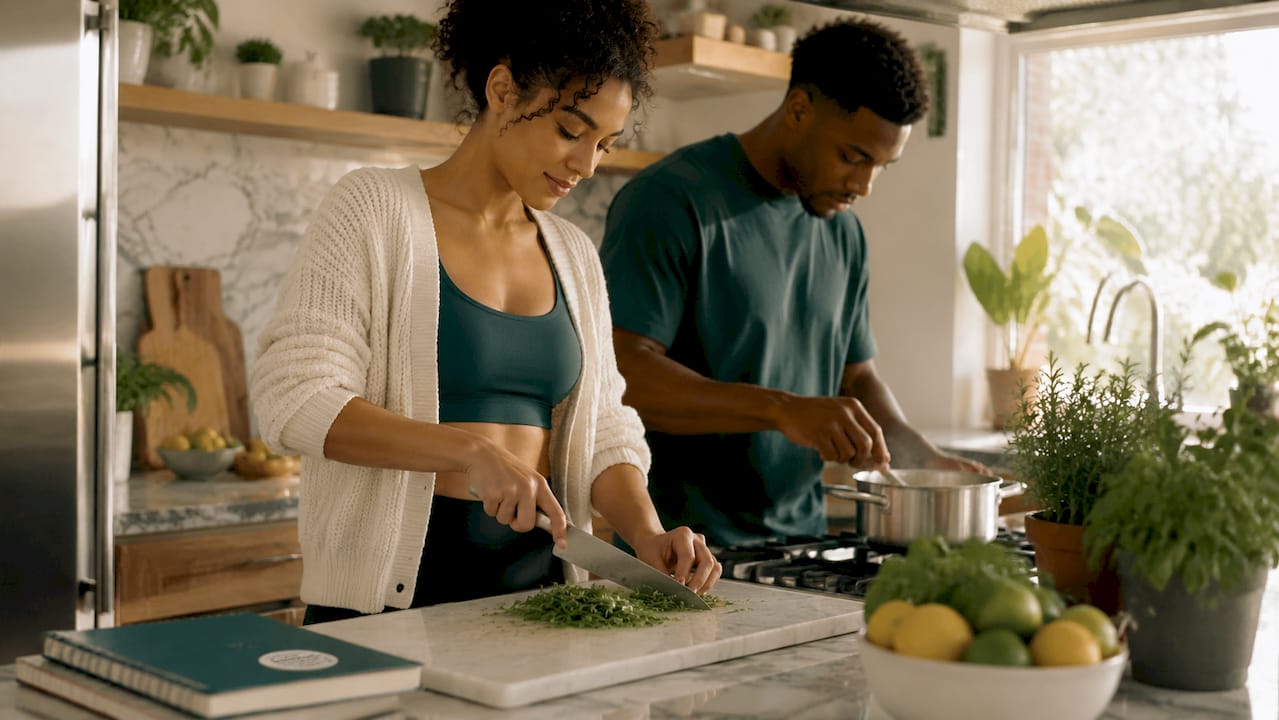
Cooking together is defined as a shared practice that simultaneously builds healthier eating habits and strengthens emotional bonds between partners and individuals. Research confirms that shared meals boost well-being at a level comparable to income or employment status. That finding alone reframes cooking from a daily chore into one of the most practical wellness tools available. Understanding why cooking together improves habits means looking at both the nutritional evidence and the psychological science behind collaborative meal preparation.
Why cooking together improves habits: the nutritional case
Collaborative cooking produces measurably better food choices. Regular family meals contain more fruits, vegetables, calcium, and fiber than takeout or restaurant meals. That nutritional gap is not accidental. When you prepare food yourself, you control ingredients, portions, and cooking methods in ways that pre-made meals never allow.
Johns Hopkins clinical dietitian Jaclyn Rose confirms that cooking at home models balanced eating and teaches portion control more effectively than eating out. This is the core mechanism behind the benefits of cooking together. You see exactly how much oil goes into a dish. You choose whole grains over refined ones. You build nutritional awareness through repetition, not willpower.
Involving others in meal prep amplifies this effect. Research shows that children involved in food prep are more willing to try fruits and vegetables. The same principle applies to adults. When you participate in building a meal, you feel invested in eating it. That investment translates into more consistent, nutritious choices over time.
Key nutritional benefits of cooking together include:
Better portion awareness: Measuring and assembling ingredients builds an intuitive sense of appropriate serving sizes.
Higher vegetable intake: Home-cooked meals naturally include more produce than restaurant alternatives.
Reduced processed food consumption: Cooking from scratch replaces packaged, high-sodium convenience foods.
Shared accountability: A partner or family member reinforces healthy choices without requiring formal tracking.
Pro Tip: Assign one person to proteins and another to vegetables each session. This task division keeps prep efficient and ensures both food groups get equal attention.
What psychological benefits does cooking together offer?
Cooking together and healthy habits are linked not just through nutrition but through measurable psychological effects. The order and predictability of cooking reduce stress by providing grounding through measuring, timing, and sequencing. These are not abstract benefits. Chopping vegetables at a steady rhythm, waiting for water to boil, and following a recipe step by step all activate a calm, focused mental state.
Psychologists describe this as behavioral activation. You are doing something concrete and productive, which interrupts anxious thought patterns. Cooking together adds a social layer to that grounding effect. Two people working through a shared task build trust and a sense of competence together.
The side-by-side nature of kitchen work also removes a common barrier to honest conversation. Cooking side-by-side reduces the pressure of direct eye contact, making it easier to navigate sensitive topics naturally. Couples often report that their best conversations happen in the kitchen, not at the dinner table.
“Cooking together creates a low-pressure environment where connection happens naturally. The focus on the task takes the weight off the conversation.”
Additional psychological benefits include:
Reduced social anxiety: Shared tasks give both people a role, reducing the discomfort of unstructured social time.
Increased sense of belonging: Preparing and sharing food is one of the most universal expressions of care and community.
Improved mood: Completing a creative task together releases a sense of accomplishment that carries into the meal itself.
Stronger communication patterns: Regular shared cooking builds a rhythm of collaboration that extends beyond the kitchen.
Common misconceptions about cooking together
The most persistent myth about cooking together is that it takes more time than cooking alone. Research from a 5-week cooking and nutrition program found that task-sharing and prep coordination actually reduce individual effort over time. Participants reported that cooking felt less stressful and more manageable after building shared routines. The initial learning curve is real, but it flattens quickly.
A second misconception is that you need to cook elaborate meals for the habit to matter. That is not true. Simple meals prepared together consistently outperform occasional ambitious cooking projects. The habit is built through frequency, not complexity.
Practical ways to integrate cooking together sustainably:
Start with one or two meals per week. Starting small builds confidence without pressure. Pick a Sunday dinner or a Wednesday lunch and protect that time.
Divide tasks by preference or skill. One person handles chopping and prep while the other manages heat and timing. Clear roles prevent overlap and frustration.
Batch cook together on weekends. Preparing grains, roasted vegetables, and proteins in one session sets up the entire week. This approach fits cooking together into busy schedules without requiring daily coordination.
Use a shared grocery list. Planning ingredients together before shopping reduces mid-cook surprises and keeps both people invested in the meal from the start.
Rotate who chooses the recipe. Giving each person ownership over meal selection maintains enthusiasm and introduces variety into your nutrition naturally.
Pro Tip: Keep a short list of five to seven go-to recipes you both enjoy. Rotating through familiar meals reduces decision fatigue and makes weeknight cooking feel automatic rather than effortful.
For more structured guidance on building these routines, the Coachjillbyrne resource on healthy eating routines offers nine evidence-based strategies that pair well with a shared cooking practice.
How does cooking together strengthen relationships?
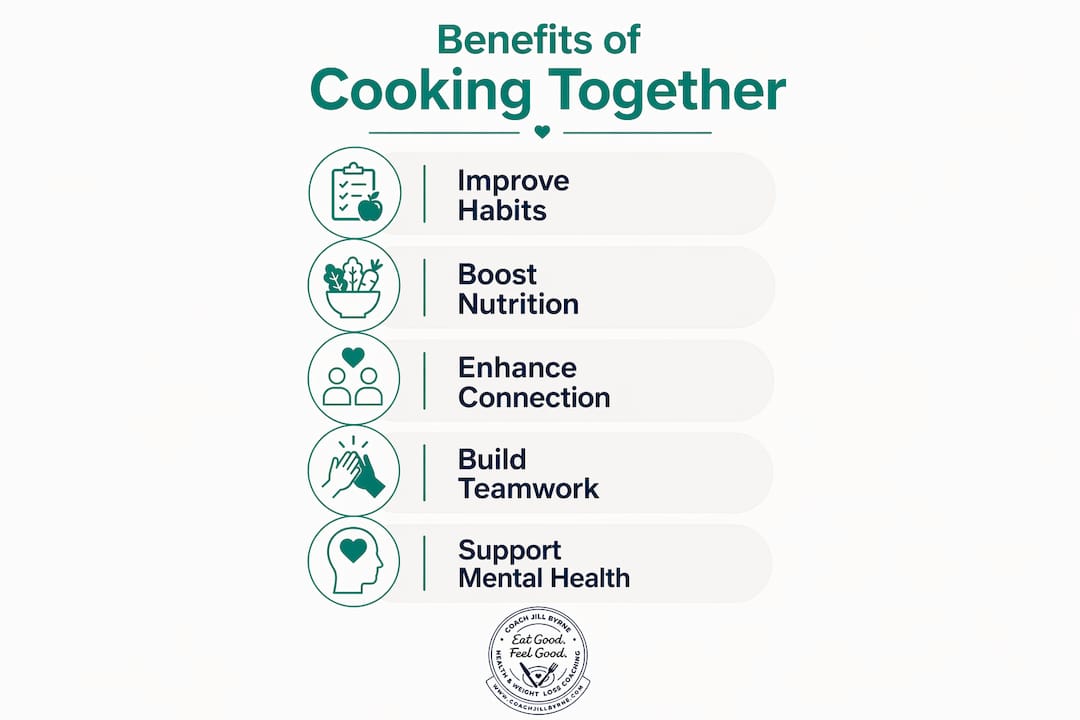
Cooking together fosters teamwork and emotional connection in ways that most shared activities do not. The kitchen requires real-time communication, negotiation, and mutual support. You ask for help, you offer it, and you solve small problems together. Those micro-interactions build relational trust over time.
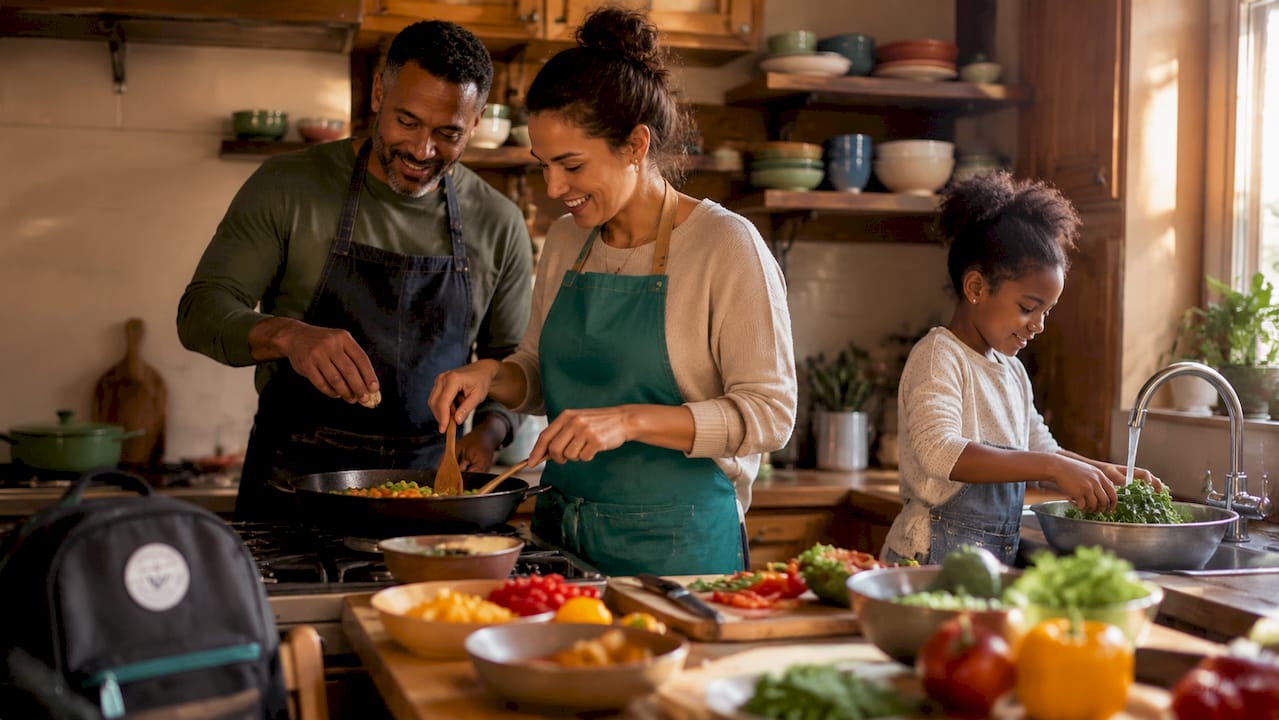
The impact of family meals and shared cooking extends well beyond nutrition. Eating together reduces risky behaviors in teenagers, including tobacco, alcohol, and marijuana use. That protective effect comes from the consistent presence of connection and accountability that shared meals create. The same dynamic operates in adult relationships. Regular shared cooking creates a ritual that signals stability and mutual investment.
Relationship benefit | How cooking together delivers it |
Improved communication | Side-by-side tasks reduce eye contact pressure and open natural dialogue |
Shared accountability | Both partners reinforce healthy food choices without formal rules |
Increased trust | Completing tasks together builds competence and reliability |
Emotional connection | Preparing food for someone is a direct expression of care |
Consistent ritual | Weekly cooking sessions create a dependable shared routine |
Cooking as a bonding activity also builds what researchers call lifelong competence and confidence in healthy choices. Skills developed in the kitchen carry forward. A couple that learns to cook balanced meals together is more likely to maintain those habits through life changes like job shifts, moves, or having children.
For couples specifically, learning to sync healthy eating habits with a partner is one of the most practical steps toward long-term wellness. Shared cooking is the most direct path to that alignment.
Key Takeaways
Cooking together improves habits because it combines nutritional accountability, psychological grounding, and relationship-building into a single repeatable practice.
Point | Details |
Nutritional quality improves | Home-cooked meals contain more fruits, vegetables, and fiber than restaurant or takeout alternatives. |
Portion control becomes natural | Measuring and assembling ingredients builds intuitive awareness of balanced serving sizes. |
Stress decreases through routine | The predictability of cooking tasks provides grounding and reduces social anxiety for both partners. |
Relationships strengthen consistently | Side-by-side cooking builds trust, communication, and a shared sense of accomplishment. |
Small starts build lasting habits | Beginning with one or two shared meals per week creates sustainable momentum without pressure. |
What I’ve seen cooking together actually change
Working with clients over the years, I have noticed that the couples and individuals who make the most lasting progress are rarely the ones who overhaul their entire diet at once. They are the ones who start cooking together once or twice a week and build from there.
What surprises most people is how quickly the kitchen becomes a space for connection, not just food. I have seen clients who struggled to talk about nutrition goals suddenly find it easy to discuss them while chopping vegetables side by side. The task gives both people something to focus on, and the conversation follows naturally.
My honest observation is this: perfection is not the goal. A simple stir-fry made together on a Tuesday night does more for long-term healthy habits than a perfectly planned meal prep session done alone. The shared experience is what makes the habit stick. Accountability, encouragement, and consistency come from the relationship, not the recipe.
If you are working on home cooking and family health, start with what feels manageable. One meal. One week. Build from there.
— Coach Jill
Personalized support for your cooking and nutrition goals
Building a shared cooking habit is one of the most practical steps toward lasting wellness. Knowing where to start and how to stay consistent is where structured support makes the difference.

Coachjillbyrne offers personalized nutrition coaching designed for individuals and couples who want to build real, sustainable habits around food. From meal planning strategies to accountability support, the coaching programs focus on practical changes that fit your actual life. No restrictive diets. No unrealistic expectations. Just clear guidance on building the kind of cooking and eating routines that last. Visit Coachjillbyrne to learn how personalized coaching can support your goals.
FAQ
Why does cooking together improve healthy eating habits?
Cooking together improves healthy eating because it increases awareness of ingredients, portions, and nutritional quality. Home-cooked meals consistently contain more fruits, vegetables, and fiber than restaurant or takeout alternatives.
How does shared cooking benefit a relationship?
Shared cooking builds trust, communication, and emotional connection through collaborative tasks. The side-by-side nature of kitchen work reduces conversational pressure and encourages natural, open dialogue between partners.
How often should couples cook together to see real benefits?
Starting with one or two shared meals per week is enough to build confidence and establish a sustainable habit. Frequency matters more than complexity when forming new cooking routines.
Does cooking together actually save time?
Research from a structured cooking and nutrition program found that task-sharing and prep coordination reduce individual effort over time. The initial adjustment period is short, and most couples find the process faster once roles are established.
Can cooking together support mental health?
The predictability and structure of cooking tasks provide measurable grounding effects that reduce stress. Completing a shared creative task also builds a sense of accomplishment and belonging that supports overall mental well-being.
Recommended
Comments