
2.7% Less Weight Loss From Alcohol, Coach Jill's 4 Steps for Adults
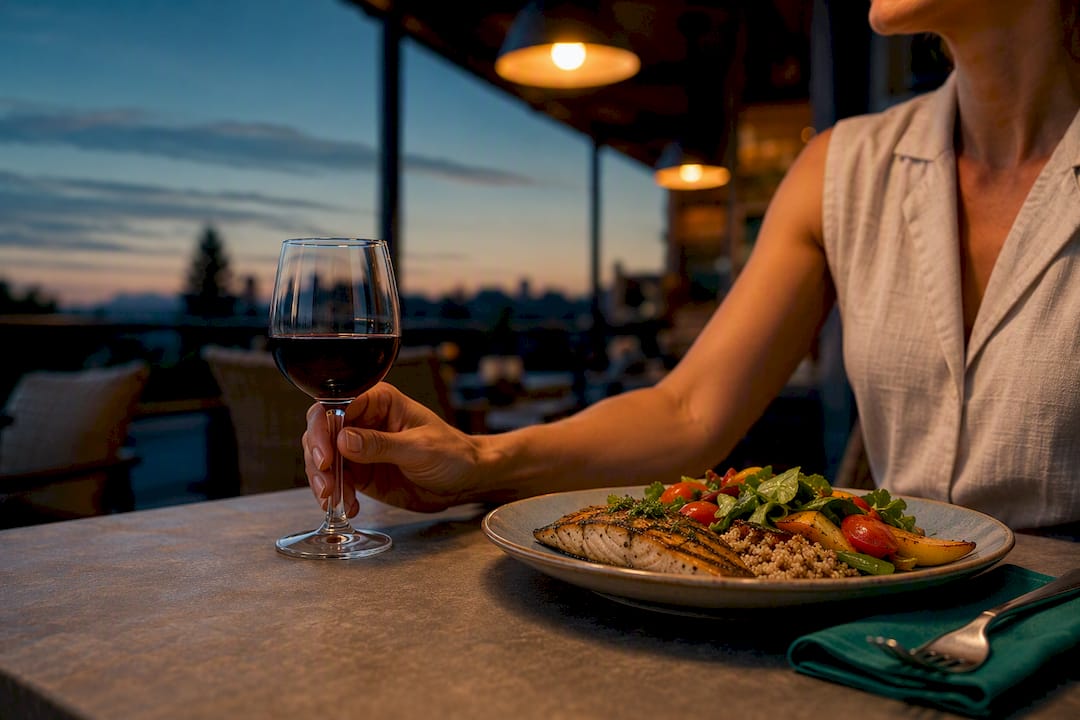
Alcohol commonly slows fat loss and adds calories your body handles differently than food. The clearest evidence comes from the Look AHEAD trial, where participants who abstained lost a greater percentage of their body weight over four years compared with consistent heavy drinkers, showing a notable difference in long-term weight loss. You don’t have to quit entirely. Budgeting alcohol calories and choosing lighter drinks narrows that gap considerably.
TL;DR:
Heavy drinking over months or years significantly impairs fat loss, with abstainers losing more weight than drinkers, as shown in the Look AHEAD trial.
Alcohol temporarily halts fat oxidation during metabolism and raises cortisol levels, increasing abdominal fat storage and risking hormonal disruption.
Consuming alcohol on training days blunts muscle recovery and protein synthesis, so it’s best to drink on rest days or at least six hours after lifting.
Binge drinking or frequent alcohol intake is linked to increased visceral fat and worsened cardiometabolic markers, even when total body weight remains stable.
Using lower-calorie drinks like dry wine, light beer, or spirits with zero-calorie mixers helps reduce calorie impact and supports ongoing fat loss efforts.
Table of Contents
Alcohol Calories: How to Count Drinks Toward Your Daily Budget
Best Drink Choices and How Often You Can Drink While Losing Weight
Coach Jill’s 4-Step Framework for Drinking and Still Losing Weight
Coach Jill’s Perspective on Drinks, Discipline, and Realistic Progress
How Coachjillbyrne Helps You Budget Alcohol Without Losing Momentum
How Alcohol Changes Metabolism and Body Composition
Alcohol carries 7 calories per gram, more than protein or carbohydrate and just shy of pure fat. That number alone understates the problem. Once alcohol enters your bloodstream, your liver treats it as a priority fuel to clear before anything else, which means the fat you’re trying to burn gets put on hold while your system deals with the ethanol first.
This isn’t a permanent metabolic shutdown. It’s a temporary reprioritization, but it happens every time you drink, and it stacks with other physiological effects that work against weight loss.
What alcohol does inside your body during and after drinking:
Suppresses fat oxidation while ethanol is being metabolized, since the liver clears alcohol before touching stored fat
Raises cortisol, the stress hormone that encourages fat storage, particularly around the abdomen
Suppresses testosterone production, which matters for muscle preservation during a calorie deficit
Disrupts sleep architecture, even at moderate doses, reducing deep sleep that supports hormone regulation and recovery
Reduces muscle protein synthesis after resistance training when alcohol is consumed in the recovery window
That last point deserves attention if you lift weights. Research on post-exercise recovery has found that drinking after resistance training blunts muscle protein synthesis compared with a protein-only recovery approach, which can chip away at the muscle mass you’re working to keep while losing fat.
Sleep disruption compounds everything else. Even moderate drinking fragments sleep cycles, and poor sleep is consistently linked to increased hunger hormones and reduced willpower around food choices the next day.
Statistic Callout: Alcohol’s suppression of fat oxidation isn’t indefinite; it lasts roughly as long as your liver needs to clear the ethanol, extending by about an hour for each standard drink, while the hormonal and sleep disruptions can linger for up to 24 hours.
It’s worth separating what’s proven from what’s still being studied. The calorie math and the liver’s metabolic priority for alcohol are well established. The precise size of the cortisol and testosterone effects, and how much they individually matter for weight loss versus muscle retention, is less settled and varies by dose, frequency, and individual physiology. Treat those as directionally reliable but not exact.
Pro Tip: If you lift weights and plan to drink, do it on a rest day or at least six hours after training, not immediately post-workout when your muscles are primed to absorb protein for repair.
What the Research Shows About Drinking and Fat Loss
The Look AHEAD study, a long-term intervention in adults with overweight or obesity and type 2 diabetes, remains the most useful real-world evidence available. Over four years, consistent abstainers lost more than double the weight of consistent heavy drinkers. That 2.7 percentage point difference isn’t dramatic on paper, but over years of effort it separates a modest result from a meaningful one.
What makes Look AHEAD valuable isn’t just the topline number. It tracked people through an intensive lifestyle intervention, meaning both groups had structured support, counseling, and accountability. The drinkers still fell behind. That points to something beyond simple willpower or program adherence.
Shorter trials tell a more nuanced story. A pilot randomized controlled trial in premenopausal women with obesity found that daily consumption of a moderate amount of alcohol equivalent to several standard drinks, blunted improvements in blood pressure, cholesterol, and uric acid even when both groups lost similar amounts of weight. The scale showed no difference. The bloodwork did.
The weight-loss number on the scale can hide what’s actually happening inside your cardiovascular system. Similar weight loss with and without daily alcohol produced very different metabolic outcomes in controlled testing.
This is the core reason short-term studies sometimes underestimate alcohol’s real impact. A four-week or eight-week trial can show comparable weight loss between drinkers and non-drinkers because people compensate in other ways: eating a little less, moving a little more, or simply not yet hitting the plateau that shows up further down the road. Behavioral compensation buys time before the deficit alcohol creates becomes visible.
Cohort and imaging research adds another layer. Studies tracking visceral fat mass found a dose-dependent relationship between alcohol intake and abdominal fat accumulation, with the highest-consumption group carrying a significantly higher proportional visceral fat than lower-consumption groups. Visceral fat is the metabolically active fat surrounding organs, and it’s tied to insulin resistance independent of total body weight.
Not every study agrees on the size or even the direction of alcohol’s effect on body fat. Reviews of population-level data show inconsistent associations between overall drinking and adiposity, complicated by confounding factors like diet quality, activity levels, and what people drink alongside alcohol. Someone who has two glasses of wine with a vegetable-heavy dinner is a different case than someone who orders a plate of fried food to go with the same two glasses.
Where the evidence is strongest and weakest:
Strong: heavy, consistent drinking over months or years measurably slows weight loss (Look AHEAD)
Strong: alcohol adds calories that don’t trigger the same fullness signals as food
Moderate: alcohol worsens cardiometabolic markers independent of weight change
Weak/mixed: light, occasional drinking’s effect on weight loss speed in otherwise well-managed diets
If you’re unsure whether alcohol is the reason your progress has stalled, a pragmatic four-week abstinence trial gives you a cleaner answer than any study can, because it tests your specific body, habits, and drinking pattern.
Alcohol Calories: How to Count Drinks Toward Your Daily Budget
The NIAAA defines one U.S. standard drink as 0.6 fluid ounces, or 14 grams, of pure alcohol. That’s the baseline every calorie estimate below assumes, and it’s smaller than most people pour at home.
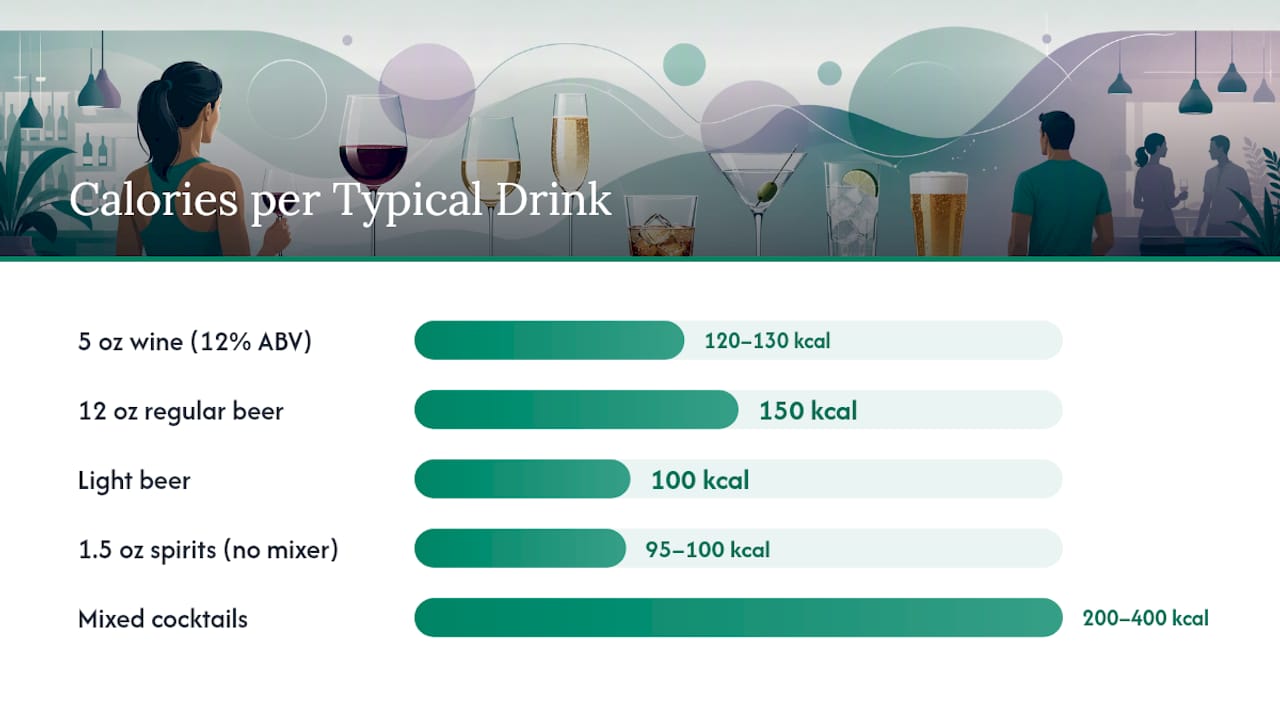
Typical calorie ranges for common standard drinks:
5 oz glass of wine (12% ABV): roughly 120 to 130 calories
12 oz regular beer: roughly 150 calories; light beer drops to around 100
1.5 oz shot of spirits (80 proof, no mixer): roughly 95 to 100 calories
Mixed cocktails: often 200 to 400+ calories once you add sugary mixers, syrups, or cream
Craft beers: frequently 200 to 300 calories per pour due to higher ABV and denser malt content
Cocktails and craft beer are where calorie counts get away from people fastest. A margarita or a piña colada can easily double or triple the calorie load of a plain glass of wine, and most menus don’t list the number anywhere near the price.
Statistic Callout: A standard drink calculator from NIAAA’s Rethinking Drinking tool lets you estimate drink sizes and calories more accurately, as restaurant pours often exceed a single standard drink equivalent.
The simplest way to fold alcohol into a weight-loss plan is to treat it as a line item, not an exception. If your daily calorie target is 1,800 and you plan to have two glasses of wine tonight, subtract roughly 250 calories from your food budget for the day, or swap a starchy side for vegetables to create the room. The USDA FoodData Central database and NIAAA’s calculators both let you look up exact figures instead of guessing, which matters because guessing tends to run low.
Why Drinking Leads to Extra Calories Beyond the Glass
The calories in your glass are only part of the problem. Alcohol changes behavior around food in ways that quietly add up over a week, even when you feel like you’re eating normally.
Researchers describe a “next-meal calorie bump,” a well-documented tendency to eat more food during and after drinking than you would sober. Alcohol lowers inhibition around food choices, and it briefly increases appetite for salty, fatty foods, which explains why bar snacks and late-night food runs feel so much more appealing three drinks in than they did before you started. One night of this might add a few hundred extra calories. Across a month of weekend social drinking, it can offset a meaningful chunk of your weekly deficit.
Practical mitigations that work better than relying on willpower alone:
Eat a protein-rich meal before drinking, not just a snack, to blunt the appetite spike and slow alcohol absorption
Set a drink limit before you arrive at a social event, not after the second round
Alternate alcoholic drinks with water or seltzer to pace intake and reduce total volume
Plan your next-day meals in advance so a rough night doesn’t cascade into a rough week
Avoid drinking on an empty stomach, since it intensifies both intoxication and the subsequent appetite surge
Individual responses vary quite a bit here. Some people feel almost no appetite change after one drink; others notice a strong pull toward food after even a small amount. Genetics, body size, and drinking frequency all play a role, so pay attention to your own pattern rather than assuming a universal response.
If you manage diabetes or take medications that interact with alcohol, including some blood pressure or blood sugar medications, talk with your doctor before making alcohol a regular part of your routine, since the metabolic effects described above can compound existing risks.
Pro Tip: Order your non-alcoholic drink first at a social event and finish it before your first alcoholic one. It slows your pace without drawing attention, and it takes the edge off hunger before the alcohol amplifies it.
Best Drink Choices and How Often You Can Drink While Losing Weight
Not all alcohol affects your progress equally, and frequency matters as much as choice. A single glass of wine on a Friday behaves very differently in your body than a nightly habit of two or three drinks.
Lower-calorie, lower-impact options:
Dry wine (red or white), 5 oz pour: around 120 calories
Light beer: around 100 calories
Spirits with a zero-calorie mixer (soda water, diet tonic): around 100 calories per drink
Hard seltzers: typically 90 to 110 calories, though sugar content varies by brand
What to limit or avoid if weight loss is the priority:
Sugary cocktails (margaritas, daiquiris, piña coladas)
Creamy liqueurs and dessert cocktails
Craft beers with high ABV and dense malt profiles
Sweetened mixers, tonic water, and juice-based cocktails
Public health guidance generally separates drinking into light (up to 3 drinks a week), moderate (up to 7 for women or 14 for men weekly, spread out, not consumed all at once), and heavy (exceeding those thresholds or binge patterns of 4+ drinks in a sitting). Heavy intake is where the visceral fat risk climbs fastest, consistent with the dose-dependent pattern seen in imaging studies.
Training timing matters just as much as drink choice:
Avoid drinking within a few hours of resistance training to protect muscle protein synthesis
If you drink the same day you train, prioritize a protein-rich meal before your workout, not after drinking
Schedule your heavier training days on days you don’t plan to drink at all
Give yourself at least one full alcohol-free day after intense training sessions to support recovery
When to Stop Drinking Entirely: Signals and a Simple Test
Some situations call for more than moderation. If you’ve been consistent with your nutrition and training for six or more weeks and still see no movement on the scale, alcohol is one of the first variables worth isolating, especially if drinking is frequent.
Signs alcohol may be blocking your progress:
A weight plateau despite genuinely consistent tracking and training
Binge-drinking episodes that reliably derail the following one to two days of eating
Visible increases in abdominal or visceral fat despite stable or dropping body weight elsewhere
Poor sleep quality on drinking nights that bleeds into low energy and higher hunger the next day
A pragmatic four to twelve week abstinence trial answers the question more reliably than guessing. Track three things during that window: body weight trend, sleep quality, and training performance (strength, energy, recovery time). If all three improve noticeably once alcohol is removed, you have your answer.
Seek medical advice if you notice signs of alcohol use disorder, take medications that interact with alcohol, or have any known liver concerns. Those situations need a doctor’s guidance, not a self-directed experiment.
Coach Jill’s 4-Step Framework for Drinking and Still Losing Weight
You don’t need to choose between a social life and progress. What you need is a system that accounts for alcohol honestly instead of pretending it doesn’t count.
Step 1: Audit before you adjust. Track your actual drinking pattern and total calories for one typical week, including the “next-meal” food that follows. Most people underestimate both by a wide margin.
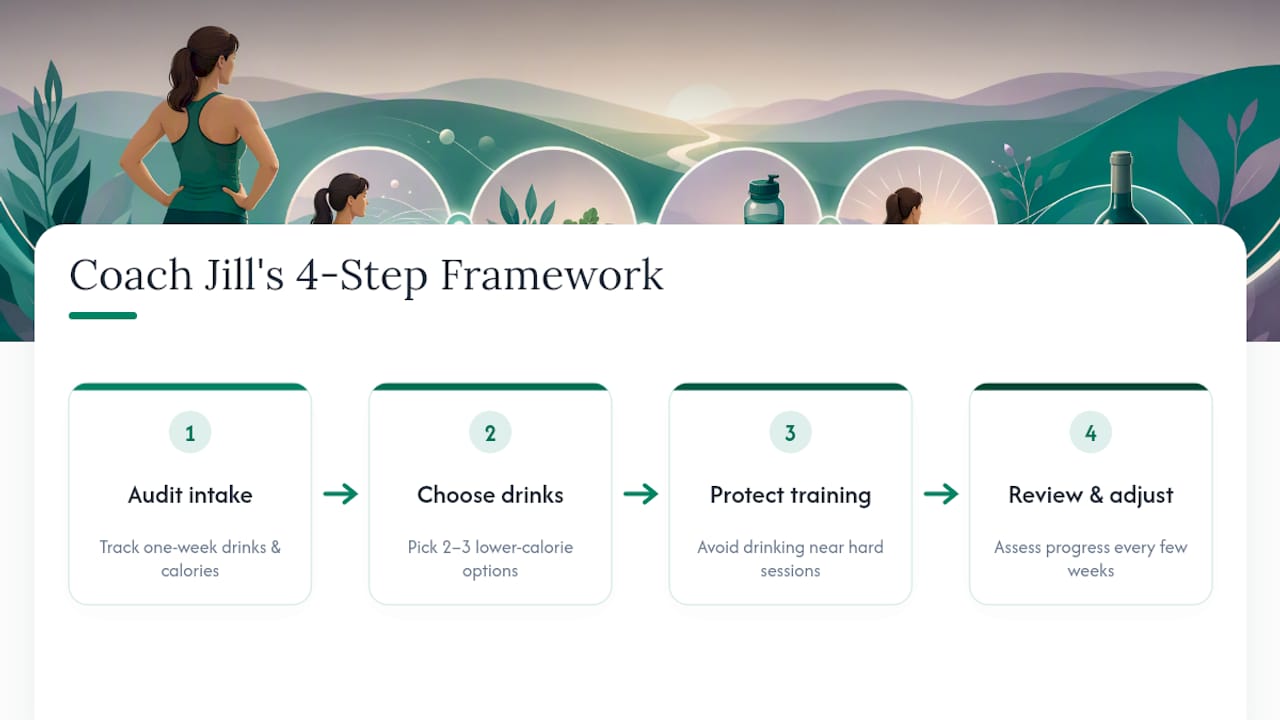
Step 2: Choose your drinks and set a frequency rule. Pick two or three go-to lower-calorie options and decide, in advance, how many drinking occasions fit your goals this month. A rule set ahead of time beats a decision made three drinks in.
Step 3: Protect your training window. Schedule drinking away from your hardest training days and the hours right after resistance work, so recovery and muscle protein synthesis aren’t competing with alcohol clearance.
Step 4: Review and adjust every few weeks. Weight loss isn’t linear, and neither is your social calendar. This is where accountability coaching earns its value, catching drift before it becomes a six-week plateau.
Pro Tip: Write your drink rule down somewhere you’ll see it before you go out, not just in your head. A rule you have to consciously recall under social pressure gets broken far more often than one you’ve already committed to on paper.
Alcohol, Inflammation, and Why It Matters for Fat Loss
Alcohol triggers a measurable inflammatory response in the gut and liver, even at moderate intake levels, and that inflammation has downstream effects on weight regulation that go beyond simple calorie counting.
Chronic low-grade inflammation is linked to insulin resistance, which makes your body more prone to storing fat, particularly visceral fat, and less efficient at using stored fat for energy. Alcohol also increases intestinal permeability, sometimes called a “leaky gut” effect, allowing bacterial byproducts to enter the bloodstream and provoke an immune response that keeps inflammatory markers elevated.
This matters most for people drinking frequently rather than occasionally, since the gut has time to recover between infrequent episodes but not between nightly ones. The liver bears a particular burden here: it’s the organ processing both alcohol and dietary fat, and chronic inflammation from regular drinking can impair its ability to manage both efficiently, contributing to fat accumulation in and around the liver itself.
For someone using GLP-1 medications to support weight loss, this inflammatory load deserves extra attention. These medications slow gastric emptying, which means alcohol clears more slowly and its effects, including inflammatory ones, may be prolonged. Alcohol also delivers its full calorie load regardless of how suppressed your appetite is, so it can quietly erase a meaningful share of the daily deficit the medication is designed to create.
Coach Jill’s Perspective on Drinks, Discipline, and Realistic Progress
There’s no single right answer here, and I’d push back on anyone who tells you there is. Abstaining gets you the fastest, cleanest results, full stop. Cutting back to two or three drinks a week gets you slower but sustainable results most people can actually live with for years. Keeping your current habits and accepting a slower timeline is also a legitimate choice, as long as it’s a choice you’re making with open eyes rather than a surprise showing up on the scale.
What matters is picking the trade-off that fits your actual life, not the one that sounds most disciplined on paper. A personalized plan accounts for your specific patterns, your training schedule, and your social calendar, and a little outside accountability tends to catch the drift before it becomes six months of quiet stagnation.
— Coach Jill
How Coachjillbyrne Helps You Budget Alcohol Without Losing Momentum
Coachjillbyrne builds alcohol into your plan instead of pretending it doesn’t exist, which is the gap that trips up most generic diet advice. The Unlimited coaching packages, offered in 1, 2, and 3 month terms, give you direct access to habit-based guidance on drink choices, calorie budgeting around social occasions, and adjustments when a busy month of dinners and events throws your routine off track.

Each package pairs real food strategy with the kind of ongoing accountability that catches a plateau early instead of six weeks late, and it’s built specifically for people who want sustainable habits rather than another restrictive rule they’ll abandon by spring. If you’re on a GLP-1 medication, that same framework extends to nutrition support tailored to appetite changes and slower gastric emptying. Check the pricing and plans page to see which term fits your goals, and book a consult to start building a plan that accounts for your actual life, drinks included.
Sources
The findings referenced throughout this article come primarily from peer-reviewed research and federal public health guidance, not lifestyle blogs or marketing claims.
FAQ
Does Alcohol Affect Your Belly Fat Specifically?
Yes. Imaging research shows a dose-dependent link between higher alcohol intake and visceral fat, the metabolically active fat around your organs, with heavy drinkers carrying over 10% more proportional visceral fat than lighter drinkers in some cohorts. This happens even when total body weight doesn’t change dramatically, which is why waistline changes sometimes outpace scale changes for regular drinkers.
What Alcohol Should I Drink If I’m Trying to Lose Weight?
Dry wine, light beer, and spirits mixed with a zero-calorie mixer are your lowest-impact options, typically running 90 to 130 calories per standard drink. Avoid sugary cocktails, creamy liqueurs, and high-ABV craft beers, which can run 200 to 400+ calories per serving and add up fast over a week.
Does Alcohol Hinder Weight Loss Even If I Stay Within My Calorie Budget?
It can, because alcohol’s effects go beyond calories alone. The Look AHEAD trial found consistent heavy drinkers lost less weight over four years than abstainers even within a structured program, and separate research shows daily drinking can blunt cardiometabolic improvements independent of weight change.
How Many Drinks a Week Is Safe While Losing Weight?
Light drinking, generally up to three drinks a week, shows the least interference with weight-loss progress in most research. Moderate intake spread across the week carries more risk of slowing results, and heavy or binge-pattern drinking consistently shows the clearest harm to both fat loss and visceral fat accumulation.
Can Coachjillbyrne Help Me Plan Around Social Drinking?
Yes. Coachjillbyrne’s Unlimited coaching packages include habit-based guidance for budgeting alcohol calories, choosing lower-impact drinks, and adjusting your plan around social occasions without abandoning progress. Current pricing details for the 1, 2, and 3 month terms are available on the pricing page.
Recommended
Comments