
How to Build Wellness Goals with Your Partner

Shared wellness planning is the practice of collaboratively setting, supporting, and achieving health objectives with your partner to strengthen both your bodies and your relationship. Couples who build wellness goals with a partner gain a built-in accountability system that solo efforts simply cannot replicate. Starting with 3 short-term and 3 long-term goals keeps the process focused without creating overwhelm. The most effective shared health aspirations combine individual flexibility with a common framework, and that balance is what separates couples who stick with it from those who quit by february.
What types of wellness goals do couples set together?
Couples set wellness goals across five core categories: physical fitness, nutrition, mental health, sleep, and social connection. Knowing which categories apply to you helps you choose goals that feel relevant rather than borrowed from someone else’s routine.
Physical fitness goals are the most common starting point. These include committing to three joint workouts per week, walking 8,000 steps together daily, or training for a 5K as a team. Short-term versions might look like “we walk after dinner every night this week.” Long-term versions look like “we complete a 10-week strength program together by june.”
Nutrition and healthy eating goals rank a close second. Couples often commit to syncing healthy eating habits by meal prepping on Sundays, reducing takeout to once per week, or cooking at least four dinners at home. These goals work because both people share the same kitchen environment, which makes coordination natural.
Mental health and stress management goals are frequently overlooked but highly effective. Examples include a shared 10-minute meditation before bed, a weekly “no phones after 9 p.m.” rule, or a standing Sunday check-in conversation about the week ahead. Reducing digital distractions during key moments improves presence and mindfulness for both partners.

Sleep optimization goals address one of the most underrated health factors. Agreeing on a consistent bedtime, limiting screens in the bedroom, or setting a shared wind-down routine are all practical targets. Sleep goals also tend to reinforce other wellness habits because better rest improves food choices and exercise motivation.
Social and emotional connection goals round out the picture. These include scheduling one new shared activity per month, joining a community fitness class, or simply committing to active listening when one partner discusses stress. Emotional support, such as reminding each other about preventive care appointments, is a legitimate wellness goal, not a soft add-on.
Short-term physical: Walk 20 minutes together after dinner, five nights per week
Short-term nutrition: Cook three new healthy recipes this month
Short-term mental health: Practice a 5-minute breathing exercise together each morning
Long-term physical: Complete a beginner strength program over 12 weeks
Long-term nutrition: Reduce processed food purchases by half over six months
Long-term connection: Attend a couples wellness retreat or cooking class by year’s end
How do you create supportive partner wellness strategies?
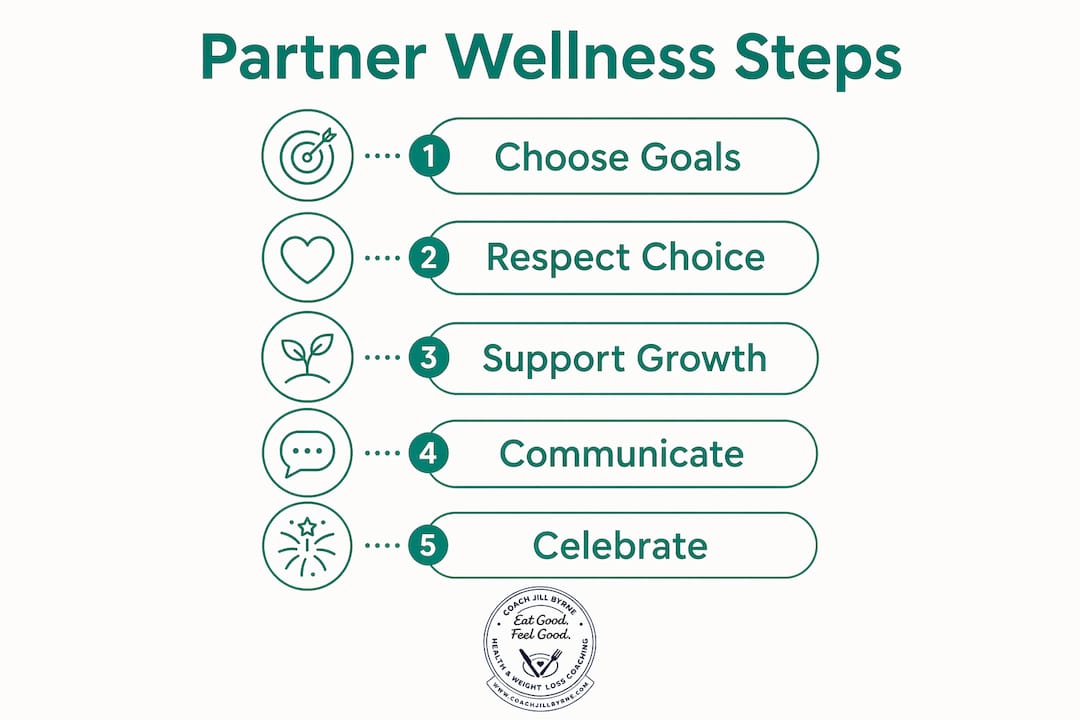
The most durable partner wellness strategies share one trait: they agree on a framework but allow each person to execute it in their own way. Couples who build shared frameworks around nutrition and movement, while maintaining flexible individual routines, avoid the friction that kills most joint efforts. One partner may prefer morning workouts while the other performs better at night. The framework says “we both move daily.” The execution stays personal.
Here is a practical sequence for building those strategies from the ground up:
Hold a goal-setting conversation. Sit down without phones and each write three short-term and three long-term wellness goals. Then compare lists and identify where they overlap. Overlap points become your shared goals.
Use positive, inclusive language. Framing goals positively with phrases like “we could both feel stronger” creates collaboration. Framing them as corrections (“you need to eat better”) creates defensiveness. Language shapes the entire dynamic.
Create a visible wellness station at home. Place supplements, water bottles, resistance bands, or a meal prep checklist in a shared, visible spot. Visible wellness stations act as non-verbal cues that reduce reliance on willpower or verbal reminders.
Schedule accountability check-ins. A brief text at midday (“did you drink your water?”) or a five-minute evening recap keeps both partners connected to the goals without turning every conversation into a progress report.
Plan joint and solo activities. Designate two or three wellness activities you do together each week and protect time for individual practices. This prevents resentment when schedules differ.
Review and adjust monthly. Set a recurring calendar reminder to revisit goals together. What worked? What felt forced? Adjust without judgment.
Pro Tip: Never assign a goal to your partner that they did not choose themselves. Suggested goals feel like assignments. Co-created goals feel like commitments.
Couples who lose weight together consistently report that the process works best when both people feel ownership over the plan, not just compliance with it.
How do you maintain consistent progress and overcome challenges?
Consistency in shared wellness comes from treating it as a system, not a bonus activity. Wellness habits built as a system with small, non-negotiable daily actions survive busy weeks, travel, and stress far better than ambitious routines that require perfect conditions.
The most common challenge couples face is mismatched energy levels. One partner is motivated; the other is exhausted. The solution is not to push harder. It is to have a pre-agreed minimum. For example, “on low-energy days, we still take a 10-minute walk.” That minimum keeps the habit alive without creating pressure.
Pre-plan for disruption. Before a busy travel week, agree on what your minimum wellness actions will be. A hotel gym session or a walk counts. Doing nothing breaks the system.
Celebrate small wins. Finishing a week of meal prep together deserves recognition. Acknowledge it. Small celebrations reinforce the behavior and build momentum.
Practice partner responsiveness. Recognizing a partner’s readiness and offering support without pressure improves both success rates and trust. Sometimes the right support is space, not encouragement.
Rebuild after setbacks without blame. A skipped week is not a failed plan. Treat it as data. Ask what made it hard and adjust the system accordingly.
Use joint accountability methods like shared meal logs, workout calendars, or weekly weigh-ins to keep both partners informed and engaged.
“Wellness is not something you add to your life when things calm down. It is the structure that helps you stay steady when things get hard.” This mindset shift is what separates couples who build lasting habits from those who restart the same goals every january.
Rebuilding healthy eating routines after a setback follows the same logic: start with the smallest possible action, not the most ambitious one.
How do you celebrate progress and deepen connection through wellness?
Celebrating progress is not optional. It is the mechanism that keeps couples motivated between milestones. Couples who acknowledge both big and small wins together report stronger commitment to their shared health goals over time.
The most effective celebrations are tied to the activity itself. Finishing a month of consistent meal prep together? Cook a special dinner from a new recipe. Completing a 10-week fitness program? Book a spa day or a hiking trip. The reward reinforces the behavior and creates a positive memory around wellness.
Wellness activities also serve as quality time when approached intentionally. Cooking together, taking evening walks, or attending a yoga class side by side builds connection without requiring a separate “date night” budget. Home cooking as a family health practice is one of the most underrated relationship tools available to couples.
The table below compares two approaches to celebrating wellness progress:
Approach | What it looks like | Effect on motivation |
Acknowledge verbally only | “Good job this week” | Fades quickly; feels routine |
Tie reward to the goal | Cook a new recipe after a month of meal prep | Reinforces the habit; creates positive memory |
Celebrate publicly | Share progress with a friend or community group | Adds social accountability and pride |
Ignore progress entirely | Move straight to the next goal | Leads to burnout and disconnection |
Open communication about individual needs is equally important. One partner may need verbal encouragement. The other may prefer quiet support. Asking directly, “what kind of support helps you most right now?” removes guesswork and prevents well-meaning gestures from landing as pressure. Active listening about stress and sleep is itself a wellness practice, not just a relationship skill.
Key Takeaways
Couples who build wellness goals together succeed by combining a shared framework with individual flexibility, consistent accountability, and deliberate celebration of progress.
Point | Details |
Start with six goals | Choose 3 short-term and 3 long-term goals together to stay focused and avoid overwhelm. |
Use positive framing | Inclusive language like “we could both feel stronger” builds cooperation instead of defensiveness. |
Build visible cues | A shared wellness station at home reduces reliance on willpower and keeps habits visible. |
Treat wellness as a system | Pre-plan minimum daily actions so busy weeks do not break the routine entirely. |
Celebrate consistently | Tie rewards to the activity itself to reinforce habits and strengthen your connection. |
What I have learned coaching couples through wellness goals
Working with couples on their wellness goals has taught me one thing above all else: the couples who succeed are not the ones with the most ambitious plans. They are the ones who stay flexible with each other.
I have seen partners start with perfectly matched goals and fall apart because neither one knew how to respond when the other had a hard week. And I have seen couples with completely different fitness preferences build lasting habits because they agreed on the framework and gave each other room to execute it differently. That flexibility is not a compromise. It is the strategy.
The emotional side of shared wellness is real and often underestimated. When one partner feels seen and supported in their health goals, it changes how they show up in the relationship overall. Wellness becomes a language you share, not a task you manage. That shift is what I work toward with every couple I coach.
My honest advice: do not wait until you both feel ready at the same time. Start with one shared goal, keep it simple, and build from there. The structure creates the motivation, not the other way around. If you want a practical place to begin, realistic goal examples give you a concrete starting point without the pressure of perfection.
— Coach Jill
Professional support for your couple wellness goals
Knowing what to do and actually doing it consistently are two different things. That gap is exactly where structured coaching makes the difference for couples.

Coachjillbyrne offers personalized nutrition coaching and accountability programs designed for real life, not ideal conditions. Whether you are working on healthy eating habits at home or building a full wellness plan together, the coaching process starts with your specific goals, your schedule, and your household. There are no rigid meal plans or unrealistic fitness standards. There is a clear, practical system built around what actually works for two people sharing a life. Visit coachjillbyrne.com to learn more about working together.
FAQ
What does it mean to build wellness goals with a partner?
Building wellness goals with a partner means collaboratively setting shared health objectives, creating mutual accountability, and supporting each other’s individual progress. The process covers physical fitness, nutrition, mental health, sleep, and emotional connection.
How many wellness goals should couples start with?
Starting with 3 short-term and 3 long-term goals gives couples enough direction without creating overwhelm. This manageable set allows both partners to build confidence before expanding their plan.
What is the biggest challenge couples face with shared wellness goals?
Mismatched energy levels and different readiness to change are the most common obstacles. Partner responsiveness, knowing when to encourage versus when to give space, is the skill that resolves most of these conflicts.
Do couples need to do every wellness activity together?
No. The most durable couple wellness routines combine joint activities with individual practices. Agreeing on a shared framework while allowing flexible personal execution prevents friction and keeps both partners engaged long term.
How does shared accountability improve wellness results?
Couples with accountability partnerships maintain healthy routines significantly better than individuals working alone. Methods like text check-ins, joint meals, and shared workout schedules keep both partners connected to their goals without requiring constant conversation.
Recommended
Comments