
Why Regaining Health Requires New Habits That Last

Regaining health is defined as the process of replacing old, counterproductive behaviors with consistent new habits that rewire how your body and brain function daily. This is why regaining health requires new habits rather than willpower alone or short-term fixes. Up to two-thirds of daily actions are habitual, meaning your current health outcomes are largely the product of repeated behaviors, not one-time choices. The World Health Organization frames self-care as an ongoing, personalized process rather than a single intervention. Coachjillbyrne builds its entire coaching model on this principle: lasting wellness comes from building practical, repeatable habits that fit your real life.
Why regaining health requires new habits, not quick fixes
The science of habit formation explains why short-term efforts rarely produce lasting results. Habits are automatic behaviors triggered by cues and reinforced by rewards. They form neural pathways in the brain through repetition. The stronger the repetition, the more automatic the behavior becomes.
A common myth is that habits form in 21 days. Research shows no universal timeframe exists for habit formation. The actual timeline depends on the complexity of the behavior and how frequently you repeat it. A simple habit like drinking a glass of water after waking may solidify faster than a complex one like preparing a balanced meal from scratch.
Neuroscience confirms that building new positive habits is more effective than trying to suppress old ones. Old neural pathways do not disappear, but new ones grow stronger with consistent repetition. Over time, the new habit loop, which follows the pattern of cue, routine, and reward, becomes the dominant response. This is the mechanism behind lasting behavior change.
Two techniques accelerate this process significantly:
Habit stacking: Attach a new behavior to an existing one. For example, take a five-minute walk immediately after your morning coffee.
Implementation intentions: Create an if-then plan. “If I feel stressed at 3 p.m., then I will drink a glass of water and take three deep breaths instead of reaching for a snack.”
Cue design: Place visual reminders where you need them. Put your vitamins next to your toothbrush. Keep fruit on the counter instead of in a drawer.
Reward pairing: Connect a new habit to something you already enjoy. Listen to a favorite podcast only during your daily walk.
Pro Tip: Start with one habit so small it feels almost too easy. Consistency at a low level builds the neural pathway faster than sporadic effort at a high level.
How new habits reduce chronic disease risk over time

The health stakes of changing habits for better health are significant. A long-term lifestyle intervention study found that intensive lifestyle changes reduce the risk of developing multiple chronic diseases by 21% over 20 years compared to no lifestyle change. That figure represents a meaningful shift in long-term quality of life.
The intervention included three specific behaviors: reducing dietary fat intake, completing 150 or more minutes of physical activity per week, and achieving a body weight reduction of 7% or more. Each of these is a habit, not a one-time action. The results came from sustained repetition over years, not from a single month of effort.
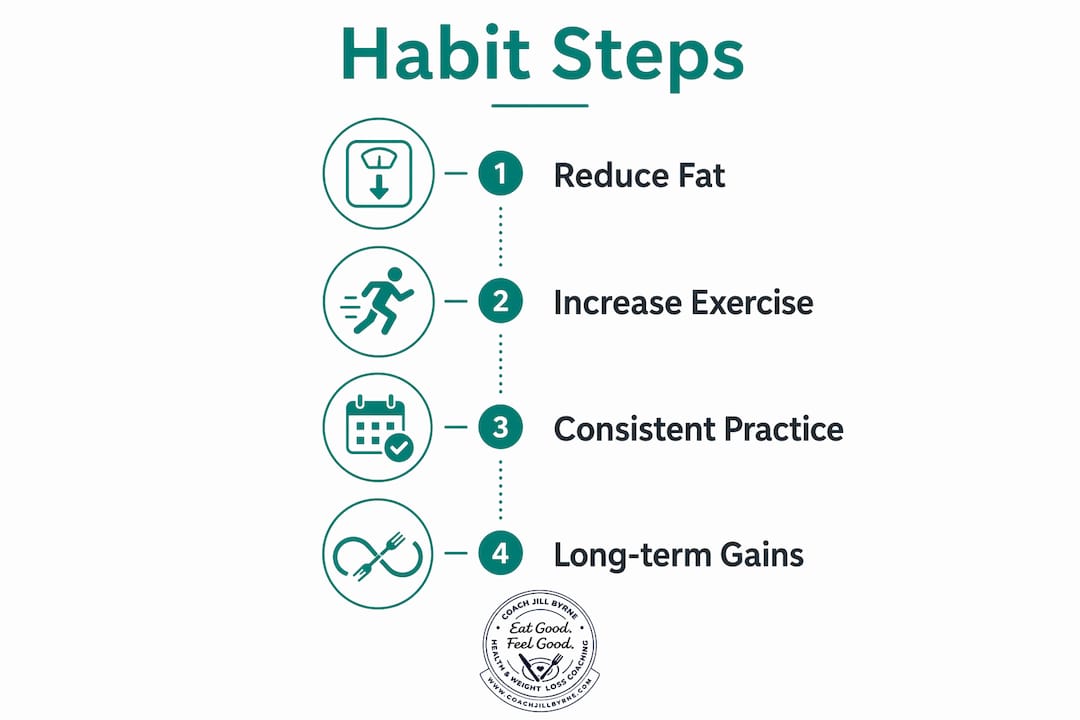
Multimorbidity, the condition of living with two or more chronic diseases simultaneously, affects quality of life, independence, and healthcare costs. Research shows that 85% of people develop two or more chronic conditions over time without lifestyle intervention. Early behavioral change is the most effective tool for preventing this accumulation.
Lifestyle habit | Outcome supported by research |
Reducing dietary fat | Lower risk of multiple chronic conditions over 20 years |
150+ minutes of weekly activity | Significant reduction in multimorbidity risk |
7% or more body weight reduction | Improved long-term health and independence |
Early habit intervention | Prevents accumulation of chronic diseases |
The practical implication is clear. Waiting until a health crisis occurs before changing habits means missing the window where intervention has the greatest impact. Building sustainable eating habits and consistent physical activity now reduces the probability of managing multiple conditions later.
Why willpower fails and what actually works instead
Willpower is a limited cognitive resource. Stress, poor sleep, and decision fatigue all deplete it. Telling someone to simply try harder consistently fails because it ignores the biological reality of how the brain manages energy and attention.
Decision fatigue is the reason you make worse food choices at 7 p.m. than at 7 a.m. Every decision you make throughout the day draws from the same cognitive reserve. By evening, that reserve is depleted. The result is that you reach for the easiest option available, which is usually not the healthiest one.
The solution is not more motivation. The solution is a better environment. When healthy choices are the easiest choices, you make them automatically without relying on willpower. This concept is called decision architecture, and it is one of the most underused tools in personal health management.
Practical environment changes that reduce cognitive load:
Remove processed snacks from visible, easy-to-reach locations.
Prep vegetables and proteins in advance so a healthy meal takes less effort than ordering takeout.
Set phone reminders for water intake, movement breaks, or meal times.
Keep workout clothes visible the night before to reduce friction in the morning.
Pro Tip: One change at a time lowers cognitive load and significantly improves habit retention. Trying to overhaul everything at once is the fastest route to abandoning all of it.
How to build healthy habits that survive setbacks and emotional triggers
Building habits that last through real life, including stress, travel, emotional eating episodes, and low-motivation weeks, requires a system rather than a streak. The goal is not perfection. The goal is a structure that makes returning to your habits easy after any disruption.
Start with micro-habits. A micro-habit is a version of your target behavior so small that skipping it feels harder than doing it. If your goal is daily movement, start with a two-minute walk after lunch. The behavior matters more than the duration at this stage.
Anchor habits to stable daily events. Linking new behaviors to rigid daily anchors like brushing your teeth, making coffee, or sitting down for lunch removes dependence on motivation. The anchor triggers the habit automatically.
Use if-then plans for emotional triggers. Emotional eating is often a response to a specific cue: boredom, stress, loneliness, or anxiety. Identify your personal cues and write a specific if-then response. “If I feel the urge to eat when I am not hungry, then I will drink a glass of water and wait ten minutes.” This does not suppress the urge. It redirects the routine while keeping the cue and reward structure intact.
Build boring, automatic systems. Small, manageable habits are more sustainable than dramatic resets. A habit you do consistently on your worst days is more valuable than one you do perfectly on your best days. Boring works. Boring lasts.
Evolve habits progressively. Static routines lose effectiveness as your body adapts. Once a habit feels automatic, increase its intensity or complexity slightly. Add five minutes to your walk. Add one more vegetable to your plate. This prevents the plateau where effort continues but results stall.
Rebuild without self-blame after breaks. Missing a habit for one day or one week does not erase the neural pathway you built. Self-blame increases stress, which depletes willpower further. The most effective response to a break is a neutral, practical one: return to the habit at its smallest version and rebuild from there.
Coachjillbyrne’s approach to rebuilding healthy eating routines reflects this same principle. Clients who succeed long-term are not the ones who never slip. They are the ones who have a clear, low-friction path back to their habits after any disruption.
Key Takeaways
Regaining health requires building new habits because consistent, repeated behaviors form the neural pathways that make healthy choices automatic over time.
Point | Details |
Habit formation is not fixed at 21 days | Complexity and repetition frequency determine how long a habit takes to form. |
New habits replace old ones neurologically | Positive habit loops grow stronger with repetition and eventually override old patterns. |
Lifestyle habits reduce chronic disease risk | A 21% reduction in multimorbidity risk is linked to sustained dietary and activity habits. |
Environment beats willpower | Removing friction and designing your space for healthy defaults reduces decision fatigue. |
Micro-habits and habit stacking sustain progress | Small, anchored behaviors survive setbacks better than high-effort, motivation-dependent routines. |
What I have learned from coaching people through real habit change
The clients I have worked with who struggled most were not lacking motivation. They were working against a system that was never designed for them. They had goals but no structure. They had willpower on Monday and none by Thursday. That pattern is not a character flaw. It is a design problem.
What I have seen work, consistently, is this: personalized habit design that respects where someone actually is, not where they think they should be. A person managing emotional eating does not need a strict meal plan. They need to understand their cues, build a realistic response, and practice it until it becomes the easier choice. That takes time, and it takes honesty about what is actually triggering the behavior.
The biggest mistake I see is people setting outcome goals without building the system to reach them. “I want to lose 20 pounds” is an outcome. “I will prep lunch on Sunday and walk for 15 minutes after dinner” is a system. Systems are what create outcomes. Outcomes alone create pressure, and pressure without a plan leads to the same cycle of starting over.
Health is not a destination you reach and then maintain effortlessly. It is a process that requires ongoing adjustment. Your habits need to evolve as your body adapts and your life changes. The goal is not to find the perfect routine. The goal is to build the skill of returning to your habits, refining them, and treating setbacks as data rather than failure. That skill is what separates people who sustain their health from those who keep starting over.
— Coach Jill
Personalized support for building your new health habits
Knowing what to do and actually doing it consistently are two different things. Accountability and personalized guidance close that gap faster than going it alone.

Coachjillbyrne offers personalized nutrition coaching built around your real life, your triggers, and your goals. The focus is on practical habits you can maintain, not restrictive plans that collapse under pressure. Clients receive structured support for meal planning, portion control, and habit tracking, along with consistent accountability to keep progress moving. Whether you are rebuilding after a setback or starting from scratch, the coaching process meets you where you are and builds from there.
FAQ
Why do new habits matter more than motivation for health?
Motivation fluctuates daily, but habits run automatically once formed. Building consistent behaviors removes the need to rely on motivation, which depletes under stress and fatigue.
How long does it actually take to form a healthy habit?
No fixed timeline applies to everyone. Formation depends on the complexity of the behavior and how consistently you repeat it, not on a set number of days.
What is the best way to handle emotional eating as a habit trigger?
Use an if-then plan: identify the specific emotional cue and write a planned response in advance. Redirecting the routine while keeping the cue-reward structure intact is more effective than suppression.
Why do health habits stop working over time?
Your body adapts to static routines, and benefits plateau when habits no longer challenge your system. Gradually increasing intensity or variety prevents this and sustains long-term results.
How do I rebuild healthy habits after a break without losing progress?
Return to the smallest version of your habit immediately and avoid self-blame. The neural pathway you built does not disappear during a break, and low-friction re-entry rebuilds momentum faster than starting over from scratch.
Recommended
Comments