
Sustainable Fat Loss Habits Guide for Real Results

Sustainable fat loss is defined as gradual, maintainable fat reduction that preserves muscle mass while supporting long-term metabolic health. The safe rate of fat loss is 1 to 2 pounds per week, a standard supported by clinical guidelines that also emphasize combining nutrition, exercise, and behavioral support. Intensive lifestyle programs produce an average loss of about 17.6 pounds over 6 months, which reflects what consistent, evidence-based habits actually deliver. This sustainable fat loss habits guide covers the practical changes that make the difference between short-term results and lifelong weight management.
What does a sustainable fat loss habits guide actually cover?
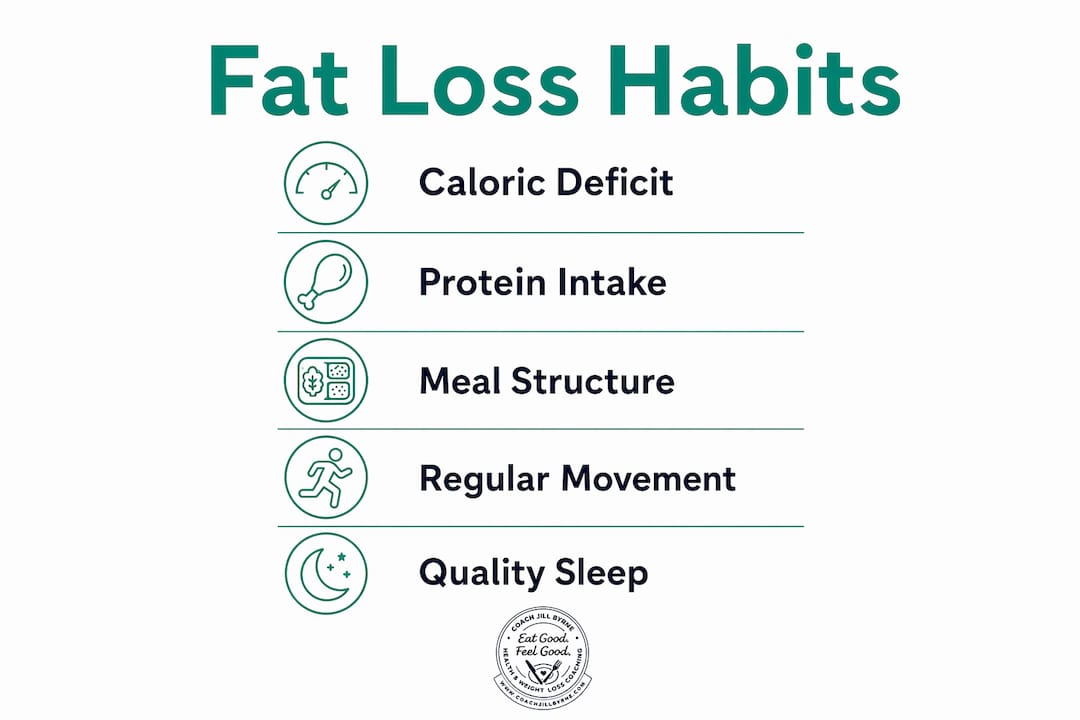
Sustainable fat loss requires a caloric deficit, adequate protein, structured meals, regular movement, quality sleep, and behavioral systems that reduce daily friction. Each of these elements works together. Relying on one alone, such as cutting calories without resistance training, risks muscle loss and metabolic slowdown. Combined approaches that include self-monitoring, a 500-calorie daily deficit, and adherence-supported physical activity produce significantly better clinical results than diet or exercise alone.
How to create a caloric deficit without losing muscle
A 500-calorie daily deficit is the standard starting point for safe fat loss. This deficit produces roughly 1 pound of loss per week without triggering the aggressive muscle breakdown that comes with steeper cuts. The goal is to reduce body fat while keeping lean tissue intact, which protects your metabolic rate over time.
Protein intake is the most important nutritional lever for preserving muscle during a deficit. The evidence-supported target is 1.6–2.2 grams of protein per kilogram of body weight daily. For a 160-pound person, that means roughly 116–160 grams of protein per day. Hitting that range consistently reduces muscle catabolism even when calories are restricted.
Meal structure matters as much as total calories. The plate method, which fills half the plate with vegetables, one quarter with lean protein, and one quarter with whole grains or starchy vegetables, reduces decision fatigue at every meal. Eating protein and vegetables first slows glucose absorption and increases satiety. Structured meal planning with whole foods removes the need to make food choices from scratch multiple times a day.
Pro Tip: Track your gym performance weekly. Declining training strength is the clearest signal that your caloric deficit is too aggressive and is cutting into muscle tissue. Adjust calories up by 100–150 kcal before the deficit damages your lean mass.
Key nutrition habits at a glance
Maintain a 500-calorie daily deficit, not more
Target 1.6–2.2 g of protein per kilogram of body weight
Use the plate method to structure every main meal
Eat protein and vegetables before grains or starches
Adjust calories gradually when transitioning to maintenance
Nutrition habit | Why it matters |
500-calorie daily deficit | Produces steady fat loss without triggering muscle breakdown |
High protein intake | Preserves lean muscle mass during calorie restriction |
Plate method | Reduces decision fatigue and controls portions automatically |
Gradual calorie increase post-diet | Prevents fat regain and supports metabolic rate recovery |
How does physical activity support long-term fat loss?
Physical activity guidelines recommend at least 150 minutes of moderate-intensity aerobic exercise weekly, plus two resistance training sessions. That combination addresses both fat burning and muscle preservation, which are the two competing priorities during a caloric deficit. Meeting both targets produces better body composition outcomes than cardio alone.

Resistance training is the most underused tool in fat loss programs. Strength training prevents most muscle loss during calorie restriction and keeps your metabolic rate from dropping as far as it would with diet alone. Two sessions per week covering major muscle groups, such as squats, rows, presses, and hinges, is enough to see this protective effect.
Scheduling workouts like appointments removes the daily decision of whether to exercise. Consistency matters more than intensity, especially in the first 90 days when habits are forming. The majority of people who maintain fat loss long-term perform at least 150 minutes of moderate activity weekly and pair it with self-monitoring habits.
Pro Tip: Pair your two weekly resistance sessions with your two busiest days. When life is full, strength training is the first thing people drop. Scheduling it on high-demand days makes it a fixed commitment rather than an optional extra.
Here is a practical weekly activity structure that meets the guidelines:
Monday: 30-minute brisk walk or cycling (aerobic)
Tuesday: Full-body resistance training, 45 minutes
Wednesday: 30-minute moderate cardio
Thursday: Rest or light stretching
Friday: Full-body resistance training, 45 minutes
Saturday: 30-minute walk or recreational activity
Sunday: Rest or gentle movement
How do behavioral habits reduce the friction of eating well?
Habit design outperforms willpower for long-term adherence. Fixed meal templates, default grocery lists, and structured eating windows remove the need to make food decisions repeatedly throughout the day. Every decision you eliminate is one less opportunity for an impulsive choice.
Self-monitoring is one of the most evidence-backed behaviors for fat loss success. Food journals and tracking apps improve awareness of portion sizes, eating patterns, and calorie intake, which reduces impulsive eating and increases adherence. You do not need to track forever. Even four to six weeks of consistent logging builds the food awareness that guides better choices long after you stop.
Lapses are a normal part of any long-term behavior change. The defining difference between people who maintain fat loss and those who regain weight is how they respond to a bad day or week. Viewing a lapse as data rather than failure keeps you in the process.
“Weight loss is not a short-term event. It is a continuous process that requires mindset shifts and habit sustainability.” — BBC Science Focus
Plateaus are predictable, not signs of failure. When fat loss stalls for two or more weeks, a small adjustment such as adding 1,000 steps per day or reducing portion sizes by 10% is enough to restart progress. Avoid dramatic cuts. Incremental changes protect muscle and prevent the rebound that follows aggressive restriction.
Use a fixed weekly meal template with 3 to 4 default dinners
Keep a food journal for at least four weeks to build awareness
Set a consistent eating window and stick to it on weekdays
Plan one flexible meal per week to reduce restriction-driven cravings
Treat a lapse as a single data point, not a reason to restart from zero
Why does sleep affect fat loss outcomes?
Sleep deprivation disrupts ghrelin and leptin, the two hormones that regulate hunger and fullness. Poor sleep raises ghrelin and suppresses leptin, which drives overeating even when calorie targets are otherwise on track. This hormonal disruption is one of the most overlooked reasons fat loss stalls despite consistent diet and exercise.
Recovery during sleep is also when muscle repair happens. If you are training twice a week for muscle preservation, inadequate sleep reduces the adaptation from those sessions. You get less return on the same effort. Prioritizing 7 to 9 hours of sleep per night is not optional for people pursuing long-term fat loss. It is a core part of the program.
Practical sleep habits that support fat loss include:
Set a consistent bedtime and wake time, including on weekends
Avoid screens for 30 minutes before bed to support melatonin production
Keep your bedroom cool and dark to improve sleep depth
Limit caffeine after 2 p.m. to avoid disrupted sleep cycles
Treat sleep as a recovery tool with the same priority as workouts
Key Takeaways
Sustainable fat loss requires combining a moderate caloric deficit, high protein intake, consistent resistance training, behavioral habit design, and adequate sleep to preserve muscle and prevent regain.
Point | Details |
Safe deficit rate | A 500-calorie daily deficit produces 1 pound of loss per week without muscle breakdown. |
Protein target | Aim for 1.6–2.2 g of protein per kilogram of body weight to preserve lean muscle. |
Exercise minimum | 150 minutes of moderate aerobic activity plus two resistance sessions weekly protects metabolic health. |
Habit design over willpower | Fixed meal templates and self-monitoring reduce decision fatigue and improve long-term adherence. |
Sleep as a fat loss tool | Seven to nine hours of sleep regulates hunger hormones and supports muscle recovery. |
What I have learned coaching real people through fat loss
After working with clients across a wide range of starting points, the pattern I see most often is this: people who succeed long-term are not the ones with the most discipline. They are the ones who built the most boring, predictable routines.
The clients who struggle are usually chasing intensity. They want the aggressive deficit, the six-day workout schedule, the complete dietary overhaul. That approach works for about three weeks. Then life happens, the system collapses, and the rebound follows. The clients who lose weight and keep it off are the ones who set realistic goals and treat the process as a permanent lifestyle shift rather than a temporary project.
One insight I share with every client: your habits need to be sustainable on your worst week, not just your best one. If your plan requires perfect conditions to work, it will fail. Design your eating and movement habits around the version of your life that includes stress, travel, and disrupted sleep. That is the version that shows up most often.
Setbacks are not signs that the plan is broken. Viewing lapses as learning rather than failure is the single mindset shift that separates people who maintain their results from those who cycle through the same 20 pounds repeatedly. Progress is not linear, and expecting it to be is the fastest way to quit.
— Coach Jill
Personalized support for building lasting fat loss habits
Knowing what to do and actually doing it consistently are two different challenges. Coachjillbyrne provides personalized nutrition coaching that helps you build the specific habits, meal structures, and accountability systems that fit your real life.

Coachjillbyrne works with clients on sustainable weight loss programs that cover meal planning, portion control, clean eating strategies, and behavioral coaching without restrictive dieting. Whether you are starting from scratch or trying to break through a plateau, the coaching process is built around practical changes you can maintain long-term. Clients consistently report improved energy, better food choices, and lasting results through the structured support and accountability that personalized coaching provides.
FAQ
What is a safe rate of fat loss per week?
The clinically supported safe rate is 1 to 2 pounds per week. This pace minimizes muscle loss and reduces the risk of regaining weight after the diet ends.
How much protein do I need during a fat loss phase?
Target 1.6–2.2 grams of protein per kilogram of body weight daily. This range preserves lean muscle mass while you are in a caloric deficit.
Does resistance training matter for fat loss?
Resistance training prevents most muscle loss during calorie restriction and protects your metabolic rate. Two full-body sessions per week is the minimum effective dose.
How does sleep affect my ability to lose fat?
Poor sleep raises ghrelin and suppresses leptin, which increases hunger and drives overeating. Seven to nine hours of sleep per night supports the hormonal balance needed for consistent fat loss.
What should I do when fat loss plateaus?
A plateau lasting two or more weeks signals the need for a small adjustment. Add 1,000 daily steps, reduce portions slightly, or review protein intake before making larger changes.
Recommended
Comments