
How to Start Weight Loss Without Restrictive Dieting

Sustainable weight loss is defined as a consistent, gradual reduction in body weight achieved through lasting lifestyle changes rather than strict food elimination. You can start weight loss without restrictive dieting by building habits around portion awareness, intuitive eating, and regular movement. This approach, supported by organizations like the Cleveland Clinic and WebMD, produces results that hold over time because it works with your preferences rather than against them. The goal is a moderate calorie deficit created through smarter food choices and daily activity, not through deprivation or rigid meal plans.
What does losing weight without restrictive dieting really mean?
Non-restrictive weight loss, often called intuitive eating or habit-based weight management, is the practice of reducing body fat without eliminating food groups or following rigid calorie rules. Fad diets exclude necessary nutrients and increase illness risk over time, which is why most people regain weight within a year of finishing them. The sustainable alternative focuses on building a healthy relationship with food rather than treating certain foods as forbidden.
Intuitive eating provides a framework of full permission to eat while using hunger and fullness cues to guide decisions. This approach is associated with better psychological outcomes and fewer unhealthy weight-loss behaviors compared to calorie-counting methods. It shifts the question from “What am I not allowed to eat?” to “What does my body actually need right now?”
Several key principles separate non-restrictive approaches from traditional dieting:
No forbidden foods. Removing the “off-limits” label reduces binge cycles and emotional eating.
Hunger awareness. Eating when genuinely hungry and stopping when satisfied creates a natural calorie deficit over time.
Food peace. Viewing all foods as neutral removes guilt, which is one of the primary drivers of yo-yo dieting.
Flexible structure. Consistent meal timing and sustainable food choices support satiety without rigid rules.
Time-restricted eating, a related approach, shows that TRE can produce significant weight loss short to medium term when individualized correctly. It works best when treated as a flexible window rather than a strict rule, which keeps it aligned with non-restrictive principles.
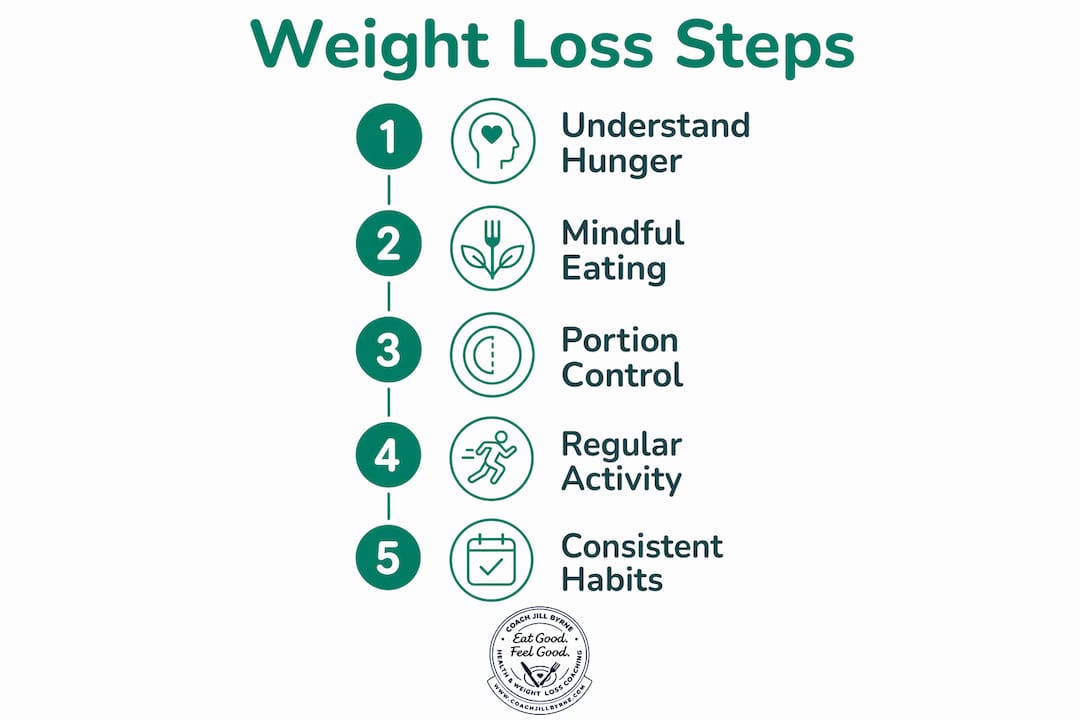
How to use portion control and mindful eating to support weight loss
Portion control does not require a food scale or calorie app. A sustainable calorie deficit can be maintained without counting by focusing on meal structures built around protein, fiber, and limited liquid calories. This non-counting approach improves adherence because it removes the mental burden of tracking every bite.
Practical portion strategies that work in real life include:
Use smaller plates. Research consistently shows that plate size influences how much food people serve themselves and ultimately eat.
Eat slower. Your brain takes roughly 20 minutes to register fullness signals from your stomach. Slowing down closes that gap.
Fill half your plate with vegetables. High-fiber vegetables add volume and satiety without adding significant calories.
Limit liquid calories. Sodas, juices, and alcohol add hundreds of calories with no satiety benefit.
Share meals when eating out. Restaurant portions in the United States average two to three times the recommended serving size.
Mindful eating pairs naturally with these strategies. Before reaching for a snack, pause and ask whether you are physically hungry or responding to stress, boredom, or habit. This single check-in, practiced consistently, reduces unnecessary calorie intake without any formal diet rule.
Pro Tip: Prep a small container of nuts, cut fruit, or hummus with vegetables at the start of each week. Having a ready snack removes the decision fatigue that leads to vending machine choices or skipped meals followed by overeating.

Replacing the mindset of “what to remove” with “what to add” is a proven shift. Adding protein and fiber to every meal improves long-term weight loss adherence because these nutrients keep you full longer and reduce the urge to graze between meals.
What role does physical activity play alongside non-restrictive eating?
Physical activity amplifies the calorie deficit created through mindful eating and accelerates metabolic health improvements. The American Heart Association recommends 150 minutes per week of moderate aerobic activity or 75 minutes of vigorous activity, plus two muscle-strengthening sessions. Spreading movement across the week is more effective than cramming it into one or two long sessions.
The combination of aerobic exercise and strength training is the most effective physical approach for weight loss. Aerobic activity burns calories during the session, while strength training builds muscle that raises your resting metabolic rate. Together, they create a compounding effect that supports sustainable weight loss results over months rather than weeks.
Here is a practical weekly activity framework to meet those guidelines:
Day | Activity | Duration |
Monday | Brisk walking or cycling | 30 minutes |
Tuesday | Strength training (full body) | 30 minutes |
Wednesday | Rest or light stretching | 15-20 minutes |
Thursday | Brisk walking or swimming | 30 minutes |
Friday | Strength training (full body) | 30 minutes |
Saturday | Longer walk, hike, or bike ride | 45-60 minutes |
Sunday | Rest or gentle yoga | Optional |
This plan meets the 150-minute aerobic threshold and includes two strength sessions, fitting the Cleveland Clinic’s recommendation to combine movement types for sustainable weight loss. The key is consistency over intensity. A 30-minute walk five days a week outperforms one exhausting two-hour gym session followed by four days of soreness and avoidance.
How can digital tools support weight loss without dieting?
Digital tools are now a legitimate, evidence-backed component of healthy weight management. Stand-alone digital lifestyle interventions produce clinically meaningful weight loss averaging 2.6 to 6.5 kg without requiring in-person support. That range is meaningful. It represents real, measurable progress achieved through apps, reminders, and goal-setting features alone.
The most effective digital tools for non-restrictive weight loss share several characteristics:
Behavior tracking over calorie counting. Apps that log hunger levels, mood, and meal timing support intuitive eating better than strict calorie trackers.
Goal-setting features. Setting weekly movement goals or water intake targets keeps progress visible without creating food anxiety.
Reminders and nudges. Scheduled reminders to take a walk, drink water, or check hunger levels build habits without requiring willpower.
Progress visualization. Seeing a streak of consistent behavior reinforces motivation more reliably than watching a number on a scale.
The scalability of digital tools makes them accessible to people who cannot afford or access in-person coaching. However, engagement quality matters. Tools that encourage reflection and behavior change outperform those that simply log numbers. Pairing a digital tool with even occasional human accountability, such as a coaching check-in, significantly improves outcomes. You can explore how online coaching tools can complement your daily habits without adding stress to your routine.
What common challenges arise and how do you stay motivated?
Plateaus are the most common obstacle in non-restrictive weight loss, and they are normal. The Cleveland Clinic advises that you should expect to modify your plan when progress stalls rather than abandoning it entirely. A plateau signals that your body has adapted, not that your approach has failed.
One underappreciated failure mode is micro-restriction. This happens when subtle food rules creep back in, such as avoiding carbs after 6 p.m. or labeling certain snacks as “bad.” Micro-restrictions perpetuate a restrictive mindset even when no formal diet is being followed. Catching these patterns early and returning to hunger and fullness awareness keeps the approach genuinely non-restrictive.
Sleep and emotional health have a direct impact on weight loss outcomes. Poor sleep raises ghrelin, the hunger hormone, and lowers leptin, the satiety hormone, making overeating significantly more likely the following day. Managing stress through consistent sleep, social connection, and recovery time is not optional. It is a core part of the strategy.
Research on habit-based weight loss programs shows that an iterative mindset approach focusing on habits over goals improved 12-month retention by 25.2% compared to control groups. That figure matters because most weight loss programs fail at the maintenance stage. Focusing on building consistent behaviors rather than hitting a target weight keeps you engaged long after the initial motivation fades.
Pro Tip: Track non-scale victories weekly. Improved sleep, more energy in the afternoon, fewer cravings, or fitting into a specific pair of pants are all real indicators of progress. Relying solely on the scale ignores the majority of what is actually changing in your body and habits.
Long-term weight loss maintenance requires the same consistent behaviors that produced the initial results. The transition from “losing” to “maintaining” is smoother when the habits were never extreme to begin with.
Key takeaways
Sustainable weight loss without restrictive dieting works because it builds consistent habits around hunger awareness, balanced nutrition, and regular movement rather than relying on willpower or food elimination.
Point | Details |
Non-restrictive approach | Intuitive eating and portion awareness create a calorie deficit without food rules or guilt. |
Portion control without counting | Structuring meals around protein and fiber maintains satiety and reduces overeating naturally. |
Physical activity guidelines | 150 minutes of moderate aerobic activity plus two strength sessions per week supports sustainable fat loss. |
Digital tools add real value | Stand-alone digital interventions produce 2.6 to 6.5 kg of clinically meaningful weight loss on average. |
Habit focus beats goal focus | An iterative, habit-based mindset improved 12-month weight loss retention by 25.2% over goal-only approaches. |
What I have learned coaching clients through this process
After working with clients across a wide range of starting points and goals, the pattern I see most consistently is this: the people who succeed long-term are not the ones who follow the strictest plan. They are the ones who build the most flexible, forgiving relationship with food and movement.
The biggest mistake I see is treating non-restrictive eating as permission to eat without awareness. Intuitive eating is not passive. It requires active attention to hunger signals, honest reflection on emotional triggers, and a willingness to adjust without judgment. That takes practice, and most people need a few weeks before it starts to feel natural.
I have also noticed that clients who focus on cooking habits and meal preparation make faster progress than those who rely on willpower alone. When healthy food is already prepared and accessible, the decision to eat well becomes the path of least resistance. That is the environment design piece that most advice skips over.
Patience is not a soft skill here. It is a strategic requirement. Weight loss that happens at a rate of 0.5 to 1 pound per week is the rate most likely to stay off. Clients who accept that timeline and focus on how they feel rather than how fast the scale moves are the ones I see thriving at the one-year mark.
— Coach Jill
Ready to build your own sustainable plan?
If you are ready to move beyond guesswork and build a weight loss approach that actually fits your life, Coachjillbyrne offers personalized nutrition coaching designed around your habits, preferences, and goals.

Coach Jill Byrne’s programs focus on real food, practical meal planning, and accountability support without restrictive rules or unrealistic expectations. Clients have achieved significant, lasting results through simple, consistent changes guided by structured coaching. Whether you are just starting out or looking to break through a plateau, personalized wellness coaching gives you the tools and support to make progress that lasts.
FAQ
What is the best way to lose weight without dieting?
The most effective approach combines intuitive eating, portion awareness, and consistent physical activity. Research from the Cleveland Clinic confirms that sustainable weight loss requires lifestyle changes rather than strict food restriction.
Can you really lose weight without counting calories?
Yes. A non-counting approach built around protein, fiber, and consistent meal structure maintains a calorie deficit without formal tracking, and it improves long-term adherence compared to strict calorie counting.
How much exercise do I need to lose weight without dieting?
The American Heart Association recommends 150 minutes of moderate aerobic activity per week plus two strength training sessions. This level of activity, combined with mindful eating, supports steady, sustainable fat loss.
How do digital tools help with weight loss?
Stand-alone digital lifestyle interventions produce clinically meaningful weight loss of 2.6 to 6.5 kg on average. Tools that track behavior, set goals, and send reminders are more effective than those focused solely on calorie logging.
What should I do when my weight loss stalls?
A plateau means your body has adapted, not that your plan has failed. Adjust your activity level, review your meal structure, and check for subtle food rules that may have crept back in. Focusing on non-scale victories during this period keeps motivation steady.
Recommended
Comments