
Beat Weekend Overeating in One Weekend: Log It, Test One B Minus Fix

One weekend of overeating will not undo weeks of progress. What actually moves the needle on your health goals is the pattern that repeats every Friday through Sunday. If you’re in a cycle right now, the fastest path forward is simple: hydrate, prioritize protein at your next meal, set a plan for alcohol before you’re in the moment, and pick one small, repeatable habit to anchor your weekend.
TL;DR:
Overeating on weekends is driven mainly by loss of routine, alcohol consumption, sleep disruptions, social cues, and emotional factors, not willpower.
Planning ahead by setting alcohol rules and starting weekends with a protein-rich breakfast significantly reduces the risk of overeating episodes.
Tracking weekend eating patterns with an Observation Log helps identify personal triggers and tailor small, sustainable habit changes.
Post-overeating recovery should focus on rehydration, balanced meals, and maintaining regular routines without extreme dieting or punishing workouts.
Long-term success depends on breaking repetitive patterns over multiple weekends rather than fixing a single episode or relying on rigid rules.
Table of Contents
Why Weekend Overeating Happens: The Real Drivers
Weekend overeating rarely comes from a lack of willpower. It comes from a predictable set of behavioral and physical triggers that build up across the week and land hardest once the weekday structure disappears.
The most common driver is what coaches call the “cheat day” mindset. You eat carefully Monday through Friday, then treat Saturday and Sunday as a free pass. That mental split, good days versus bad days, sets up a rebound. Restriction during the week primes your body and brain to overcorrect once the rules lift. The tighter the weekday control, the bigger the weekend swing tends to be.
Several other factors stack on top of that restriction rebound:
Loss of routine. Weekday meal timing, work schedules, and built-in structure disappear, and unstructured time often becomes unstructured eating.
Alcohol. Drinks lower inhibition and increase appetite, making it easier to eat past the point of fullness.
Sleep debt. Late nights and inconsistent wake times on weekends disrupt hunger signals, leaving you hungrier and less able to regulate portions.
Social cues. Restaurant meals, parties, and family gatherings introduce larger portions and more food variety than a typical weeknight.
Boredom and emotional coping. Unstructured weekend hours create more openings for eating driven by stress or low mood rather than hunger.
Timing matters here too. Evening hours carry the highest risk for overeating episodes, which means your defenses need to be strongest exactly when your willpower is running lowest. Planning around that window, rather than hoping to white-knuckle through it, is where most sustainable change actually starts.
How to Stop Weekend Binge Eating Before It Starts
You don’t need a rigid diet to break this cycle. You need a short list of repeatable moves you can run on autopilot when Friday evening hits. Here’s the toolkit, in order of impact.
Retire the “good food, bad food” list. Labeling foods as forbidden is what fuels the restriction rebound in the first place. Let small treats show up during the week in reasonable portions, so the weekend stops feeling like the only chance to have them.
Start weekends with a protein-first breakfast. A meal built around eggs, Greek yogurt, or a protein shake blunts the hunger swings that lead to grazing by 2 p.m. Keep meal timing close to your weekday pattern instead of skipping breakfast because there’s “no schedule” to follow.
Set alcohol rules before you’re holding a drink. Eat a real meal first, alternate each drink with a glass of water, and decide your limit ahead of time. This single habit change has an outsized effect, since alcohol lowers blood sugar and increases hunger and cravings, which makes overeating far more likely once the second or third drink arrives.
Find sensation swaps. If you’re craving the crunch of chips or the sweetness of dessert, look for a version with a built-in portion, like a single-serve bag or a small plated dessert, rather than eating straight from a family-size container.
Run a one-weekend Observation Log. For two days, jot down the time, what you ate, and why (bored, hungry, social, tired). Patterns show up fast, and one log tells you more than a month of guessing.
Prepare one-line scripts. Decision fatigue is real by Saturday night. Having a pre-written line ready (“I’ll have one plate, then check in with myself”) removes the need to negotiate with yourself in the moment.
Pro Tip: Pick one “B-minus” upgrade instead of a total overhaul. If your Observation Log shows late-night snacking is your weak spot, the B-minus fix isn’t “stop snacking.” It’s swapping the snack for something with protein and a fixed portion. Small, repeatable wins beat perfect plans you abandon by week two.
Readers rebuilding structure around meals more broadly often find it useful to pair this toolkit with proven ways to rebuild healthy eating routines, since the same anchoring principle applies across the whole week, not just Saturday and Sunday.
What to Do the Day After Overeating
The 24 to 48 hours after a heavy weekend determine whether you bounce back quickly or spiral into a longer setback. The goal is recovery, not punishment.
Start with water. Overeating often leaves you dehydrated, especially if alcohol was involved, and rehydrating is the first practical step toward feeling normal again. From there, shift to protein-rich meals and fiber, which help stabilize appetite and reduce the urge to keep grazing. Clinical guidance on binge recovery consistently points to the same sequence: rehydrate, eat balanced meals, return to your regular schedule, and skip anything extreme.
A realistic recovery day looks like this:
Morning: A large glass of water followed by a protein-forward breakfast, eggs and fruit, or a smoothie with protein powder and greens.
Midday: A regular lunch with lean protein, vegetables, and a whole grain, eaten at your normal time rather than delayed.
Afternoon: A short walk outside, which supports digestion and mood without qualifying as “compensation” exercise.
Evening: An early, screen-free wind-down to protect sleep, since sleep debt is part of what fuels the cycle in the first place.
What you should skip matters just as much as what you add. Avoid extreme dieting, skipped meals, or punishing workouts the next day. Those responses signal deprivation to your body, which often triggers the exact rebound overeating you’re trying to escape. If overeating episodes are becoming frequent, feel out of your control, or come with strong shame or secrecy, that’s a sign to talk with a doctor or a registered dietitian rather than trying to manage it alone.
What Research Says About Timing, Alcohol, and One Bad Weekend
The data on weekend overeating point to three practical truths: timing is predictable, alcohol is a bigger factor than most people assume, and a single overeating episode does far less damage than it feels like in the moment.
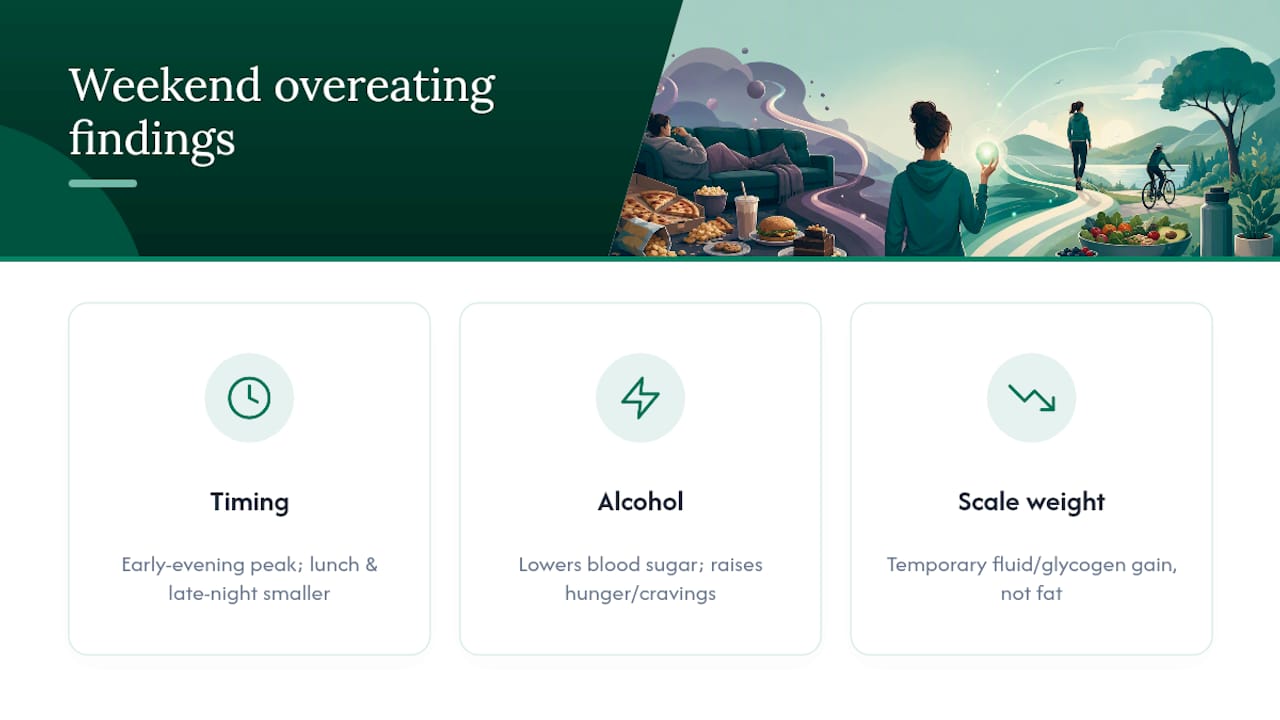
Evening is the danger zone. A seven-day ecological momentary assessment study found that binge eating risk peaks in the early evening, with smaller peaks around lunch and late night. Notably, the risk pattern held steady across days, meaning the clock, not the calendar, is the stronger predictor.
That timing pattern gives you something concrete to plan around. Instead of vaguely trying to “eat better on weekends,” you can build specific support around the early evening window, a protein-rich pre-dinner snack, a plan for the first hour home from work, or a scheduled activity that isn’t centered on food.
Alcohol compounds the problem beyond simple extra calories. It lowers blood sugar, increases hunger and cravings, and reduces inhibition, which explains why a night of drinking so often leads to both overeating that same evening and elevated hunger the next day.
The most reassuring finding is about scale weight. A single overeating episode typically produces temporary weight from fluid shifts and stored glycogen, not immediate fat gain, according to Cleveland Clinic guidance on overeating. Repeated overconsumption over weeks and months is what drives durable weight change, which is exactly why the pattern matters more than any single Saturday.
Coach Jill’s Habit-Based Plan for Weekend Eating
Weekend overeating is a strategy problem, not a discipline problem. The fix isn’t more rules. It’s better information about your own patterns, followed by one small change you can actually sustain.

Run a two-day Observation Log this weekend. For every eating episode, note the time, what you ate, and why, hungry, bored, social, tired. At the end of the weekend, ask yourself one question: what would I want to remember about this next time?
From there, identify your Weekend Profile. Are you an evening grazer, a Saturday-brunch overeater, or a Sunday-stress eater? Pick one B-minus upgrade to test next weekend, not a full overhaul.
Use a portion template at dinner: half the plate vegetables, a quarter protein, a quarter starch.
Build two or three protein-first meal ideas you can repeat without thinking.
Keep a script ready for the moment temptation peaks, so you’re not deciding from scratch every time.
This is the same framework used inside personalized coaching sessions, adjusted to real client patterns and goals rather than generic advice.
Progress Isn’t Ruined by One Bad Weekend
The biggest misconception about weekend overeating is that a slip means starting over. It doesn’t. What actually predicts long-term success is whether the same pattern repeats three, four, five weekends in a row, not whether one Saturday went sideways.
Rigid food rules tend to fail exactly where flexible, repeatable habits succeed. Track one weekend with an honest eye, change one small thing, and see what happens before you change anything else. That’s a more durable strategy than any all-or-nothing plan, and it builds real confidence because you’re working from your own data instead of someone else’s checklist.
If the pattern keeps repeating despite genuine effort, or if the eating feels driven by something bigger than habit, that’s worth bringing to a coach or a clinician. Asking for support at that point isn’t a failure. It’s the next reasonable step.
— Coach Jill
Get Personalized Support for Weekend Eating Patterns
If you’ve tried the toolkit above and still find yourself stuck in the same weekend cycle, the missing piece usually isn’t more information. It’s accountability and a plan built around your specific triggers, not a generic template. Personalized habit-based coaching programs build around real food and real patterns often include tracking weekend behavior and adjusting plans as Observation Log data comes in, rather than relying on one-size-fits-all meal plans.

Coaching programs may include ongoing accountability, portion guidance, and support tailored to weekend eating profiles, and can offer nutrition guidance for clients using GLP-1 medications who need a tailored approach to appetite and portions. Coach Jill’s coaching packages are available as Unlimited 1 month, Unlimited 2 months, and Unlimited 3 months plans, with current pricing available on request through the site. If weekend patterns have felt out of your control for more than a few weeks, booking a consult is a practical next step toward a plan built around your own data instead of another generic diet.
This article is general information, not a substitute for advice from a qualified doctor. Consult a qualified healthcare professional about your own circumstances before acting on anything here.
Sources
FAQ
Is It Normal to Eat More on the Weekend?
Yes. Loss of weekday structure, social meals, and alcohol all make weekend eating naturally higher than weekday eating for most people. It becomes a concern only when the pattern repeats heavily every week and starts working against your health goals.
Is It Possible to Gain Four Pounds Over a Weekend?
A jump on the scale after a heavy weekend is usually water weight and stored carbohydrate, not four pounds of body fat. According to Cleveland Clinic, one-off overeating causes temporary fluid shifts rather than lasting fat gain, and the number typically drops within days once you return to regular eating.
What Counts as a Weekend Binge?
A weekend binge generally means eating a much larger amount of food than usual within a short window, often paired with a feeling of losing control over the eating. It differs from simply enjoying a bigger weekend meal, since binges tend to involve discomfort, guilt, or a sense that the eating happened almost automatically.
Will a Weekend of Overeating Ruin My Progress?
No, a single weekend will not undo weeks of consistent habits. What actually affects long-term results is whether the same overeating pattern repeats weekend after weekend, which is why tracking your own patterns matters more than judging any one day.
When Should I Get Professional Help for Weekend Overeating?
Consider professional support if the pattern repeats most weekends despite real effort, involves a strong sense of losing control, or comes with shame that affects your mood or relationships. A registered dietitian, doctor, or a coaching program like Coachjillbyrne can help identify triggers and build a sustainable plan around your specific patterns.
Recommended
Comments