
Why Exercise Alone Won't Cause Weight Loss

Exercise alone typically does not produce meaningful weight loss, and the science now explains exactly why. Your body is not passive during a workout program. It actively compensates by reducing the energy it burns elsewhere, making the total caloric deficit far smaller than expected. Research from Tel Aviv University confirms that total energy expenditure increases by only about one-third of the predicted amount after an exercise intervention. You can be consistent, committed, and genuinely improving your fitness, and still see the scale barely move.
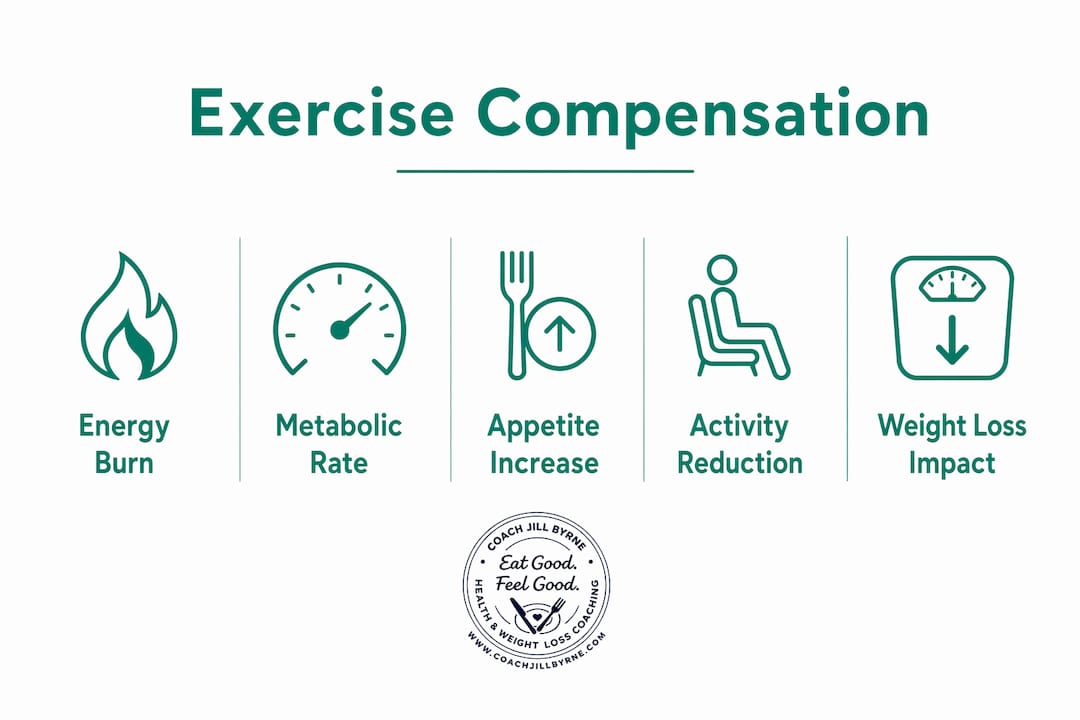
The core reasons exercise alone falls short include:
Metabolic adaptation: Resting metabolic rate drops, particularly during sleep, offsetting calories burned during workouts.
Organ efficiency: Energy-consuming organs like the liver and kidneys shrink in size, reducing internal energy use.
NEAT reduction: Non-exercise activity thermogenesis (NEAT), the calories burned through everyday movement, declines after structured exercise programs.
Appetite increase: Exercise can raise hunger signals, leading to higher caloric intake that erases the deficit.
Calorie miscalculation: People consistently overestimate how many calories a workout burns and underestimate what they eat.
“Physical activity is very important for good health, but when it comes to weight loss, it is not always sufficient on its own. To see significant weight loss, it must be combined with the appropriate nutrition.” — Dr. Tzachi Knaan, Tel Aviv University
The distinction between weight loss and fat loss also matters here. Participants in the Tel Aviv study improved body composition, reducing fat and gaining muscle, yet their scale weight did not change significantly. Exercise reshapes the body. Nutrition moves the scale.
Why your body fights back against exercise-only weight loss
The biological mechanisms behind exercise-induced compensation are more sophisticated than most people realize. When physical activity increases, the body does not simply burn more calories and shrink. It recalibrates its entire energy budget to maintain homeostasis, a survival mechanism rooted in human evolution.

Prof. Yftach Gepner of Tel Aviv University offers a striking explanation:
One of the most unexpected findings from this research involves internal organs. After 12 weeks of supervised aerobic walking, participants showed about a 5% reduction in liver and kidney volume. These organs are among the body’s largest calorie consumers, and shrinking them is a direct physiological strategy to conserve energy. The brain, notably, did not shrink.
Metabolic adaptation also targets resting metabolism. Aerobic exercise reduces resting metabolic rate, especially during sleep, meaning the body burns fewer calories even during its longest daily period of inactivity.
A review of 15 exercise studies found that the energy imbalance generated was consistently lower than the prescribed exercise energy expenditure. In one confined study where food intake was held at baseline levels, resting metabolic rate was depressed by 7% beyond weight-related reductions, suggesting a genuine adaptive response when exercise is combined with a stable diet. Leaner individuals showed the most pronounced suppression, which explains why people who are already fairly fit often struggle most to lose weight through exercise alone.
Adaptation Mechanism | Effect on Energy Balance |
Resting metabolic rate reduction | Fewer calories burned at rest, especially during sleep |
Organ volume decrease (liver, kidneys) | Lower internal energy consumption |
Increased movement efficiency | Less energy spent on the same daily activities |
NEAT decline | Reduced calorie burn from non-structured movement |
How exercise type and intensity shape weight loss outcomes
Not all exercise produces the same compensatory response, and understanding the difference can meaningfully change your approach.
Aerobic exercise (walking, cycling, running) tends to trigger the strongest compensatory mechanisms. The body adapts quickly to steady-state cardio by becoming more efficient, burning fewer calories for the same effort over time. Relying on aerobic exercise alone for weight loss typically requires very high daily volumes that exceed standard clinical guidelines and are unsustainable for most people. A joint position statement from the American College of Sports Medicine notes that up to 60 minutes per day may be required when relying on exercise alone for weight loss.
Resistance training behaves differently. Building muscle increases total daily energy expenditure beyond what the exercise session itself accounts for. Research published in New Scientist found that resistance exercise can increase daily calorie burn by 250 kcal when adding only 200 kcal worth of activity, a net positive effect that aerobic exercise rarely produces at moderate volumes.
Exercise Type | Compensation Effect | Body Composition Impact |
Moderate aerobic (walking, cycling) | High metabolic adaptation | Fat reduction, minimal scale change |
High-intensity aerobic | Moderate, with greater appetite response | Improved fitness, variable weight loss |
Resistance training | Lower compensation, muscle gain effect | Increased daily energy expenditure |
Combined aerobic + resistance | Reduced compensation overall | Best body composition outcomes |
Key considerations when evaluating exercise for weight loss:
Duration above 150 minutes per week of moderate activity is more likely to contribute to weight loss than shorter programs.
Higher exercise doses correlate with greater dietary compensation, meaning the more you work out, the more you may eat.
Individual variability is real. Research identifies clear “responders” and “non-responders” to exercise as a weight loss tool, driven partly by hormonal differences and appetite regulation.
Behavioral and lifestyle factors that quietly undermine your results
Physiology is only part of the story. Behavior plays an equally significant role in why workouts aren’t enough on their own.
Exercise-induced appetite is one of the most underappreciated barriers to weight loss. Physical activity can trigger increased hunger, and for some people, the caloric intake that follows a workout fully offsets the deficit created. Research shows considerable individual variability here. Non-responders to exercise-based weight loss demonstrate a much greater degree of hunger and subsequent food intake, sufficient in quantity to explain the weight differences between groups.
“People tend to overestimate the amount of calories they burn per workout, so it is important to avoid taking in more energy than you expend exercising.” — MedlinePlus Medical Encyclopedia, National Library of Medicine
NEAT decline compounds the problem. After starting a structured exercise program, many people unconsciously reduce their everyday movement, sitting more, fidgeting less, and taking fewer incidental steps. These small reductions add up across a full day and can erase a meaningful portion of the workout’s caloric contribution.
The behavioral compensation loop looks like this:
Workout burns 400 calories.
Post-exercise hunger leads to an extra 300 calories consumed.
Fatigue from the workout reduces afternoon walking and standing by 150 calories.
Net deficit: roughly 50 calories, far below what weight loss requires.
People also consistently underestimate food intake and overestimate calories burned, a double miscalculation that makes tracking feel accurate while the numbers quietly work against progress. Building sustainable eating habits alongside any exercise program addresses this gap directly.
Calorie balance also involves stress, sleep quality, and hormonal status. These factors influence hunger hormones like ghrelin and leptin, making simple calorie arithmetic an incomplete picture of long-term weight management.

Practical strategies for combining exercise and nutrition effectively
The evidence is clear: combined diet and exercise interventions consistently outperform either approach alone, particularly over 12 months. Meta-analyses of randomized trials confirm this across multiple populations. The goal is not to abandon exercise but to pair it with deliberate nutritional choices that create a genuine caloric deficit.
Effective strategies for balancing exercise and nutrition:
Create a caloric deficit through food first. Reducing intake by 300–500 calories per day through portion awareness is more reliable than trying to burn the same amount through exercise.
Prioritize protein. Higher protein intake preserves muscle mass during weight loss and reduces hunger, making the deficit easier to sustain.
Track what you eat, not just what you burn. Food logging, even for two to four weeks, reveals patterns that most people do not notice otherwise.
Combine resistance training with aerobic activity. This pairing reduces metabolic compensation and improves body composition simultaneously.
Do not reward workouts with food. Post-exercise eating is one of the most common ways people unknowingly cancel their deficit.
Maintain consistent daily movement beyond workouts. Protecting NEAT by walking, standing, and staying active outside gym sessions preserves total daily energy expenditure.
Pro Tip: Start with nutrition changes before adding a new exercise program. Establishing a stable, sustainable eating pattern first means your body has a clear caloric framework before compensatory mechanisms from exercise begin to influence hunger and metabolism.
Clinical guidelines from the American College of Sports Medicine support combining dietary modification with physical activity as the standard approach for meaningful, sustained weight loss. Exercise contributes health benefits that nutrition alone cannot replicate, including cardiovascular fitness, bone density, and mood regulation. The goal is integration, not substitution. For practical guidance on starting without restrictive dieting, the focus should be on building a caloric deficit that feels manageable over months, not weeks.
How Coachjillbyrne approaches sustainable nutrition for lasting results
Coachjillbyrne works from a foundational principle that weight loss requires changing what you eat, not just how much you move. The coaching philosophy centers on real food nutrition, habit formation, and accountability, addressing the behavioral and metabolic factors that exercise programs alone cannot fix.
The approach focuses on building practical habits that clients can maintain long after a program ends:
Portion awareness without rigid calorie counting: Learning to recognize appropriate serving sizes reduces intake without the psychological burden of tracking every gram.
Protein prioritization: Structuring meals around adequate protein supports muscle retention and manages hunger across the day.
Meal planning and clean eating: Preparing meals in advance removes the decision fatigue that leads to poor food choices after a long or tiring day.
Mindful eating practices: Slowing down and paying attention to hunger and fullness cues helps break the cycle of exercise-induced overeating.
Consistent accountability: Regular check-ins and structured support keep clients on track through the plateaus and behavioral adjustments that every weight loss journey involves.
“Successful weight loss requires moving beyond calorie counting to build habits such as portion control and prioritizing protein intake to preserve muscle and manage hunger.” — Tel Aviv University CRIS research summary
Coachjillbyrne’s clients work on sustainable weight loss habits that fit into real life, not idealized schedules. The coaching framework connects nutrition, behavior, and lifestyle into a single, coherent plan, recognizing that the body’s compensatory mechanisms require a multi-pronged response. Exercise remains part of the picture, but nutrition drives the deficit that actually moves the scale.
Key Takeaways
Exercise improves fitness and body composition, but meaningful weight loss requires a caloric deficit that nutrition, not exercise alone, reliably creates.
Point | Details |
Exercise triggers compensation | Total energy expenditure rises by only about one-third of the predicted amount after exercise intervention. |
Organs adapt to conserve energy | Liver and kidney volume decreases by about 5% after 12 weeks of aerobic training, reducing internal calorie burn. |
Resistance training differs | Resistance exercise can increase daily burn by 250 kcal when adding only 200 kcal of activity, unlike aerobic exercise. |
Combined approach wins | Meta-analyses confirm diet plus exercise outperforms either strategy alone, especially over 12 months. |
Behavior drives the gap | Post-exercise hunger and NEAT reduction can erase most of the caloric deficit a workout creates. |
FAQ
Why am I exercising consistently but not losing weight?
Your body compensates for increased activity by reducing calorie burn elsewhere, including resting metabolism and everyday movement. Without a corresponding change in food intake, the net caloric deficit is often too small to produce scale weight loss.
Can you lose weight through exercise alone?
Exercise alone can produce modest weight loss, but research consistently shows the results are far below what predicted calorie burn would suggest. A joint position statement from the American College of Sports Medicine notes that up to 60 minutes per day may be required when relying solely on exercise, a volume most people cannot sustain.
Why do some people seem to lose weight only when they stop exercising?
Stopping a structured exercise program can reduce appetite and eliminate post-workout eating patterns, sometimes creating a net caloric deficit that the exercise program itself was canceling out. This reflects behavioral compensation, not a benefit of inactivity.
What is the most effective combination for weight loss?
Meta-analyses of randomized trials confirm that combining dietary modification with regular physical activity produces greater and more sustained weight loss than either approach alone. Prioritizing a caloric deficit through nutrition while using exercise for health and body composition is the evidence-based standard.
Does the type of exercise matter for weight loss?
Resistance training tends to increase total daily energy expenditure more reliably than aerobic exercise at moderate volumes, partly because muscle gain raises resting metabolism. Aerobic exercise offers strong cardiovascular benefits but triggers stronger compensatory mechanisms that limit its standalone impact on scale weight.
Recommended
Comments